


Community hub
Recent from talks
Contribute something to knowledge base
Content stats: 0 posts, 0 articles, 1 media, 0 notes
Members stats: 0 subscribers, 0 contributors, 0 moderators, 0 supporters
Subscribers
Supporters
Contributors
Moderators
Hub AI
Ambulance AI simulator
(@Ambulance_simulator)
Hub AI
Ambulance AI simulator
(@Ambulance_simulator)
Ambulance
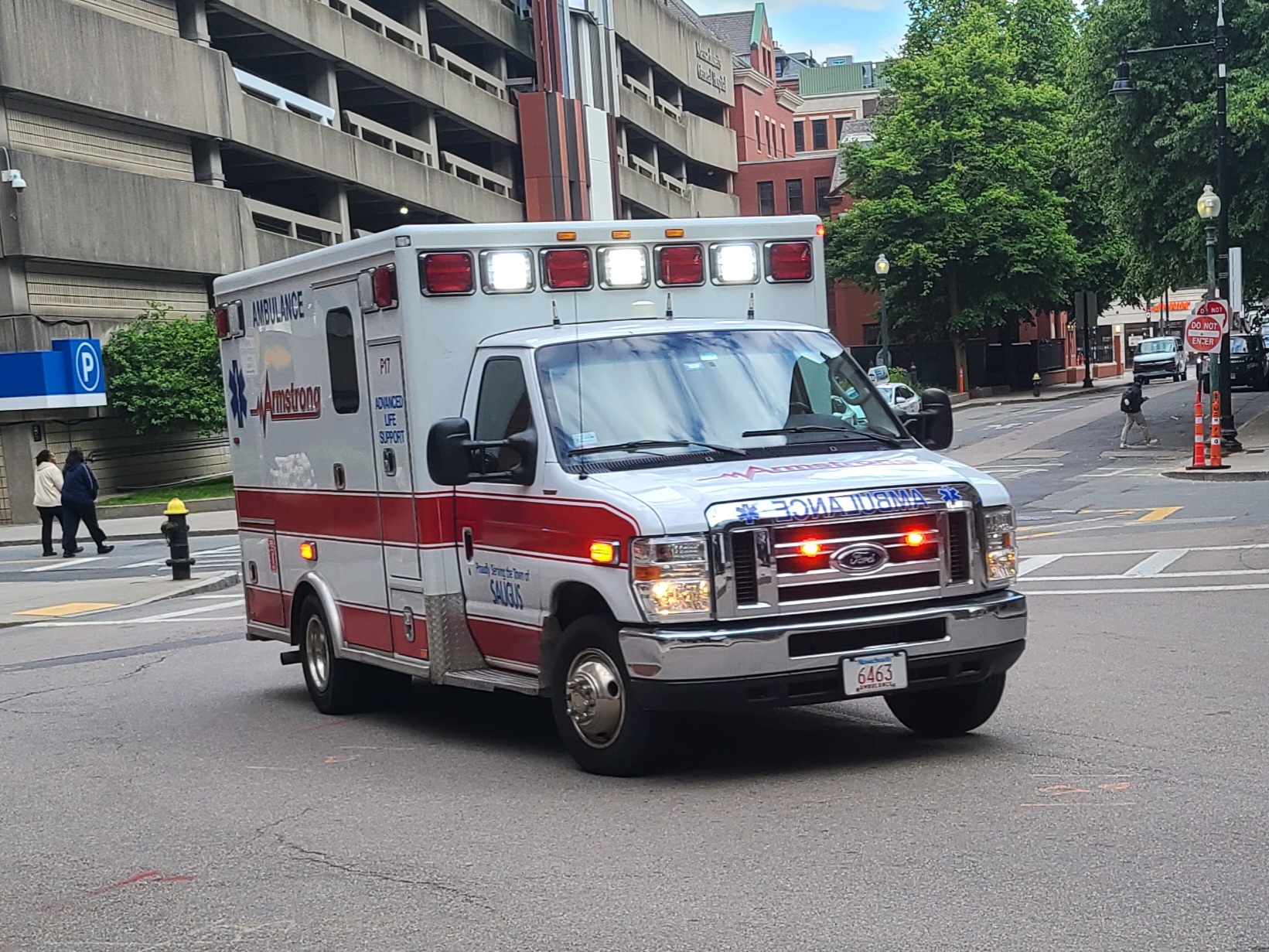
An ambulance is a medically equipped vehicle used to transport patients to treatment facilities, such as hospitals. Typically, out-of-hospital medical care is provided to the patient during the transport. Ambulances are used to respond to medical emergencies by emergency medical services (EMS), and can rapidly transport paramedics and other first responders, carry equipment for administering emergency care, and transport patients to hospital or other definitive care. Most ambulances use a design based on vans or pickup trucks, though others take the form of motorcycles, buses, hearses, aircraft and boats.
Ambulances are generally considered emergency vehicles authorized to be equipped with emergency lights and sirens. Generally, vehicles count as an ambulance if they can transport patients. However, it varies by jurisdiction as to whether a non-emergency patient transport vehicle (also called an ambulette) is counted as an ambulance. These vehicles are not usually (although there are exceptions) equipped with life-support equipment, and are usually crewed by staff with fewer qualifications than the crew of emergency ambulances. Conversely, EMS agencies may also have nontransporting EMS vehicles that cannot transport patients.
The term ambulance comes from the Latin word ambulare as meaning 'to walk or move about' which is a reference to early medical care where patients were moved by lifting or wheeling. The word originally meant a moving hospital, which follows an army in its movements. Ambulances (ambulancias in Spanish) were first used for emergency transport in 1487 by the Spanish forces during the siege of Málaga by the Catholic Monarchs against the Emirate of Granada. During the American Civil War vehicles for conveying the wounded off the field of battle were called ambulance wagons. Field hospitals were still called ambulances during the Franco-Prussian War of 1870 and in the Serbo-Turkish war of 1876 even though the wagons were first referred to as ambulances about 1854 during the Crimean War.
The history of the ambulance begins in ancient times, with the use of carts to transport incurable patients by force. Ambulances were first used for emergency transport in 1487 by the Spanish, and civilian variants were put into operation during the 1830s. Advances in technology throughout the 19th and 20th centuries led to modern self-powered ambulances.
Ambulances can be grouped into types depending on whether or not they transport patients, and under what conditions. In some cases, ambulances may fulfill more than one function (such as combining emergency ambulance care with patient transport:
Ambulances can be based on many types of vehicle although emergency and disaster conditions may lead to other vehicles serving as makeshift ambulances:
Ambulance design must take into account local conditions and infrastructure. Maintained roads are necessary for road-going ambulances to arrive on scene and then transport the patient to a hospital, though in rugged areas four-wheel drive or all-terrain vehicles can be used. Fuel must be available and service facilities are necessary to maintain the vehicle.
Methods of summoning (e.g. telephone) and dispatching ambulances usually rely on electronic equipment, which itself often relies on an intact power grid. Similarly, modern ambulances are equipped with two-way radios or cellular telephones to enable them to contact hospitals, either to notify the appropriate hospital of the ambulance's pending arrival, or, in cases where physicians do not form part of the ambulance's crew, to confer with a physician for medical oversight.
Ambulance
An ambulance is a medically equipped vehicle used to transport patients to treatment facilities, such as hospitals. Typically, out-of-hospital medical care is provided to the patient during the transport. Ambulances are used to respond to medical emergencies by emergency medical services (EMS), and can rapidly transport paramedics and other first responders, carry equipment for administering emergency care, and transport patients to hospital or other definitive care. Most ambulances use a design based on vans or pickup trucks, though others take the form of motorcycles, buses, hearses, aircraft and boats.
Ambulances are generally considered emergency vehicles authorized to be equipped with emergency lights and sirens. Generally, vehicles count as an ambulance if they can transport patients. However, it varies by jurisdiction as to whether a non-emergency patient transport vehicle (also called an ambulette) is counted as an ambulance. These vehicles are not usually (although there are exceptions) equipped with life-support equipment, and are usually crewed by staff with fewer qualifications than the crew of emergency ambulances. Conversely, EMS agencies may also have nontransporting EMS vehicles that cannot transport patients.
The term ambulance comes from the Latin word ambulare as meaning 'to walk or move about' which is a reference to early medical care where patients were moved by lifting or wheeling. The word originally meant a moving hospital, which follows an army in its movements. Ambulances (ambulancias in Spanish) were first used for emergency transport in 1487 by the Spanish forces during the siege of Málaga by the Catholic Monarchs against the Emirate of Granada. During the American Civil War vehicles for conveying the wounded off the field of battle were called ambulance wagons. Field hospitals were still called ambulances during the Franco-Prussian War of 1870 and in the Serbo-Turkish war of 1876 even though the wagons were first referred to as ambulances about 1854 during the Crimean War.
The history of the ambulance begins in ancient times, with the use of carts to transport incurable patients by force. Ambulances were first used for emergency transport in 1487 by the Spanish, and civilian variants were put into operation during the 1830s. Advances in technology throughout the 19th and 20th centuries led to modern self-powered ambulances.
Ambulances can be grouped into types depending on whether or not they transport patients, and under what conditions. In some cases, ambulances may fulfill more than one function (such as combining emergency ambulance care with patient transport:
Ambulances can be based on many types of vehicle although emergency and disaster conditions may lead to other vehicles serving as makeshift ambulances:
Ambulance design must take into account local conditions and infrastructure. Maintained roads are necessary for road-going ambulances to arrive on scene and then transport the patient to a hospital, though in rugged areas four-wheel drive or all-terrain vehicles can be used. Fuel must be available and service facilities are necessary to maintain the vehicle.
Methods of summoning (e.g. telephone) and dispatching ambulances usually rely on electronic equipment, which itself often relies on an intact power grid. Similarly, modern ambulances are equipped with two-way radios or cellular telephones to enable them to contact hospitals, either to notify the appropriate hospital of the ambulance's pending arrival, or, in cases where physicians do not form part of the ambulance's crew, to confer with a physician for medical oversight.
Recent media
Recent media