
Recent from talks
Anatoly Lyadov
Knowledge base stats:
Talk channels stats:
Members stats:
Anatoly Lyadov
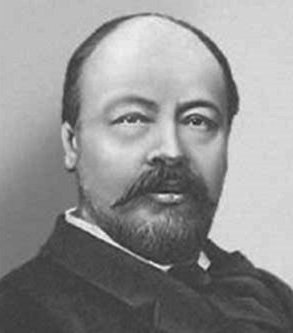
Anatoly Konstantinovich Lyadov (Russian: Анато́лий Константи́нович Ля́дов; 12 May [O.S. 30 April] 1855 – 28 August [O.S. 15 August] 1914) was a Russian composer, teacher and conductor.
Lyadov was born in 1855 in St. Petersburg, Russian Empire, into a family of eminent Russian musicians. He was taught informally by his conductor step-father Konstantin Lyadov from 1860 to 1868, and then in 1870 entered the Saint Petersburg Conservatory to study piano and violin.
He soon gave up instrumental study to concentrate on counterpoint and fugue, although he remained a fine pianist. His musical talent was highly regarded by Modest Mussorgsky, among others, and during the 1870s he became associated with the group of composers known as The Five. Expelled from the composition classes of Nikolai Rimsky-Korsakov for absenteeism in 1876, he re-enrolled in 1878 in order to complete his graduation composition.
He taught at the St. Petersburg Conservatory from 1878, with pupils including Sergei Prokofiev, Nikolai Myaskovsky, Mikhail Gnesin, Lazare Saminsky, Lyubov Streicher, and Boris Asafyev. See: List of music students by teacher: K to M#Anatoly Lyadov. Consistent with his character, he was a variable but at times brilliant instructor. Conductor Nikolai Malko, who studied harmony with him at the conservatory, wrote, "Lyadov's critical comments were always precise, clear, understandable, constructive, and brief.... And it was done indolently, without haste, sometimes seemingly disdainfully. He could suddenly stop in midword, take out some small scissors from his pocket and start doing something with his fingernail, while we all waited."
Igor Stravinsky remarked that Lyadov was as strict with himself as he was with his pupils, writing with great precision and demanding fine attention to detail. Prokofiev recalled that even the most innocent musical innovations drove the conservative Lyadov crazy. "Shoving his hands in his pockets and rocking in his soft woolen shoes without heels, he would say, 'I don't understand why you are studying with me. Go to Richard Strauss. Go to Debussy.' This was said in a tone that meant 'Go to the devil!'" Still, Lyadov said of Prokofiev to his acquaintances, "I am obliged to teach him. He must form his technique, his style—first in piano music." In 1905, he resigned his post over the dismissal of Rimsky-Korsakov, returning once Rimsky-Korsakov was reinstated.
Lyadov introduced timber millionaire and philanthropist Mitrofan Belyayev to the music of the teenage Alexander Glazunov. Interest in Glazunov's music quickly grew to Belyayev's patronage of an entire group of Russian nationalist composers. In 1884 Belyayev instituted the Russian Symphony Concerts and established the annual Glinka Prize. The following year he started his own publishing house in Leipzig. He published music by Glazunov, Lyadov, Rimsky-Korsakov and Borodin at his own expense. With young composers increasingly appealing to Belyayev for help, he asked Lyadov to serve on an advisory board to select among applicants, together with Glazunov and Rimsky-Korsakov. The group of composers that emerged in this ambit became known as the Belyayev Circle.
In November 1887, Lyadov met Pyotr Ilyich Tchaikovsky. Nearly seven years earlier Tchaikovsky had given a negative opinion to the publisher Besel about a piano arabesque Lyadov had written. Even before this visit, though, there are indications that Tchaikovsky's opinion of Lyadov was evolving. He had, for example, presented Lyadov a copy of the score of his Manfred Symphony. Following their first meeting in person, the younger composer became "dear Lyadov." From winter of 1890, Tchaikovsky was a frequent visitor to Lyadov and the Belyayev Circle.
He married into money in 1884, acquiring through his marriage a country property in Polynovka, Borovichevsky, Novgorod Governorate, where he spent his summers composing unhurriedly, and where he died in 1914.[citation needed]
Hub AI
Anatoly Lyadov AI simulator
(@Anatoly Lyadov_simulator)
Anatoly Lyadov
Anatoly Konstantinovich Lyadov (Russian: Анато́лий Константи́нович Ля́дов; 12 May [O.S. 30 April] 1855 – 28 August [O.S. 15 August] 1914) was a Russian composer, teacher and conductor.
Lyadov was born in 1855 in St. Petersburg, Russian Empire, into a family of eminent Russian musicians. He was taught informally by his conductor step-father Konstantin Lyadov from 1860 to 1868, and then in 1870 entered the Saint Petersburg Conservatory to study piano and violin.
He soon gave up instrumental study to concentrate on counterpoint and fugue, although he remained a fine pianist. His musical talent was highly regarded by Modest Mussorgsky, among others, and during the 1870s he became associated with the group of composers known as The Five. Expelled from the composition classes of Nikolai Rimsky-Korsakov for absenteeism in 1876, he re-enrolled in 1878 in order to complete his graduation composition.
He taught at the St. Petersburg Conservatory from 1878, with pupils including Sergei Prokofiev, Nikolai Myaskovsky, Mikhail Gnesin, Lazare Saminsky, Lyubov Streicher, and Boris Asafyev. See: List of music students by teacher: K to M#Anatoly Lyadov. Consistent with his character, he was a variable but at times brilliant instructor. Conductor Nikolai Malko, who studied harmony with him at the conservatory, wrote, "Lyadov's critical comments were always precise, clear, understandable, constructive, and brief.... And it was done indolently, without haste, sometimes seemingly disdainfully. He could suddenly stop in midword, take out some small scissors from his pocket and start doing something with his fingernail, while we all waited."
Igor Stravinsky remarked that Lyadov was as strict with himself as he was with his pupils, writing with great precision and demanding fine attention to detail. Prokofiev recalled that even the most innocent musical innovations drove the conservative Lyadov crazy. "Shoving his hands in his pockets and rocking in his soft woolen shoes without heels, he would say, 'I don't understand why you are studying with me. Go to Richard Strauss. Go to Debussy.' This was said in a tone that meant 'Go to the devil!'" Still, Lyadov said of Prokofiev to his acquaintances, "I am obliged to teach him. He must form his technique, his style—first in piano music." In 1905, he resigned his post over the dismissal of Rimsky-Korsakov, returning once Rimsky-Korsakov was reinstated.
Lyadov introduced timber millionaire and philanthropist Mitrofan Belyayev to the music of the teenage Alexander Glazunov. Interest in Glazunov's music quickly grew to Belyayev's patronage of an entire group of Russian nationalist composers. In 1884 Belyayev instituted the Russian Symphony Concerts and established the annual Glinka Prize. The following year he started his own publishing house in Leipzig. He published music by Glazunov, Lyadov, Rimsky-Korsakov and Borodin at his own expense. With young composers increasingly appealing to Belyayev for help, he asked Lyadov to serve on an advisory board to select among applicants, together with Glazunov and Rimsky-Korsakov. The group of composers that emerged in this ambit became known as the Belyayev Circle.
In November 1887, Lyadov met Pyotr Ilyich Tchaikovsky. Nearly seven years earlier Tchaikovsky had given a negative opinion to the publisher Besel about a piano arabesque Lyadov had written. Even before this visit, though, there are indications that Tchaikovsky's opinion of Lyadov was evolving. He had, for example, presented Lyadov a copy of the score of his Manfred Symphony. Following their first meeting in person, the younger composer became "dear Lyadov." From winter of 1890, Tchaikovsky was a frequent visitor to Lyadov and the Belyayev Circle.
He married into money in 1884, acquiring through his marriage a country property in Polynovka, Borovichevsky, Novgorod Governorate, where he spent his summers composing unhurriedly, and where he died in 1914.[citation needed]
Recent media