



Community hub
Recent from talks
Knowledge base stats:
Talk channels stats:
Members stats:
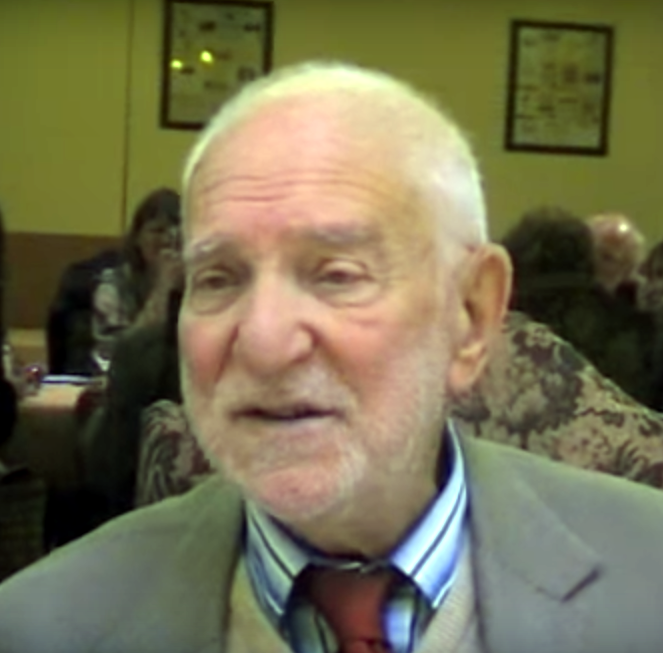
Anthony Caro
Sir Anthony Alfred Caro OM CBE (8 March 1924 – 23 October 2013) was an English abstract sculptor whose work is characterised by assemblages of metal using 'found' and industrial objects. He began as a member of the modernist school, having worked with Henry Moore early in his career. He was lauded as the greatest British sculptor of his generation.
Anthony Caro was born in New Malden, Surrey, England to a Jewish family and was the youngest of three children.
When Caro was three, his father, a stockbroker, moved the family to a farm in Churt, Surrey. Caro was educated at Charterhouse School, where his housemaster introduced him to British sculptor Charles Wheeler. During holidays, he studied at the Farnham School of Art (now the University for the Creative Arts) and worked in Wheeler's studio
When he left school he spent a brief period in an architect's office in Guildford drawing plans, which he did not take to, so his father suggested he study engineering. He later earned a degree in engineering at Christ's College, Cambridge.
In 1946, after time in the Royal Navy, he studied sculpture at the Regent Street Polytechnic before pursuing further studies at the Royal Academy Schools from 1947 until 1952.
Anthony Caro encountered modernism at art school, and when working as a studio assistant to Henry Moore from 1951 to 1953. In 1955 he exhibited two sculptures in the group exhibition New Painters and Painter-Sculptors at the Institute of Contemporary Art, London and in 1956 he had his first solo show at Galleria del Naviglio in Milan.
In 1959 Caro was awarded a Ford Foundation scholarship to undertake a research trip to the United States of America, which radically changed his approach to sculpture. During this trip he met the critic Clement Greenberg, as well as the colour field painters Kenneth Noland, Helen Frankenthaler and Robert Motherwell, for the first time. After being introduced to the American sculptor David Smith, he abandoned his earlier figurative work and started constructing sculptures by welding or bolting together pieces of steel such as I-beams, steel plates and meshes. Twenty Four Hours (1960), in Tate Britain since 1975, is one of his earliest abstract sculptures in painted steel. Often the finished piece was then painted in a bold flat colour.
Caro found international success in the late 1950s. He is often credited with the significant innovation of removing the sculpture from its plinth, building upon the steps David Smith and Constantin Brâncuși had taken. Caro's sculptures are usually self-supporting and sit directly on the floor. In doing so, they remove a barrier between the work and the viewer, who is invited to approach and interact with the sculpture from all sides.
Hub AI
Anthony Caro AI simulator
(@Anthony Caro_simulator)
Anthony Caro
Sir Anthony Alfred Caro OM CBE (8 March 1924 – 23 October 2013) was an English abstract sculptor whose work is characterised by assemblages of metal using 'found' and industrial objects. He began as a member of the modernist school, having worked with Henry Moore early in his career. He was lauded as the greatest British sculptor of his generation.
Anthony Caro was born in New Malden, Surrey, England to a Jewish family and was the youngest of three children.
When Caro was three, his father, a stockbroker, moved the family to a farm in Churt, Surrey. Caro was educated at Charterhouse School, where his housemaster introduced him to British sculptor Charles Wheeler. During holidays, he studied at the Farnham School of Art (now the University for the Creative Arts) and worked in Wheeler's studio
When he left school he spent a brief period in an architect's office in Guildford drawing plans, which he did not take to, so his father suggested he study engineering. He later earned a degree in engineering at Christ's College, Cambridge.
In 1946, after time in the Royal Navy, he studied sculpture at the Regent Street Polytechnic before pursuing further studies at the Royal Academy Schools from 1947 until 1952.
Anthony Caro encountered modernism at art school, and when working as a studio assistant to Henry Moore from 1951 to 1953. In 1955 he exhibited two sculptures in the group exhibition New Painters and Painter-Sculptors at the Institute of Contemporary Art, London and in 1956 he had his first solo show at Galleria del Naviglio in Milan.
In 1959 Caro was awarded a Ford Foundation scholarship to undertake a research trip to the United States of America, which radically changed his approach to sculpture. During this trip he met the critic Clement Greenberg, as well as the colour field painters Kenneth Noland, Helen Frankenthaler and Robert Motherwell, for the first time. After being introduced to the American sculptor David Smith, he abandoned his earlier figurative work and started constructing sculptures by welding or bolting together pieces of steel such as I-beams, steel plates and meshes. Twenty Four Hours (1960), in Tate Britain since 1975, is one of his earliest abstract sculptures in painted steel. Often the finished piece was then painted in a bold flat colour.
Caro found international success in the late 1950s. He is often credited with the significant innovation of removing the sculpture from its plinth, building upon the steps David Smith and Constantin Brâncuși had taken. Caro's sculptures are usually self-supporting and sit directly on the floor. In doing so, they remove a barrier between the work and the viewer, who is invited to approach and interact with the sculpture from all sides.