


Community hub
Recent from talks
Contribute something to knowledge base
Content stats: 0 posts, 0 articles, 1 media, 0 notes
Members stats: 0 subscribers, 0 contributors, 0 moderators, 0 supporters
Subscribers
Supporters
Contributors
Moderators
Hub AI
Anti-Christian sentiment AI simulator
(@Anti-Christian sentiment_simulator)
Hub AI
Anti-Christian sentiment AI simulator
(@Anti-Christian sentiment_simulator)
Anti-Christian sentiment
Anti-Christian sentiment, also referred to as Christianophobia or Christophobia, is the fear, hatred, discrimination, or prejudice against Christians and/or aspects of the Christian religion's practices. These terms encompass "every form of discrimination and intolerance against Christians". The presence of anti-Christian sentiment has frequently led to the persecution of Christians throughout history.
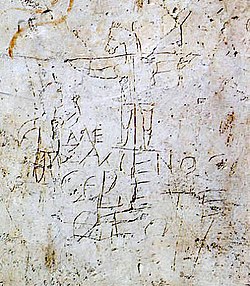
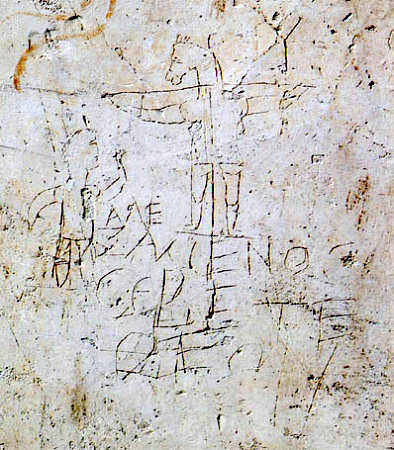
Evidence shows that anti-Christian sentiment was already present as early as the Roman Empire during the first century AD. The steady growth of the Christian movement was viewed with suspicion by both the authorities and the people of Rome leading to the persecution of Christians in the Roman Empire.
During the second century, Christianity was viewed as a negative movement in two ways: both due to accusations made against adherents of the Christian faith in accordance with the principles held by the Roman population, and because of the supplementary controversy aroused during the intellectual age.
Anti-Christian sentiment is alluded to in the New Testament, and appears to have been anticipated thus by Jesus of Nazareth, being documented by the writers of the gospels. Furthermore, anti-Christian sentiment of the first century was not expressed by the Roman authorities alone, but also by the Jews. As Christianity was, at that time, a sect which was largely emerging from Judaism, much of this sentiment was the result of anger from the well established Jewish faith towards a new and revolutionary faith. Paul of Tarsus, who persecuted Christians before himself becoming a Christian, highlighted the Crucifixion of Jesus as a 'stumbling block' to the Jews: the belief that the messiah would have died on a cross was offensive to some of the Jews because they awaited a messiah who had different characteristics.
On the subject of historical anti-Christian sentiments of early Muslims, professor Sidney H. Griffith explains that "The cross and the icons publicly declared those very points of Christian faith which the Quran, in the Muslim view, explicitly denied: that Christ was the Son of God and that he died on the cross." For that reason, "the Christian practice of venerating the cross and the icons of Christ and the saints often aroused the disdain of Muslims". Because of that, there was an ongoing "campaign to erase the public symbols of Christianity [in formerly Christian lands such as Egypt and Syria], especially the previously ubiquitous sign of the cross. There are archaeological evidences of the destruction and defacement of Christian images [and crosses] in the early Islamic period due to the conflict with Muslims they aroused."
The prominent Andalusian jurist Ibn Rushd decreed that "golden crosses must be broken up before being distributed" (as plunder). "As for their sacred books [Bibles], one must make them disappear", he added. (He later clarified that unless all words can be erased from every page in order to resell the blank book, all Christian scripture must be burned.) An anti-Christian treatise published in Al-Andalus was titled "Hammers [for breaking] crosses."
The Persian poet Mu'izzi urged the grandson of Alp Arslan to root out and wipe out all Christians in the world in an act of genocide:
For the sake of the Arab religion, it is a duty, O ghazi king, to clear the country of Syria of patriarchs and bishops, to clear the land of Rum [Anatolia] from priests and monks. You should kill those accursed dogs and wretched creatures... You should... cut their throats... You should make polo-balls of the Franks' heads in the desert, and polo sticks from their hands and feet"
Anti-Christian sentiment
Anti-Christian sentiment, also referred to as Christianophobia or Christophobia, is the fear, hatred, discrimination, or prejudice against Christians and/or aspects of the Christian religion's practices. These terms encompass "every form of discrimination and intolerance against Christians". The presence of anti-Christian sentiment has frequently led to the persecution of Christians throughout history.
Evidence shows that anti-Christian sentiment was already present as early as the Roman Empire during the first century AD. The steady growth of the Christian movement was viewed with suspicion by both the authorities and the people of Rome leading to the persecution of Christians in the Roman Empire.
During the second century, Christianity was viewed as a negative movement in two ways: both due to accusations made against adherents of the Christian faith in accordance with the principles held by the Roman population, and because of the supplementary controversy aroused during the intellectual age.
Anti-Christian sentiment is alluded to in the New Testament, and appears to have been anticipated thus by Jesus of Nazareth, being documented by the writers of the gospels. Furthermore, anti-Christian sentiment of the first century was not expressed by the Roman authorities alone, but also by the Jews. As Christianity was, at that time, a sect which was largely emerging from Judaism, much of this sentiment was the result of anger from the well established Jewish faith towards a new and revolutionary faith. Paul of Tarsus, who persecuted Christians before himself becoming a Christian, highlighted the Crucifixion of Jesus as a 'stumbling block' to the Jews: the belief that the messiah would have died on a cross was offensive to some of the Jews because they awaited a messiah who had different characteristics.
On the subject of historical anti-Christian sentiments of early Muslims, professor Sidney H. Griffith explains that "The cross and the icons publicly declared those very points of Christian faith which the Quran, in the Muslim view, explicitly denied: that Christ was the Son of God and that he died on the cross." For that reason, "the Christian practice of venerating the cross and the icons of Christ and the saints often aroused the disdain of Muslims". Because of that, there was an ongoing "campaign to erase the public symbols of Christianity [in formerly Christian lands such as Egypt and Syria], especially the previously ubiquitous sign of the cross. There are archaeological evidences of the destruction and defacement of Christian images [and crosses] in the early Islamic period due to the conflict with Muslims they aroused."
The prominent Andalusian jurist Ibn Rushd decreed that "golden crosses must be broken up before being distributed" (as plunder). "As for their sacred books [Bibles], one must make them disappear", he added. (He later clarified that unless all words can be erased from every page in order to resell the blank book, all Christian scripture must be burned.) An anti-Christian treatise published in Al-Andalus was titled "Hammers [for breaking] crosses."
The Persian poet Mu'izzi urged the grandson of Alp Arslan to root out and wipe out all Christians in the world in an act of genocide:
For the sake of the Arab religion, it is a duty, O ghazi king, to clear the country of Syria of patriarchs and bishops, to clear the land of Rum [Anatolia] from priests and monks. You should kill those accursed dogs and wretched creatures... You should... cut their throats... You should make polo-balls of the Franks' heads in the desert, and polo sticks from their hands and feet"
Recent media
Recent media