
Recent from talks
Anton Rubinstein
Knowledge base stats:
Talk channels stats:
Members stats:
Anton Rubinstein
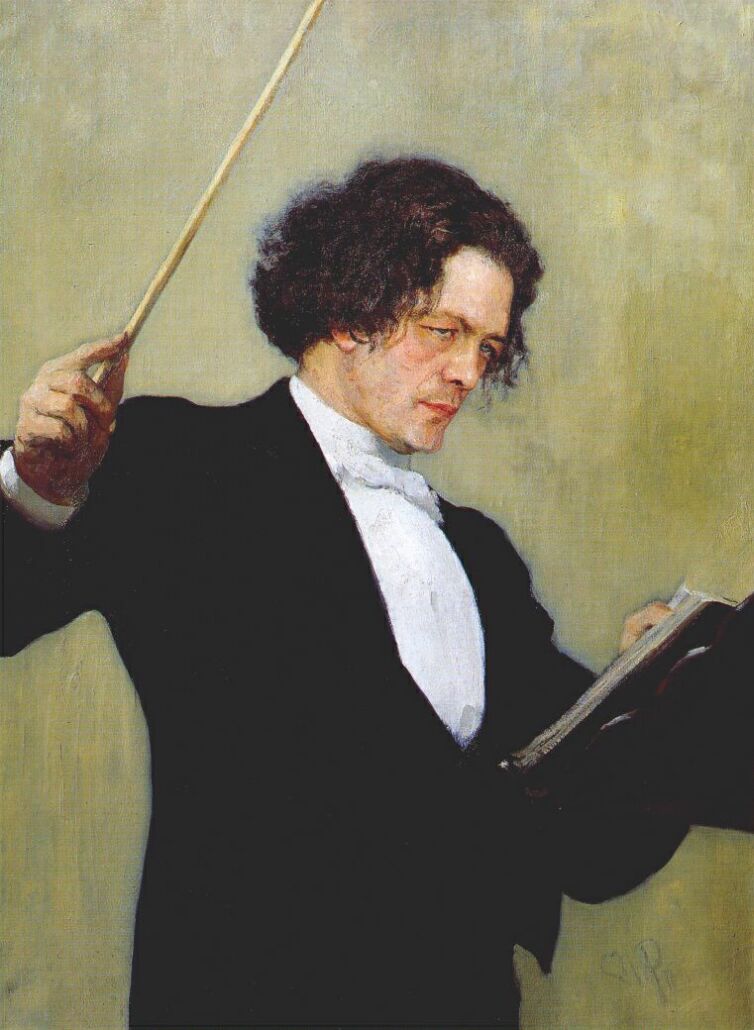
Anton Grigoryevich Rubinstein (Russian: Антон Григорьевич Рубинштейн, romanized: Anton Grigoryevich Rubinshteyn; 28 November [O.S. 16 November] 1829 – 20 November [O.S. 8 November] 1894) was a Russian pianist, composer and conductor who founded the Saint Petersburg Conservatory. He was the elder brother of Nikolai Rubinstein, who founded the Moscow Conservatory.
As a pianist, Rubinstein ranks among the great 19th-century keyboard virtuosos. He became most famous for his series of historical recitals, seven enormous, consecutive concerts covering the history of piano music. Rubinstein played this series throughout Russia and Eastern Europe and in the United States when he toured there.
Although best remembered as a pianist and educator (most notably as the composition teacher of Tchaikovsky), Rubinstein was also a prolific composer; he wrote 20 operas, the best known of which is The Demon. He composed many other works, including five piano concertos, six symphonies and many solo piano works along with a substantial output of works for chamber ensemble.
In 1865 Rubinstein married Vera de Tschikouanov, a maid of honor at the Russian court, who bore him three children.
Rubinstein was born to Jewish parents in the village of Vikhvatinets in the Podolia Governorate, Russian Empire (now known as Ofatinți in Transnistria, Republic of Moldova), on the Dniestr River, about 150 kilometres (93 mi) northwest of Odessa. His sister Sofia was a chamber singer and teacher. Before he was 5 years old, his paternal grandfather ordered all members of the Rubinstein family to convert from Judaism to Russian Orthodoxy. Although he was raised as a Christian, Rubinstein would later become an atheist.
Russians call me German, Germans call me Russian, Jews call me a Christian, Christians a Jew. Pianists call me a composer, composers call me a pianist. The classicists think me a futurist, and the futurists call me a reactionary. My conclusion is that I am neither fish nor fowl—a pitiful individual.
Rubinstein's father opened a pencil factory in Moscow. His mother, a competent musician, began giving him piano lessons at five, until the teacher Alexander Villoing heard and accepted Rubinstein as a non-paying student. Rubinstein made his first public appearance at a charity benefit concert at the age of nine. Later that year Rubinstein's mother sent him, accompanied by Villoing, to Paris where he sought unsuccessfully to enroll at the Paris Conservatoire.[citation needed]
Rubinstein and Villoing remained in Paris for a year. In December 1840, Rubinstein played in the Salle Érard for an audience that included Frédéric Chopin and Franz Liszt. Chopin invited Rubinstein to his studio and played for him. Liszt advised Villoing to take him to Germany to study composition; however, Villoing took Rubinstein on an extended concert tour of Europe and Western Russia. They finally returned to Moscow in June 1843. Determined to raise money to further the musical careers of both Anton and his younger brother Nikolai, their mother sent Rubinstein and Villoing on a tour of Russia, following which the brothers were dispatched to Saint Petersburg to play for Tsar Nicholas I and the Imperial family at the Winter Palace. Anton was 14 years old; Nikolai was eight.
Hub AI
Anton Rubinstein AI simulator
(@Anton Rubinstein_simulator)
Anton Rubinstein
Anton Grigoryevich Rubinstein (Russian: Антон Григорьевич Рубинштейн, romanized: Anton Grigoryevich Rubinshteyn; 28 November [O.S. 16 November] 1829 – 20 November [O.S. 8 November] 1894) was a Russian pianist, composer and conductor who founded the Saint Petersburg Conservatory. He was the elder brother of Nikolai Rubinstein, who founded the Moscow Conservatory.
As a pianist, Rubinstein ranks among the great 19th-century keyboard virtuosos. He became most famous for his series of historical recitals, seven enormous, consecutive concerts covering the history of piano music. Rubinstein played this series throughout Russia and Eastern Europe and in the United States when he toured there.
Although best remembered as a pianist and educator (most notably as the composition teacher of Tchaikovsky), Rubinstein was also a prolific composer; he wrote 20 operas, the best known of which is The Demon. He composed many other works, including five piano concertos, six symphonies and many solo piano works along with a substantial output of works for chamber ensemble.
In 1865 Rubinstein married Vera de Tschikouanov, a maid of honor at the Russian court, who bore him three children.
Rubinstein was born to Jewish parents in the village of Vikhvatinets in the Podolia Governorate, Russian Empire (now known as Ofatinți in Transnistria, Republic of Moldova), on the Dniestr River, about 150 kilometres (93 mi) northwest of Odessa. His sister Sofia was a chamber singer and teacher. Before he was 5 years old, his paternal grandfather ordered all members of the Rubinstein family to convert from Judaism to Russian Orthodoxy. Although he was raised as a Christian, Rubinstein would later become an atheist.
Russians call me German, Germans call me Russian, Jews call me a Christian, Christians a Jew. Pianists call me a composer, composers call me a pianist. The classicists think me a futurist, and the futurists call me a reactionary. My conclusion is that I am neither fish nor fowl—a pitiful individual.
Rubinstein's father opened a pencil factory in Moscow. His mother, a competent musician, began giving him piano lessons at five, until the teacher Alexander Villoing heard and accepted Rubinstein as a non-paying student. Rubinstein made his first public appearance at a charity benefit concert at the age of nine. Later that year Rubinstein's mother sent him, accompanied by Villoing, to Paris where he sought unsuccessfully to enroll at the Paris Conservatoire.[citation needed]
Rubinstein and Villoing remained in Paris for a year. In December 1840, Rubinstein played in the Salle Érard for an audience that included Frédéric Chopin and Franz Liszt. Chopin invited Rubinstein to his studio and played for him. Liszt advised Villoing to take him to Germany to study composition; however, Villoing took Rubinstein on an extended concert tour of Europe and Western Russia. They finally returned to Moscow in June 1843. Determined to raise money to further the musical careers of both Anton and his younger brother Nikolai, their mother sent Rubinstein and Villoing on a tour of Russia, following which the brothers were dispatched to Saint Petersburg to play for Tsar Nicholas I and the Imperial family at the Winter Palace. Anton was 14 years old; Nikolai was eight.
Recent media