



Community hub
Recent from talks
Knowledge base stats:
Talk channels stats:
Members stats:
Appalachian elktoe
The Appalachian elktoe (Alasmidonta raveneliana) is a species of freshwater mussel in the family Unionidae, the river mussels. It is native to the United States, where it is known only from North Carolina and Tennessee.
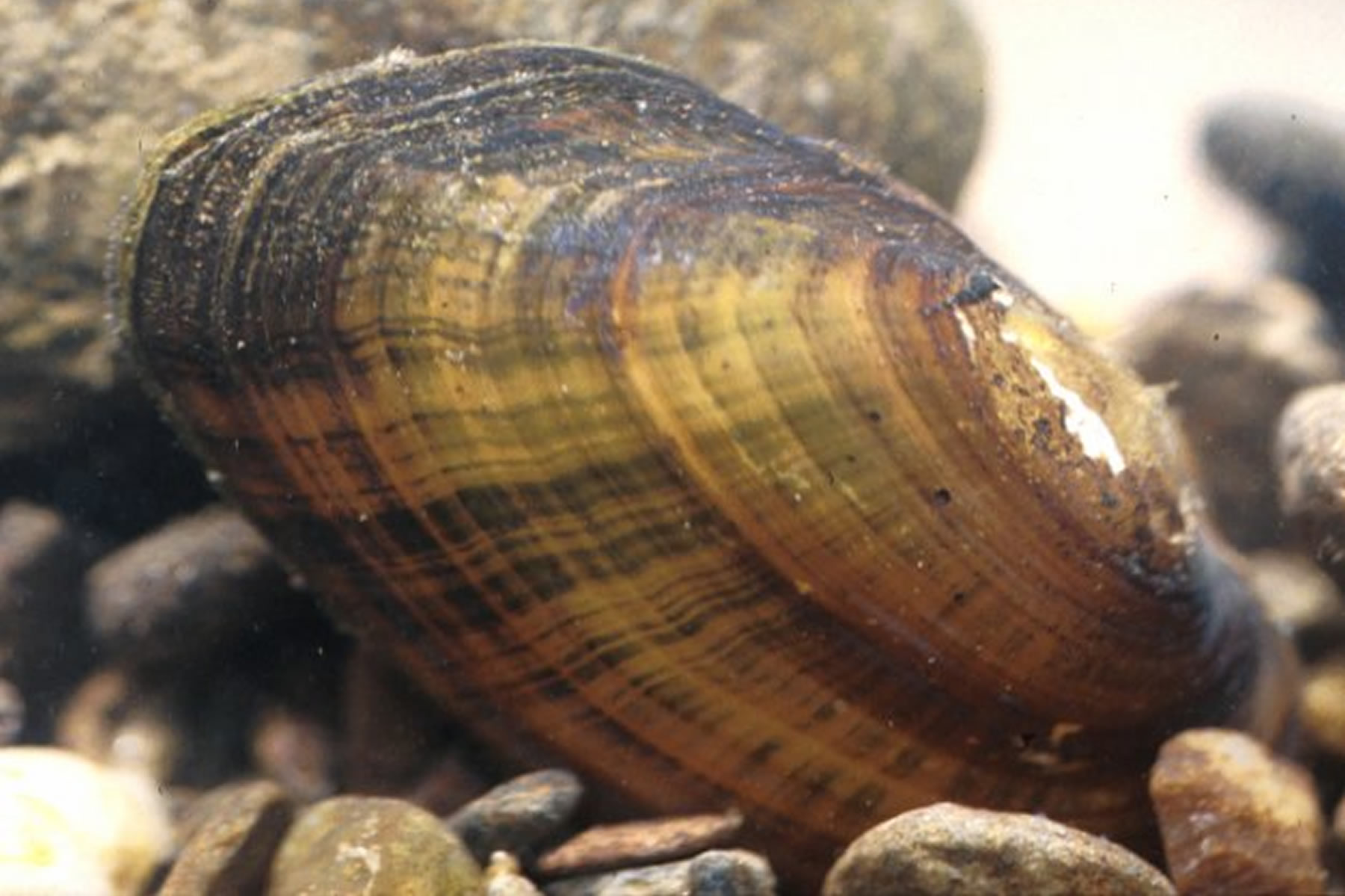
The Appalachian elktoe has a "thin, kidney-shaped shell, reaching up to about 10 centimeters (4 inches)."[citation needed]
Younger mussels normally have a yellowish-brown periostracum (outer shell layer), while more mature mussels generally have a dark brown to greenish-brown periostracum.
Features on the outer shell of the mussel, whether juvenile or adult, are often fine or hard to distinguish. In some cases streaks or waves are apparent, which are most easily noticeable on the dorsal region of the outer shell. Most individuals however have green waves, which are a similar hue as the rest of the shell and are often minute.
Inside the shell, the nacre has a sheen which is white, blue, and silver. The center of the inner shell changes from a light, almost translucent shine, to a more pink or tan color. Some species have irregular spots or blotches in the center of the nacre that are much darker than the rest of the lining of the shell.
Despite the rarity of the species, and the lack of information about the Appalachian elktoe, their habitat is very easily described because of the similarity to that of other species of freshwater mussels.
Alasmidonta raveneliana is found mostly in shallow to medium-sized creeks or rivers. They prefer cooler temperature water with fast-flowing to moderately-flowing currents. They are found near sections of the water where there is more rock or gravel at the bottom, as opposed to water that flows over areas with clay or silt on the bottom. (Appalachian elktoe mussels do not survive well in areas of streams where there are clay or silt particles moving in the water current.)
The species has been found in areas with varying sizes of rock such as sand, gravel, and boulders, and ideally prefers an area that has a combination of all three.
Hub AI
Appalachian elktoe AI simulator
(@Appalachian elktoe_simulator)
Appalachian elktoe
The Appalachian elktoe (Alasmidonta raveneliana) is a species of freshwater mussel in the family Unionidae, the river mussels. It is native to the United States, where it is known only from North Carolina and Tennessee.
The Appalachian elktoe has a "thin, kidney-shaped shell, reaching up to about 10 centimeters (4 inches)."[citation needed]
Younger mussels normally have a yellowish-brown periostracum (outer shell layer), while more mature mussels generally have a dark brown to greenish-brown periostracum.
Features on the outer shell of the mussel, whether juvenile or adult, are often fine or hard to distinguish. In some cases streaks or waves are apparent, which are most easily noticeable on the dorsal region of the outer shell. Most individuals however have green waves, which are a similar hue as the rest of the shell and are often minute.
Inside the shell, the nacre has a sheen which is white, blue, and silver. The center of the inner shell changes from a light, almost translucent shine, to a more pink or tan color. Some species have irregular spots or blotches in the center of the nacre that are much darker than the rest of the lining of the shell.
Despite the rarity of the species, and the lack of information about the Appalachian elktoe, their habitat is very easily described because of the similarity to that of other species of freshwater mussels.
Alasmidonta raveneliana is found mostly in shallow to medium-sized creeks or rivers. They prefer cooler temperature water with fast-flowing to moderately-flowing currents. They are found near sections of the water where there is more rock or gravel at the bottom, as opposed to water that flows over areas with clay or silt on the bottom. (Appalachian elktoe mussels do not survive well in areas of streams where there are clay or silt particles moving in the water current.)
The species has been found in areas with varying sizes of rock such as sand, gravel, and boulders, and ideally prefers an area that has a combination of all three.