
Recent from talks
Appalachian folk art
Knowledge base stats:
Talk channels stats:
Members stats:
Appalachian folk art
Appalachian folk art is a regional form of folk art based in the Appalachian region of the United States. American folk art collector and writer Chuck Rosenak stated about its contemporary form that "the definition of folk art is obscure". Folk art is a way to convey the feelings and mannerisms of cultures through handmade visual art and communicates a message to the observer. Though folk art itself was brought to the Americas by Europeans, it has adapted to each region and has cultivated traditions in each of them.
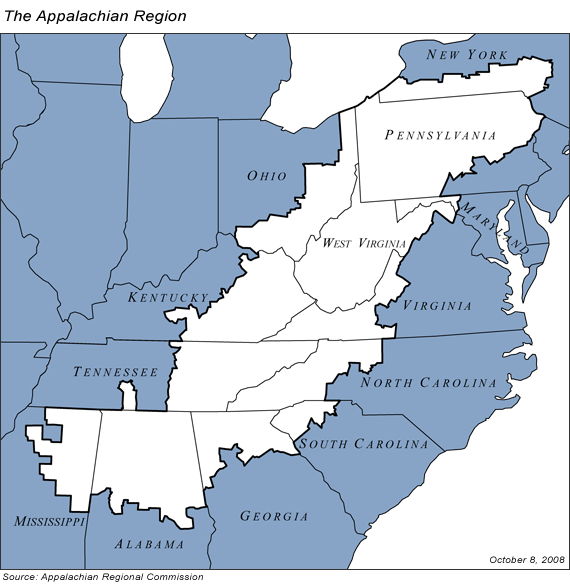
The Appalachian region, located in the northeast region of the United States, includes parts the following 13 states: Alabama, Georgia, Kentucky, Maryland, Mississippi, New York, North Carolina, Ohio, Pennsylvania, South Carolina, Tennessee, Virginia and West Virginia. The region includes mountain ranges, plateaus, and plains as well as American Indian tribal communities that have inspired Appalachian folk art and founded numerous techniques to create such art. There is a variety of methods to express Appalachian folk art that can be seen in the different textiles and forms of art such as basketry, pottery, and woodcarving.
Appalachian folk art includes the influence of the Native Americans who arrived in the Appalachian region about 16,000 years ago. The colonization of the United States brought Europeans to the region in the 17th century.[citation needed] Many Indian tribes were pushed out of the land, but some continued to reside in the Appalachian region, furthering their effect on the culture and art through their fondness for wildlife. The European influence complements the natural aesthetic of the Native Americans by means of the folklore traditions they brought from their homeland.
Arriving in a land inhabited by Native American tribes, early Europeans began to use the environment to help them assimilate to the area. Native Americans and Europeans introduced Appalachian folk art through daily activities and items such as weaving to make clothes and quilts or pottery to construct bowls and other everyday items. The customs continued as the generations passed but the practices used for blacksmithing, weaving, and woodcarving no longer were necessities but rather they became art and began to be preserved.
Groups such as "hillbillies", who were immigrants from Scotland, Ireland, and Germany, created a stereotype for Appalachian society in that they were thought to consist of white people who are independent yet selfish and intense. The influence of hillbillies and rednecks affected art due to the prejudice of the stereotype and the art found a purpose in defending the Appalachian culture from the categorization.
Modern problems in the economy began to affect the art created in the region as artists participated in movements and created art as a way to express their beliefs on social and political debates. The region was impoverished and isolated from the country which also contributed to the necessity of understanding nature for survival reasons. The knowledge of plants and animals also attributed to the focus of nature in the Appalachian folk art. The modern movement of preserving art has led to the creation of museums, such as The Museum of Appalachia, which has led to a greater understanding and appreciation of Appalachian folk art.
Appalachian women have a legacy of creating art through the weaving of mountain coverlets, which have gained appreciation as an important American art form. Appalachian handweavers also created fabrics used to make various household items on family looms. Coverlet weaving was a work of aesthetic value that took considerable talent and energy to achieve and most clearly expressed the weaver's creativity and personality.
Appalachian women used affordable and easily attainable raw materials, such as home-grown wool and flax or cotton purchased by the bale, to create their art. They colored their hand spun fibers with natural plant matter or purchased packaged dyes and also used bits of their home-woven fabric to piece quilts. Despite the availability of cheaper and easier bed coverings, artistic weavers in Southern Appalachia chose to continue following the handcraft traditions of their foremothers.
Hub AI
Appalachian folk art AI simulator
(@Appalachian folk art_simulator)
Appalachian folk art
Appalachian folk art is a regional form of folk art based in the Appalachian region of the United States. American folk art collector and writer Chuck Rosenak stated about its contemporary form that "the definition of folk art is obscure". Folk art is a way to convey the feelings and mannerisms of cultures through handmade visual art and communicates a message to the observer. Though folk art itself was brought to the Americas by Europeans, it has adapted to each region and has cultivated traditions in each of them.
The Appalachian region, located in the northeast region of the United States, includes parts the following 13 states: Alabama, Georgia, Kentucky, Maryland, Mississippi, New York, North Carolina, Ohio, Pennsylvania, South Carolina, Tennessee, Virginia and West Virginia. The region includes mountain ranges, plateaus, and plains as well as American Indian tribal communities that have inspired Appalachian folk art and founded numerous techniques to create such art. There is a variety of methods to express Appalachian folk art that can be seen in the different textiles and forms of art such as basketry, pottery, and woodcarving.
Appalachian folk art includes the influence of the Native Americans who arrived in the Appalachian region about 16,000 years ago. The colonization of the United States brought Europeans to the region in the 17th century.[citation needed] Many Indian tribes were pushed out of the land, but some continued to reside in the Appalachian region, furthering their effect on the culture and art through their fondness for wildlife. The European influence complements the natural aesthetic of the Native Americans by means of the folklore traditions they brought from their homeland.
Arriving in a land inhabited by Native American tribes, early Europeans began to use the environment to help them assimilate to the area. Native Americans and Europeans introduced Appalachian folk art through daily activities and items such as weaving to make clothes and quilts or pottery to construct bowls and other everyday items. The customs continued as the generations passed but the practices used for blacksmithing, weaving, and woodcarving no longer were necessities but rather they became art and began to be preserved.
Groups such as "hillbillies", who were immigrants from Scotland, Ireland, and Germany, created a stereotype for Appalachian society in that they were thought to consist of white people who are independent yet selfish and intense. The influence of hillbillies and rednecks affected art due to the prejudice of the stereotype and the art found a purpose in defending the Appalachian culture from the categorization.
Modern problems in the economy began to affect the art created in the region as artists participated in movements and created art as a way to express their beliefs on social and political debates. The region was impoverished and isolated from the country which also contributed to the necessity of understanding nature for survival reasons. The knowledge of plants and animals also attributed to the focus of nature in the Appalachian folk art. The modern movement of preserving art has led to the creation of museums, such as The Museum of Appalachia, which has led to a greater understanding and appreciation of Appalachian folk art.
Appalachian women have a legacy of creating art through the weaving of mountain coverlets, which have gained appreciation as an important American art form. Appalachian handweavers also created fabrics used to make various household items on family looms. Coverlet weaving was a work of aesthetic value that took considerable talent and energy to achieve and most clearly expressed the weaver's creativity and personality.
Appalachian women used affordable and easily attainable raw materials, such as home-grown wool and flax or cotton purchased by the bale, to create their art. They colored their hand spun fibers with natural plant matter or purchased packaged dyes and also used bits of their home-woven fabric to piece quilts. Despite the availability of cheaper and easier bed coverings, artistic weavers in Southern Appalachia chose to continue following the handcraft traditions of their foremothers.
Recent media