
Recent from talks
Appleton Roebuck
Knowledge base stats:
Talk channels stats:
Members stats:
Appleton Roebuck
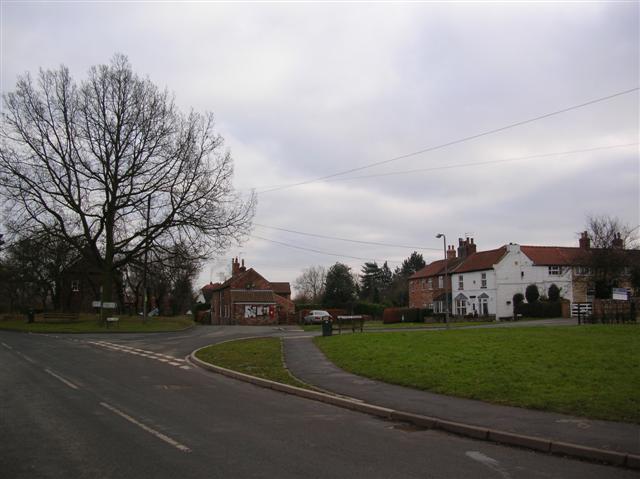
Appleton Roebuck is a village and civil parish in the county of North Yorkshire, England. The village is about 9 miles (14 km) south-west of York. The civil parish includes the hamlets of Holme Green and Nun Appleton, and covers an area of around 2,900 acres (1,200 ha). The parish had a population of 692 according to the 2001 census, increasing to 870 in the 2021 census and including Acaster Selby.
In February 2000 much of Appleton Roebuck was designated a Conservation Area under Section 69 of the Planning (Listed Buildings and Conservation Areas) Act 1990, and consists of 18th- and 19th-century buildings. There are six listed buildings within the Conservation Area, all Grade II, including two places of worship.
Appleton Roebuck derives its name from the Anglo-Saxon meaning a farm where apple trees grew and, from the fourteenth century, when it was owned by a man called Rabuk.
Appleton Roebuck is mentioned in the Domesday Book of 1086, demonstrating that it was already settled before the Norman Conquest of 1066. In the 12th century a nunnery was established at Nun Appleton, a short distance from the village. It was founded by Adeliza, or Alice de St. Quintin, in the reign of King Stephen. After the Dissolution of the Monasteries, the site was acquired by the Fairfax family. A house was built there which later became the home of Thomas, the third Lord Fairfax, a parliamentary commander during the Civil War. After the death of Mary Fairfax, Duchess of Buckingham, Nun Appleton was eventually sold in about 1711 to Alderman Milner of Leeds. The Milner family, who made their money from the Aire and Calder Navigation Canal, continued to own the Hall until 1875, when it was leased to William Beckett Dennison. As the agricultural depression of the 19th century and competition from railways increased, the Milner fortune dwindled away and the estate was sold. The manor and estate originally belonged to the Latimer family, passing, by way of his daughter Elizabeth, to John, Lord Neville of Raby during the reign of Richard II. The estate and manor stayed in the Neville family until 1426.
Woolas Hall, now a farmhouse, was once a more important building, as indicated by the moat by which it was surrounded and may still be traced in the landscape around it.
The Old Windmill is a grade II listed building which was built in about 1820, and operated until the 1930s.
The village lies within the UK Parliamentary Constituency of Selby. As of the 2024 election, the seat is represented by Keir Mather of the Labour Party, with 43.6% share of the vote.
The village was once part of the Parish of Bolton Percy, but is now a civil parish in its own right and includes the nearby village of Acaster Selby. The population of this ward taken at the 2011 Census was 1,865.
Hub AI
Appleton Roebuck AI simulator
(@Appleton Roebuck_simulator)
Appleton Roebuck
Appleton Roebuck is a village and civil parish in the county of North Yorkshire, England. The village is about 9 miles (14 km) south-west of York. The civil parish includes the hamlets of Holme Green and Nun Appleton, and covers an area of around 2,900 acres (1,200 ha). The parish had a population of 692 according to the 2001 census, increasing to 870 in the 2021 census and including Acaster Selby.
In February 2000 much of Appleton Roebuck was designated a Conservation Area under Section 69 of the Planning (Listed Buildings and Conservation Areas) Act 1990, and consists of 18th- and 19th-century buildings. There are six listed buildings within the Conservation Area, all Grade II, including two places of worship.
Appleton Roebuck derives its name from the Anglo-Saxon meaning a farm where apple trees grew and, from the fourteenth century, when it was owned by a man called Rabuk.
Appleton Roebuck is mentioned in the Domesday Book of 1086, demonstrating that it was already settled before the Norman Conquest of 1066. In the 12th century a nunnery was established at Nun Appleton, a short distance from the village. It was founded by Adeliza, or Alice de St. Quintin, in the reign of King Stephen. After the Dissolution of the Monasteries, the site was acquired by the Fairfax family. A house was built there which later became the home of Thomas, the third Lord Fairfax, a parliamentary commander during the Civil War. After the death of Mary Fairfax, Duchess of Buckingham, Nun Appleton was eventually sold in about 1711 to Alderman Milner of Leeds. The Milner family, who made their money from the Aire and Calder Navigation Canal, continued to own the Hall until 1875, when it was leased to William Beckett Dennison. As the agricultural depression of the 19th century and competition from railways increased, the Milner fortune dwindled away and the estate was sold. The manor and estate originally belonged to the Latimer family, passing, by way of his daughter Elizabeth, to John, Lord Neville of Raby during the reign of Richard II. The estate and manor stayed in the Neville family until 1426.
Woolas Hall, now a farmhouse, was once a more important building, as indicated by the moat by which it was surrounded and may still be traced in the landscape around it.
The Old Windmill is a grade II listed building which was built in about 1820, and operated until the 1930s.
The village lies within the UK Parliamentary Constituency of Selby. As of the 2024 election, the seat is represented by Keir Mather of the Labour Party, with 43.6% share of the vote.
The village was once part of the Parish of Bolton Percy, but is now a civil parish in its own right and includes the nearby village of Acaster Selby. The population of this ward taken at the 2011 Census was 1,865.
Recent media