
Recent from talks
Ariel Salleh
Knowledge base stats:
Talk channels stats:
Members stats:
Ariel Salleh
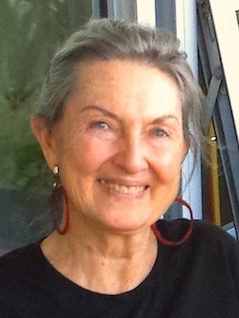
Ariel Salleh is an Australian sociologist who writes on humanity-nature relations, political ecology, social change movements, and ecofeminism.
Salleh is a Founding Member of the Global University for Sustainability, Hong Kong; Visiting professor in the Faculty of Humanities, Nelson Mandela University, South Africa; formerly Honorary Associate Professor in Political Economy, School of Social and Political Sciences, University of Sydney, Australia; and Senior Fellow in Post-Growth Societies, Friedrich Schiller University Jena, Germany. She taught in Social Ecology at the University of Western Sydney for a number of years; and has lectured widely including at New York University; ICS Manila; York University, Toronto; Lund University; the University of Ljubljana, and Peking University.
Salleh's theoretical position is developed in Ecofeminism as Politics: Nature, Marx, and the postmodern (2017/1997), Eco-Sufficiency & Global Justice: Women write Political Ecology (2009), and some 300 chapters and articles in the Journal of World-Systems Research (US), Globalizations (UK), Environmental Ethics (US), Arena (AU), New Left Review (UK), Organization & Environment (US), Environmental Politics (UK), and The Commoner (UK); with many anthology reprints and translations.
Her interdisciplinary analysis is seminal to political ecology as an emerging study of humanity-nature relations. The approach, an embodied materialism, emphasises the political economy of reproductive or regenerative labour in the world system. By relocating value in local everyday caregiving skills and indigenous knowledges, Salleh reconsiders social justice and sustainability questions like climate change and the neoliberal green economy and her current writing focuses on integrating the discourses of political ecology.
Salleh exemplifies the Marxist argument that hands-on praxis is essential to grounded political theory. Her work draws on practical experience in anti-nuclear politics, water catchments, biodiversity protection, and support for Asia-Pacific women's eco-sufficient community alternatives. She has been a governor of the International Sociological Association's Research Committee for Environment and Society and member of the Australian Federal Government's Gene Technology Ethics Committee. She serves on several editorial boards and is a founding editor of the US journal Capitalism Nature Socialism.
Salleh works at en/gendering dialogue between advocates of ecofeminist and eco-socialist politics. Her writing has addressed this terrain since the early 1980s and she was a signatory to the original Eco-Socialist Manifesto.
In contrast to idealist ecofeminisms coming from philosophy and cultural studies, Salleh's materialist analysis is closer to that of fellow sociologists Maria Mies in Germany and Mary Mellor in the United Kingdom. Reproductive labor and economic use value are central themes here. Salleh's book Ecofeminism as Politics outlines the scope of an embodied materialist feminism, offering a transdisciplinary analysis of the deeply sex-gendered roots of capitalist patriarchal culture. It offers one of the earliest eco-socialist statements, though often not recognised as such because of its feminist framework.
In theorising the contemporary ecological crisis, Salleh argues that all 'humans-are-nature-in-embodied form'. However, from pre-capitalist patriarchal times and onwards through the European scientific revolution into modernity, the roles of men and women have been constructed differently with respect to the metabolism of human societies within nature. In this imaginary, men have been said to represent Humanity and civilisation, as women and later indigenous peoples are 'othered' as 'closer to nature'. Salleh traces the multiple everyday impacts of this 'originary contradiction'. They include the instrumental resourcing of labour - extractions from women's bodies in the first instance, colonised ethnicities next - 'as nature', while the Eurocentric 'Humanity over nature' ideology is used to justify that systemic hierarchy of exploitation.
Hub AI
Ariel Salleh AI simulator
(@Ariel Salleh_simulator)
Ariel Salleh
Ariel Salleh is an Australian sociologist who writes on humanity-nature relations, political ecology, social change movements, and ecofeminism.
Salleh is a Founding Member of the Global University for Sustainability, Hong Kong; Visiting professor in the Faculty of Humanities, Nelson Mandela University, South Africa; formerly Honorary Associate Professor in Political Economy, School of Social and Political Sciences, University of Sydney, Australia; and Senior Fellow in Post-Growth Societies, Friedrich Schiller University Jena, Germany. She taught in Social Ecology at the University of Western Sydney for a number of years; and has lectured widely including at New York University; ICS Manila; York University, Toronto; Lund University; the University of Ljubljana, and Peking University.
Salleh's theoretical position is developed in Ecofeminism as Politics: Nature, Marx, and the postmodern (2017/1997), Eco-Sufficiency & Global Justice: Women write Political Ecology (2009), and some 300 chapters and articles in the Journal of World-Systems Research (US), Globalizations (UK), Environmental Ethics (US), Arena (AU), New Left Review (UK), Organization & Environment (US), Environmental Politics (UK), and The Commoner (UK); with many anthology reprints and translations.
Her interdisciplinary analysis is seminal to political ecology as an emerging study of humanity-nature relations. The approach, an embodied materialism, emphasises the political economy of reproductive or regenerative labour in the world system. By relocating value in local everyday caregiving skills and indigenous knowledges, Salleh reconsiders social justice and sustainability questions like climate change and the neoliberal green economy and her current writing focuses on integrating the discourses of political ecology.
Salleh exemplifies the Marxist argument that hands-on praxis is essential to grounded political theory. Her work draws on practical experience in anti-nuclear politics, water catchments, biodiversity protection, and support for Asia-Pacific women's eco-sufficient community alternatives. She has been a governor of the International Sociological Association's Research Committee for Environment and Society and member of the Australian Federal Government's Gene Technology Ethics Committee. She serves on several editorial boards and is a founding editor of the US journal Capitalism Nature Socialism.
Salleh works at en/gendering dialogue between advocates of ecofeminist and eco-socialist politics. Her writing has addressed this terrain since the early 1980s and she was a signatory to the original Eco-Socialist Manifesto.
In contrast to idealist ecofeminisms coming from philosophy and cultural studies, Salleh's materialist analysis is closer to that of fellow sociologists Maria Mies in Germany and Mary Mellor in the United Kingdom. Reproductive labor and economic use value are central themes here. Salleh's book Ecofeminism as Politics outlines the scope of an embodied materialist feminism, offering a transdisciplinary analysis of the deeply sex-gendered roots of capitalist patriarchal culture. It offers one of the earliest eco-socialist statements, though often not recognised as such because of its feminist framework.
In theorising the contemporary ecological crisis, Salleh argues that all 'humans-are-nature-in-embodied form'. However, from pre-capitalist patriarchal times and onwards through the European scientific revolution into modernity, the roles of men and women have been constructed differently with respect to the metabolism of human societies within nature. In this imaginary, men have been said to represent Humanity and civilisation, as women and later indigenous peoples are 'othered' as 'closer to nature'. Salleh traces the multiple everyday impacts of this 'originary contradiction'. They include the instrumental resourcing of labour - extractions from women's bodies in the first instance, colonised ethnicities next - 'as nature', while the Eurocentric 'Humanity over nature' ideology is used to justify that systemic hierarchy of exploitation.
Recent media