


Community hub
Recent from talks
Contribute something
Nothing was collected or created yet.
Arthur Guest
View on Wikipedia
Arthur Edward Guest (7 November 1841 – 17 July 1898),[1] was a British Conservative politician.
Key Information


Background
[edit]Guest was the fifth son of Sir Josiah Guest, 1st Baronet, and Lady Charlotte Elizabeth, daughter of Albemarle Bertie, 9th Earl of Lindsey. Ivor Guest, 1st Baron Wimborne, and Montague Guest were his elder brothers.
Political career
[edit]Guest entered Parliament for Poole in 1868, a seat he held until 1874. He unsuccessfully contested Cardiff in 1880 and Southampton on 23 May 1888.[2]
Family
[edit]Guest married Adeline Mary Chapman, daughter of David Barclay Chapman, in 1867. Their daughter Mildred Mansel (1868–1942) went on to marry Colonel John Delalynde Mansel and was a suffragette.[3]
Guest died in July 1898, aged 56. Adeline Mary married as her second husband Cecil Maurice Chapman in 1899. She died in January 1931.
References
[edit]- ^ The London Gazette. Tho. Newcomb over against Baynards Castle in Thamse-street. 1898. p. 8372.
- ^ Who's Who of British Members of Parliament.
- ^ "Chapman [née Chapman; former married name Guest], Adeline Mary (1847–1931), campaigner for women's suffrage". Oxford Dictionary of National Biography. doi:10.1093/odnb/9780198614128.001.0001/odnb-9780198614128-e-369183. Retrieved 11 January 2025.
External links
[edit]Arthur Guest
View on GrokipediaEarly Life
Birth and Family Background
Arthur Edward Guest was born on 7 November 1841 in Dowlais, Glamorgan, Wales, United Kingdom. [5] [6] He was the son of Sir Josiah John Guest, 1st Baronet, a prominent ironmaster of the Dowlais Ironworks, and Charlotte Elizabeth Bertie. [6] No verified details about his siblings or extended ancestral connections appear in available primary or reputable sources beyond basic family records.Childhood and Upbringing
Little is known about Arthur Guest's childhood and upbringing, with available sources providing no specific details on his education, early residences beyond his birthplace, or formative experiences during his youth. Following his christening in Dowlais, Glamorgan, Wales, in December 1841, he grew up in the context of his family's iron industry prominence, though no accounts describe particular aspects of his developmental years in the mid-19th century. [5] His father's death in 1852, when Arthur was eleven, likely influenced the household, but no further information on how this or other events shaped his upbringing survives in documented records. [5]Adult Life
Personal Life and Residences
Arthur Edward Guest married Adeline Mary Chapman on 23 April 1867.[7] The couple had two children together.[7] Their daughter Mildred Ella Guest was born on 6 July 1868, and their son Arthur Rhuven Guest was born on 16 December 1869 in Roehampton, Greater London.[5] [8] In adulthood, Guest resided primarily at Canford Manor House in Canford Magna, Great Canford, Dorset, England, the estate that had been the family home since his father's acquisition of it.[6] [9] This Dorset residence remained his principal home. He died in London on 17 July 1898.[6] The London area connection, evidenced by his son's birth in Roehampton, suggests a possible secondary residence in the capital during parts of his adult life, consistent with the demands on a parliamentarian of the era.[8]Professional Activities
Arthur Guest's professional activities during his adult life remain largely undocumented beyond his political career, with no primary sources identifying a specific non-political occupation or sustained career path.Later Years and Death
No reliable information is available on Arthur Guest's later years, activities after leaving Parliament, or date and place of death. Available records are limited primarily to his parliamentary service from 1868 to 1874.Legacy and Historical Record
Contemporary Documentation
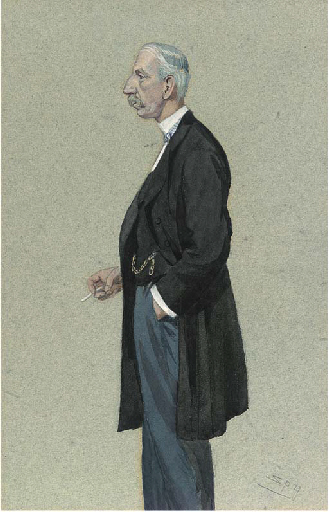
Contemporary documentation for Arthur Guest is primarily limited to parliamentary records, including his service as Member of Parliament for Poole from 1868 to 1874 and contributions recorded in Hansard. [1] He lived from 1841 to 1898. [1] As a one-term MP, he did not generate extensive public records beyond official parliamentary proceedings, such as detailed newspaper coverage or directories common for more prominent figures. His caricature in Vanity Fair (as noted in the article introduction) reflects some recognition in political and social circles during his later years.Modern Recognition
Arthur Guest has limited modern recognition, primarily through historical parliamentary archives and biographical mentions in connection with his political service. No significant presence exists in contemporary entertainment, media, or popular databases unrelated to his parliamentary career. His legacy remains tied to his brief tenure in the House of Commons during a period of Victorian political reform.References
- https://commons.wikimedia.org/wiki/File:Arthur_Edward_Guest_Vanity_Fair_27_August_1896.jpg