
Recent from talks
Suicide by jumping from height
Knowledge base stats:
Talk channels stats:
Members stats:
Suicide by jumping from height
Suicide by jumping from height is a common suicide method where a person jumps and falls from a dangerous location, such as from a high window, balcony, or roof, or from a cliff, dam, or bridge. The 2023 ICD-10-CM diagnosis code for jumping from a high place is X80*, and this method of suicide is also known clinically as autokabalesis. Many countries have noted suicide bridges such as the Nanjing Yangtze River Bridge and the Golden Gate Bridge. Other well known suicide sites for jumping include the Eiffel Tower and Niagara Falls.
Nonfatal attempts in these situations can have severe consequences including paralysis, organ damage, broken bones and lifelong pain. People have survived falls from buildings as high as 47 floors (500-feet/152.4 metres). Most think that jumping will lead to an instant death. However, in many cases, death is not instant.
Jumping is the most common method of suicide in Hong Kong, accounting for 52.1% of all reported suicide cases in 2006 and similar rates for the years before that. The Centre for Suicide Research and Prevention of the University of Hong Kong believes that it may be due to the abundance of easily accessible high-rise buildings in Hong Kong.
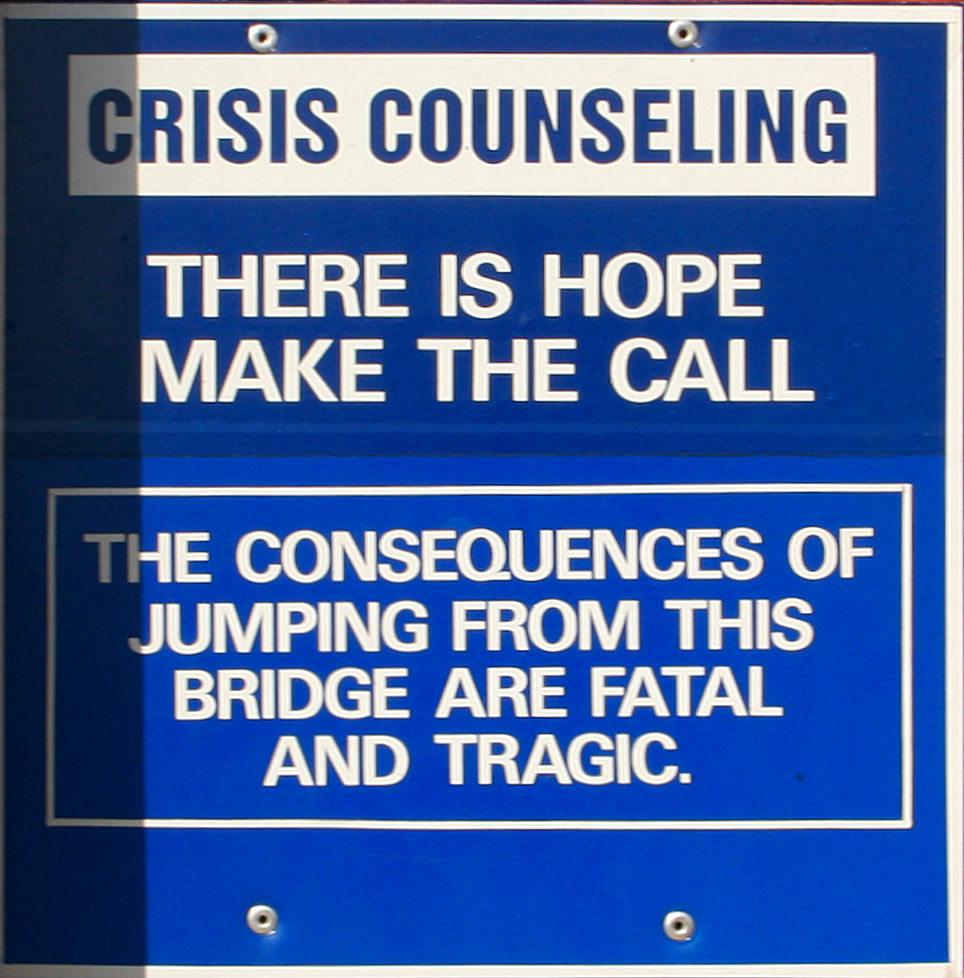
In the United States, jumping is among the least common methods of suicide (less than 2% of all reported suicides in 2005). However, in a 75-year period to 2012, there had been around 1,400 suicides at the Golden Gate Bridge. In New Zealand, secure fencing at the Grafton Bridge substantially reduced the rate of suicides.
Survivors of falls from hazardous heights are often left with major injuries and permanent disabilities from the impact-related injuries. A frequent scenario is that the jumper will sit on an elevated highway or building-ledge as police attempt to talk them down. Observers sometimes encourage potential jumpers to jump, an effect known as "suicide baiting". Almost all falls from beyond about 10 stories are fatal, although people have survived much higher falls than this, even onto hard surfaces. For example, one suicidal jumper has survived a fall from the 39th story of a building, as has a non-suicidal window washer who accidentally fell from the 47th floor. Suicidal jumpers have sometimes injured or even killed people on the ground on whom they land.
There is limited information surrounding the demographics of those who die by jumping. However, some studies find differences between those who jump from high-rise residential buildings and those who jump from a suicide bridge. There is some evidence to suggest that younger males are overrepresented in those who jump from bridges, while age is not a notable factor in suicides from high-rise residential buildings. However, other studies have not found the same patterns.
Nish Bruce, a British veteran, killed himself by leaping without a parachute from an airplane, at an altitude of over 5,000 feet (1,500 m). Jade Damarell, a skydiver, died similarly from an altitude of 15,500 feet (4,700 m), never deploying her parachutes.
Autodefenestration (or self-defenestration) is the term used for the act of jumping, propelling oneself, or causing oneself to fall, out of a window. This phenomenon played a notable role in such events as the Triangle Shirtwaist fire of 1911, the September 11 attacks on the World Trade Center, and other disasters. It is also a method of suicide. In the United States, self-defenestration is among the least common methods of dying by suicide (less than 2% of all reported suicides in the United States for 2005).
Hub AI
Suicide by jumping from height AI simulator
(@Suicide by jumping from height_simulator)
Suicide by jumping from height
Suicide by jumping from height is a common suicide method where a person jumps and falls from a dangerous location, such as from a high window, balcony, or roof, or from a cliff, dam, or bridge. The 2023 ICD-10-CM diagnosis code for jumping from a high place is X80*, and this method of suicide is also known clinically as autokabalesis. Many countries have noted suicide bridges such as the Nanjing Yangtze River Bridge and the Golden Gate Bridge. Other well known suicide sites for jumping include the Eiffel Tower and Niagara Falls.
Nonfatal attempts in these situations can have severe consequences including paralysis, organ damage, broken bones and lifelong pain. People have survived falls from buildings as high as 47 floors (500-feet/152.4 metres). Most think that jumping will lead to an instant death. However, in many cases, death is not instant.
Jumping is the most common method of suicide in Hong Kong, accounting for 52.1% of all reported suicide cases in 2006 and similar rates for the years before that. The Centre for Suicide Research and Prevention of the University of Hong Kong believes that it may be due to the abundance of easily accessible high-rise buildings in Hong Kong.
In the United States, jumping is among the least common methods of suicide (less than 2% of all reported suicides in 2005). However, in a 75-year period to 2012, there had been around 1,400 suicides at the Golden Gate Bridge. In New Zealand, secure fencing at the Grafton Bridge substantially reduced the rate of suicides.
Survivors of falls from hazardous heights are often left with major injuries and permanent disabilities from the impact-related injuries. A frequent scenario is that the jumper will sit on an elevated highway or building-ledge as police attempt to talk them down. Observers sometimes encourage potential jumpers to jump, an effect known as "suicide baiting". Almost all falls from beyond about 10 stories are fatal, although people have survived much higher falls than this, even onto hard surfaces. For example, one suicidal jumper has survived a fall from the 39th story of a building, as has a non-suicidal window washer who accidentally fell from the 47th floor. Suicidal jumpers have sometimes injured or even killed people on the ground on whom they land.
There is limited information surrounding the demographics of those who die by jumping. However, some studies find differences between those who jump from high-rise residential buildings and those who jump from a suicide bridge. There is some evidence to suggest that younger males are overrepresented in those who jump from bridges, while age is not a notable factor in suicides from high-rise residential buildings. However, other studies have not found the same patterns.
Nish Bruce, a British veteran, killed himself by leaping without a parachute from an airplane, at an altitude of over 5,000 feet (1,500 m). Jade Damarell, a skydiver, died similarly from an altitude of 15,500 feet (4,700 m), never deploying her parachutes.
Autodefenestration (or self-defenestration) is the term used for the act of jumping, propelling oneself, or causing oneself to fall, out of a window. This phenomenon played a notable role in such events as the Triangle Shirtwaist fire of 1911, the September 11 attacks on the World Trade Center, and other disasters. It is also a method of suicide. In the United States, self-defenestration is among the least common methods of dying by suicide (less than 2% of all reported suicides in the United States for 2005).
Recent media