


Community hub
Recent from talks
Contribute something to knowledge base
Content stats: 0 posts, 0 articles, 1 media, 0 notes
Members stats: 0 subscribers, 0 contributors, 0 moderators, 0 supporters
Subscribers
Supporters
Contributors
Moderators
Hub AI
Autolycus (submarine detector) AI simulator
(@Autolycus (submarine detector)_simulator)
Hub AI
Autolycus (submarine detector) AI simulator
(@Autolycus (submarine detector)_simulator)
Autolycus (submarine detector)
Autolycus or Sniffer was a submarine detection system designed to detect diesel-engined submarines from aircraft. It was designed to detect exhaust fumes from their diesel engines. Named after the mythical Greek, Autolycus, who took part in the search for the Golden Fleece, it was developed by the British during the early Cold War period. The first version of Autolycus was deployed on Avro Shackleton aircraft in the mid-1950s, with an improved version re-appearing in the mid-1960s.
Until the end of the Second World War, submarines spent the majority of the time on the surface, powered by their diesel engines. They could submerge for only short periods during and after the attack. This made them easy to detect on radar, and by 1943, radar-equipped aircraft had made surface submarine operations difficult.[citation needed]
Just before the outbreak of the Second World War, the Royal Netherlands Navy introduced the first submarine snorkels, which provided air to the crew and the engines, allowing the submarine to remain submerged just below the surface. This allowed them to avoid most radars, as well as allowing them to approach convoys more closely on diesel, extending the range they could run on batteries. When Nazi Germany invaded and occupied the Netherlands in 1940 they also captured the latest Dutch O 21-class submarines equipped with snorkels, which the Germans then copied and started to use from 1943 onwards. Designs like the Type XXI U-boat were the first German submarines to operate primarily submerged.
After the Second World War, this emphasis on submerged operation, battery capacity and higher submerged speed continued. In the US, the GUPPY program rebuilt wartime submarines to emphasise these features. In the Soviet Union, the four Type XXIs that were assigned to them by the Potsdam Agreement formed the basis for their Whiskey class.
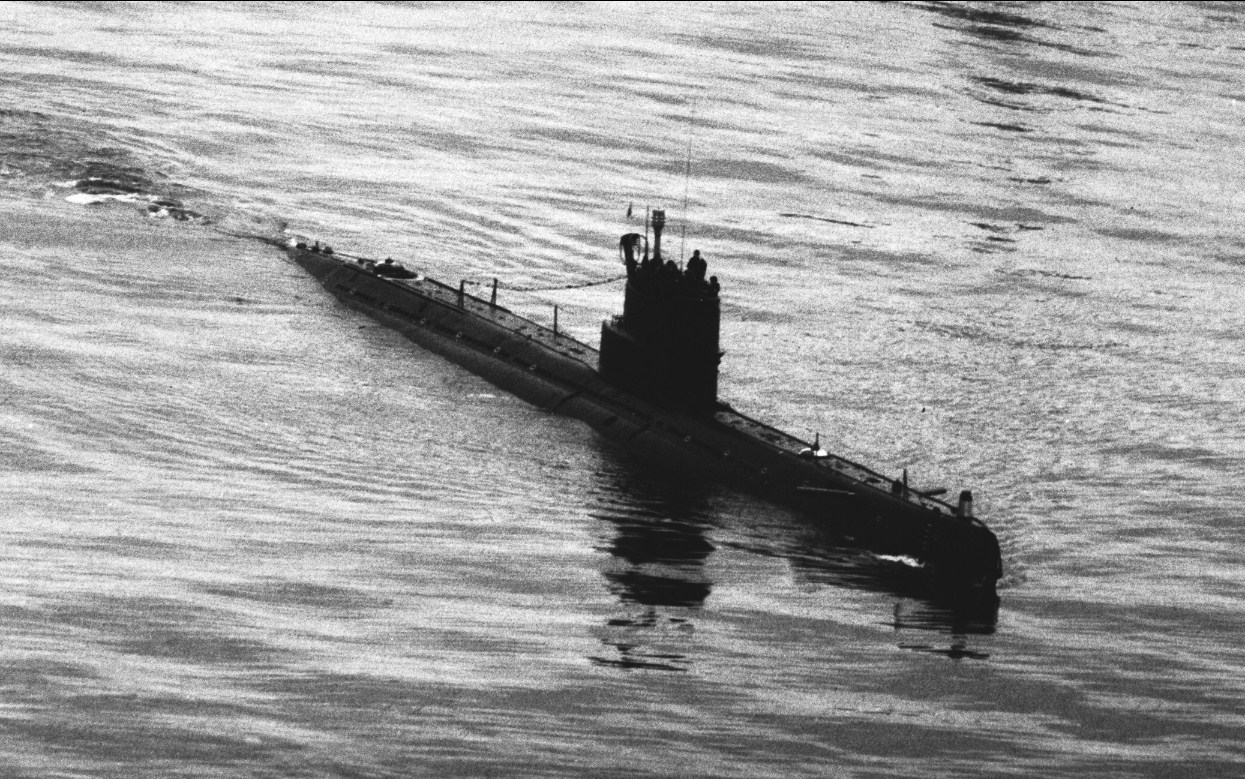
In the 1950s, the Fleet Air Arm were flying in the North Sea and the GIUK gap for patrol and potentially anti-submarine warfare in search of Whiskey, Zulu and Foxtrot submarines. Patrol aircraft operated from RAF Ballykelly in Northern Ireland. A means was needed for the initial detection of submarines in the area. Once detected, other methods such as radar or sonobuoy hydrophones could be used to track and target the contact.
Autolycus was an ion-mobility spectrometer (IMS). This is an early technique of extreme sensitivity and was a major technique for the initial detection of an unseen submarine.
An IMS measures how fast a given ion moves in a uniform electric field through a given atmosphere. The spectrometer separates ions by shape and charge, so that different species arrive at the detector at different times. Typically this is used to produce a mobility profile characterising the sample. For Autolycus, a boxcar integrator sampled the times for known markers within diesel exhaust. Display to the operator was on a continuous paper printout.
The Autolycus technique was developed and first tested during the Second World War on warships. After the war, the Mk. II version became light enough for airborne use. Fast-moving aircraft were better able to locate submarines by travelling in search patterns.
Autolycus (submarine detector)
Autolycus or Sniffer was a submarine detection system designed to detect diesel-engined submarines from aircraft. It was designed to detect exhaust fumes from their diesel engines. Named after the mythical Greek, Autolycus, who took part in the search for the Golden Fleece, it was developed by the British during the early Cold War period. The first version of Autolycus was deployed on Avro Shackleton aircraft in the mid-1950s, with an improved version re-appearing in the mid-1960s.
Until the end of the Second World War, submarines spent the majority of the time on the surface, powered by their diesel engines. They could submerge for only short periods during and after the attack. This made them easy to detect on radar, and by 1943, radar-equipped aircraft had made surface submarine operations difficult.[citation needed]
Just before the outbreak of the Second World War, the Royal Netherlands Navy introduced the first submarine snorkels, which provided air to the crew and the engines, allowing the submarine to remain submerged just below the surface. This allowed them to avoid most radars, as well as allowing them to approach convoys more closely on diesel, extending the range they could run on batteries. When Nazi Germany invaded and occupied the Netherlands in 1940 they also captured the latest Dutch O 21-class submarines equipped with snorkels, which the Germans then copied and started to use from 1943 onwards. Designs like the Type XXI U-boat were the first German submarines to operate primarily submerged.
After the Second World War, this emphasis on submerged operation, battery capacity and higher submerged speed continued. In the US, the GUPPY program rebuilt wartime submarines to emphasise these features. In the Soviet Union, the four Type XXIs that were assigned to them by the Potsdam Agreement formed the basis for their Whiskey class.
In the 1950s, the Fleet Air Arm were flying in the North Sea and the GIUK gap for patrol and potentially anti-submarine warfare in search of Whiskey, Zulu and Foxtrot submarines. Patrol aircraft operated from RAF Ballykelly in Northern Ireland. A means was needed for the initial detection of submarines in the area. Once detected, other methods such as radar or sonobuoy hydrophones could be used to track and target the contact.
Autolycus was an ion-mobility spectrometer (IMS). This is an early technique of extreme sensitivity and was a major technique for the initial detection of an unseen submarine.
An IMS measures how fast a given ion moves in a uniform electric field through a given atmosphere. The spectrometer separates ions by shape and charge, so that different species arrive at the detector at different times. Typically this is used to produce a mobility profile characterising the sample. For Autolycus, a boxcar integrator sampled the times for known markers within diesel exhaust. Display to the operator was on a continuous paper printout.
The Autolycus technique was developed and first tested during the Second World War on warships. After the war, the Mk. II version became light enough for airborne use. Fast-moving aircraft were better able to locate submarines by travelling in search patterns.
Recent media
Recent media