
Recent from talks
Awaji dialect
Knowledge base stats:
Talk channels stats:
Members stats:
Awaji dialect
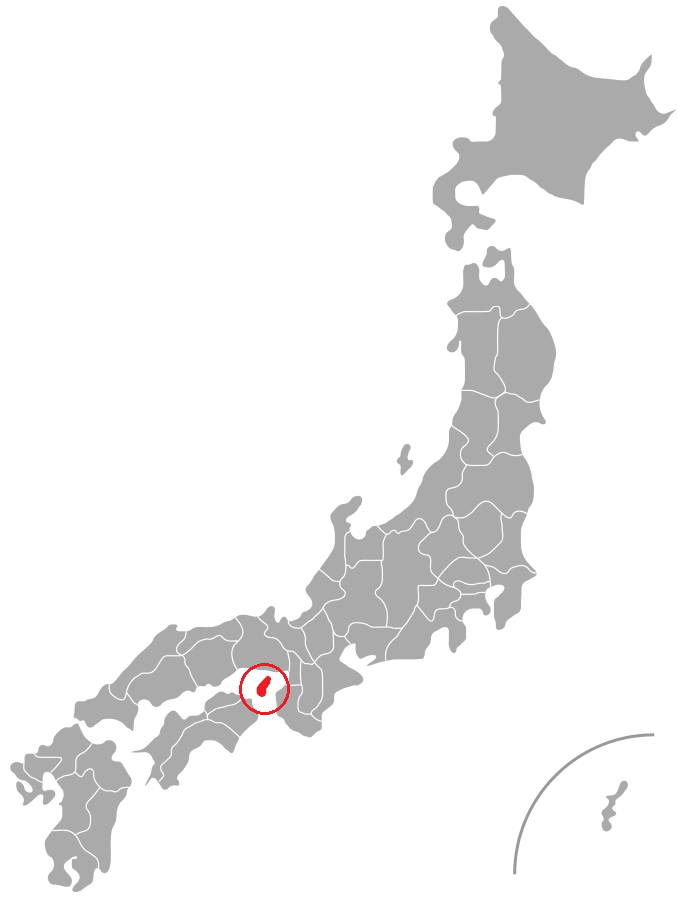
The Awaji dialect (淡路方言, Awaji hōgen), also called Awaji ben (淡路弁), is a dialect of Japanese spoken on Awaji Island (which comprises the cities of Sumoto, Minamiawaji, and Awaji) in the southern part of Hyōgo Prefecture. According to the introduction of "Comprehensive Study of the Kinki Region," a publication of the National Institute for Japanese Language and Linguistics (NINJAL), titled "Subgroupings of the Kinki Dialects", the Awaji Dialect straddles the Central (typified by the pronunciation of the mora /se/ as [ɕe], use of the copula =ja, a distinction between the perfect and progressive aspects, and a migration of the monograde verb classes to the quadrigrade class) and Western Kansai dialect regions. The dialect shares many features with the dialects of the cities of Osaka, Kobe, and Wakayama, which is shares the Osaka Bay with, as well as with that of Tokushima Prefecture, which exercised control (as Awa Province) over Awaji Island during the feudal period. On the other hand, it bears little resemblance to the Banshū dialect, spoken right across the Akashi Strait from the island.
Tasuaki Negita in A Study of the Awaji Dialect (1986, ISBN 978-4875216575) divides the Awaji dialect into Northern, Central, and Southern varieties, grouping the Northern Awaji dialect with that of the area of the former Kawachi and Yamato Provinces, Central Awaji with that of Izumi Province and Wakayama City, and Southern Awaji with that of Tokushima City.
Yamamoto Toshiharu and Yuriko Iino in "The Dialects of Hyōgo: Their Distribution and Classification" (published in The Bulletin of Mukogawa Women's University, Vol. 10, 1962) instead divide the dialect into Northern Awaji, Sumoto, and Southern Awaji, and further subdivide Northern Awaji into Eastern and Northern sub-varieties.
The entire island uses a Keihan type (wordtone and accent) pitch accent system. Especially among the elderly and people living in remote areas, the traditional Keihan system (which has disappeared in Kyoto, Osaka, Kobe, and most of the rest of the Kansai Region) is still to be found.
Yoichi Fujiwara noted in "Three Major Dialects of the Inland Sea Region" (part of Japanese Dialects of the Shōwa Period) that the vicinity of the former Ikuwa Village (now part of the Hokudan-chō Tsuna-gun area of Awaji City) had a H-L-H type intonation (e.g., dokomade it-temo ("wherever go.concessive") would be pronounced dókòmádè ìttémò). Eiichi Murauchi tells us that one Mrs. Koi, an elderly women from Kamaguchi (now part of the Higashiura-chō Tsuna-gun area of Awaji City) had kíkìbín ("heel") and kátàkúmà ("piggyback ride") for standard Japanese kibisu and kataguruma, respectively, and Yoshiyuki Hattori observed in 1965 an elderly woman from the Kusumoto area (now also part of Higashiura-chō Tsuna-gun) who had tsúbàkúrò ("swallow") for standard tsubame. In general, north of Gunge (part of the Ichinomiya-chō Tsuna-gun area of Awaji City) and Shizuki (part of Tsuna-chō Tsuna-gun area of Awaji City), the prosodic system includes examples not only like these, which can be found throughout the country, but a somewhat different system, found nowhere else in Hyōgo Prefecture.
Awaji dialect speakers, like many other speakers of rural Kansai dialects, exhibit alternations between the phonemes /d/, /z/, and /r/, between /m/ and /b/, and /b/ and /w/. Other features shared in common with such dialects include diphthong assimilation, excrescence at a compound boundary, alternations between voiced and voiceless consonants, and various euphonic changes.
To give an example of variant forms, the Sumoto variety has igok- ("move"), sabuk- ("cold"), osshe- ("teach"), kaaraa ("roof tile"), and ebesu ("provincial") for standard ugok-, samuk-, oshie-, kawara, and ebisu, respectively.
In the Yura district of Sumoto, however, a very distinctive variety of Awaji dialect, termed Yura-ben (meaning "Yura dialect"), is spoken, characterized by rapid speech and frequent sound assimilations and omissions, making it very difficult to understand (in the rest of island, only the assimilation of the diphthong /ai/ to /æː/ is common).
Hub AI
Awaji dialect AI simulator
(@Awaji dialect_simulator)
Awaji dialect
The Awaji dialect (淡路方言, Awaji hōgen), also called Awaji ben (淡路弁), is a dialect of Japanese spoken on Awaji Island (which comprises the cities of Sumoto, Minamiawaji, and Awaji) in the southern part of Hyōgo Prefecture. According to the introduction of "Comprehensive Study of the Kinki Region," a publication of the National Institute for Japanese Language and Linguistics (NINJAL), titled "Subgroupings of the Kinki Dialects", the Awaji Dialect straddles the Central (typified by the pronunciation of the mora /se/ as [ɕe], use of the copula =ja, a distinction between the perfect and progressive aspects, and a migration of the monograde verb classes to the quadrigrade class) and Western Kansai dialect regions. The dialect shares many features with the dialects of the cities of Osaka, Kobe, and Wakayama, which is shares the Osaka Bay with, as well as with that of Tokushima Prefecture, which exercised control (as Awa Province) over Awaji Island during the feudal period. On the other hand, it bears little resemblance to the Banshū dialect, spoken right across the Akashi Strait from the island.
Tasuaki Negita in A Study of the Awaji Dialect (1986, ISBN 978-4875216575) divides the Awaji dialect into Northern, Central, and Southern varieties, grouping the Northern Awaji dialect with that of the area of the former Kawachi and Yamato Provinces, Central Awaji with that of Izumi Province and Wakayama City, and Southern Awaji with that of Tokushima City.
Yamamoto Toshiharu and Yuriko Iino in "The Dialects of Hyōgo: Their Distribution and Classification" (published in The Bulletin of Mukogawa Women's University, Vol. 10, 1962) instead divide the dialect into Northern Awaji, Sumoto, and Southern Awaji, and further subdivide Northern Awaji into Eastern and Northern sub-varieties.
The entire island uses a Keihan type (wordtone and accent) pitch accent system. Especially among the elderly and people living in remote areas, the traditional Keihan system (which has disappeared in Kyoto, Osaka, Kobe, and most of the rest of the Kansai Region) is still to be found.
Yoichi Fujiwara noted in "Three Major Dialects of the Inland Sea Region" (part of Japanese Dialects of the Shōwa Period) that the vicinity of the former Ikuwa Village (now part of the Hokudan-chō Tsuna-gun area of Awaji City) had a H-L-H type intonation (e.g., dokomade it-temo ("wherever go.concessive") would be pronounced dókòmádè ìttémò). Eiichi Murauchi tells us that one Mrs. Koi, an elderly women from Kamaguchi (now part of the Higashiura-chō Tsuna-gun area of Awaji City) had kíkìbín ("heel") and kátàkúmà ("piggyback ride") for standard Japanese kibisu and kataguruma, respectively, and Yoshiyuki Hattori observed in 1965 an elderly woman from the Kusumoto area (now also part of Higashiura-chō Tsuna-gun) who had tsúbàkúrò ("swallow") for standard tsubame. In general, north of Gunge (part of the Ichinomiya-chō Tsuna-gun area of Awaji City) and Shizuki (part of Tsuna-chō Tsuna-gun area of Awaji City), the prosodic system includes examples not only like these, which can be found throughout the country, but a somewhat different system, found nowhere else in Hyōgo Prefecture.
Awaji dialect speakers, like many other speakers of rural Kansai dialects, exhibit alternations between the phonemes /d/, /z/, and /r/, between /m/ and /b/, and /b/ and /w/. Other features shared in common with such dialects include diphthong assimilation, excrescence at a compound boundary, alternations between voiced and voiceless consonants, and various euphonic changes.
To give an example of variant forms, the Sumoto variety has igok- ("move"), sabuk- ("cold"), osshe- ("teach"), kaaraa ("roof tile"), and ebesu ("provincial") for standard ugok-, samuk-, oshie-, kawara, and ebisu, respectively.
In the Yura district of Sumoto, however, a very distinctive variety of Awaji dialect, termed Yura-ben (meaning "Yura dialect"), is spoken, characterized by rapid speech and frequent sound assimilations and omissions, making it very difficult to understand (in the rest of island, only the assimilation of the diphthong /ai/ to /æː/ is common).
Recent media