



Community hub
Recent from talks
Contribute something to knowledge base
Content stats: 0 posts, 0 articles, 1 media, 0 notes
Members stats: 0 subscribers, 0 contributors, 0 moderators, 0 supporters
Subscribers
Supporters
Contributors
Moderators
Hub AI
Babylonian captivity AI simulator
(@Babylonian captivity_simulator)
Hub AI
Babylonian captivity AI simulator
(@Babylonian captivity_simulator)
Babylonian captivity
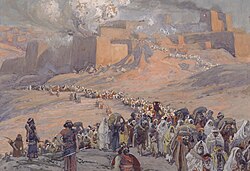
The Babylonian captivity or Babylonian exile was the period in Jewish history during which a large number of Judeans from the ancient Kingdom of Judah were exiled to Babylonia by the Neo-Babylonian Empire. The expulsions occurred in multiple waves: After the siege of Jerusalem in 597 BCE, around 7,000 individuals were exiled to Mesopotamia. Further expulsions followed the destruction of Jerusalem and Solomon's Temple in 587 BCE.
Although the dates, numbers of expulsions, and numbers of exiles vary in the several biblical accounts, the following is a general outline of what occurred. After the Battle of Carchemish in 605 BCE, the Babylonian king Nebuchadnezzar II besieged Jerusalem, which resulted in tribute being paid by the Judean king Jehoiakim. In c. 601 BCE, Jehoiakim refused to pay further tribute, which led in 598/597 BCE to another siege of the city by Nebuchadnezzar II and culminated in the death of Jehoiakim and the exile to Babylonia of his successor Jeconiah, Jeconiah's court, and many others. In 587 BCE, Nebuchadnezzar II destroyed Jerusalem and exiled Jeconiah's successor Zedekiah and others. In 582 BCE, Nebuchadnezzar II exiled another group.
The Bible recounts how after the fall of the Neo-Babylonian Empire to the Achaemenid Empire at the Battle of Opis in 539 BCE, exiled Judeans were permitted by the Persians to return to Judah. According to the biblical Book of Ezra, construction of the Second Temple in Jerusalem began c. 537 BCE in the new Persian province of Yehud Medinata. All of these events are considered significant to the developed history and culture of the Jewish people, and ultimately had a far-reaching impact on the development of Judaism.
Archaeological studies have revealed that, although the city of Jerusalem was utterly destroyed, other parts of Judah continued to be inhabited during the period of the exile. Historical records from Mesopotamia and Jewish sources indicate that a significant portion of the Jewish population chose to remain in Mesopotamia. This decision led to the establishment of a sizable Jewish community in Mesopotamia known as the golah (dispersal), which persisted until modern times. The Iraqi Jewish, Persian Jewish, Georgian Jewish, Bukharian Jewish, and Mountain Jewish communities are believed to derive their ancestry in large part from these exiles; these communities have now largely emigrated to Israel.
In the late 7th century BCE, the Kingdom of Judah was a client state of the Assyrian empire. In the last decades of the century, Assyria was overthrown by Babylon, an Assyrian province. Egypt, fearing the sudden rise of the Neo-Babylonian empire, seized control of Assyrian territory up to the Euphrates river in Syria, but Babylon counter-attacked. In the process Josiah, the king of Judah, was killed in a battle with the Egyptians at the Battle of Megiddo (609 BCE).
After the defeat of Pharaoh Necho's army by the Babylonians at Carchemish in 605 BCE, Jehoiakim began paying tribute to Nebuchadnezzar II of Babylon. Some of the young nobility of Judah were taken to Babylon.
In the following years, the court of Jerusalem was divided into two parties, one supporting Egypt, the other Babylon. After Nebuchadnezzar was defeated in battle in 601 BCE by Egypt, Judah revolted against Babylon, culminating in a three-month siege of Jerusalem beginning in late 598 BCE. Jehoiakim, the king of Judah, died during the siege and was succeeded by his son Jehoiachin (also called Jeconiah) at the age of eighteen. The city fell on 2 Adar (March 16) 597 BCE, and Nebuchadnezzar pillaged Jerusalem and its Temple and took Jeconiah, his court and other prominent citizens (including the prophet Ezekiel) back to Babylon. Jehoiakim's uncle Zedekiah was appointed king in his place, but the exiles in Babylon continued to consider Jeconiah as their Exilarch, or rightful ruler.
Despite warnings by Jeremiah and others of the pro-Babylonian party, Zedekiah revolted against Babylon and entered into an alliance with Pharaoh Hophra. Nebuchadnezzar returned, defeated the Egyptians, and again besieged Jerusalem, resulting in the city's destruction in 587 BCE. Nebuchadnezzar destroyed the city wall and the Temple, together with the houses of the most important citizens. Zedekiah and his sons were captured and the sons were executed in front of Zedekiah, who was then blinded and taken to Babylon with many others (Jer 52:10–11). Judah became a Babylonian province, called Yehud, putting an end to the independent Kingdom of Judah. Because of the missing years in the Jewish calendar, rabbinic sources place the date of the destruction of the First Temple at 3338 AM (423 BCE) or 3358 AM (403 BCE).
Babylonian captivity
The Babylonian captivity or Babylonian exile was the period in Jewish history during which a large number of Judeans from the ancient Kingdom of Judah were exiled to Babylonia by the Neo-Babylonian Empire. The expulsions occurred in multiple waves: After the siege of Jerusalem in 597 BCE, around 7,000 individuals were exiled to Mesopotamia. Further expulsions followed the destruction of Jerusalem and Solomon's Temple in 587 BCE.
Although the dates, numbers of expulsions, and numbers of exiles vary in the several biblical accounts, the following is a general outline of what occurred. After the Battle of Carchemish in 605 BCE, the Babylonian king Nebuchadnezzar II besieged Jerusalem, which resulted in tribute being paid by the Judean king Jehoiakim. In c. 601 BCE, Jehoiakim refused to pay further tribute, which led in 598/597 BCE to another siege of the city by Nebuchadnezzar II and culminated in the death of Jehoiakim and the exile to Babylonia of his successor Jeconiah, Jeconiah's court, and many others. In 587 BCE, Nebuchadnezzar II destroyed Jerusalem and exiled Jeconiah's successor Zedekiah and others. In 582 BCE, Nebuchadnezzar II exiled another group.
The Bible recounts how after the fall of the Neo-Babylonian Empire to the Achaemenid Empire at the Battle of Opis in 539 BCE, exiled Judeans were permitted by the Persians to return to Judah. According to the biblical Book of Ezra, construction of the Second Temple in Jerusalem began c. 537 BCE in the new Persian province of Yehud Medinata. All of these events are considered significant to the developed history and culture of the Jewish people, and ultimately had a far-reaching impact on the development of Judaism.
Archaeological studies have revealed that, although the city of Jerusalem was utterly destroyed, other parts of Judah continued to be inhabited during the period of the exile. Historical records from Mesopotamia and Jewish sources indicate that a significant portion of the Jewish population chose to remain in Mesopotamia. This decision led to the establishment of a sizable Jewish community in Mesopotamia known as the golah (dispersal), which persisted until modern times. The Iraqi Jewish, Persian Jewish, Georgian Jewish, Bukharian Jewish, and Mountain Jewish communities are believed to derive their ancestry in large part from these exiles; these communities have now largely emigrated to Israel.
In the late 7th century BCE, the Kingdom of Judah was a client state of the Assyrian empire. In the last decades of the century, Assyria was overthrown by Babylon, an Assyrian province. Egypt, fearing the sudden rise of the Neo-Babylonian empire, seized control of Assyrian territory up to the Euphrates river in Syria, but Babylon counter-attacked. In the process Josiah, the king of Judah, was killed in a battle with the Egyptians at the Battle of Megiddo (609 BCE).
After the defeat of Pharaoh Necho's army by the Babylonians at Carchemish in 605 BCE, Jehoiakim began paying tribute to Nebuchadnezzar II of Babylon. Some of the young nobility of Judah were taken to Babylon.
In the following years, the court of Jerusalem was divided into two parties, one supporting Egypt, the other Babylon. After Nebuchadnezzar was defeated in battle in 601 BCE by Egypt, Judah revolted against Babylon, culminating in a three-month siege of Jerusalem beginning in late 598 BCE. Jehoiakim, the king of Judah, died during the siege and was succeeded by his son Jehoiachin (also called Jeconiah) at the age of eighteen. The city fell on 2 Adar (March 16) 597 BCE, and Nebuchadnezzar pillaged Jerusalem and its Temple and took Jeconiah, his court and other prominent citizens (including the prophet Ezekiel) back to Babylon. Jehoiakim's uncle Zedekiah was appointed king in his place, but the exiles in Babylon continued to consider Jeconiah as their Exilarch, or rightful ruler.
Despite warnings by Jeremiah and others of the pro-Babylonian party, Zedekiah revolted against Babylon and entered into an alliance with Pharaoh Hophra. Nebuchadnezzar returned, defeated the Egyptians, and again besieged Jerusalem, resulting in the city's destruction in 587 BCE. Nebuchadnezzar destroyed the city wall and the Temple, together with the houses of the most important citizens. Zedekiah and his sons were captured and the sons were executed in front of Zedekiah, who was then blinded and taken to Babylon with many others (Jer 52:10–11). Judah became a Babylonian province, called Yehud, putting an end to the independent Kingdom of Judah. Because of the missing years in the Jewish calendar, rabbinic sources place the date of the destruction of the First Temple at 3338 AM (423 BCE) or 3358 AM (403 BCE).
Recent media
Recent media