Hubbry Logo
BarnehurstBarnehurstMain
Open search
Barnehurst
Community hub
Barnehurst
logo
8 pages, 0 posts
0 subscribers
Be the first to start a discussion here.
Barnehurst
Barnehurst
from Wikipedia

Barnehurst ward (green) within the London Borough of Bexley (yellow)

Key Information

Barnehurst is a town in Greater London within the London Borough of Bexley. It lies north east of Bexleyheath, and 13.0 miles (20 km) east south-east of Charing Cross. It is separated from North Bexleyheath by the A220, Erith Road.

History

[edit]

The town came into being after the sale of land in 1881 to build the Bexleyheath loop line between Lewisham and Dartford.

A path through Bursted Wood in Barnehurst

Barnehurst's name originates from the name of the railway station, which was so-named after Colonel Barne, who owned a local property, May Place House (and was vice-chairman of the railway company).[2]

As in much of suburban London, Barnehurst railway station was opened to encourage building of houses. The Barnehurst Estate was built in 1926 and other building, mainly by W.H. Wedlock followed in the years after. A key landmark, just west of the station, is the Red Barn pub, a venue important to the survival of jazz in Britain immediately following the Second World War, largely due to the enthusiasm of pianist George Webb.

In 1920 the area became part of the Crayford Urban District of Kent. In 1965, under the London Government Act 1963, the urban district was abolished and its area transferred to Greater London to form part of the present-day London Borough of Bexley.[3]

Politics

[edit]

Most of Barnehurst is in the Barnehurst electoral ward of the London Borough of Bexley. Two elected councillors represent the ward on the borough council. The northernmost part of Barnehurst is in Colyers ward and part of one road, Eversley Avenue, lies within North End ward.

Education

[edit]

Sport and leisure

[edit]

Barnehurst has a non-League football club Phoenix Sports F.C., which plays at Phoenix Sports Ground.

Notable people

[edit]

Transport and locale

[edit]

Nearest places

[edit]

Rail

[edit]

Barnehurst station serves the area, with Southeastern services to London Victoria, London Charing Cross, London Cannon Street and Dartford.

Buses

[edit]

Several bus routes serve the area, all provided by Transport for London. These connect Barnehurst with areas including Bexleyheath, Blackheath, Erith, Lewisham, Sidcup, Thamesmead, Welling and Woolwich.

Religious sites

[edit]
  • Saint Martin's, The parish church of Barnehurst[4]
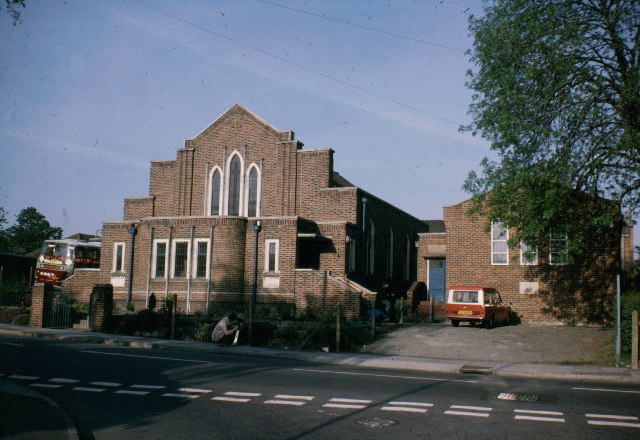
  • Barnehurst Methodist Church
  • Lyndhurst Chapel
  • Selah Independent Baptist Church

References

[edit]
[edit]
Revisions and contributorsEdit on WikipediaRead on Wikipedia
from Grokipedia
Barnehurst is a primarily residential suburb and electoral ward in the London Borough of Bexley, , . The area's name derives from local landowner Frederick Barne and the Saxon term "hurst" for , originating with the construction of Barnehurst railway station in 1895 on his May Place Estate by the Bexley Heath Railway Company. Initially rural farmland and orchards in Crayford parish, it underwent rapid suburban expansion from 1926 onward, spurred by electrification of the Bexleyheath Line, with developers like J. W. Ellingham and W. H. Wedlock Ltd building estates of houses priced between £495 and £850. The ward recorded a population of 11,678 in the 2021 census. Key features include Barnehurst railway station on the Bexleyheath Line between Lewisham and Dartford, providing commuter services to London via Southeastern. Local amenities developed alongside housing, such as the Barnehurst Golf Course established in 1903 and Midfield Parade shops in 1928, with the Red Barn public house opening in 1936. Postwar infill on former farms like Normandy and Venners continued growth, while the area remains characterized by family-oriented housing and green spaces including Bursted Wood.

Geography

Location and Boundaries

Barnehurst occupies a suburban position in the London Borough of Bexley, , situated approximately 13 miles (21 km) east-southeast of . It lies northeast of and northwest of Crayford, forming part of the commuter belt with primarily residential development. The area's boundaries are delineated by key landmarks, including Erith Road (A220) to the southwest, which separates Barnehurst from North , and the Bexleyheath railway line influencing its southern extent. To the north, it approaches areas near , close to the River Thames roughly 2 miles away, while Crayford borders it eastward. This configuration positions Barnehurst as a compact, self-contained within Bexley's northeastern quadrant.

Topography and Environment

Barnehurst occupies gently undulating terrain characteristic of the Bexley borough, with elevations averaging around 29-31 meters above . The area's landscape consists primarily of low-lying plateaus and subtle slopes, reflecting its origins in former agricultural fields that have been overlaid with suburban development while retaining a relatively low building density that preserves semi-rural edges. Key green spaces include Bursted Woods, a compact of approximately 12 hectares featuring outgrown Sweet Chestnut coppice, mature trees, and poplars, alongside ground flora such as elder, , cherry, and wood anemone. Designated as a Grade 2 Site of Importance for , it supports local through scrub and habitats. Adjacent Barnehurst Open Space spans 11 hectares of scrubland, , meadows, and informal recreation areas bordering Barnehurst Golf Course, enhancing ecological connectivity and value within the urban matrix. Environmental conditions in Bexley, applicable to Barnehurst, include monitored air quality at urban background sites, with primary concerns over and particulate matter levels, though outer borough locations generally exhibit lower pollution than . Flood risks are managed borough-wide, with surface water and minor fluvial sources from nearby tributaries like the River Cray posing localized threats, mitigated by that aids drainage and reduces runoff. These features contribute to Bexley's protections on peripheral areas, maintaining landscape buffers that limit and support habitat preservation.

History

Early Ownership and Land Use

The land encompassing modern Barnehurst formed part of historic estates in the Crayford parish, primarily agricultural with manor houses serving as administrative centers for tenant farming. May Place, a key property dating to at least the , was likely built for the Apylton (or Appleton) family, whose member Roger Apylton served as auditor to Kings Henry V and VI. Ownership of May Place passed through various hands, including the Draper family by the early , before the Shovell family acquired it in 1694 from the executors of Cresheld Draper. The estate entered the Barne family's possession in 1745 via the marriage of Miles Barne, son of a London merchant, to Elizabeth Elwick on 11 May in Foots Cray; she was the daughter and of Nathaniel Elwick, former governor of Madras, who retained a life interest. This union transferred control of May Place and surrounding lands to the Barnes, who retained ownership until 1938 but seldom occupied the house, preferring to lease it to tenants including Mary Verney, a Verney family . Throughout the 18th and 19th centuries, the Barnehurst area remained predominantly rural, with land use centered on managed from estates like May Place; records indicate tenant-operated agriculture on the Barne holdings, including arable and pasture fields typical of Kent's manor system, though specific crop yields or details for this locale are sparse in surviving documents. Manor houses such as May Place and nearby Crayford Manor House, built by Thomas Barne (1766-1834) adjacent to the estate, oversaw these operations, reflecting limited pre-industrial diversification beyond subsistence and market-oriented farming. By the late , under figures like Frederick Barne, the estate still emphasized agricultural tenure, with May Place standing vacant from 1898 to 1903 before leasing to Christian Gray, who established Barnehurst Golf Club on part of the grounds.

Railway Development and Suburbanization

The Bexleyheath line, linking Lewisham to Dartford via intermediate stations, emerged from land sales beginning in 1881 and subsequent construction awarded in 1890, with the full route opening to passengers on 1 May 1895. Barnehurst station, integrated into this engineering project to serve the then-rural locale, derived its name from Colonel Barne, a prominent local landowner associated with nearby May Place estate. Initially, the steam-operated service supported minimal activity, as the surrounding farmland deterred large-scale settlement despite the station's provision of basic facilities like sidings and a goods yard. Electrification of the line by the Southern Railway, completed in June 1926 as part of broader North Kent route upgrades, marked a causal turning point by reducing travel times to to under 30 minutes and enabling frequent services. This infrastructure improvement directly catalyzed private land releases for residential development, with builders such as W. H. Wedlock Ltd initiating grid-pattern estates featuring houses priced affordably for clerical and manual workers from London docks, factories, and offices. Early projects included over 500 homes along Barnehurst Road, emphasizing efficient plot layouts and proximity to the station to exploit rail economics rather than relying on speculative amenities. The rail-driven expansion yielded measurable demographic shifts, with Barnehurst's population escalating from near-zero pre-1926 levels to several thousand residents by the mid-1930s, mirroring Bexley borough's overall doubling during the decade amid interwar suburban migration. This growth stemmed from market incentives—lower fares and reliable electric trains attracting self-financed households—rather than governmental subsidies, as evidenced by the predominance of owner-occupied semis over rented accommodations in early sales records. By prioritizing commuter utility, the railway infrastructure economically validated Barnehurst's transition from agrarian holdings to a self-contained , with station passenger volumes surging post-electrification to underpin sustained private investment.

Post-War Expansion and Modern Changes

Following the Second World War, Barnehurst underwent infill development on remaining undeveloped plots, primarily residential in character, as part of broader suburban consolidation in the Bexley area. The Springfield Estate was redeveloped by W.G. Garratt and Sons Ltd., introducing new housing amid post-war reconstruction efforts, while nearby Dorothy Evans Close emerged as another such initiative to address local demand. These changes reflected national priorities for housing expansion without large-scale greenfield incursions, constrained by wartime damage and planning controls. A significant commercial addition came in 1989 with the opening of the Building Society's headquarters complex north of Barnehurst railway station, officiated by Princess Anne on land previously earmarked for limited industrial use. This modern office facility, built at a cost exceeding £10 million, represented one of the area's last major non-residential developments before the society's merger with in 2000, after which the site was repurposed for as Bexley Civic Offices in 2004. Industrial activity in the vicinity remained modest, confined to small units such as those along Days Road, supporting light rather than heavy . In the , changes have been incremental, focusing on institutional adaptations rather than wholesale . Barnehurst Infant and Junior Schools federated in 2013 and converted to academies under The Primary First Trust, enhancing operational autonomy and curriculum delivery while maintaining high performance standards, as evidenced by Ofsted's outstanding rating. Such educational consolidations exemplify minor regenerations amid stable suburban fabric. Housing pressures have intensified since 2020, driven by London's and affordability constraints, yet Bexley has prioritized green space retention, with 78% of residents valuing open areas in surveys informing the 2020-2025 Housing Strategy. The borough's Local Plan, adopted in 2023, resists high-density infill in areas like Barnehurst to safeguard fringes, including Bursted Wood, balancing modest supply increases against environmental and infrastructural limits. This approach underscores causal trade-offs in planning, where unchecked urbanization risks straining transport and ecology without proportional economic gains.

Demographics

According to the 2011 Census, the population of Barnehurst ward stood at 10,418 residents. By the 2021 Census, this figure had increased to 11,678, representing a growth of approximately 12.1% over the decade, or an average annual change of 0.32%. This expansion aligns with broader trends in the London Borough of Bexley, where the overall population rose from 231,997 in 2011 to around 246,500 by 2021, driven primarily by net and natural increase rather than international inflows. Historical data indicate that Barnehurst experienced accelerated population growth during the , particularly after the opening of Barnehurst railway station in 1932, which facilitated suburban development on previously and attracted commuters from . Post-World War II expansion was more gradual, with slower increments tied to controlled builds and steady birth rates offset by aging demographics, as evidenced by Bexley's borough-wide patterns of modest net migration gains. Recent mid-year estimates for Bexley suggest ongoing stability with slight upward pressure, including a 1.71% increase from mid-2023 to mid-2024, implying similar trajectories for wards like Barnehurst through 2025 absent major disruptions. At 5,745 residents per square kilometer in 2021 (over an area of 2.033 km²), Barnehurst's density exceeds the Bexley borough average of approximately 4,033 per km², reflecting its compact residential layout amid suburban green spaces rather than high-rise concentration typical of .
Census YearPopulationAnnual Growth Rate (to next census)
201110,418-
202111,6780.32%

Ethnic and Socioeconomic Composition

In the 2021 United Kingdom census, the ethnic composition of Barnehurst ward remained predominantly at 72% of the population, with White residents overall comprising approximately 78% when including other White categories. Black residents accounted for 9.4%, Asian residents for 7%, mixed or multiple ethnic groups for 3.4%, and other ethnic groups for 1.7%, reflecting modest diversification from earlier censuses driven by broader post-1990s patterns into suburbs, though at lower levels than inner boroughs. Socioeconomically, Barnehurst exhibits indicators of relative affluence, with home ownership rates exceeding the national average and ranking among the higher wards in Bexley, where borough-wide owner-occupation stands at around 70%. Mean household incomes in the area approximate £57,400 annually, above medians, supported by median house prices of £346,500 as of 2020. Deprivation levels are low per the 2019 Index of Multiple Deprivation, with Barnehurst's lower-layer super output areas generally avoiding the most deprived deciles nationally, aligning with Bexley's overall ranking as one of London's less deprived boroughs.

Governance and Politics

Local Administration

Barnehurst constitutes an electoral ward in the London Borough of Bexley, administered by the Bexley London Borough Council, a responsible for local in the area. The ward elects two councillors to the council's 45 members, who represent 17 wards borough-wide and deliver services including , , social care, and environmental management. The council manages and services through a policy emphasizing fortnightly residual collections, weekly food , and access to designated centers, contributing to Bexley's sustained position as London's top-performing for rates, exceeding 54% as of 2019/20. functions are handled via a dedicated department processing development applications, enforcing local development frameworks to regulate and building permissions. Bexley maintains a selective secondary education system, coordinating the Bexley Selection Test—an 11-plus examination—for admission to its grammar schools, with eligibility determined by standardized scores for entry. The borough operates as a lean authority, with spending below the London average, reflected in band D rates for 2025/26 that, despite a 4.99% increase, remain competitive relative to higher-tax boroughs. Efficiency is evidenced by streamlined financial operations achieving a 25% reduction in full-time equivalents without service cuts.

Electoral History and Representation

Barnehurst ward elects two councillors to the London Borough of Bexley council. The ward has been represented by Conservative Party members since at least the 2018 elections, reflecting a pattern of strong local support for the party. In the May 2022 local elections, Conservative candidates Brian Bishop and Howard Jackson retained both seats with 1,637 and 1,599 votes respectively, securing 58.3% of the vote share against Labour's 41.7%. This followed a similar outcome in the May 2018 elections, where Bishop and Jackson won with 1,833 and 1,751 votes (57.7% combined share), defeating Labour (33.4%) and UKIP (8.9%) candidates. Bishop and Jackson continue to serve as the ward's councillors as of 2025. Barnehurst falls within the and Crayford parliamentary constituency, which has exhibited conservative voter preferences historically. The seat was held by the Conservative Party from its creation in 1997 until the July 2024 general election, with Sir serving as MP from 2005 to 2024. In the 2024 election, Labour's Daniel Francis gained the seat with 15,717 votes (36.2% share) and a of 2,114 over the Conservative candidate, on a turnout of 61.99% from an electorate of 70,297. This marked a shift from prior elections, where Conservatives secured comfortable , though the ward's local results indicate sustained preference for Conservative representation at the borough level.
Election YearPartyCandidatesVotesShare
2022 Local (Barnehurst)ConservativeBrian Bishop, Howard Jackson1,637; 1,59958.3%
LabourElizabeth Folarin, Andy Smith1,173; 1,10641.7%
2018 Local (Barnehurst)ConservativeBrian Bishop, Howard Jackson1,833; 1,75157.7%
LabourAlexis Chase, Ali Ali1,060; 1,03333.4%
UKIPHarry Buttar, Mike Ferro282; 2808.9%
2024 General (Bexleyheath and Crayford)LabourDaniel Francis15,71736.2%
ConservativeMark Brooks13,60331.3%

Economy and Housing

Residential Character

Barnehurst features a stock dominated by properties, which comprise 48% of dwellings, alongside 37% terraced homes, 5% detached houses, and 11% flats. This typology supports a low-density suburban layout, with private gardens and street-facing designs typical of interwar-era builds that prioritize family-oriented living over high-rise or communal formats. The prevalence of owner-occupied homes aligns with Bexley's broader profile, where approximately 70% of households own outright or with a , reflecting preferences for stable, long-term residency amid limited rental options. Average sold prices in Barnehurst averaged £463,875 in recent transactions, with homes often ranging from £400,000 to £500,000 depending on condition and location. Borough-wide figures reached £412,000 in August 2025, driven by constrained supply as evidenced by vacancy rates below the 3% transactional threshold, signaling robust demand and minimal empty stock. policies in Bexley restrict infill development and conversions to maintain this character, including Article 4 directions that curb changes from commercial to residential uses in sensitive zones, thereby preventing over-densification. Property values benefit from Barnehurst's commuter advantages, with the local railway station offering 25-35 minute journeys to via Southeastern services, attracting buyers seeking affordable proximity to central employment hubs over inner-city premiums. This connectivity underpins price resilience, as Land Registry data shows consistent appreciation tied to transport accessibility rather than local amenities alone.

Employment and Commercial Activity

Barnehurst residents exhibit high levels of economic activity, with Bexley borough recording an employment rate of 73.9% for those aged 16-64 in the year ending December 2023, surpassing London's average and reflecting a stable local labor market. in Bexley stands at approximately 3%, below both the London borough average and the national rate, supported by a mix of professional and skilled trades occupations prevalent in the area. The dominant employment sectors for Barnehurst residents include professional occupations, with around 12.4% in higher managerial and professional roles, often requiring commutes to via Barnehurst railway station, where services reach destinations like in 31-35 minutes. This commuter pattern underscores limited local job opportunities beyond retail and services, fostering reliance on London's broader for higher-wage positions. Self-employment, particularly in trades and small-scale services, contributes to local resilience, though specific ward-level data remains aggregated within Bexley's overall profile of modest entrepreneurial activity. Commercial activity centers on modest retail clusters, such as Midfield Parade near the station, featuring essentials like a alongside independent shops for daily needs, with few larger employers dominating the landscape. Barnehurst Road hosts service-oriented businesses, including convenience stores and basic amenities, but lacks significant industrial or office hubs, aligning with Bexley's emphasis on low-regulatory support for small enterprises over heavy development. This structure perpetuates a service-light , where proximity to Bexleyheath's broader options supplements local provisions without substantial job creation.

Education

Primary and Secondary Schools

Barnehurst's is anchored by the of Barnehurst Schools, which includes (ages 3-7) and (ages 7-11), operating as a single entity under the Primary First Trust. Both schools received Outstanding ratings from in inspections conducted in November 2023, with inspectors noting exceptional pupil happiness, high-quality education, and strong behavior and attitudes. serves 229 pupils with a student-teacher ratio of approximately 29:1, emphasizing foundational skills in a calm environment. The builds on this with a focus on reading, problem-solving, and global curriculum elements, contributing to its position in the top 20% of schools for pupil progress. Enrollment in these schools reflects parental preference for high-performing institutions, with steady demand driven by the borough's emphasis on merit-based outcomes rather than comprehensive zoning. Secondary education for Barnehurst residents falls under the London Borough of Bexley's coordinated system, which includes both selective schools and non-selective academies, with places allocated based on the 11+ selection test for grammars. Qualifying pupils from Barnehurst primaries gain access to high-performing grammars such as (co-educational, located in nearby ) and Townley Grammar School (girls, in ), both rated Outstanding by and known for superior results, including average Attainment 8 scores exceeding national benchmarks by 10-15 points in recent years. Non-selective options like Leigh Academy Bexley or Bexleyheath Academy serve the area, but the selective pathway incentivizes preparation for the GL Assessment-based test, taken by pupils in September, fostering competition and elevating standards through parental choice and performance data. This system prioritizes academic merit, with grammar admissions limited to those scoring in the top 25-30% locally, ensuring rigorous entry without regard to socioeconomic quotas. Up to 2025, enrollment trends show sustained demand for grammars, with oversubscription reflecting Bexley's reputation for merit-driven education over uniform provision.

Further Education Access

Residents of Barnehurst access primarily through nearby institutions in the London Borough of Bexley, including the Bexley Campus of in , approximately 2 miles away, which provides vocational courses, apprenticeships, and adult training in fields such as media, IT, and . The Learning and Enterprise College Bexley offers specialized programs for adults, including essential skills and vocational studies tailored to learning difficulties or SEND needs. Local secondary schools, such as those feeding into Bexleyheath Academy or Leigh Academy Bexley, host sixth forms emphasizing A-levels, vocational qualifications, and preparation for higher education or employment, with options for three-subject study pathways. Bexley exhibits notably high apprenticeship participation rates compared to other London boroughs, with starts at 923 per 100,000 population in 2022/23, reflecting strong local demand for practical training routes over purely academic progression. Institutions like facilitate apprenticeships in STEM-related sectors, including construction and digital technologies, aligning with Bexley's emphasis on employability-focused post-16 outcomes. Progression data indicates robust transitions to university, higher apprenticeships, or employment; for instance, sixth forms in Bexley, per metrics, show above-average value-added scores in 2024, particularly in vocational tracks that prioritize STEM skills over general academic attainment. Borough-wide post-16 directories highlight pathways to independent training providers for specialized vocational entry, with apprenticeships comprising a significant share of non-university destinations. Access to options in adjacent , such as via bus or rail, supplements local provisions for broader course availability.

Community and Culture

Religious Institutions

St. Martin's Church, the parish church of Barnehurst and affiliated with the , was constructed in 1936 as a red brick structure to serve the growing suburban population following the area's development after the railway station opened in 1895. A new sanctuary was added in the late 1960s or early 1970s to complete the original design. The church, located on Erith Road, holds Sunday worship services at 10:30 a.m. Barnehurst Methodist Church, part of the Lesnes Abbey Methodist Circuit, operates from Risedale Road and conducts Sunday services at 10:30 a.m. under the leadership of Revd Dr. Chellaian Lawrence. It contributes to the local Christian presence alongside St. Martin's, reflecting the historical establishment of Protestant denominations amid Barnehurst's interwar housing expansion. According to the 2021 census for Barnehurst ward, Christians comprise 50% of the population (5,824 individuals), indicating a stable majority affiliation despite national trends of declining religious observance. Smaller communities include Muslims (388), Hindus (242), and Sikhs (213), with no dedicated non-Christian places of worship identified within the ward boundaries, suggesting reliance on facilities in adjacent areas of Bexleyheath. No specific attendance figures for local churches are publicly detailed, but the demographic profile points to low active participation consistent with broader UK patterns.

Sports and Recreation

Barnehurst , situated on the historic May Place estate, was established in 1903 when the property was leased to Christian Gray, who founded it as the first ladies' in the region. The 9-hole layout, designed in 1904 by architect , incorporates the estate's original grounds and accommodates players of varying abilities, including a driving range and clubhouse facilities. The course reopened under American Golf management in spring 2022 following a period of closure. ![Pathway through Bursted Wood (III](./assets/Pathway_through_Bursted_Wood_IIIIII Bursted Woods, a 12-hectare borough-grade site of importance for adjoining Barnehurst, offers recreational walking paths through mixed woodland of and sweet , alongside open suitable for informal activities. The northern section features mown fields used for casual , while the southern woodland supports low-impact pursuits like , with minimal development preserving its semi-natural character. Phoenix Sports F.C., a community club with nearly 90 years of history based in Barnehurst, competes in the Premier Division and fields almost 20 youth teams across various age groups. The club's ground hosts over 100 matches annually, emphasizing grassroots participation and development for local players. Football pitches in nearby Bexley areas, including those accessible to Barnehurst residents, support additional community leagues and training sessions.

Cultural and Social Life

Barnehurst maintains a traditional suburban social fabric, emphasizing family-oriented norms and community cohesion through local organizations that foster interpersonal ties and youth development. Groups such as the 3rd Barnehurst Scout Group and 4th Barnehurst (St Martin's) Scout Group provide weekly programs for children aged 6 to 14, including practical activities, games, and outings that build skills and social networks during term time. These initiatives contribute to by encouraging volunteer leadership and intergenerational involvement, aligning with broader suburban patterns of resident-led engagement rather than large-scale commercial entertainment. The area's low levels further reinforce its appeal as a stable environment for family life, with overall rates in Barnehurst 28% below the average and 36% below the national figure as of recent data. Specific wards report positive trends in safety, including fewer incidents per capita compared to neighboring Bexley districts, which supports resident retention and informal neighborhood interactions like street gatherings or garden fetes organized by local societies. This security underpins traditional social norms, where low-risk settings enable unsupervised play and community vigilance without reliance on institutional interventions. While large festivals are limited, smaller-scale events tied to scout troops or halls occasionally feature in local media, such as youth-focused gatherings emphasizing fun and skill-building over spectacle. Resident surveys in Bexley highlight a pride and belonging as key satisfiers, though borough-wide rankings vary, with some attributing suburban tranquility to these micro-events and groups. Such dynamics distinguish Barnehurst's social life from urban anonymity, prioritizing enduring local bonds over transient trends.

Transport and Connectivity

Rail Services

Barnehurst railway station lies on the , approximately 13 miles 71 chains from , and is served exclusively by Southeastern trains using Classes 376, 465, and 466 electric multiple units. Services operate towards terminals including , , and , with eastward routes extending to and connections to the . The line was electrified on third rail at 660 V DC on 6 June 1926 by the Southern Railway, replacing traction and enabling more frequent and efficient suburban operations that supported residential growth in suburbs like Barnehurst. Off-peak services typically run every 15 to 30 minutes in each direction, with higher frequencies of up to every 10 minutes during peak hours on weekdays; as of September 2025, Southeastern announced timetable enhancements effective December 2025, adding two extra evening Kent-bound trains (departing 20:25 and 21:25 from ) to achieve half-hourly intervals on the line. Annual passenger entries and exits at Barnehurst station totaled 888,000 for the period 2023 to March 2024, reflecting steady suburban commuter usage primarily for London-bound travel. Southeastern's network-wide public performance measure (PPM), tracking trains arriving within 10 minutes for metro services like the line, averaged around 85-90% in recent years, though specific station-level delay data attributes disruptions often to infrastructure faults or signaling issues managed by . Ongoing regional upgrades, including a £1.25 billion investment in and south-east railways, aim to enhance reliability through equipment renewals, though no Barnehurst-specific projects were detailed as of 2025.

Road and Bus Networks

Barnehurst lies adjacent to the A206, a principal road linking Greenwich to Greenhithe along the , facilitating access to and for residents. Local roads such as Barnehurst Road and Erith Road form the primary network, supporting residential traffic and connecting to nearby commercial areas in . The London Borough of Bexley maintains over 570 km of highways in the area, including routine resurfacing and defect repairs, though pothole complaints have persisted amid budget constraints. Public bus services, operated by , provide key links from Barnehurst Station and surrounding stops. Route 89 runs between Slade Green and , offering frequent services via . Route 99 connects to Slade Green, passing through Barnehurst and Erith with hourly operations. The B15 serves to , integrating Barnehurst into broader routes, while the N89 night bus extends to . Additional services like the 229 to and 428 toward Bluewater support cross-borough travel. Traffic congestion in Barnehurst is influenced by peak-hour flows on Erith Road and proximity to A206 junctions, exacerbated by local for utility and maintenance activities. Cycling infrastructure includes shared paths along quieter residential streets, with routes extending to parks, though dedicated lanes remain limited compared to boroughs. Parking provision relies on on-street bays and resident permits, managed by Bexley Council to balance demand in this suburban setting.

Nearest Settlements

Barnehurst borders to the southwest, with the centres of the two areas separated by approximately 1 mile (1.6 km). lies to the north, at a distance of about 1 to 3 miles (1.6 to 4.8 km) depending on specific locales within each settlement. To the east, Crayford adjoins Barnehurst, roughly 1 mile (1.6 km) away, forming part of the continuous suburban fabric in southeastern . Additional proximate settlements include Northumberland Heath immediately northwest and to the south, both within 2 miles (3.2 km), contributing to shared local amenities and community overlaps in the London Borough of Bexley. These neighbouring areas exhibit similar suburban development patterns, with transitions toward semi-rural green spaces eastward near the Crayford Marshes boundary. No notable inter-settlement rivalries are documented, though historical ties, such as shared edges with Crayford, influence local access.

Notable Residents

Historical Figures

Miles Barne (1718–1780), a landowner and son of a , acquired the May Place estate in 1745 through his marriage to Elizabeth Elwick, the sole heir of Nathaniel Elwick, who had purchased the property in 1731. This union brought significant lands in the Crayford and area under Barne family control, forming the basis for their long-term association with the locality later known as Barnehurst. Barne represented in intermittently from 1747 to 1774, reflecting his status among England's propertied elite. A later family member, Lieutenant-Colonel Frederick St. John Newdegate Barne (1841–1898), owned May Place during the late and chaired the Railway Company. In 1881, he collaborated with local landowners to advance the railway project, which crossed his estate at Court Lees Bottom—a wooded site previously part of the property. The station established there in 1895 was named Barnehurst in his honor, combining "Barne" with the Saxon term for ("hurst"), marking the transition of the area from agrarian holdings to emerging suburbia.

Modern Notables

Boy George, born George Alan O'Dowd on 14 June 1961, is an English singer, songwriter, DJ, and fashion icon best known as the lead singer of the pop band , which achieved global success in the 1980s with hits like "" that topped the UK Singles Chart for three weeks in 1983. He was born at Barnehurst Hospital. , born Janet Dorothy Atkins on 5 January 1942, is an English and newsreader who worked for the , including as a newsreader on and presenter for shows like Nationwide and , and served as a hostess for the pageant from 1980 to 1985. She was born in .

References

Add your contribution
Related Hubs
User Avatar
No comments yet.