



Community hub
Recent from talks
Knowledge base stats:
Talk channels stats:
Members stats:
Basingstoke
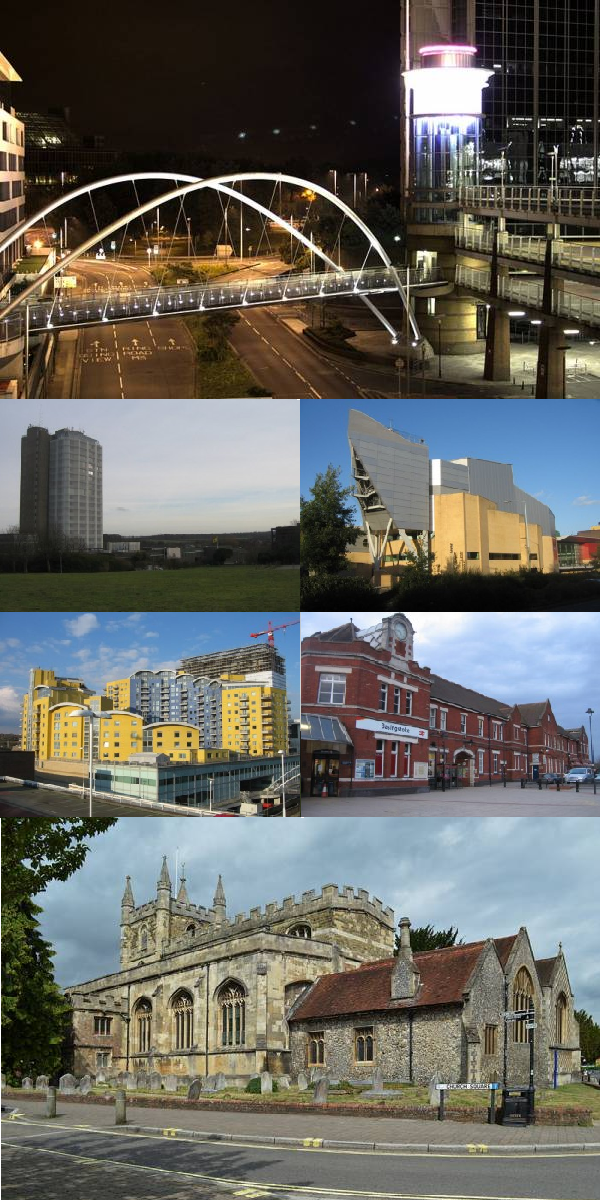
Basingstoke (/ˈbeɪzɪŋstoʊk/ BAY-zing-stohk) is a town in Hampshire, situated in south-central England across a valley at the source of the River Loddon on the western edge of the North Downs. It is the largest settlement in Hampshire without city status. It is located 30 miles (48 km) north-east of Southampton, 48 miles (77 km) south-west of London, 27 miles (43 km) west of Guildford, 22 miles (35 km) south of Reading and 20 miles (32 km) north-east of the county town and former capital Winchester. According to the 2021 population estimate, the town had a population of 107,642. It is part of the borough of Basingstoke and Deane and part of the parliamentary constituency of Basingstoke.
Basingstoke is an old market town expanded in the mid-1960s, as a result of an agreement between London County Council and Hampshire County Council. It was developed rapidly after the Second World War, along with various other towns in the United Kingdom, in order to accommodate part of the London 'overspill' as perceived under the Greater London Plan in 1944. Basingstoke market was mentioned in the Domesday Book of 1086 and it remained a small market town until the early 1960s. At the start of the Second World War, the population was little more than 13,000. It still has a regular market, but is now larger than Hampshire County Council's definition of a market town.
Basingstoke became an important economic centre during the second half of the 20th century and houses the locations of the UK headquarters of Motorola, The Automobile Association, De La Rue, Sun Life Financial, ST Ericsson, GAME, Barracuda Networks, Eli Lilly and Company, FCB Halesway part of FCB, BNP Paribas Leasing Solutions (the leasing arm of BNP Paribas in the UK) and Sony Professional Solutions. It is also the location of the European headquarters of the TaylorMade Golf Company. Other industries include IT, telecommunications, insurance and electronics.
The name Basingstoke (A.D 990; Embasinga stocæ, Domesday; Basingestoches) is believed to have been derived from the town's position as the outlying, western settlement of Basa's people. Basing, now Old Basing, a village 2 miles (3 km) to the east, is thought to have the same etymology, and was the original Anglo-Saxon settlement of the people – Basingas – led by a tribal chief called Basa. Basing remained the main settlement until changes in the local church moved the religious base from St Marys Church, Basing, to the church in Basingstoke.
A Neolithic campsite of around 3000 BC beside a spring on the west of the town is the earliest known human settlement here, but the Willis Museum has flint implements and axes from nearby fields that date back to Palæolithic times. The hillfort at Winklebury (2 miles (3 km) west of the town centre), known locally as Winklebury Camp or Winklebury Ring dates from the Iron Age and there are remains of several other earthworks around Basingstoke, including a long barrow near Down Grange. The site of Winklebury camp was home to Fort Hill Community School (this school has shut down). Nearby, to the west, Roman Road marks the course of a Roman road that ran from Winchester to Silchester. Further to the east, another Roman road ran from Chichester through the outlying villages of Upton Grey and Mapledurwell. The Harrow Way is an Iron-age ancient route that runs to the south of the town. The first recorded historical event in the area was the defeat of King Æthelred of Wessex and his brother Alfred the Great at Old Basing by the Danes in 871.
Basingstoke is recorded as a weekly market site in the Domesday Book, in 1086, and has held a regular Wednesday market since 1214. During the Civil War, and the siege of Basing House between 1643 and 1645, the town played host to large numbers of Parliamentarians. During this time, St. Michael's Church was damaged whilst being used as an explosive store and lead was stripped from the roof of the Chapel of the Holy Ghost, Basingstoke leading to its eventual ruin. It had been incorporated in 1524, but was effectively out of use after the Civil War. The 17th century saw serious damage to much of the town and its churches, because of the great fires of 1601 and 1656. Oliver Cromwell is thought to have stayed here towards the end of the siege of Basing House, and wrote a letter to the Speaker of the House of Commons addressed from Basingstoke.
The cloth industry appears to have been important in the development of the town until the 17th century, along with malting. Brewing became important during the 18th and 19th centuries, and the oldest and most successful brewery was May's Brewery, established by Thomas and William May in 1750 in Brook Street.
The London and South Western Railway arrived in 1839 from London and, within a year, it was extended to Winchester and Southampton. In 1848, a rival company, sponsored by the Great Western Railway built a branch from Reading. In 1854, a line was built to Salisbury by the London and South Western. In the 19th century, Basingstoke began to move into industrial manufacture; Wallis and Haslam (later Wallis & Steevens) began producing agricultural equipment including threshing machines in the 1850s, moving into the production of stationary steam engines in the 1860s and then traction engines in the 1870s.
Hub AI
Basingstoke AI simulator
(@Basingstoke_simulator)
Basingstoke
Basingstoke (/ˈbeɪzɪŋstoʊk/ BAY-zing-stohk) is a town in Hampshire, situated in south-central England across a valley at the source of the River Loddon on the western edge of the North Downs. It is the largest settlement in Hampshire without city status. It is located 30 miles (48 km) north-east of Southampton, 48 miles (77 km) south-west of London, 27 miles (43 km) west of Guildford, 22 miles (35 km) south of Reading and 20 miles (32 km) north-east of the county town and former capital Winchester. According to the 2021 population estimate, the town had a population of 107,642. It is part of the borough of Basingstoke and Deane and part of the parliamentary constituency of Basingstoke.
Basingstoke is an old market town expanded in the mid-1960s, as a result of an agreement between London County Council and Hampshire County Council. It was developed rapidly after the Second World War, along with various other towns in the United Kingdom, in order to accommodate part of the London 'overspill' as perceived under the Greater London Plan in 1944. Basingstoke market was mentioned in the Domesday Book of 1086 and it remained a small market town until the early 1960s. At the start of the Second World War, the population was little more than 13,000. It still has a regular market, but is now larger than Hampshire County Council's definition of a market town.
Basingstoke became an important economic centre during the second half of the 20th century and houses the locations of the UK headquarters of Motorola, The Automobile Association, De La Rue, Sun Life Financial, ST Ericsson, GAME, Barracuda Networks, Eli Lilly and Company, FCB Halesway part of FCB, BNP Paribas Leasing Solutions (the leasing arm of BNP Paribas in the UK) and Sony Professional Solutions. It is also the location of the European headquarters of the TaylorMade Golf Company. Other industries include IT, telecommunications, insurance and electronics.
The name Basingstoke (A.D 990; Embasinga stocæ, Domesday; Basingestoches) is believed to have been derived from the town's position as the outlying, western settlement of Basa's people. Basing, now Old Basing, a village 2 miles (3 km) to the east, is thought to have the same etymology, and was the original Anglo-Saxon settlement of the people – Basingas – led by a tribal chief called Basa. Basing remained the main settlement until changes in the local church moved the religious base from St Marys Church, Basing, to the church in Basingstoke.
A Neolithic campsite of around 3000 BC beside a spring on the west of the town is the earliest known human settlement here, but the Willis Museum has flint implements and axes from nearby fields that date back to Palæolithic times. The hillfort at Winklebury (2 miles (3 km) west of the town centre), known locally as Winklebury Camp or Winklebury Ring dates from the Iron Age and there are remains of several other earthworks around Basingstoke, including a long barrow near Down Grange. The site of Winklebury camp was home to Fort Hill Community School (this school has shut down). Nearby, to the west, Roman Road marks the course of a Roman road that ran from Winchester to Silchester. Further to the east, another Roman road ran from Chichester through the outlying villages of Upton Grey and Mapledurwell. The Harrow Way is an Iron-age ancient route that runs to the south of the town. The first recorded historical event in the area was the defeat of King Æthelred of Wessex and his brother Alfred the Great at Old Basing by the Danes in 871.
Basingstoke is recorded as a weekly market site in the Domesday Book, in 1086, and has held a regular Wednesday market since 1214. During the Civil War, and the siege of Basing House between 1643 and 1645, the town played host to large numbers of Parliamentarians. During this time, St. Michael's Church was damaged whilst being used as an explosive store and lead was stripped from the roof of the Chapel of the Holy Ghost, Basingstoke leading to its eventual ruin. It had been incorporated in 1524, but was effectively out of use after the Civil War. The 17th century saw serious damage to much of the town and its churches, because of the great fires of 1601 and 1656. Oliver Cromwell is thought to have stayed here towards the end of the siege of Basing House, and wrote a letter to the Speaker of the House of Commons addressed from Basingstoke.
The cloth industry appears to have been important in the development of the town until the 17th century, along with malting. Brewing became important during the 18th and 19th centuries, and the oldest and most successful brewery was May's Brewery, established by Thomas and William May in 1750 in Brook Street.
The London and South Western Railway arrived in 1839 from London and, within a year, it was extended to Winchester and Southampton. In 1848, a rival company, sponsored by the Great Western Railway built a branch from Reading. In 1854, a line was built to Salisbury by the London and South Western. In the 19th century, Basingstoke began to move into industrial manufacture; Wallis and Haslam (later Wallis & Steevens) began producing agricultural equipment including threshing machines in the 1850s, moving into the production of stationary steam engines in the 1860s and then traction engines in the 1870s.