
Recent from talks
Basingstoke Canal
Knowledge base stats:
Talk channels stats:
Members stats:
Basingstoke Canal
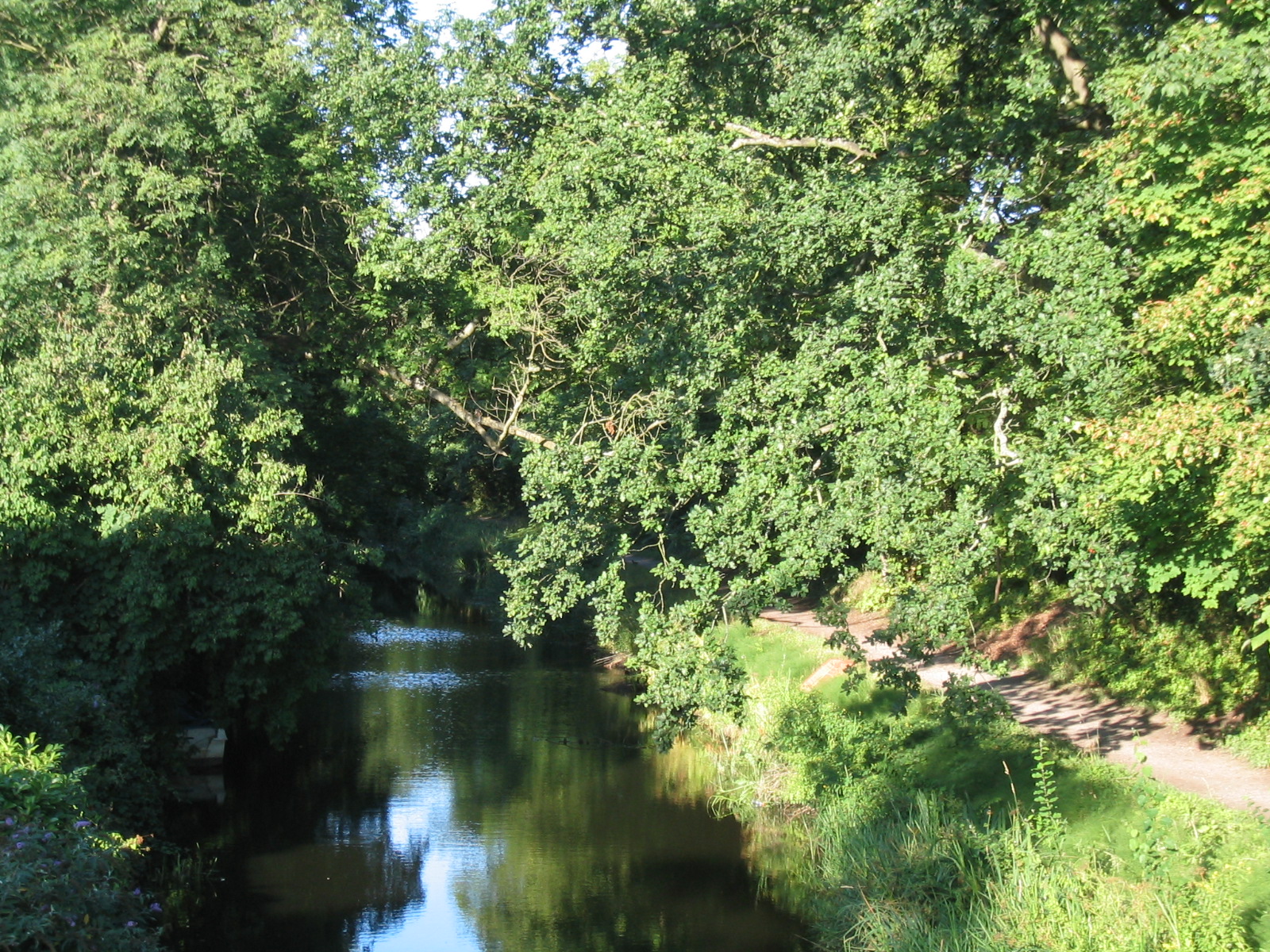
The Basingstoke Canal is an English canal, completed in 1794, built to connect Basingstoke with the River Thames at Weybridge via the Wey Navigation.
From Basingstoke, the canal passes through or near Greywell, North Warnborough, Odiham, Dogmersfield, Fleet, Farnborough Airfield, Aldershot, Mytchett, Brookwood, Knaphill and Woking. Its eastern end is at Byfleet, where it connects to the Wey Navigation. This, in turn, leads to the River Thames at Weybridge. Its intended purpose was to allow boats to travel from the docks in East London to Basingstoke.
It was never a commercial success and, starting in 1950, a lack of maintenance allowed the canal to become increasingly derelict. After many years of neglect, restoration commenced in 1977 and on 10 May 1991 the canal was reopened as a fully navigable waterway from the River Wey to almost as far as the Greywell Tunnel. However its usage is currently still limited by low water supply and conservation issues.
The canal was originally conceived as a way to stimulate agricultural development in Hampshire. It was authorised by the Basingstoke Canal Act 1778 (18 Geo. 3. c. 75), the company being allowed to raise £86,000 (equivalent to £13,662,000 in 2024) by issuing shares, and an additional £40,000 (equivalent to £6,354,000 in 2024) if required.
The original proposed route was about 44 miles (71 km) long, running from Basingstoke to join the Wey and Godalming Navigations near Weybridge, with a large loop running to the north to pass around Greywell Hill. The loop cut through the grounds of Tylney Hall, owned by Earl Tylney, and he objected to the route. Due to this objection, difficulties in raising capital funding, and the American Revolutionary War being in progress, no construction took place for some time.
Nearly ten years later, a favourable forecast of expected traffic was published in 1787, and the canal committee took action. John Smeaton was appointed engineer, together with Benjamin Henry Latrobe, and William Jessop was appointed as assistant engineer and made a survey. To avoid Tylney Hall the route was changed, with the original long contour-following route which had been surveyed around Greywell Hill being replaced by a tunnel through it, shortening the canal by nearly 7 miles (11 km).
The contract for construction was awarded to John Pinkerton, part of a family of contractors who had often worked with Jessop, in August 1788. Construction started in October 1788.
The construction of Greywell Tunnel had been initially subcontracted to Charles Jones, although he had been dismissed by the Thames and Severn Canal company in 1788 after failing to complete the Sapperton Tunnel project, not entirely at his own fault. Jones was again dismissed in 1789 after the quality of the tunnel work was criticised.
Hub AI
Basingstoke Canal AI simulator
(@Basingstoke Canal_simulator)
Basingstoke Canal
The Basingstoke Canal is an English canal, completed in 1794, built to connect Basingstoke with the River Thames at Weybridge via the Wey Navigation.
From Basingstoke, the canal passes through or near Greywell, North Warnborough, Odiham, Dogmersfield, Fleet, Farnborough Airfield, Aldershot, Mytchett, Brookwood, Knaphill and Woking. Its eastern end is at Byfleet, where it connects to the Wey Navigation. This, in turn, leads to the River Thames at Weybridge. Its intended purpose was to allow boats to travel from the docks in East London to Basingstoke.
It was never a commercial success and, starting in 1950, a lack of maintenance allowed the canal to become increasingly derelict. After many years of neglect, restoration commenced in 1977 and on 10 May 1991 the canal was reopened as a fully navigable waterway from the River Wey to almost as far as the Greywell Tunnel. However its usage is currently still limited by low water supply and conservation issues.
The canal was originally conceived as a way to stimulate agricultural development in Hampshire. It was authorised by the Basingstoke Canal Act 1778 (18 Geo. 3. c. 75), the company being allowed to raise £86,000 (equivalent to £13,662,000 in 2024) by issuing shares, and an additional £40,000 (equivalent to £6,354,000 in 2024) if required.
The original proposed route was about 44 miles (71 km) long, running from Basingstoke to join the Wey and Godalming Navigations near Weybridge, with a large loop running to the north to pass around Greywell Hill. The loop cut through the grounds of Tylney Hall, owned by Earl Tylney, and he objected to the route. Due to this objection, difficulties in raising capital funding, and the American Revolutionary War being in progress, no construction took place for some time.
Nearly ten years later, a favourable forecast of expected traffic was published in 1787, and the canal committee took action. John Smeaton was appointed engineer, together with Benjamin Henry Latrobe, and William Jessop was appointed as assistant engineer and made a survey. To avoid Tylney Hall the route was changed, with the original long contour-following route which had been surveyed around Greywell Hill being replaced by a tunnel through it, shortening the canal by nearly 7 miles (11 km).
The contract for construction was awarded to John Pinkerton, part of a family of contractors who had often worked with Jessop, in August 1788. Construction started in October 1788.
The construction of Greywell Tunnel had been initially subcontracted to Charles Jones, although he had been dismissed by the Thames and Severn Canal company in 1788 after failing to complete the Sapperton Tunnel project, not entirely at his own fault. Jones was again dismissed in 1789 after the quality of the tunnel work was criticised.
Recent media