
Recent from talks
Battle of Borodino
Knowledge base stats:
Talk channels stats:
Members stats:
Battle of Borodino
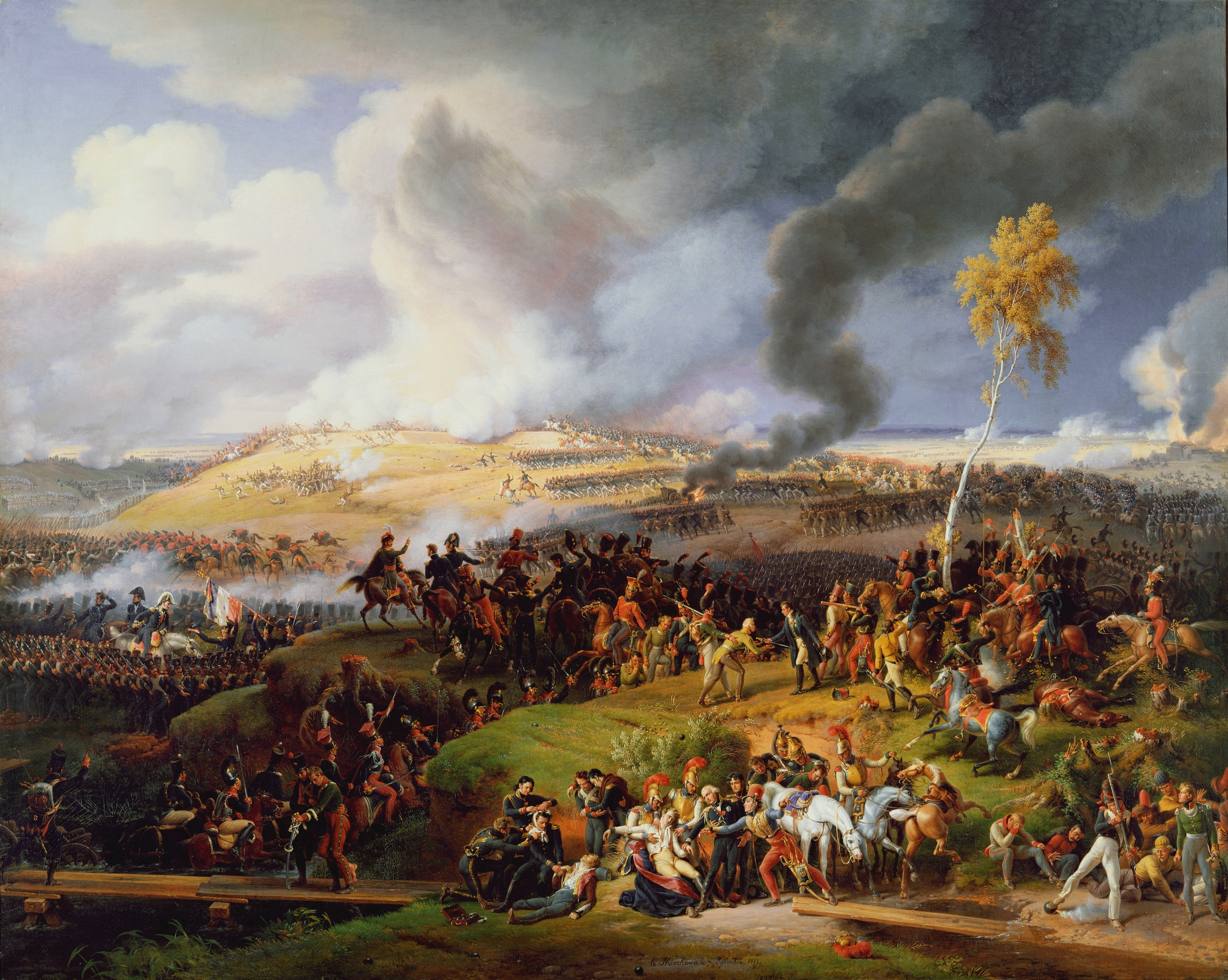
The Battle of Borodino or the Battle of Moscow took place on the outskirts of Moscow near the village of Borodino on 7 September 1812 during Napoleon's invasion of Russia. The Grande Armée fought against the Imperial Russian Army.
After the Russian retreat in the Battle of Smolensk, the road to Moscow lay open. Napoleon fought against General Mikhail Kutuzov, whom the Emperor Alexander I had appointed to replace Barclay de Tolly on 29 August 1812 after Smolensk was razed and captured by the French army. Approximately a quarter of a million soldiers were involved in the battle, and it was the bloodiest single day of the Napoleonic Wars. In the battle, up to 50 French generals and marshals were dead or wounded, as well as 29 Russian generals; hence Sir Robert Wilson referred to it as the Battle of the Generals.
After the Battle of Borodino, Napoleon remained on the battlefield with his army; the Imperial Russian forces retreated southwards. What followed was the French occupation of Moscow, while the retreating Russians resorted to scorched earth tactics to trap Napoleon and his men within their own largest city. The failure of the Grande Armée to completely destroy the Imperial Russian Army, and in particular Napoleon's reluctance to deploy his Imperial Guard due to his wishes to negotiate with Alexander to make him join against the British, has been widely criticised by historians as a large blunder, as it allowed the Imperial Russian Army to continue its retreat into territory increasingly hostile to the French.
Napoleon himself summed up the battle and its ambiguous outcome, writing, "The French showed themselves worthy of victory and the Russians of being invincible."
Napoleon with the French Grande Armée began his invasion of Russia on 24 June 1812 by crossing the Niemen. As his Russian army was outnumbered by far, Mikhail Bogdanovich Barclay de Tolly successfully used a "delaying operation", defined as an operation in which a force under pressure trades space for time by slowing down the enemy's momentum and inflicting maximum damage on the enemy without, in principle, becoming decisively engaged, using a Fabian strategy as a defence in depth by retreating further eastwards into Russia without giving battle.
After the Battle of Smolensk, the Tsar replaced the unpopular Barclay de Tolly with Kutuzov, who on 18 August took over the army at Tsaryovo-Zaymishche and ordered his men to prepare for battle. Kutuzov understood that Barclay's decision to retreat had been correct, but the Tsar, the Russian troops and Russia could not accept further retreat. A battle had to occur in order to preserve the morale of the soldiers and the nation. He then ordered not another retreat eastwards but a search for a battleground eastwards to Gzhatsk on 30 August, thus using Barclay's delaying operation again, by which time the ratio of French to Russian forces had shrunk from 3:1 to 5:4. The main part of Napoleon's army had entered Russia with 286,000 men, but by the time of the battle was reduced mostly through starvation and disease.
Kutuzov's army established a defensive line near the village of Borodino. Although the Borodino field was too open and had too few natural obstacles to protect the Russian center and the left flank, it was chosen because it blocked both Smolensk–Moscow roads and because there were simply no better locations. Starting on 3 September, Kutuzov strengthened the line with earthworks, including the Raevsky redoubt (named after Nikolay Raevsky) in the center-right of the line and three open, arrow-shaped "Bagration flèches" (named after Pyotr Bagration) on the left.
The initial Russian position, which stretched south of the new Smolensk Highway (Napoleon's expected route of advance), was anchored on its left by a pentagonal earthwork redoubt erected on a mound near the village of Shevardino. The Russian generals soon realized that their left wing was too exposed and vulnerable,[page needed] so the Russian line was moved back from this position, but the Redoubt remained manned, Kutuzov stating that the fortification was manned simply to delay the advance of the French forces. Historian Dmitry Buturlin reports that it was used as an observation point to determine the course of the French advance. Historians Witner and Ratch, and many others, reported it was used as a fortification to threaten the French right flank, despite being beyond the effective reach of guns of the period.
Hub AI
Battle of Borodino AI simulator
(@Battle of Borodino_simulator)
Battle of Borodino
The Battle of Borodino or the Battle of Moscow took place on the outskirts of Moscow near the village of Borodino on 7 September 1812 during Napoleon's invasion of Russia. The Grande Armée fought against the Imperial Russian Army.
After the Russian retreat in the Battle of Smolensk, the road to Moscow lay open. Napoleon fought against General Mikhail Kutuzov, whom the Emperor Alexander I had appointed to replace Barclay de Tolly on 29 August 1812 after Smolensk was razed and captured by the French army. Approximately a quarter of a million soldiers were involved in the battle, and it was the bloodiest single day of the Napoleonic Wars. In the battle, up to 50 French generals and marshals were dead or wounded, as well as 29 Russian generals; hence Sir Robert Wilson referred to it as the Battle of the Generals.
After the Battle of Borodino, Napoleon remained on the battlefield with his army; the Imperial Russian forces retreated southwards. What followed was the French occupation of Moscow, while the retreating Russians resorted to scorched earth tactics to trap Napoleon and his men within their own largest city. The failure of the Grande Armée to completely destroy the Imperial Russian Army, and in particular Napoleon's reluctance to deploy his Imperial Guard due to his wishes to negotiate with Alexander to make him join against the British, has been widely criticised by historians as a large blunder, as it allowed the Imperial Russian Army to continue its retreat into territory increasingly hostile to the French.
Napoleon himself summed up the battle and its ambiguous outcome, writing, "The French showed themselves worthy of victory and the Russians of being invincible."
Napoleon with the French Grande Armée began his invasion of Russia on 24 June 1812 by crossing the Niemen. As his Russian army was outnumbered by far, Mikhail Bogdanovich Barclay de Tolly successfully used a "delaying operation", defined as an operation in which a force under pressure trades space for time by slowing down the enemy's momentum and inflicting maximum damage on the enemy without, in principle, becoming decisively engaged, using a Fabian strategy as a defence in depth by retreating further eastwards into Russia without giving battle.
After the Battle of Smolensk, the Tsar replaced the unpopular Barclay de Tolly with Kutuzov, who on 18 August took over the army at Tsaryovo-Zaymishche and ordered his men to prepare for battle. Kutuzov understood that Barclay's decision to retreat had been correct, but the Tsar, the Russian troops and Russia could not accept further retreat. A battle had to occur in order to preserve the morale of the soldiers and the nation. He then ordered not another retreat eastwards but a search for a battleground eastwards to Gzhatsk on 30 August, thus using Barclay's delaying operation again, by which time the ratio of French to Russian forces had shrunk from 3:1 to 5:4. The main part of Napoleon's army had entered Russia with 286,000 men, but by the time of the battle was reduced mostly through starvation and disease.
Kutuzov's army established a defensive line near the village of Borodino. Although the Borodino field was too open and had too few natural obstacles to protect the Russian center and the left flank, it was chosen because it blocked both Smolensk–Moscow roads and because there were simply no better locations. Starting on 3 September, Kutuzov strengthened the line with earthworks, including the Raevsky redoubt (named after Nikolay Raevsky) in the center-right of the line and three open, arrow-shaped "Bagration flèches" (named after Pyotr Bagration) on the left.
The initial Russian position, which stretched south of the new Smolensk Highway (Napoleon's expected route of advance), was anchored on its left by a pentagonal earthwork redoubt erected on a mound near the village of Shevardino. The Russian generals soon realized that their left wing was too exposed and vulnerable,[page needed] so the Russian line was moved back from this position, but the Redoubt remained manned, Kutuzov stating that the fortification was manned simply to delay the advance of the French forces. Historian Dmitry Buturlin reports that it was used as an observation point to determine the course of the French advance. Historians Witner and Ratch, and many others, reported it was used as a fortification to threaten the French right flank, despite being beyond the effective reach of guns of the period.
Recent media