
Recent from talks
Battle of Castiglione
Knowledge base stats:
Talk channels stats:
Members stats:
Battle of Castiglione
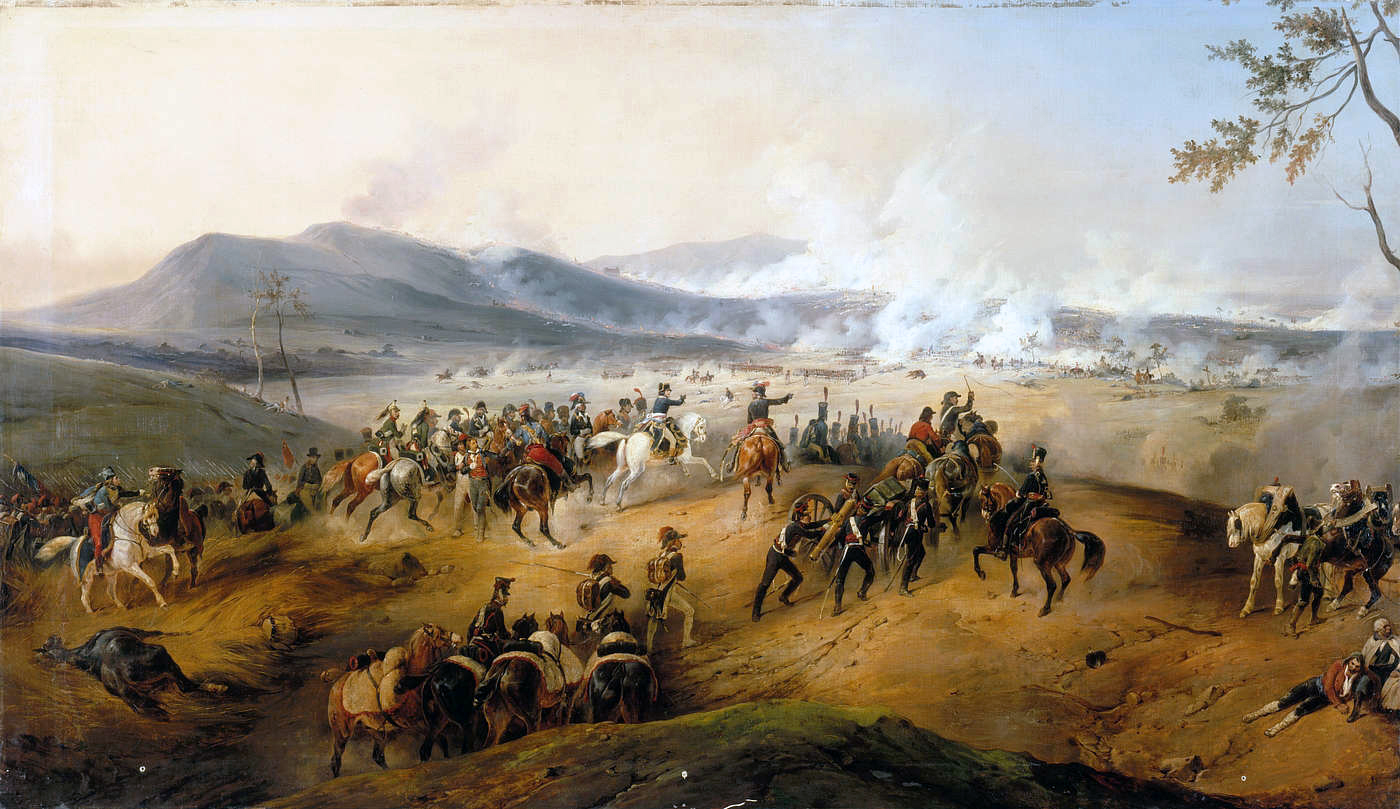
The Battle of Castiglione saw the French Army of Italy under General Napoleon Bonaparte attack an army of the Habsburg monarchy led by Feldmarschall Dagobert Sigmund von Wurmser on 5 August 1796. The outnumbered Austrians were defeated and driven back along a line of hills to the river crossing at Borghetto, where they retired beyond the Mincio River. The town of Castiglione delle Stiviere is located 10 kilometres (6 mi) south of Lake Garda in northern Italy. This battle was one of four famous victories won by Bonaparte during the War of the First Coalition, part of the French Revolutionary Wars. The others were Bassano, Arcole, and Rivoli.
Castiglione was the first attempt by the Austrian army to break the French Siege of Mantua, which was the primary Austrian fortress in northern Italy. To achieve this goal, Wurmser planned to lead four converging columns against the French. It succeeded insofar as Bonaparte lifted the siege in order to have the manpower sufficient to meet the threat. But his skill and the speed of his troops' march allowed the French army commander to keep the Austrian columns separated and defeat each in detail over a period of about one week. Although the final flank attack was prematurely delivered, it nevertheless resulted in a victory. Nevertheless, the battle marked the end of four months of rapid French advances across Northern Italy, and the front lines would remain anchored around Mantua until its fall in February of 1797.
After being defeated at the battles of Fombio, Lodi, and Borghetto by Bonaparte, the Austrian Army under Feldzeugmeister Johann Peter Beaulieu left almost 14,000 soldiers in the fortress of Mantua and retreated north toward Trento. Mantua was one of four famous fortresses known as the Quadrilateral. The French army occupied the other three, Legnago, Verona and Peschiera.
On 31 May, Bonaparte tried to rush Mantua, but the attempt failed. By 3 June, the French army invested the place, which was defended by Joseph Franz Canto d'Irles's Austrian garrison and 316 cannons. In June, Bonaparte's army forced the Papal States, Tuscany, Parma and Modena to make peace, extorting large contributions. By taking artillery pieces from the subdued cities, the French general assembled a siege train of 179 cannons for his siege of Mantua. The formal siege began on 4 July.
Bonaparte positioned his 46,000 soldiers to protect the siege of Mantua. Pierre François Sauret held Brescia and the western side of Lake Garda. André Masséna guarded the northern approaches with the bulk of his force in the upper Adige River valley on the east side of Lake Garda. Masséna also garrisoned Verona. Pierre Augereau covered the lower Adige on either side of Legnago. Jean-Mathieu-Philibert Sérurier led the force besieging Mantua. Hyacinthe Despinoy had one demi-brigade at Peschiera, another with Masséna and more troops on the march. Charles Edward Jennings de Kilmaine's cavalry reserve lay at Villafranca di Verona, southwest of Verona.
Wurmser devised a four-column plan of attack. He retained direct control over the two central columns. Leading the Right-Center (2nd) Column, Michael von Melas struck south with 14,000 soldiers down the west bank of the Adige. Paul Davidovich led the 10,000 men of the Left-Center (3rd) Column down the east bank. Operating west of Lake Garda, Peter Quasdanovich commanded the Right (1st) Column's 18,000 men. Johann Mészáros von Szoboszló lay at Vicenza, with the 5,000 troops of the Left (4th) Column. His orders were to occupy Verona and Legnago as soon as the French evacuated the two cities.
In late July, the Austrian army advanced from Trento. Wurmser's two center columns defeated Masséna in the difficult rough terrain near Rivoli Veronese on 29 July. For a loss of 800 men, the Austrian inflicted 1,200 killed and wounded, and captured 1,600 men and nine cannons. One of Quasdanovich's brigades drove Sauret's men out of Salò on Lake Garda. A second Austrian brigade pushed a French force out of Gavardo. On 30 July, the other two brigades belonging to Quasdanovich surprised and captured Brescia. Augereau fell back toward Mantua. Masséna retreated to the southern end of Lake Garda.[citation needed]
On 31 July, Bonaparte retreated to the west bank of the Mincio and began concentrating against Quasdanovich. That evening Napoleon ordered Sérurier to lift the siege of Mantua. From 31 July through 2 August, a complex series of operations occurred in the area of Brescia, Montichiari, Gavardo, Lonato del Garda and Salò. Bonaparte concentrated Augereau, Masséna, Despinoy, and Kilmaine and recaptured Brescia on 1 August, clearing his supply line to the west. Meanwhile, Wurmser dropped off a force under General-major (GM) Adam Bajalics von Bajahaza to lay siege to Peschiera. His center columns reached Mantua where they spent time demolishing the French siege lines and dragging the abandoned siege guns into the city. Bonaparte nearly ordered a retreat to the west, but when he realised Wurmser was not quickly following up his success, he decided to fight it out. Mészáros finally occupied Legnago on 1 August.[citation needed]
Hub AI
Battle of Castiglione AI simulator
(@Battle of Castiglione_simulator)
Battle of Castiglione
The Battle of Castiglione saw the French Army of Italy under General Napoleon Bonaparte attack an army of the Habsburg monarchy led by Feldmarschall Dagobert Sigmund von Wurmser on 5 August 1796. The outnumbered Austrians were defeated and driven back along a line of hills to the river crossing at Borghetto, where they retired beyond the Mincio River. The town of Castiglione delle Stiviere is located 10 kilometres (6 mi) south of Lake Garda in northern Italy. This battle was one of four famous victories won by Bonaparte during the War of the First Coalition, part of the French Revolutionary Wars. The others were Bassano, Arcole, and Rivoli.
Castiglione was the first attempt by the Austrian army to break the French Siege of Mantua, which was the primary Austrian fortress in northern Italy. To achieve this goal, Wurmser planned to lead four converging columns against the French. It succeeded insofar as Bonaparte lifted the siege in order to have the manpower sufficient to meet the threat. But his skill and the speed of his troops' march allowed the French army commander to keep the Austrian columns separated and defeat each in detail over a period of about one week. Although the final flank attack was prematurely delivered, it nevertheless resulted in a victory. Nevertheless, the battle marked the end of four months of rapid French advances across Northern Italy, and the front lines would remain anchored around Mantua until its fall in February of 1797.
After being defeated at the battles of Fombio, Lodi, and Borghetto by Bonaparte, the Austrian Army under Feldzeugmeister Johann Peter Beaulieu left almost 14,000 soldiers in the fortress of Mantua and retreated north toward Trento. Mantua was one of four famous fortresses known as the Quadrilateral. The French army occupied the other three, Legnago, Verona and Peschiera.
On 31 May, Bonaparte tried to rush Mantua, but the attempt failed. By 3 June, the French army invested the place, which was defended by Joseph Franz Canto d'Irles's Austrian garrison and 316 cannons. In June, Bonaparte's army forced the Papal States, Tuscany, Parma and Modena to make peace, extorting large contributions. By taking artillery pieces from the subdued cities, the French general assembled a siege train of 179 cannons for his siege of Mantua. The formal siege began on 4 July.
Bonaparte positioned his 46,000 soldiers to protect the siege of Mantua. Pierre François Sauret held Brescia and the western side of Lake Garda. André Masséna guarded the northern approaches with the bulk of his force in the upper Adige River valley on the east side of Lake Garda. Masséna also garrisoned Verona. Pierre Augereau covered the lower Adige on either side of Legnago. Jean-Mathieu-Philibert Sérurier led the force besieging Mantua. Hyacinthe Despinoy had one demi-brigade at Peschiera, another with Masséna and more troops on the march. Charles Edward Jennings de Kilmaine's cavalry reserve lay at Villafranca di Verona, southwest of Verona.
Wurmser devised a four-column plan of attack. He retained direct control over the two central columns. Leading the Right-Center (2nd) Column, Michael von Melas struck south with 14,000 soldiers down the west bank of the Adige. Paul Davidovich led the 10,000 men of the Left-Center (3rd) Column down the east bank. Operating west of Lake Garda, Peter Quasdanovich commanded the Right (1st) Column's 18,000 men. Johann Mészáros von Szoboszló lay at Vicenza, with the 5,000 troops of the Left (4th) Column. His orders were to occupy Verona and Legnago as soon as the French evacuated the two cities.
In late July, the Austrian army advanced from Trento. Wurmser's two center columns defeated Masséna in the difficult rough terrain near Rivoli Veronese on 29 July. For a loss of 800 men, the Austrian inflicted 1,200 killed and wounded, and captured 1,600 men and nine cannons. One of Quasdanovich's brigades drove Sauret's men out of Salò on Lake Garda. A second Austrian brigade pushed a French force out of Gavardo. On 30 July, the other two brigades belonging to Quasdanovich surprised and captured Brescia. Augereau fell back toward Mantua. Masséna retreated to the southern end of Lake Garda.[citation needed]
On 31 July, Bonaparte retreated to the west bank of the Mincio and began concentrating against Quasdanovich. That evening Napoleon ordered Sérurier to lift the siege of Mantua. From 31 July through 2 August, a complex series of operations occurred in the area of Brescia, Montichiari, Gavardo, Lonato del Garda and Salò. Bonaparte concentrated Augereau, Masséna, Despinoy, and Kilmaine and recaptured Brescia on 1 August, clearing his supply line to the west. Meanwhile, Wurmser dropped off a force under General-major (GM) Adam Bajalics von Bajahaza to lay siege to Peschiera. His center columns reached Mantua where they spent time demolishing the French siege lines and dragging the abandoned siege guns into the city. Bonaparte nearly ordered a retreat to the west, but when he realised Wurmser was not quickly following up his success, he decided to fight it out. Mészáros finally occupied Legnago on 1 August.[citation needed]
Recent media