



Community hub
Recent from talks
Knowledge base stats:
Talk channels stats:
Members stats:
Battle of Orthez
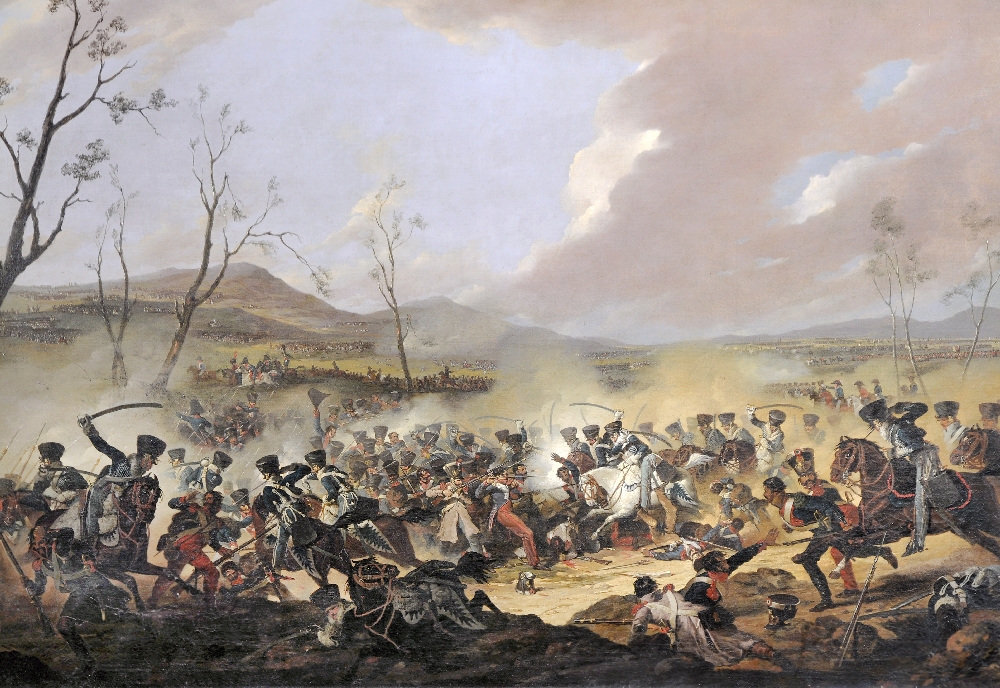
The Battle of Orthez was fought on 27 February 1814 in the southwest of France near the end of the Peninsular War. An army of British, Spanish and Portuguese troops under Field Marshal Lord Wellington attacked a French army led by Marshal Jean-de-Dieu Soult in southern France. The outnumbered French repelled several Allied assaults on their right flank, but their center and left flank were overcome and Soult was compelled to retreat. At first the withdrawal was conducted in good order, but it eventually ended in a scramble for safety and many French soldiers were taken prisoner.
In mid-February, Wellington's army broke out of its small area of conquered territory near Bayonne. Moving east, the Allies drove the French back from several river lines. After a pause in the campaign, the westernmost Allied corps surrounded and isolated Bayonne. Resuming their eastward drive, the remaining two Allied corps pushed Soult's army back to Orthez where the French marshal offered battle. In subsequent operations, Soult decided to abandon the large western port of Bordeaux and fall back east toward Toulouse. The next action was the Battle of Toulouse.
The Battle of the Nive ended on 13 December 1813 when Wellington's army repulsed the last of Soult's assaults. This ended the fighting for the year. Soult had found the Allied army divided by the Nive River but failed to inflict a damaging defeat. The French then pulled back within Bayonne's defenses and entered winter quarters. Heavy rains brought operations to a standstill for the next two months. After the Battle of Nivelle on 10 November 1813, Wellington's Spanish troops had gone out of control in seized French villages. Horrified at the idea of provoking a guerilla war by French civilians, the British commander imposed a vigorous discipline on his British and Portuguese soldiers and sent most of his Spanish troops home. Since his men were paid and fed by the British government, Pablo Morillo's Spanish division remained with the army. Wellington's policy paid dividends; his soldiers soon found that guarding the roads in his army's rear areas was no longer required.
In January 1814, Soult sent reinforcements to Napoleon. Transferred to the Campaign in Northeast France were the 7th and 9th infantry divisions and Anne-François-Charles Trelliard's dragoons. Altogether, this totaled 11,015 foot soldiers under Jean François Leval and Pierre François Xavier Boyer and 3,420 horsemen in the brigades of Pierre Ismert, François Léon Ormancey and Louis Ernest Joseph Sparre. This left Soult with the 1st Division under Maximilien Sébastien Foy (4,600 men), 2nd Division led by Jean Barthélemy Darmagnac (5,500 men), 3rd Division commanded by Louis Jean Nicolas Abbé (5,300), 4th Division directed by Eloi Charlemagne Taupin (5,600 men), 5th Division commanded by Jean-Pierre Maransin (5,000 men), 6th Division under Eugène-Casimir Villatte (5,200 men), 8th Division led by Jean Isidore Harispe (6,600 men) and Cavalry Division under Pierre Benoît Soult (3,800 men). Marshal Soult also commanded 7,300 gunners, engineers and wagon drivers plus the garrisons of Bayonne (8,800 men) and Saint-Jean-Pied-de-Port (2,400 men).
Wellington's army consisted of the 1st Division under Kenneth Howard (6,898 men), 2nd Division commanded by William Stewart (7,780 men), 3rd Division led by Thomas Picton (6,626 men), 4th Division directed by Lowry Cole (5,952 men), 5th Division under Andrew Hay (4,553 men), 6th Division commanded by Henry Clinton (5,571 men), 7th Division led by George Townshend Walker (5,643 men), Light Division under Charles Alten (3,480 men), Portuguese Division directed by Carlos Lecor (4,465 men) and Spanish Division led by Morillo (4,924 men). Stapleton Cotton commanded three British light cavalry brigades under Henry Fane (765 men), Hussey Vivian (989 men) and Edward Somerset (1,619 men). There were also three independent infantry brigades, 1,816 British led by Matthew Whitworth-Aylmer, 2,185 Portuguese under John Wilson and 1,614 Portuguese directed by Thomas Bradford.
Wellington planned to use the greater part of his army to drive the bulk of Soult's army well to the east, away from Bayonne. Once the French army was pressed sufficiently far to the east, a strong Allied corps would seize a bridgehead over the river Adour to the west of Bayonne and encircle that fortress. Because Soult's army was weakened by three divisions, Wellington's forces were superior enough to risk dividing them into two bodies. Soult wished to contain his opponent in a wedge of occupied French territory. Strongly garrisoned Bayonne blocked the north side of the Allied-occupied area. East of the city, three French divisions held the line of the Adour to Port-de-Lanne. The east side of the Allied-occupied area was defended by four French divisions along the river Joyeuse as far south as Hélette. Cavalry patrols formed a cordon from there to the fortress of Saint-Jean-Pied-de-Port in the Pyrenees.
On 14 February, Wellington launched his offensive toward the east. On the right flank was Rowland Hill's 20,000-man corps which included the 2nd and 3rd divisions, Lecor's Portuguese and Morillo's Spanish divisions and Fane's cavalry. Hill's main column struck toward Harispe's division at Hélette. Picton moved on the left flank against Villatte's division at Bonloc and Morillo took his men through the foothills on the right flank. On 15 February, Hill's column defeated Harispe's division in the Battle of Garris and forced the French to abandon Saint-Palais and the line of the river Bidouze.
The 25,400-strong Allied left flank corps under William Beresford began its advance on 16 February, aiming for the village of Bidache. Beresford's corps was made up of the 4th, 6th, 7th and Light divisions as well as Somerset's and Vivian's cavalry. Altogether, Wellington had 42,000 foot soldiers and 3,000 horsemen marching to the east. Reacting to the Allied pressure, Soult joined two of the three divisions north of the Adour to the four divisions farther east. This action created a field army of 32,000 infantry and 3,800 cavalry. The French divisions were directed to form a new line behind the Gave d'Oloron River, along a line from Peyrehorade to Sauveterre-de-Béarn to Navarrenx. On 17 February, Hill's corps forded the river Saison, breaching yet another French defensive line. The French marshal sent Abbé's division to help defend Bayonne, a questionable move which left his army with fewer troops to fight Wellington. By 18 February, Soult had his troops in position on the Gave d'Oloron. That day the weather broke again, causing another pause in operations.
Hub AI
Battle of Orthez AI simulator
(@Battle of Orthez_simulator)
Battle of Orthez
The Battle of Orthez was fought on 27 February 1814 in the southwest of France near the end of the Peninsular War. An army of British, Spanish and Portuguese troops under Field Marshal Lord Wellington attacked a French army led by Marshal Jean-de-Dieu Soult in southern France. The outnumbered French repelled several Allied assaults on their right flank, but their center and left flank were overcome and Soult was compelled to retreat. At first the withdrawal was conducted in good order, but it eventually ended in a scramble for safety and many French soldiers were taken prisoner.
In mid-February, Wellington's army broke out of its small area of conquered territory near Bayonne. Moving east, the Allies drove the French back from several river lines. After a pause in the campaign, the westernmost Allied corps surrounded and isolated Bayonne. Resuming their eastward drive, the remaining two Allied corps pushed Soult's army back to Orthez where the French marshal offered battle. In subsequent operations, Soult decided to abandon the large western port of Bordeaux and fall back east toward Toulouse. The next action was the Battle of Toulouse.
The Battle of the Nive ended on 13 December 1813 when Wellington's army repulsed the last of Soult's assaults. This ended the fighting for the year. Soult had found the Allied army divided by the Nive River but failed to inflict a damaging defeat. The French then pulled back within Bayonne's defenses and entered winter quarters. Heavy rains brought operations to a standstill for the next two months. After the Battle of Nivelle on 10 November 1813, Wellington's Spanish troops had gone out of control in seized French villages. Horrified at the idea of provoking a guerilla war by French civilians, the British commander imposed a vigorous discipline on his British and Portuguese soldiers and sent most of his Spanish troops home. Since his men were paid and fed by the British government, Pablo Morillo's Spanish division remained with the army. Wellington's policy paid dividends; his soldiers soon found that guarding the roads in his army's rear areas was no longer required.
In January 1814, Soult sent reinforcements to Napoleon. Transferred to the Campaign in Northeast France were the 7th and 9th infantry divisions and Anne-François-Charles Trelliard's dragoons. Altogether, this totaled 11,015 foot soldiers under Jean François Leval and Pierre François Xavier Boyer and 3,420 horsemen in the brigades of Pierre Ismert, François Léon Ormancey and Louis Ernest Joseph Sparre. This left Soult with the 1st Division under Maximilien Sébastien Foy (4,600 men), 2nd Division led by Jean Barthélemy Darmagnac (5,500 men), 3rd Division commanded by Louis Jean Nicolas Abbé (5,300), 4th Division directed by Eloi Charlemagne Taupin (5,600 men), 5th Division commanded by Jean-Pierre Maransin (5,000 men), 6th Division under Eugène-Casimir Villatte (5,200 men), 8th Division led by Jean Isidore Harispe (6,600 men) and Cavalry Division under Pierre Benoît Soult (3,800 men). Marshal Soult also commanded 7,300 gunners, engineers and wagon drivers plus the garrisons of Bayonne (8,800 men) and Saint-Jean-Pied-de-Port (2,400 men).
Wellington's army consisted of the 1st Division under Kenneth Howard (6,898 men), 2nd Division commanded by William Stewart (7,780 men), 3rd Division led by Thomas Picton (6,626 men), 4th Division directed by Lowry Cole (5,952 men), 5th Division under Andrew Hay (4,553 men), 6th Division commanded by Henry Clinton (5,571 men), 7th Division led by George Townshend Walker (5,643 men), Light Division under Charles Alten (3,480 men), Portuguese Division directed by Carlos Lecor (4,465 men) and Spanish Division led by Morillo (4,924 men). Stapleton Cotton commanded three British light cavalry brigades under Henry Fane (765 men), Hussey Vivian (989 men) and Edward Somerset (1,619 men). There were also three independent infantry brigades, 1,816 British led by Matthew Whitworth-Aylmer, 2,185 Portuguese under John Wilson and 1,614 Portuguese directed by Thomas Bradford.
Wellington planned to use the greater part of his army to drive the bulk of Soult's army well to the east, away from Bayonne. Once the French army was pressed sufficiently far to the east, a strong Allied corps would seize a bridgehead over the river Adour to the west of Bayonne and encircle that fortress. Because Soult's army was weakened by three divisions, Wellington's forces were superior enough to risk dividing them into two bodies. Soult wished to contain his opponent in a wedge of occupied French territory. Strongly garrisoned Bayonne blocked the north side of the Allied-occupied area. East of the city, three French divisions held the line of the Adour to Port-de-Lanne. The east side of the Allied-occupied area was defended by four French divisions along the river Joyeuse as far south as Hélette. Cavalry patrols formed a cordon from there to the fortress of Saint-Jean-Pied-de-Port in the Pyrenees.
On 14 February, Wellington launched his offensive toward the east. On the right flank was Rowland Hill's 20,000-man corps which included the 2nd and 3rd divisions, Lecor's Portuguese and Morillo's Spanish divisions and Fane's cavalry. Hill's main column struck toward Harispe's division at Hélette. Picton moved on the left flank against Villatte's division at Bonloc and Morillo took his men through the foothills on the right flank. On 15 February, Hill's column defeated Harispe's division in the Battle of Garris and forced the French to abandon Saint-Palais and the line of the river Bidouze.
The 25,400-strong Allied left flank corps under William Beresford began its advance on 16 February, aiming for the village of Bidache. Beresford's corps was made up of the 4th, 6th, 7th and Light divisions as well as Somerset's and Vivian's cavalry. Altogether, Wellington had 42,000 foot soldiers and 3,000 horsemen marching to the east. Reacting to the Allied pressure, Soult joined two of the three divisions north of the Adour to the four divisions farther east. This action created a field army of 32,000 infantry and 3,800 cavalry. The French divisions were directed to form a new line behind the Gave d'Oloron River, along a line from Peyrehorade to Sauveterre-de-Béarn to Navarrenx. On 17 February, Hill's corps forded the river Saison, breaching yet another French defensive line. The French marshal sent Abbé's division to help defend Bayonne, a questionable move which left his army with fewer troops to fight Wellington. By 18 February, Soult had his troops in position on the Gave d'Oloron. That day the weather broke again, causing another pause in operations.