



Community hub
Recent from talks
Knowledge base stats:
Talk channels stats:
Members stats:
Battle of Tannenberg
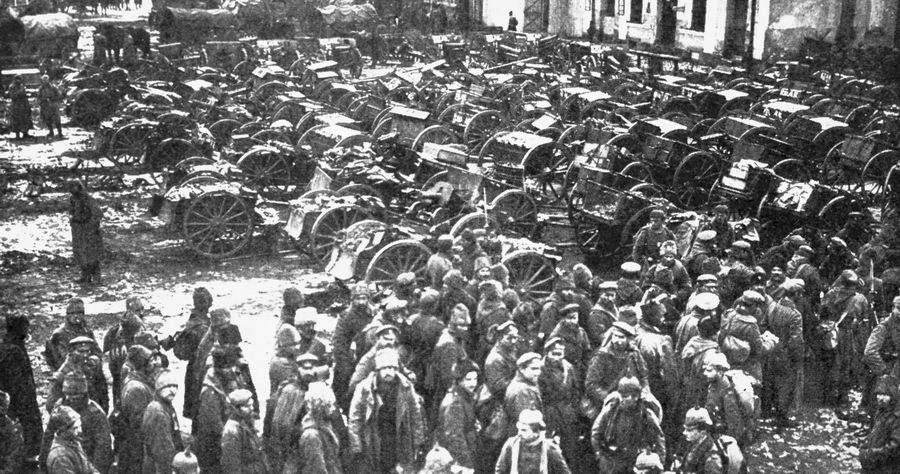
The Battle of Tannenberg, also known as the Second Battle of Tannenberg, was fought between Russia and Germany between 26 and 30 August 1914, the first month of World War I. The battle resulted in the encirclement and the almost complete destruction of the Russian 2nd Army by the German 8th Army and the suicide of its commanding general, Alexander Samsonov. A series of follow-up battles (First Masurian Lakes) led to the ousting of the Russian 1st Army from East Prussia.
The outcome brought considerable prestige to the German army commander, General (later Field Marshal) Paul von Hindenburg, and his rising staff-officer Erich Ludendorff. Although the battle actually took place near Allenstein (Olsztyn), Hindenburg named it after Tannenberg, 30 km (19 mi) to the west, in order to avenge the Teutonic Knights' defeat at the First Battle of Tannenberg 500 years earlier.
The East Prussian campaign is particularly notable for fast rail movements by the German 8th Army, enabling them to concentrate against each of the two Russian armies in turn, first delaying the 1st Army and then destroying the 2nd before once again turning on the 1st days later. It is also notable for the failure of the Russians to encode their radio messages, broadcasting their daily marching orders in the clear, which allowed the Germans to make their movements with the confidence they would not be flanked. After the battles of Stallupönen and Gumbinnen, the German army was forced to retreat by the 1st Army. Yakov Zhilinsky, the leader of the Russian Northwestern Front, of which the 2nd and 1st Armies were a part, based on a report from the 1st Army, drew a non-existent picture for Samsonov about the German withdrawal, partly to the Vistula, partly to Königsberg, without any knowledge of the order in which they were withdrawing or where they were located. Samsonov's Russians, in turn, uncertain of the German army's exact location, acted as if counting "on a miracle" during their offensive.
In the course of the Russian offensive into East Prussia, there was no agreement between Samsonov and Zhilinsky, concerning the direction in which the 2nd Army would engage in battle; Samsonov moved to the northwest ("Allenstein – Osterode") and intended to continue, but Zhilinsky intended to strike north ("Seeburg – Allenstein"). This disorganized leadership contributed to the disastrous defeat as well; it was globally present in the senior command staff. In the end of disputes about the army's movement, Zhilinsky chose to find the golden mean, – he gave in to Samsonov, with the fact that the latter agreed to detach only the 6th Army Corps to Bischofsburg, in the direction that Zhilinsky intended. This corps escaped encirclement, though it was also defeated separately. Zhilinsky did not give Samsonov any specific orders at Tannenberg; the latter actually acted independently and this already put pressure on the psyche of Samsonov. In addition to the previous, the Imperial Russian Army began the war without a sufficiently trained officer corps, with a small reserve for new formations and for the training of conscripts, with a sharp, compared to the Germans, shortage of artillery, very poorly supplied with all technical means and ammunition, having in its rear a country and its military administration unprepared for waging a major war and an industry completely unprepared for the transition to work for military needs. Moreover, the Russians also had problems supplying their armies due to bad local infrastructure and with the fact that they deployed very significant horsepower (cavalry), which required larger food supplies that were already critical.
Germany entered World War I largely following the Schlieffen Plan. According to Prit Buttar, "In combination with his own strong desire to fight an offensive war featuring outflanking and encircling movements, Schlieffen went on to develop his plan for a sweeping advance through Belgium. In the east, limited German forces would defend against any Russian attack until more forces became available from the west, fresh from victory over the French. The total strength of the fully mobilised German Army in 1914 amounted to 1,191 battalions, the great majority of which would be deployed against France. The 8th Army in East Prussia would go to war with barely 10 per cent of this total."
The Russian Forces were less prepared than they would have otherwise been, thanks to an overestimation of the Russian war machine and a general who was having real problems on Russia's other fronts. General Yakov Grigoryevich Zhilinsky was in charge of this attack and had pledged to put 800,000 men on the front by the 15th day of mobilization. Due to the rushed nature of this attack, the Russian war machine developed numerous cracks and failures as a result of poor communication between the front and command. This lack of communication resulted in orders that would contradict the previous ones and headquarters giving soldiers orders in a hurry. All of this confusion and disorganization severely hampered the general's efforts and progress on the Russian Front stalled.[citation needed]
The French Army's Plan XVII at the outbreak of the war involved swift mobilization followed by an immediate attack to drive the Germans from Alsace and Lorraine. If the British Expeditionary Force (BEF) joined in accordance with their Allied treaty, they would fill the left flank. Their Russian allies in the East would have a massive army, more than 95 divisions, but their mobilization would inevitably be slower. Getting their men to the front would itself take time because of their relatively sparse and unreliable railway network (for example, 75% of Russian railways were still single-tracked). Russia intended to have 27 divisions at the front by day 15 of hostilities and 52 by day 23, but it would take 60 days before 90 divisions were in action. Despite their difficulties, the Russians promised the French that they would promptly engage the armies of Austria-Hungary in the south and on day 15 would invade German East Prussia.
According to Prit Buttar, "In addition to the fortifications amongst the Masurian Lake District, the Germans had built a series of major forts around Königsberg in the 19th century and had then modernised them over the years. Similarly, major fortresses had been established along the Vistula, particularly at Thorn (now Toruń). Combined with the flexibility provided by the German railways, allowing General Maximilian von Prittwitz to concentrate against the inner flanks of either Russian invasion force, the Germans could realistically view the coming war with a degree of confidence."
Hub AI
Battle of Tannenberg AI simulator
(@Battle of Tannenberg_simulator)
Battle of Tannenberg
The Battle of Tannenberg, also known as the Second Battle of Tannenberg, was fought between Russia and Germany between 26 and 30 August 1914, the first month of World War I. The battle resulted in the encirclement and the almost complete destruction of the Russian 2nd Army by the German 8th Army and the suicide of its commanding general, Alexander Samsonov. A series of follow-up battles (First Masurian Lakes) led to the ousting of the Russian 1st Army from East Prussia.
The outcome brought considerable prestige to the German army commander, General (later Field Marshal) Paul von Hindenburg, and his rising staff-officer Erich Ludendorff. Although the battle actually took place near Allenstein (Olsztyn), Hindenburg named it after Tannenberg, 30 km (19 mi) to the west, in order to avenge the Teutonic Knights' defeat at the First Battle of Tannenberg 500 years earlier.
The East Prussian campaign is particularly notable for fast rail movements by the German 8th Army, enabling them to concentrate against each of the two Russian armies in turn, first delaying the 1st Army and then destroying the 2nd before once again turning on the 1st days later. It is also notable for the failure of the Russians to encode their radio messages, broadcasting their daily marching orders in the clear, which allowed the Germans to make their movements with the confidence they would not be flanked. After the battles of Stallupönen and Gumbinnen, the German army was forced to retreat by the 1st Army. Yakov Zhilinsky, the leader of the Russian Northwestern Front, of which the 2nd and 1st Armies were a part, based on a report from the 1st Army, drew a non-existent picture for Samsonov about the German withdrawal, partly to the Vistula, partly to Königsberg, without any knowledge of the order in which they were withdrawing or where they were located. Samsonov's Russians, in turn, uncertain of the German army's exact location, acted as if counting "on a miracle" during their offensive.
In the course of the Russian offensive into East Prussia, there was no agreement between Samsonov and Zhilinsky, concerning the direction in which the 2nd Army would engage in battle; Samsonov moved to the northwest ("Allenstein – Osterode") and intended to continue, but Zhilinsky intended to strike north ("Seeburg – Allenstein"). This disorganized leadership contributed to the disastrous defeat as well; it was globally present in the senior command staff. In the end of disputes about the army's movement, Zhilinsky chose to find the golden mean, – he gave in to Samsonov, with the fact that the latter agreed to detach only the 6th Army Corps to Bischofsburg, in the direction that Zhilinsky intended. This corps escaped encirclement, though it was also defeated separately. Zhilinsky did not give Samsonov any specific orders at Tannenberg; the latter actually acted independently and this already put pressure on the psyche of Samsonov. In addition to the previous, the Imperial Russian Army began the war without a sufficiently trained officer corps, with a small reserve for new formations and for the training of conscripts, with a sharp, compared to the Germans, shortage of artillery, very poorly supplied with all technical means and ammunition, having in its rear a country and its military administration unprepared for waging a major war and an industry completely unprepared for the transition to work for military needs. Moreover, the Russians also had problems supplying their armies due to bad local infrastructure and with the fact that they deployed very significant horsepower (cavalry), which required larger food supplies that were already critical.
Germany entered World War I largely following the Schlieffen Plan. According to Prit Buttar, "In combination with his own strong desire to fight an offensive war featuring outflanking and encircling movements, Schlieffen went on to develop his plan for a sweeping advance through Belgium. In the east, limited German forces would defend against any Russian attack until more forces became available from the west, fresh from victory over the French. The total strength of the fully mobilised German Army in 1914 amounted to 1,191 battalions, the great majority of which would be deployed against France. The 8th Army in East Prussia would go to war with barely 10 per cent of this total."
The Russian Forces were less prepared than they would have otherwise been, thanks to an overestimation of the Russian war machine and a general who was having real problems on Russia's other fronts. General Yakov Grigoryevich Zhilinsky was in charge of this attack and had pledged to put 800,000 men on the front by the 15th day of mobilization. Due to the rushed nature of this attack, the Russian war machine developed numerous cracks and failures as a result of poor communication between the front and command. This lack of communication resulted in orders that would contradict the previous ones and headquarters giving soldiers orders in a hurry. All of this confusion and disorganization severely hampered the general's efforts and progress on the Russian Front stalled.[citation needed]
The French Army's Plan XVII at the outbreak of the war involved swift mobilization followed by an immediate attack to drive the Germans from Alsace and Lorraine. If the British Expeditionary Force (BEF) joined in accordance with their Allied treaty, they would fill the left flank. Their Russian allies in the East would have a massive army, more than 95 divisions, but their mobilization would inevitably be slower. Getting their men to the front would itself take time because of their relatively sparse and unreliable railway network (for example, 75% of Russian railways were still single-tracked). Russia intended to have 27 divisions at the front by day 15 of hostilities and 52 by day 23, but it would take 60 days before 90 divisions were in action. Despite their difficulties, the Russians promised the French that they would promptly engage the armies of Austria-Hungary in the south and on day 15 would invade German East Prussia.
According to Prit Buttar, "In addition to the fortifications amongst the Masurian Lake District, the Germans had built a series of major forts around Königsberg in the 19th century and had then modernised them over the years. Similarly, major fortresses had been established along the Vistula, particularly at Thorn (now Toruń). Combined with the flexibility provided by the German railways, allowing General Maximilian von Prittwitz to concentrate against the inner flanks of either Russian invasion force, the Germans could realistically view the coming war with a degree of confidence."