



Community hub
Recent from talks
Knowledge base stats:
Talk channels stats:
Members stats:
Befana
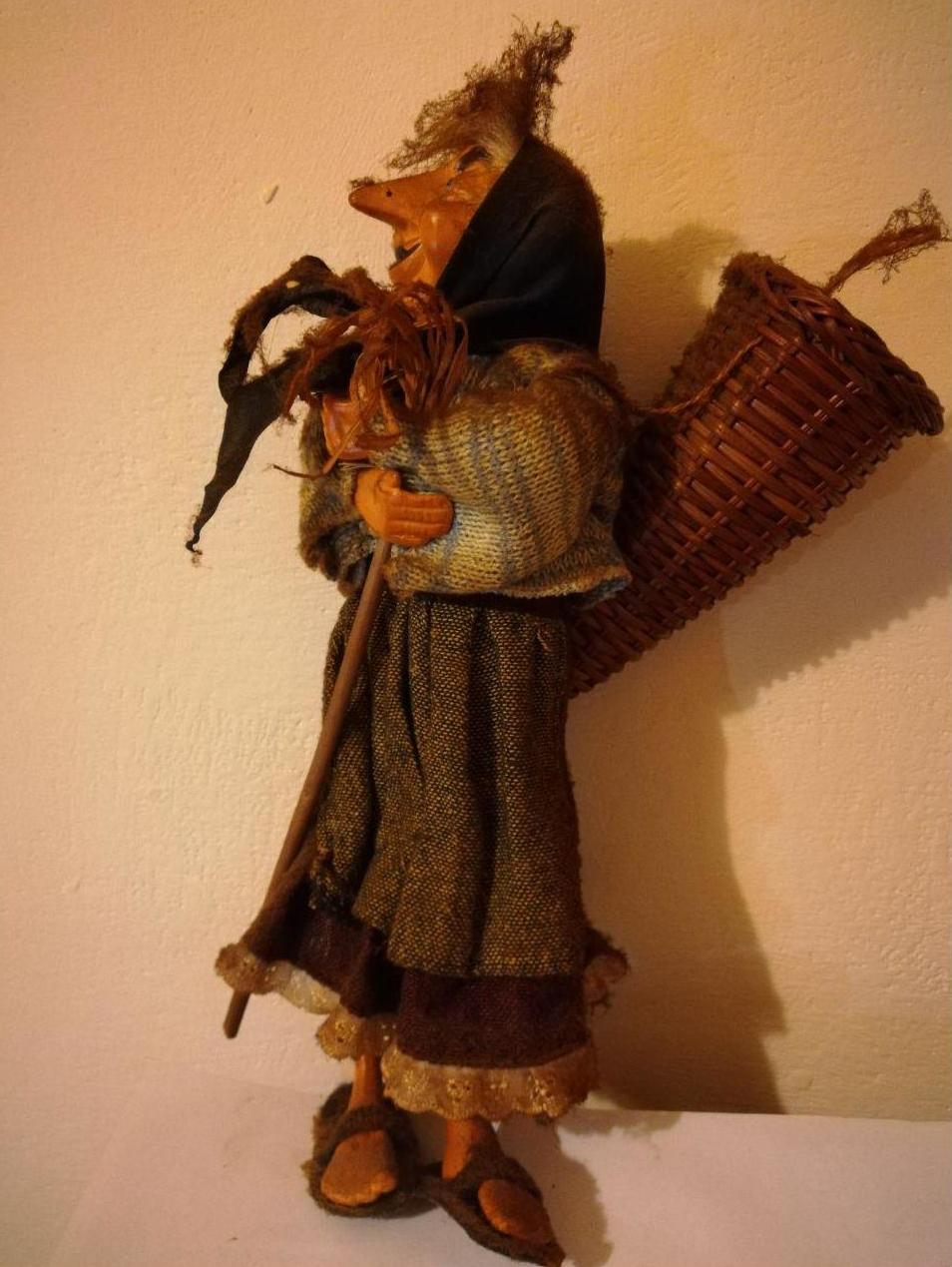
In Italian folklore and folk customs, the Befana (Italian: [beˈfaːna]) is a witch-like old woman who delivers gifts to children throughout Italy on Epiphany Eve (the night of January 5) in a similar way to Santa Claus or the Three Magi. The Befana is a widespread tradition among Italians and thus has many names. She is a part of both popular national culture and traditional folk culture and is akin to other figures who roam about sometime during the Twelve Days and reward the good, punish the bad, and receive offerings. The Befana is a mysterious, contradictory figure of unclear origins. This character is enhanced by the fact that she is overall neglected by scholars but is the subject of much speculation by the ones who do mention her. Pre-Christian, Christian, and syncretism of the two have all been postulated as explanations of her origins. In some parts of Italy, especially the central regions, mumming takes place on Epiphany eve. Dolls are made of her and effigies are burnt and bonfires are often lit. She brings gifts to good children, typically sweets, candies or toys, but coal to bad children. She is usually portrayed as a hag riding a broomstick through the air wearing a black shawl and is covered in soot because she enters the children's houses through the chimney. She is often smiling and carries a bag or hamper filled with candy, gifts, or both.[citation needed] She is not only loved but also feared and mocked, particularly by children.
A popular belief is that her name derives from the Feast of Epiphany (Italian: Festa dell'Epifania). Many people believe that the name Befana is derived from the Italian version of the Greek word epifania or epiphaneia (Greek, επιφάνεια = appearance, surface; English: epiphany) and this is the most popular theory. Others posit, however, that the name is a derivative of bastrina, the gifts associated with the goddess Strina. In the book Domestic Life in Palestine, by Mary E. Rogers (Poe & Hitchcock, 1865) the author notes:
But an 'Essay on the Fine Arts', by E. L. Tarbuck, led me to believe that this custom is a relic of pagan worship, and that the word "Bastrina" refers to the offerings which used to be made to the goddess Strenia. We could hardly expect that the pagans who embraced Christianity could altogether abandon their former creeds and customs. Macaulay says, "Christianity conquered paganism, but paganism infected Christianity; the rites of the Pantheon passed into her 'worship, and the subtlities of the Academy into her creed'". Many pagan customs were adopted by the new Church. T. Hope, in his 'Essay on Architecture', says: 'The Saturnalia were continued in the Carnival, and the festival with offerings to the goddess Strenia was continued in that of the New Year . . .'
The Befana is known by several other names throughout Italy as demonstrated by Alfredo Cattabiani, some of them dialectal variants of the Standard Italian "old woman" (vecchia) or "witch" (strega):
But the figure of the old woman who brings gifts is not only Roman: she is called, for example, the Vecchia [Old Woman] in Pavia, the Pifanie [Epiphany] in Lario Orientale, the Vecia [Old Woman] or Stria [Witch] in Mantua, Padua, Treviso, and Verona, the Pasquetta [Little Easter] in Legnago, in Venice Marantega or Redodesa, a name that is also found in the Belluno Alps with the variants Redosega, Redosola and Redosa; the Sibilia [Sybil] in Pirano, the Donnazza [Woman?] in Borca di Cadore, the Anguana [Serpent?] in Cortina d'Ampezzo and the Berola in the province of Treviso, the Vecie [Old Woman] or the Strie [Witch] or the Femenate or the Marangule in Friuli. In Modena she is Barbasa, in Piacenza she is Mara, and the Voecia [Old Woman] in Bologna.
Italian folklorist Giuseppe Pitrè also calls her Carcavecchia and the old woman of Christmas, the latter of which is Sicilian. The associated mumming custom also goes by different names in different regions of Italy. In Tuscany it is called the Befanata. It is called the Pasquella in Umbria, Lazio, Marche, Emilia-Romagna, and Abruzzo. It is also known as the Pasquarella in Abruzzo. Both of these latter names are derived from the Italian word for Easter Pasqua borrowed straight from the Hebrew Pesach.
Written records of the Befana and Befanata date to the Middle Ages. Her origins are the subject of speculation by scholars who have variously proposed they lie in paganism, Christianity, or a mix of the two. John B. Smith said she, like her High German counterpart Perchta, is nothing more than the personification of Epiphany invented by medieval Christians who had a tendency to personify feast and fast days while Jacob Grimm found it not credible that two separate cultures would personify a feast day as a supernatural figure ("a name in the calendar had caused the invention of a supernatural being") and concluded it was far more likely that the Befana and Perchta were pre-Christian in origin and that they blended with the Christian holiday name. It has been pointed out that there was "a clear attempt to Christianize the disturbing female character by transforming her into the female personification of the feast." Generally the pre-Christian origin is the one most proposed and the Befana is often said to be a goddess or the remnant of one, though what culture and time period she comes from has been less uniform. Cultures that have been proposed include Roman, Celtic, Neolithic farmers, and Paleolithic hunter-gatherers.
In traditional Italian iconography, she is portrayed as having ember eyes, sharp feline teeth, a sharp and cutting tongue, and a sooty face from the chimneys she enters houses through. She is also described as an "ugly, toothless old woman". Grimm described her as a misshapen fairy. She is said to wear rags, a headscarf, and carries a broom and a sack or a basket in which she keeps her gifts.
Hub AI
Befana AI simulator
(@Befana_simulator)
Befana
In Italian folklore and folk customs, the Befana (Italian: [beˈfaːna]) is a witch-like old woman who delivers gifts to children throughout Italy on Epiphany Eve (the night of January 5) in a similar way to Santa Claus or the Three Magi. The Befana is a widespread tradition among Italians and thus has many names. She is a part of both popular national culture and traditional folk culture and is akin to other figures who roam about sometime during the Twelve Days and reward the good, punish the bad, and receive offerings. The Befana is a mysterious, contradictory figure of unclear origins. This character is enhanced by the fact that she is overall neglected by scholars but is the subject of much speculation by the ones who do mention her. Pre-Christian, Christian, and syncretism of the two have all been postulated as explanations of her origins. In some parts of Italy, especially the central regions, mumming takes place on Epiphany eve. Dolls are made of her and effigies are burnt and bonfires are often lit. She brings gifts to good children, typically sweets, candies or toys, but coal to bad children. She is usually portrayed as a hag riding a broomstick through the air wearing a black shawl and is covered in soot because she enters the children's houses through the chimney. She is often smiling and carries a bag or hamper filled with candy, gifts, or both.[citation needed] She is not only loved but also feared and mocked, particularly by children.
A popular belief is that her name derives from the Feast of Epiphany (Italian: Festa dell'Epifania). Many people believe that the name Befana is derived from the Italian version of the Greek word epifania or epiphaneia (Greek, επιφάνεια = appearance, surface; English: epiphany) and this is the most popular theory. Others posit, however, that the name is a derivative of bastrina, the gifts associated with the goddess Strina. In the book Domestic Life in Palestine, by Mary E. Rogers (Poe & Hitchcock, 1865) the author notes:
But an 'Essay on the Fine Arts', by E. L. Tarbuck, led me to believe that this custom is a relic of pagan worship, and that the word "Bastrina" refers to the offerings which used to be made to the goddess Strenia. We could hardly expect that the pagans who embraced Christianity could altogether abandon their former creeds and customs. Macaulay says, "Christianity conquered paganism, but paganism infected Christianity; the rites of the Pantheon passed into her 'worship, and the subtlities of the Academy into her creed'". Many pagan customs were adopted by the new Church. T. Hope, in his 'Essay on Architecture', says: 'The Saturnalia were continued in the Carnival, and the festival with offerings to the goddess Strenia was continued in that of the New Year . . .'
The Befana is known by several other names throughout Italy as demonstrated by Alfredo Cattabiani, some of them dialectal variants of the Standard Italian "old woman" (vecchia) or "witch" (strega):
But the figure of the old woman who brings gifts is not only Roman: she is called, for example, the Vecchia [Old Woman] in Pavia, the Pifanie [Epiphany] in Lario Orientale, the Vecia [Old Woman] or Stria [Witch] in Mantua, Padua, Treviso, and Verona, the Pasquetta [Little Easter] in Legnago, in Venice Marantega or Redodesa, a name that is also found in the Belluno Alps with the variants Redosega, Redosola and Redosa; the Sibilia [Sybil] in Pirano, the Donnazza [Woman?] in Borca di Cadore, the Anguana [Serpent?] in Cortina d'Ampezzo and the Berola in the province of Treviso, the Vecie [Old Woman] or the Strie [Witch] or the Femenate or the Marangule in Friuli. In Modena she is Barbasa, in Piacenza she is Mara, and the Voecia [Old Woman] in Bologna.
Italian folklorist Giuseppe Pitrè also calls her Carcavecchia and the old woman of Christmas, the latter of which is Sicilian. The associated mumming custom also goes by different names in different regions of Italy. In Tuscany it is called the Befanata. It is called the Pasquella in Umbria, Lazio, Marche, Emilia-Romagna, and Abruzzo. It is also known as the Pasquarella in Abruzzo. Both of these latter names are derived from the Italian word for Easter Pasqua borrowed straight from the Hebrew Pesach.
Written records of the Befana and Befanata date to the Middle Ages. Her origins are the subject of speculation by scholars who have variously proposed they lie in paganism, Christianity, or a mix of the two. John B. Smith said she, like her High German counterpart Perchta, is nothing more than the personification of Epiphany invented by medieval Christians who had a tendency to personify feast and fast days while Jacob Grimm found it not credible that two separate cultures would personify a feast day as a supernatural figure ("a name in the calendar had caused the invention of a supernatural being") and concluded it was far more likely that the Befana and Perchta were pre-Christian in origin and that they blended with the Christian holiday name. It has been pointed out that there was "a clear attempt to Christianize the disturbing female character by transforming her into the female personification of the feast." Generally the pre-Christian origin is the one most proposed and the Befana is often said to be a goddess or the remnant of one, though what culture and time period she comes from has been less uniform. Cultures that have been proposed include Roman, Celtic, Neolithic farmers, and Paleolithic hunter-gatherers.
In traditional Italian iconography, she is portrayed as having ember eyes, sharp feline teeth, a sharp and cutting tongue, and a sooty face from the chimneys she enters houses through. She is also described as an "ugly, toothless old woman". Grimm described her as a misshapen fairy. She is said to wear rags, a headscarf, and carries a broom and a sack or a basket in which she keeps her gifts.