



Community hub
Recent from talks
Contribute something to knowledge base
Content stats: 0 posts, 0 articles, 1 media, 0 notes
Members stats: 0 subscribers, 0 contributors, 0 moderators, 0 supporters
Subscribers
Supporters
Contributors
Moderators
Hub AI
Over-the-counter drug AI simulator
(@Over-the-counter drug_simulator)
Hub AI
Over-the-counter drug AI simulator
(@Over-the-counter drug_simulator)
Over-the-counter drug
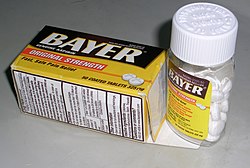
Over-the-counter (OTC) drugs are medicines sold directly to a consumer without a requirement for a prescription from a healthcare professional, as opposed to prescription drugs, which may be supplied only to consumers possessing a valid prescription. In many countries, OTC drugs are selected by a regulatory agency to ensure that they contain ingredients that are safe and effective when used without a physician's care. OTC drugs are usually regulated according to their active pharmaceutical ingredient (API) and strengths of final products.
The term over-the-counter (OTC) refers to a medication that can be purchased without a medical prescription. In contrast, prescription drugs require a prescription from a doctor or other health care professional and should only be used by the prescribed individual. Some drugs may be legally classified as over-the-counter (i.e. no prescription is required), but may only be dispensed by a pharmacist after an assessment of the patient's needs or the provision of patient education. Regulations detailing the establishments where drugs may be sold, who is authorized to dispense them, and whether a prescription is required vary considerably from country to country.
As of 2011, around a third of older adults in the US reportedly used OTC drugs, and this number is increasing. By 2018, the prevalence of use by adults in the U.S. as first-line treatment for minor illnesses had reached 81%: however, there is some debate as to whether this figure relates to an actual improvement of health.
In Canada, there are four drug schedules:
All medications other than Schedule 1 may be considered an OTC drug, as they do not require prescriptions for sale. While the National Association of Pharmacy Regulatory Authorities provides recommendations on the scheduling of drugs for sale in Canada, each province may determine its own scheduling. The drugs found in each schedule may vary from province to province.[citation needed]
In November 2016, India's Drug Consultative Committee announced it was embarking on establishing a definition of drugs which could be dispensed without a prescription. Prior to this, the general assumption was that any drug which did not fall into a prescription schedule could be purchased without a prescription. However, the needed definition had not been enacted by early 2018. The lack of a legal definition for OTC drugs has led to this US$4 billion market segment being effectively unregulated.
In the Netherlands, there are four categories:
A drug that is UA may be sold OTC but only by pharmacists. The drug can be on the shelves like any other product. Examples are domperidone, 400 mg ibuprofen up to 50 tablets and dextromethorphan. A drug that is UAD can also be sold at drugstores which are stores where no prescription can be filled. The drugs are usually on the shelves, and the store also sells items like toys, gadgets, perfumes and homeopathic products. The drugs in this category have limited risk and addiction potential. Examples are naproxen and diclofenac in small amounts, cinnarizine, 400 mg ibuprofen up to 20 tablets and also 500 mg paracetamol up to 50 tablets. Drugs in the AV category can be sold at supermarkets, gas stations, etc. and include only drugs with minimal risk to the public, like paracetamol up to 20 tablets, 200 mg ibuprofen up to 10 tablets, cetirizine and loperamide.
Over-the-counter drug
Over-the-counter (OTC) drugs are medicines sold directly to a consumer without a requirement for a prescription from a healthcare professional, as opposed to prescription drugs, which may be supplied only to consumers possessing a valid prescription. In many countries, OTC drugs are selected by a regulatory agency to ensure that they contain ingredients that are safe and effective when used without a physician's care. OTC drugs are usually regulated according to their active pharmaceutical ingredient (API) and strengths of final products.
The term over-the-counter (OTC) refers to a medication that can be purchased without a medical prescription. In contrast, prescription drugs require a prescription from a doctor or other health care professional and should only be used by the prescribed individual. Some drugs may be legally classified as over-the-counter (i.e. no prescription is required), but may only be dispensed by a pharmacist after an assessment of the patient's needs or the provision of patient education. Regulations detailing the establishments where drugs may be sold, who is authorized to dispense them, and whether a prescription is required vary considerably from country to country.
As of 2011, around a third of older adults in the US reportedly used OTC drugs, and this number is increasing. By 2018, the prevalence of use by adults in the U.S. as first-line treatment for minor illnesses had reached 81%: however, there is some debate as to whether this figure relates to an actual improvement of health.
In Canada, there are four drug schedules:
All medications other than Schedule 1 may be considered an OTC drug, as they do not require prescriptions for sale. While the National Association of Pharmacy Regulatory Authorities provides recommendations on the scheduling of drugs for sale in Canada, each province may determine its own scheduling. The drugs found in each schedule may vary from province to province.[citation needed]
In November 2016, India's Drug Consultative Committee announced it was embarking on establishing a definition of drugs which could be dispensed without a prescription. Prior to this, the general assumption was that any drug which did not fall into a prescription schedule could be purchased without a prescription. However, the needed definition had not been enacted by early 2018. The lack of a legal definition for OTC drugs has led to this US$4 billion market segment being effectively unregulated.
In the Netherlands, there are four categories:
A drug that is UA may be sold OTC but only by pharmacists. The drug can be on the shelves like any other product. Examples are domperidone, 400 mg ibuprofen up to 50 tablets and dextromethorphan. A drug that is UAD can also be sold at drugstores which are stores where no prescription can be filled. The drugs are usually on the shelves, and the store also sells items like toys, gadgets, perfumes and homeopathic products. The drugs in this category have limited risk and addiction potential. Examples are naproxen and diclofenac in small amounts, cinnarizine, 400 mg ibuprofen up to 20 tablets and also 500 mg paracetamol up to 50 tablets. Drugs in the AV category can be sold at supermarkets, gas stations, etc. and include only drugs with minimal risk to the public, like paracetamol up to 20 tablets, 200 mg ibuprofen up to 10 tablets, cetirizine and loperamide.
Recent media
Recent media