
Recent from talks
Bekesbourne Aerodrome
Knowledge base stats:
Talk channels stats:
Members stats:
Bekesbourne Aerodrome
Bekesbourne Aerodrome was an airport located at the southeast edge of the village of Bekesbourne, southeast of Canterbury, Kent. It operated from 1916 until 1940, and had both military and civil roles.
The airfield started as RFC Bekesbourne when the Royal Flying Corps requisitioned 98 acres (40 ha) of land in 1916 as an Emergency Landing Ground (ELG). B flight of No. 50 (Home Defence) Squadron moved in, operating Armstrong Whitworth F.K.3 and F.K.8 and Royal Aircraft Factory B.E.2 and B.E.12 aircraft. Very little action was seen. After a German bombing raid on London in 1917, some S.E.5 aircraft from No.56 Squadron were brought in between 21 June and 5 July, but again, no combat operations were undertaken.
Despite the land being on a slope, and quite restricted in dimensions (there is a railway line on the northern boundary), 50 Squadron moved in entirely on 8 February 1918, and soon standardised on the S.E.5A fighter. With the creation of the Royal Air Force on 1 April, the Squadron's duties expanded at what was now RAF Bekesbourne, and it upgraded its tents and temporary buildings. The S.E.5A aircraft were found to take too long to warm up, and during August were replaced by 24 Sopwith Camels.
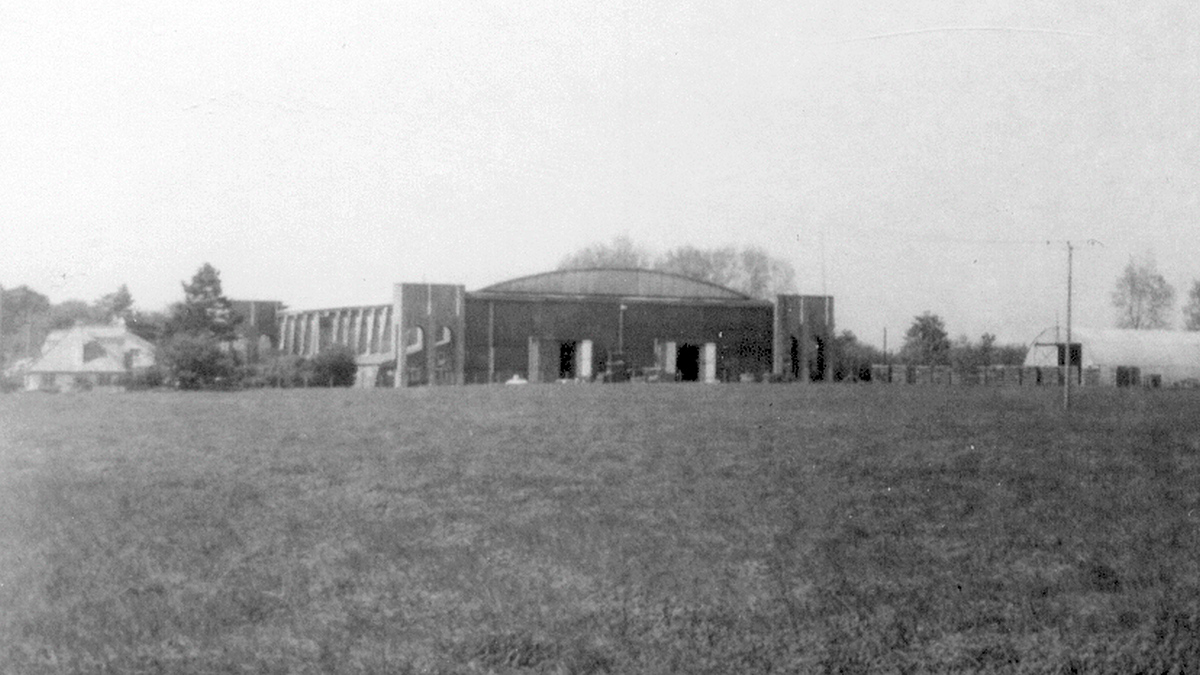
By September 1918 two Belfast Truss hangars had been completed, along with other buildings. The squadron nicknamed its hangar "The Nest". The Commanding Officer from December 1918 until disbandment was Major A T Harris AFC., later Marshal of the Royal Air Force Sir Arthur Harris GCB OBE AFC. 50 Squadron was disbanded in June 1919.
During 1919, dozens of Sopwith Snipes were stored at the airfield, some direct from the manufacturer, and were all burned. In 1920 the RAF relinquished the airfield and civilian flying started.
The airfield was named Canterbury Airport. though it was usually referred to as Bekesbourne Aerodrome even in official papers such as aircraft registration documents where that name is given as the "Usual Station". There is no record of any scheduled services using the airport.
A notable occupant of the airport was Dr. Edward Douglas Whitehead Reid, a senior surgeon at Kent and Canterbury Hospital. In 1919 he bought an old Airco DH.6 which he kept at the airport - becoming the first owner in Britain of a private aircraft after World War I. He went on to own several further aircraft, all based here, which he used for visiting patients, touring, joyriding flights, and competitions. He became very well known in aviation circles, and when he was killed in a crash in 1930, one of the tributes at his funeral came from Amy Johnson.
The Kent Gliding Club had a base here. Dr Whitehead Reid was a member, and in 1930 became its president.
Hub AI
Bekesbourne Aerodrome AI simulator
(@Bekesbourne Aerodrome_simulator)
Bekesbourne Aerodrome
Bekesbourne Aerodrome was an airport located at the southeast edge of the village of Bekesbourne, southeast of Canterbury, Kent. It operated from 1916 until 1940, and had both military and civil roles.
The airfield started as RFC Bekesbourne when the Royal Flying Corps requisitioned 98 acres (40 ha) of land in 1916 as an Emergency Landing Ground (ELG). B flight of No. 50 (Home Defence) Squadron moved in, operating Armstrong Whitworth F.K.3 and F.K.8 and Royal Aircraft Factory B.E.2 and B.E.12 aircraft. Very little action was seen. After a German bombing raid on London in 1917, some S.E.5 aircraft from No.56 Squadron were brought in between 21 June and 5 July, but again, no combat operations were undertaken.
Despite the land being on a slope, and quite restricted in dimensions (there is a railway line on the northern boundary), 50 Squadron moved in entirely on 8 February 1918, and soon standardised on the S.E.5A fighter. With the creation of the Royal Air Force on 1 April, the Squadron's duties expanded at what was now RAF Bekesbourne, and it upgraded its tents and temporary buildings. The S.E.5A aircraft were found to take too long to warm up, and during August were replaced by 24 Sopwith Camels.
By September 1918 two Belfast Truss hangars had been completed, along with other buildings. The squadron nicknamed its hangar "The Nest". The Commanding Officer from December 1918 until disbandment was Major A T Harris AFC., later Marshal of the Royal Air Force Sir Arthur Harris GCB OBE AFC. 50 Squadron was disbanded in June 1919.
During 1919, dozens of Sopwith Snipes were stored at the airfield, some direct from the manufacturer, and were all burned. In 1920 the RAF relinquished the airfield and civilian flying started.
The airfield was named Canterbury Airport. though it was usually referred to as Bekesbourne Aerodrome even in official papers such as aircraft registration documents where that name is given as the "Usual Station". There is no record of any scheduled services using the airport.
A notable occupant of the airport was Dr. Edward Douglas Whitehead Reid, a senior surgeon at Kent and Canterbury Hospital. In 1919 he bought an old Airco DH.6 which he kept at the airport - becoming the first owner in Britain of a private aircraft after World War I. He went on to own several further aircraft, all based here, which he used for visiting patients, touring, joyriding flights, and competitions. He became very well known in aviation circles, and when he was killed in a crash in 1930, one of the tributes at his funeral came from Amy Johnson.
The Kent Gliding Club had a base here. Dr Whitehead Reid was a member, and in 1930 became its president.
Recent media