
Recent from talks
Benjamin McCulloch
Knowledge base stats:
Talk channels stats:
Members stats:
Benjamin McCulloch
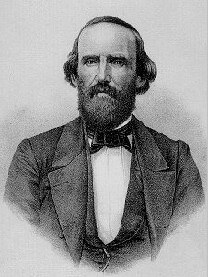
Benjamin McCulloch (November 11, 1811 – March 7, 1862) was a senior officer of the Confederate States Army who commanded infantry in the Trans-Mississippi Theater of the American Civil War. He was killed in action in 1862 at the Battle of Pea Ridge, Arkansas.
He was born November 11, 1811, in Rutherford County, Tennessee, one of twelve children and the fourth son of Alexander McCulloch and Frances Fisher LeNoir. Benjamin's father Alexander, a Yale University graduate, was a descendant of Captain Nicolas Martiau, the French Huguenot settler of Jamestown, Virginia and ancestor of President George Washington, and also had Scots-Irish ancestry. Alexander was also an officer on Brig. Gen. John Coffee's staff during the Creek War of 1813 and 1814 in Alabama (and apparently at the Battle of New Orleans in 1815). His mother was a daughter of a prominent Virginian planter. The McCulloch family had been wealthy, politically influential, and socially prominent in North Carolina before the American Revolution, but Alexander had wasted much of his inheritance and was unable even to educate his sons. (Two of Ben's older brothers had briefly attended a school in Tennessee taught by their neighbor, Sam Houston.) One of Ben's younger brothers was Henry E. McCulloch, also a Confederate general officer. Another brother, Alexander, served in the Texas Revolution and as a captain in Mexico.
The McCulloch family, like many on the frontier, moved often by choice or necessity. In the twenty years following their move from North Carolina and Ben's birth, they lived in eastern Tennessee, Alabama, and then western Tennessee. They finally settled at Dyersburg, where one of their closest neighbors was Davy Crockett, a great influence on young Ben.
In 1834, McCulloch headed west. He reached St. Louis just too late to join the fur trappers headed for the mountains for the season. He then tried to join a freight company heading for Santa Fe as a muleskinner, but was told they had a full complement. He moved on to Wisconsin to investigate lead-mining, but found all the best claims already staked by the large mining companies. In the fall of 1835, he returned to Tennessee to take up farming.
When Crockett went to Texas in 1835 (following his defeat in his third congressional campaign), Ben McCulloch—tired of farming and seeking adventure—decided to accompany him, as did his brother Henry McCulloch. They planned to meet Crockett's Tennessee Boys at Nacogdoches on Christmas Day. Crockett's arrival in Nacogdoches was delayed due to hunting between the Bois d'Arc Creek and Choctaw Bayou. By January 5, 1836, Crockett found his way to Nacogdoches. There, Ben McCulloch greeted him after having convinced his brother, Henry McCulloch to return to Tennessee. Ben subsequently contracted measles and was bedridden for several weeks. Crockett pressed on toward San Antonio. McCulloch's illness prevented him from arriving in San Antonio until after the Alamo had already fallen.
McCulloch joined the Texas army under Sam Houston in its retreat to east Texas. Assigned to Captain Isaac N. Moreland's artillery company at the Battle of San Jacinto (April 21, 1836), he commanded one of the "Twin Sisters"—two six-pounder cannon sent to aid the Texans by the citizens of Cincinnati. One of the twin sisters was named Eleanor, the other Elizabeth. It is believed he chose to command Elizabeth to honor his dear friend and mentor, David Crockett, whose widow was Elizabeth Crockett. He made deadly use of his cannon against the Mexican positions and received a battlefield commission as first lieutenant. For his service (dating before April 18, 1836), McCulloch was issued Texas Bounty Certificate No. 2473 for 320 acres (.5 mi2, 1.3 km2). In 1839, he also received Donation Certificate No. 776 for 640 acres (1 mi2, 2.6 km2), for his service at San Jacinto.
McCulloch was then attached to Captain William H. Smith's cavalry company, but returned to Tennessee to recruit a company of volunteers to return to Texas. He returned a few months later with a company of thirty volunteers which he had placed under the command of his friend, Robert Crockett, David Crockett's son.
By 1838, he had taken up the profession of surveying land for the Republic of Texas in and around the community of Seguin, later joining the Texas Rangers as lieutenant to Captain John Coffee "Jack" Hays. He acquired a reputation as an Indian fighter, favoring shotguns, pistols, and Bowie knives to the regulation saber and carbine.
Hub AI
Benjamin McCulloch AI simulator
(@Benjamin McCulloch_simulator)
Benjamin McCulloch
Benjamin McCulloch (November 11, 1811 – March 7, 1862) was a senior officer of the Confederate States Army who commanded infantry in the Trans-Mississippi Theater of the American Civil War. He was killed in action in 1862 at the Battle of Pea Ridge, Arkansas.
He was born November 11, 1811, in Rutherford County, Tennessee, one of twelve children and the fourth son of Alexander McCulloch and Frances Fisher LeNoir. Benjamin's father Alexander, a Yale University graduate, was a descendant of Captain Nicolas Martiau, the French Huguenot settler of Jamestown, Virginia and ancestor of President George Washington, and also had Scots-Irish ancestry. Alexander was also an officer on Brig. Gen. John Coffee's staff during the Creek War of 1813 and 1814 in Alabama (and apparently at the Battle of New Orleans in 1815). His mother was a daughter of a prominent Virginian planter. The McCulloch family had been wealthy, politically influential, and socially prominent in North Carolina before the American Revolution, but Alexander had wasted much of his inheritance and was unable even to educate his sons. (Two of Ben's older brothers had briefly attended a school in Tennessee taught by their neighbor, Sam Houston.) One of Ben's younger brothers was Henry E. McCulloch, also a Confederate general officer. Another brother, Alexander, served in the Texas Revolution and as a captain in Mexico.
The McCulloch family, like many on the frontier, moved often by choice or necessity. In the twenty years following their move from North Carolina and Ben's birth, they lived in eastern Tennessee, Alabama, and then western Tennessee. They finally settled at Dyersburg, where one of their closest neighbors was Davy Crockett, a great influence on young Ben.
In 1834, McCulloch headed west. He reached St. Louis just too late to join the fur trappers headed for the mountains for the season. He then tried to join a freight company heading for Santa Fe as a muleskinner, but was told they had a full complement. He moved on to Wisconsin to investigate lead-mining, but found all the best claims already staked by the large mining companies. In the fall of 1835, he returned to Tennessee to take up farming.
When Crockett went to Texas in 1835 (following his defeat in his third congressional campaign), Ben McCulloch—tired of farming and seeking adventure—decided to accompany him, as did his brother Henry McCulloch. They planned to meet Crockett's Tennessee Boys at Nacogdoches on Christmas Day. Crockett's arrival in Nacogdoches was delayed due to hunting between the Bois d'Arc Creek and Choctaw Bayou. By January 5, 1836, Crockett found his way to Nacogdoches. There, Ben McCulloch greeted him after having convinced his brother, Henry McCulloch to return to Tennessee. Ben subsequently contracted measles and was bedridden for several weeks. Crockett pressed on toward San Antonio. McCulloch's illness prevented him from arriving in San Antonio until after the Alamo had already fallen.
McCulloch joined the Texas army under Sam Houston in its retreat to east Texas. Assigned to Captain Isaac N. Moreland's artillery company at the Battle of San Jacinto (April 21, 1836), he commanded one of the "Twin Sisters"—two six-pounder cannon sent to aid the Texans by the citizens of Cincinnati. One of the twin sisters was named Eleanor, the other Elizabeth. It is believed he chose to command Elizabeth to honor his dear friend and mentor, David Crockett, whose widow was Elizabeth Crockett. He made deadly use of his cannon against the Mexican positions and received a battlefield commission as first lieutenant. For his service (dating before April 18, 1836), McCulloch was issued Texas Bounty Certificate No. 2473 for 320 acres (.5 mi2, 1.3 km2). In 1839, he also received Donation Certificate No. 776 for 640 acres (1 mi2, 2.6 km2), for his service at San Jacinto.
McCulloch was then attached to Captain William H. Smith's cavalry company, but returned to Tennessee to recruit a company of volunteers to return to Texas. He returned a few months later with a company of thirty volunteers which he had placed under the command of his friend, Robert Crockett, David Crockett's son.
By 1838, he had taken up the profession of surveying land for the Republic of Texas in and around the community of Seguin, later joining the Texas Rangers as lieutenant to Captain John Coffee "Jack" Hays. He acquired a reputation as an Indian fighter, favoring shotguns, pistols, and Bowie knives to the regulation saber and carbine.
Recent media