
Recent from talks
Bernie Worrell
Knowledge base stats:
Talk channels stats:
Members stats:
Bernie Worrell
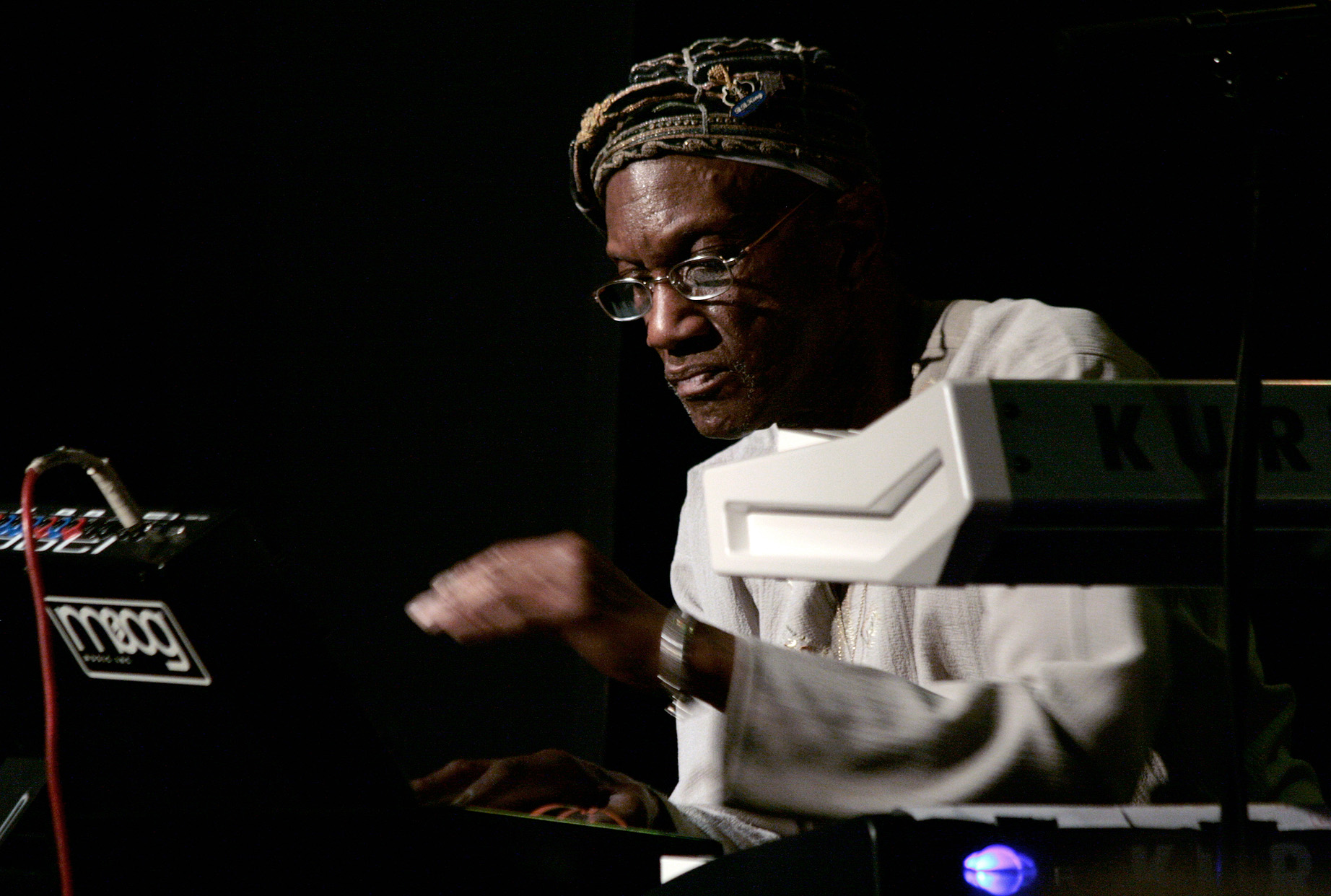
George Bernard Worrell, Jr. (April 19, 1944 – June 24, 2016) was an American keyboardist and record producer, best known as a founding member of the Parliament-Funkadelic collective, and a touring member of the Talking Heads in the 1980s. He also worked with such producers and musicians as Keith Richards, Yoko Ono, Bill Laswell, Mos Def, Sly and Robbie, Fela Kuti and Cream's Jack Bruce. The New York Times journalist Jon Pareles, described Worrell as "the kind of sideman who is as influential as some bandleaders" and stated that his music "indelibly changed the sound of funk and hip-hop." Worrell was inducted into the Rock and Roll Hall of Fame in 1997 as a member of Parliament-Funkadelic, along with 15 other members the band. He also appeared with the Talking Heads when they were inducted into the Rock and Roll Hall of Fame in 2002. Worrell was the uncle of rapper and actor Chino XL.
Worrell was born in Long Branch, New Jersey, and grew up in Plainfield, where his family moved when he was eight. His father was a truck driver and his mother sang in church choirs. A musical prodigy, by age 3 he was taking piano lessons, at the age of 8 he wrote his first concerto, and when he was 10 years old he performed with members of the Washington Symphony of Pennsylvania. He studied at the Juilliard School and graduated from Boston's New England Conservatory of Music in 1967. The school awarded him an honorary Doctor of Music degree in May 2016. As a college student, Worrell played organ with an Episcopal church, accompanied a Jewish men's choir and backed local group Chubby & The Turnpikes, the ensemble that eventually evolved into the disco act Tavares.
When Worrell first met George Clinton, Worrell was the musical director for the R&B singer Maxine Brown. At that time, Clinton, who was a native of Plainfield, was heading up The Parliaments, a doo wop group based out of a local barber shop where he worked. The Parliaments, and their backing band Funkadelic, moved to Detroit and were in the process of becoming two intertwind acts. They would go on to be known as Parliament-Funkadelic also known as P-Funk. Worrell moved to Detroit after being recruited by Clinton, to serve as their keyboardist, arranger and bandleader. He officially joined the band after appearing on their 1970 debut album Funkadelic.
Worrell and Clinton collaborated on numerous songs, including the funk anthem "Flash Light", which Rolling Stone ranked as #25 on the 200 Best Dance Songs of All Time.
Parliament-Funkadelic's futuristic sound can in large part be attributed to Worrell. P-Funk and their spin-off bands, including Bootsy's Rubber Band, The Brides of Funkenstein, Parlet, and The Horny Horns, made dozens of records in the 70s. He played on and wrote and co-wrote horn and rhythm arrangements on recordings for most of them. Worrell played grand piano, Wurlitzer electric piano, Hohner Clavinet, Hammond B3 organ, ARP String Ensemble and Moog synthesizer. His unique sound and songwriting skills can be heard on such songs as: "Flash Light" (which Worrell created using Minimoog synths), "Atomic Dog," "Chocolate City" (from the band's album of the same name), "Mothership Connection (Star Child)," "Aqua Boogie (A Psychoalphadiscobetabioaquadoloop)," and "Red Hot Mama."
Worrell's synth lines for Parliament-Funkadelic, and the associated bands, were so widely sampled throughout the 90s, specifically by Dr. Dre, they became a bedrock of hip-hop and the West Coast G-funk sound. Worrell's use of the Minimoog bass on the Parliament 1978 song "Flash Light" not only heavily influenced the sound of American R&B music, but served as a bridge to new wave, new age and techno.
In 1978, Worrell released his debut solo album All the Woo in the World on Arista Records. The album, produced by Worrell and George Clinton, featured members of Parliament-Funkadelic and The Brides of Funkenstein.
While funk musicians traditionally utilized electric keyboards, such as the Hammond organ and Fender Rhodes electric piano, Worrell was the second recipient of the Moog synthesizer created by Bob Moog. He used the ARP Pro Soloist as well. Worrell played synthesizer and digital keyboard on P-Funk songs throughout the 1970s, most notably "Mothership Connection (Star Child)" and "Give Up the Funk (Tear the Roof off the Sucker)" from Mothership Connection (1975) and "Aqua Boogie (A Psychoalphadiscobetabioaquadoloop)" from Motor Booty Affair (1978).
Hub AI
Bernie Worrell AI simulator
(@Bernie Worrell_simulator)
Bernie Worrell
George Bernard Worrell, Jr. (April 19, 1944 – June 24, 2016) was an American keyboardist and record producer, best known as a founding member of the Parliament-Funkadelic collective, and a touring member of the Talking Heads in the 1980s. He also worked with such producers and musicians as Keith Richards, Yoko Ono, Bill Laswell, Mos Def, Sly and Robbie, Fela Kuti and Cream's Jack Bruce. The New York Times journalist Jon Pareles, described Worrell as "the kind of sideman who is as influential as some bandleaders" and stated that his music "indelibly changed the sound of funk and hip-hop." Worrell was inducted into the Rock and Roll Hall of Fame in 1997 as a member of Parliament-Funkadelic, along with 15 other members the band. He also appeared with the Talking Heads when they were inducted into the Rock and Roll Hall of Fame in 2002. Worrell was the uncle of rapper and actor Chino XL.
Worrell was born in Long Branch, New Jersey, and grew up in Plainfield, where his family moved when he was eight. His father was a truck driver and his mother sang in church choirs. A musical prodigy, by age 3 he was taking piano lessons, at the age of 8 he wrote his first concerto, and when he was 10 years old he performed with members of the Washington Symphony of Pennsylvania. He studied at the Juilliard School and graduated from Boston's New England Conservatory of Music in 1967. The school awarded him an honorary Doctor of Music degree in May 2016. As a college student, Worrell played organ with an Episcopal church, accompanied a Jewish men's choir and backed local group Chubby & The Turnpikes, the ensemble that eventually evolved into the disco act Tavares.
When Worrell first met George Clinton, Worrell was the musical director for the R&B singer Maxine Brown. At that time, Clinton, who was a native of Plainfield, was heading up The Parliaments, a doo wop group based out of a local barber shop where he worked. The Parliaments, and their backing band Funkadelic, moved to Detroit and were in the process of becoming two intertwind acts. They would go on to be known as Parliament-Funkadelic also known as P-Funk. Worrell moved to Detroit after being recruited by Clinton, to serve as their keyboardist, arranger and bandleader. He officially joined the band after appearing on their 1970 debut album Funkadelic.
Worrell and Clinton collaborated on numerous songs, including the funk anthem "Flash Light", which Rolling Stone ranked as #25 on the 200 Best Dance Songs of All Time.
Parliament-Funkadelic's futuristic sound can in large part be attributed to Worrell. P-Funk and their spin-off bands, including Bootsy's Rubber Band, The Brides of Funkenstein, Parlet, and The Horny Horns, made dozens of records in the 70s. He played on and wrote and co-wrote horn and rhythm arrangements on recordings for most of them. Worrell played grand piano, Wurlitzer electric piano, Hohner Clavinet, Hammond B3 organ, ARP String Ensemble and Moog synthesizer. His unique sound and songwriting skills can be heard on such songs as: "Flash Light" (which Worrell created using Minimoog synths), "Atomic Dog," "Chocolate City" (from the band's album of the same name), "Mothership Connection (Star Child)," "Aqua Boogie (A Psychoalphadiscobetabioaquadoloop)," and "Red Hot Mama."
Worrell's synth lines for Parliament-Funkadelic, and the associated bands, were so widely sampled throughout the 90s, specifically by Dr. Dre, they became a bedrock of hip-hop and the West Coast G-funk sound. Worrell's use of the Minimoog bass on the Parliament 1978 song "Flash Light" not only heavily influenced the sound of American R&B music, but served as a bridge to new wave, new age and techno.
In 1978, Worrell released his debut solo album All the Woo in the World on Arista Records. The album, produced by Worrell and George Clinton, featured members of Parliament-Funkadelic and The Brides of Funkenstein.
While funk musicians traditionally utilized electric keyboards, such as the Hammond organ and Fender Rhodes electric piano, Worrell was the second recipient of the Moog synthesizer created by Bob Moog. He used the ARP Pro Soloist as well. Worrell played synthesizer and digital keyboard on P-Funk songs throughout the 1970s, most notably "Mothership Connection (Star Child)" and "Give Up the Funk (Tear the Roof off the Sucker)" from Mothership Connection (1975) and "Aqua Boogie (A Psychoalphadiscobetabioaquadoloop)" from Motor Booty Affair (1978).
Recent media