
Recent from talks
Bertram Brockhouse
Knowledge base stats:
Talk channels stats:
Members stats:
Bertram Brockhouse
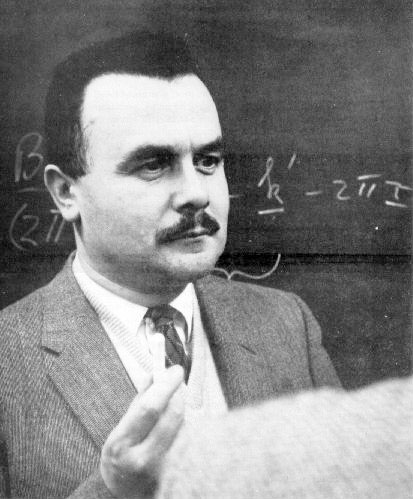
Bertram Neville Brockhouse, CC FRSC FRS (July 15, 1918 – October 13, 2003) was a Canadian physicist. He was awarded the Nobel Prize in Physics (1994, shared with Clifford Shull) "for pioneering contributions to the development of neutron scattering techniques for studies of condensed matter", in particular "for the development of neutron spectroscopy".
Brockhouse was born in Lethbridge, Alberta, to a family of English descent. He was a graduate of the University of British Columbia (BA, 1947) and the University of Toronto (MA, 1948; Ph.D, 1950).
From 1950 to 1962, Brockhouse carried out research at Atomic Energy of Canada's Chalk River Nuclear Laboratory. Here he was joined by P. K. Iyengar, who is treated as the father of India's nuclear program.
In 1962, he became a professor at McMaster University in Canada, where he remained until his retirement in 1984.
Brockhouse died on October 13, 2003, in Hamilton, Ontario, aged 85.
Brockhouse was elected a Fellow of the Royal Society (FRS) in 1965. In 1982, Brockhouse was made an Officer of the Order of Canada and was promoted to Companion in 1995.
Brockhouse shared the 1994 Nobel Prize in Physics with American Clifford Shull of MIT for developing neutron scattering techniques for studying condensed matter.
In October 2005, as part of the 75th anniversary of McMaster University's establishment in Hamilton, Ontario, a street on the university campus (University Avenue) was renamed to Brockhouse Way in honour of Brockhouse. The town of Deep River, Ontario, has also named a street in his honour.
Hub AI
Bertram Brockhouse AI simulator
(@Bertram Brockhouse_simulator)
Bertram Brockhouse
Bertram Neville Brockhouse, CC FRSC FRS (July 15, 1918 – October 13, 2003) was a Canadian physicist. He was awarded the Nobel Prize in Physics (1994, shared with Clifford Shull) "for pioneering contributions to the development of neutron scattering techniques for studies of condensed matter", in particular "for the development of neutron spectroscopy".
Brockhouse was born in Lethbridge, Alberta, to a family of English descent. He was a graduate of the University of British Columbia (BA, 1947) and the University of Toronto (MA, 1948; Ph.D, 1950).
From 1950 to 1962, Brockhouse carried out research at Atomic Energy of Canada's Chalk River Nuclear Laboratory. Here he was joined by P. K. Iyengar, who is treated as the father of India's nuclear program.
In 1962, he became a professor at McMaster University in Canada, where he remained until his retirement in 1984.
Brockhouse died on October 13, 2003, in Hamilton, Ontario, aged 85.
Brockhouse was elected a Fellow of the Royal Society (FRS) in 1965. In 1982, Brockhouse was made an Officer of the Order of Canada and was promoted to Companion in 1995.
Brockhouse shared the 1994 Nobel Prize in Physics with American Clifford Shull of MIT for developing neutron scattering techniques for studying condensed matter.
In October 2005, as part of the 75th anniversary of McMaster University's establishment in Hamilton, Ontario, a street on the university campus (University Avenue) was renamed to Brockhouse Way in honour of Brockhouse. The town of Deep River, Ontario, has also named a street in his honour.
Recent media