
Recent from talks
Bethlem Royal Hospital
Knowledge base stats:
Talk channels stats:
Members stats:
Bethlem Royal Hospital
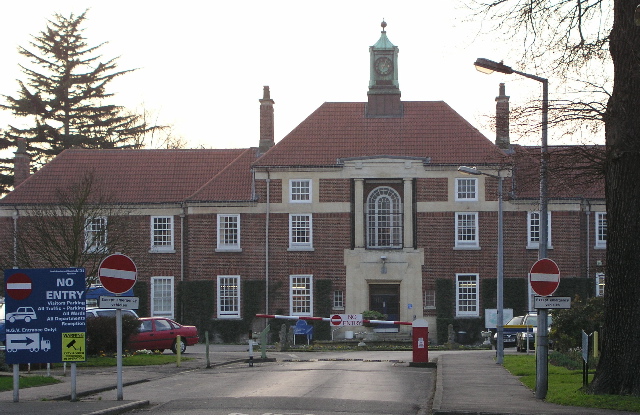
Bethlem Royal Hospital, also known as St Mary Bethlehem, Bethlehem Hospital and Bedlam, is a psychiatric hospital in Bromley, London. Its famous history has inspired several horror books, films, and television series, most notably Bedlam, a 1946 film with Boris Karloff.
The hospital is part of the South London and Maudsley NHS Foundation Trust. It is closely associated with King's College London and, in partnership with the Institute of Psychiatry, Psychology and Neuroscience, is a major centre for psychiatric research. It is part of the King's Health Partners academic health science centre and the National Institute for Health and Care Research (NIHR) Biomedical Research Centre for Mental Health.
Founded in 1247, the hospital was originally located just outside the city walls, in the Bishopsgate Without area of the City of London. It moved a short distance to Moorfields in 1676, and then to St George's Fields in Southwark in 1815, before moving to its current location in Monks Orchard in 1930.
The word "bedlam", meaning uproar and confusion, is derived from the hospital's nickname. Although it became a modern psychiatric hospital, historically it was representative of the worst excesses of asylums in the era of lunacy reform.
The hospital was founded in 1247 as the Priory of the New Order of our Lady of Bethlehem in the city of London during the reign of Henry III.
It was established by the Bishop-elect of Bethlehem, the Italian Goffredo de Prefetti, following a donation of personal property by the London alderman and former sheriff, Simon FitzMary. The original location was just beyond London's wall, in the parish of St Botolph-without-Bishopsgate, which for civil purposes was coterminous with the Bishopsgate Without area. The hospital was located where the south-east corner of Liverpool Street Station now stands. Bethlem was not initially intended as a hospital, in the clinical sense, much less as a specialist institution for the insane, but as a centre for the collection of alms to support the Crusader Church and to link England to the Holy Land.
De Prefetti's need to generate income for the Crusader Church and restore the financial fortunes of his see had been occasioned by two misfortunes: his bishopric had suffered significant losses following the destructive conquest of Bethlehem by the Khwarazmian Turks in 1244, and his immediate predecessor had further impoverished his cathedral chapter through the alienation of a considerable amount of its property. The priory, obedient to the Church of Bethlehem, also housed the poor and, if they visited, provided hospitality to the bishop, canons, and brothers of Bethlehem. Thus, Bethlem became a hospital, in medieval usage, "an institution supported by charity or taxes for the care of the needy". The subordination of the priory's religious order to the bishops of Bethlehem was further underlined in the foundational charter, which stipulated that the prior, canons, and inmates were to wear a star upon their cloaks and capes to symbolise their obedience to the church of Bethlehem.
During the thirteenth and fourteenth centuries, with its activities underwritten by episcopal and papal indulgences, the hospital's role as a centre for alms collection persisted, but its linkage to the Order of Bethlehem increasingly unravelled, putting its purpose and patronage in doubt. In 1346, the master of Bethlem, a position at that time granted to the most senior of London's Bethlemite brethren, applied to the city authorities seeking protection; thereafter metropolitan office-holders claimed power to oversee the appointment of masters and demanded in return an annual payment of 40 shillings. It is doubtful whether the city really provided substantial protection and much less that the mastership fell within their patronage but, dating from the 1346 petition, it played a role in the management of Bethlem's finances. By this time, the Bethlehemite bishops had relocated to Clamecy, France, under the surety of the Avignon papacy. This was significant as, throughout the reign of Edward III (1327–77), the English monarchy had extended its patronage over ecclesiastical positions through the seizure of priories under the control of non-English religious houses. As a dependent house of the Order of Saint Bethlehem in Clamecy, Bethlem was vulnerable to seizure by the crown and this occurred in the 1370s when Edward III took control. The purpose of this appropriation was, in the context of the Hundred Years' War between France and England, to prevent funds raised by the hospital from enriching the French monarchy via the papal court. After this event the masters of the hospital, semi-autonomous figures in charge of its day-to-day management, were normally crown appointees and it became an increasingly secularised institution. The memory of its foundation became muddied and muddled; in 1381, the royal candidate for the post of master claimed that from its beginnings it had been superintended by an order of knights and he confused its founder, Goffredo de Prefetti, with the Frankish crusader, Godfrey de Bouillon. The removal of the last symbolic link to the Bethlehemites was confirmed in 1403 when it was reported that master and inmates no longer wore the star of Bethlehem.
Hub AI
Bethlem Royal Hospital AI simulator
(@Bethlem Royal Hospital_simulator)
Bethlem Royal Hospital
Bethlem Royal Hospital, also known as St Mary Bethlehem, Bethlehem Hospital and Bedlam, is a psychiatric hospital in Bromley, London. Its famous history has inspired several horror books, films, and television series, most notably Bedlam, a 1946 film with Boris Karloff.
The hospital is part of the South London and Maudsley NHS Foundation Trust. It is closely associated with King's College London and, in partnership with the Institute of Psychiatry, Psychology and Neuroscience, is a major centre for psychiatric research. It is part of the King's Health Partners academic health science centre and the National Institute for Health and Care Research (NIHR) Biomedical Research Centre for Mental Health.
Founded in 1247, the hospital was originally located just outside the city walls, in the Bishopsgate Without area of the City of London. It moved a short distance to Moorfields in 1676, and then to St George's Fields in Southwark in 1815, before moving to its current location in Monks Orchard in 1930.
The word "bedlam", meaning uproar and confusion, is derived from the hospital's nickname. Although it became a modern psychiatric hospital, historically it was representative of the worst excesses of asylums in the era of lunacy reform.
The hospital was founded in 1247 as the Priory of the New Order of our Lady of Bethlehem in the city of London during the reign of Henry III.
It was established by the Bishop-elect of Bethlehem, the Italian Goffredo de Prefetti, following a donation of personal property by the London alderman and former sheriff, Simon FitzMary. The original location was just beyond London's wall, in the parish of St Botolph-without-Bishopsgate, which for civil purposes was coterminous with the Bishopsgate Without area. The hospital was located where the south-east corner of Liverpool Street Station now stands. Bethlem was not initially intended as a hospital, in the clinical sense, much less as a specialist institution for the insane, but as a centre for the collection of alms to support the Crusader Church and to link England to the Holy Land.
De Prefetti's need to generate income for the Crusader Church and restore the financial fortunes of his see had been occasioned by two misfortunes: his bishopric had suffered significant losses following the destructive conquest of Bethlehem by the Khwarazmian Turks in 1244, and his immediate predecessor had further impoverished his cathedral chapter through the alienation of a considerable amount of its property. The priory, obedient to the Church of Bethlehem, also housed the poor and, if they visited, provided hospitality to the bishop, canons, and brothers of Bethlehem. Thus, Bethlem became a hospital, in medieval usage, "an institution supported by charity or taxes for the care of the needy". The subordination of the priory's religious order to the bishops of Bethlehem was further underlined in the foundational charter, which stipulated that the prior, canons, and inmates were to wear a star upon their cloaks and capes to symbolise their obedience to the church of Bethlehem.
During the thirteenth and fourteenth centuries, with its activities underwritten by episcopal and papal indulgences, the hospital's role as a centre for alms collection persisted, but its linkage to the Order of Bethlehem increasingly unravelled, putting its purpose and patronage in doubt. In 1346, the master of Bethlem, a position at that time granted to the most senior of London's Bethlemite brethren, applied to the city authorities seeking protection; thereafter metropolitan office-holders claimed power to oversee the appointment of masters and demanded in return an annual payment of 40 shillings. It is doubtful whether the city really provided substantial protection and much less that the mastership fell within their patronage but, dating from the 1346 petition, it played a role in the management of Bethlem's finances. By this time, the Bethlehemite bishops had relocated to Clamecy, France, under the surety of the Avignon papacy. This was significant as, throughout the reign of Edward III (1327–77), the English monarchy had extended its patronage over ecclesiastical positions through the seizure of priories under the control of non-English religious houses. As a dependent house of the Order of Saint Bethlehem in Clamecy, Bethlem was vulnerable to seizure by the crown and this occurred in the 1370s when Edward III took control. The purpose of this appropriation was, in the context of the Hundred Years' War between France and England, to prevent funds raised by the hospital from enriching the French monarchy via the papal court. After this event the masters of the hospital, semi-autonomous figures in charge of its day-to-day management, were normally crown appointees and it became an increasingly secularised institution. The memory of its foundation became muddied and muddled; in 1381, the royal candidate for the post of master claimed that from its beginnings it had been superintended by an order of knights and he confused its founder, Goffredo de Prefetti, with the Frankish crusader, Godfrey de Bouillon. The removal of the last symbolic link to the Bethlehemites was confirmed in 1403 when it was reported that master and inmates no longer wore the star of Bethlehem.
Recent media