Hubbry Logo
Big West ConferenceBig West ConferenceMain
Open search
Big West Conference
Community hub
Big West Conference
logo
8 pages, 0 posts
0 subscribers
Be the first to start a discussion here.
Big West Conference
Big West Conference
from Wikipedia
Big West Conference
FormerlyPacific Coast Athletic Association (1969–1988)
AssociationNCAA
FoundedJuly 1, 1969; 56 years ago (1969-07-01)
CommissionerDan Butterly (since July 1, 2020)
Sports fielded
  • 21
    • men's: 10
    • women's: 11
DivisionDivision I
SubdivisionNon–football
No. of teams11 (12 in 2026, 11 in 2027)
HeadquartersIrvine, California
RegionWest Coast
BroadcastersESPN
Spectrum SportsNet
Official websitewww.bigwest.org
Locations
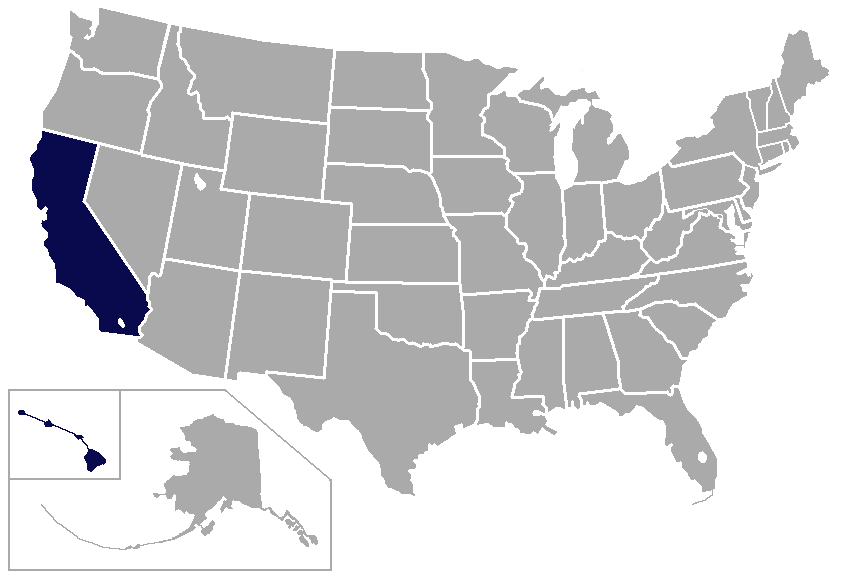
Location of teams in

The Big West Conference (BWC) is an American collegiate athletic conference whose member institutions participate in the National Collegiate Athletic Association's Division I. The conference was originally formed on July 1, 1969, as the Pacific Coast Athletic Association (PCAA), and in 1988 was renamed the Big West Conference. The conference stopped sponsoring college football after the 2000 season.

Among the conference's 11 member institutions, 10 are located in California (nine in Southern California alone), and one is located in Hawaii (though the Hawaii member is leaving for the Mountain West Conference, effective July 1, 2026). All of the current schools are public universities, with the California schools evenly split between the California State University and the University of California systems. In addition, one affiliate member plays two sports in the BWC not sponsored by its home conference.

History

[edit]
Big West Conference Members locations
– Full members
– Future member
– Current Associate and Future full member
– Departing members
Big West Conference Members locations
– Departing members (future affiliate)
Big West Conference Members locations
– Future Member

Pacific Coast Athletic Association

[edit]

The Big West Conference was formed in June 1968 as the Pacific Coast Athletic Association.[1] The five original charter members were Fresno State, San Jose State, UC Santa Barbara, San Diego State, and Long Beach State.[1] Two other schools, Cal State Los Angeles and the University of the Pacific, were also considered but they declined at that time to pursue membership.[2] The newly formed conference had several meetings to set up its governance, which was confirmed in October 1968 on the campus of UC Santa Barbara.[3] Before the league started play, Cal State Los Angeles joined as a full member and the University of the Pacific joined for football only, becoming a full member itself two years later.[4][5] The conference itself lists July 1, 1969, as its founding date, with the seven institutions beginning conference play that fall.[6][7]

Evolution

[edit]

Since its inception as the Pacific Coast Athletic Association, the conference has seen many changes. Utah State was the first institution outside California to join the conference in 1978.[8] This opened the floodgates for many other schools to affiliate with the PCAA; notable schools include UNLV, Nevada, Louisiana Tech, Boise State, and football-only members, such as Southwestern Louisiana and Arkansas State.

In 1983, the PCAA became the first western conference to introduce women's athletic programs, allowing female student-athletes to compete at the same level as their male counterparts. This proved vital for Hawaiʻi as their only participation in the conference was for their women's sports.

However, many universities left to join conferences that were perceived as more well-known, such as the Western Athletic Conference or the Mountain West Conference, while others did not see the benefit of travel since historically many of the teams have been California-based.

From the departures of Idaho and Utah State in 2005 until the arrival of Hawaiʻi in 2012, all members were based in California, reducing the cost and travel time between the universities. When Hawaiʻi joined, it agreed to help defray a portion of travel costs to that state for the league's California members.

In 2011, San Diego State University and Boise State University had initially agreed to move all sports except football to the Big West by 2013.[9] However, when the Big East decided to no longer sponsor football for the 2013 season, both San Diego and Boise backed out of their agreement with the Big West, electing to remain members of the Mountain West instead.

Upon numerous conference shifts spurred from the announcement that UCLA and USC of the Pac-12 were to move to Big 10, a domino effect occurred, ultimately resulting in both Hawaiʻi and UC Davis announcing their move to the Mountain West effective the 2026 school year.

This would leave the Big West with 9 teams, and with the remaining member universities hoping to keep the conference at at least 11 teams, the Big West invited both California Baptist University and Utah Valley University to join the conference by the 2026 school year. Both institutions have since announced their respective intentions to join the conference, marking it the first time since 2013 that a private university will compete in the Big West, and the first time since 2005 that the Big West will have a member in the continental U.S. outside of California. Later in June, Sacramento State announced its intention to join the Big West in all sports except football, effective by the 2026 school year, when they will join alongside California Baptist and Utah Valley.

On September 3, 2025, UC San Diego formally accepted an invite to the West Coast Conference for the 2027-28 season after Gonzaga announced their departure to the rebuilt Pac-12 for the 2026-27 season earlier that year.[10]

There have been no more than 35 full and associate members in the conference's history, while only two of the original seven charter members remain (Long Beach State and UC Santa Barbara, with only Long Beach State's membership being continuous).

The change to the Big West

[edit]
The logo of the Big West from 2000 to 2021[11]

Effective July 1, 1988, the Pacific Coast Athletic Association changed its name to the Big West Conference.[7] With such schools as Utah State, UNLV, Nevada, New Mexico State, and Hawaiʻi now in the fold, the name change was more representative of its member institutions.[7] In addition, the conference had signed a contract with ESPN to have its men's basketball games telecast as the third game of a triple header known as Big Monday - the other conferences being featured were the Big East and the Big Ten so the name Big West fit the theme.[12]

Member schools

[edit]

Current full members

[edit]

  Member departing for the Mountain West Conference in 2026.
  Members departing for the West Coast Conference in 2027.

Institution Location Founded Joined Type Enrollment Endowment

(millions – FY24)

Nickname Colors
California Polytechnic State University
(Cal Poly)
San Luis Obispo, California 1901 1996[a] Public
(CSU system)
22,287 $296.45[13] Mustangs      
California State University, Bakersfield
(Bakersfield)[14]
Bakersfield, California 1965 2020[15][b] Public
(CSU system)
9,261 $42.74[13] Roadrunners    
California State University, Fullerton
(Cal State Fullerton)
Fullerton, California 1957 1974 Public
(CSU system)
38,726 $148.68[13] Titans      
California State University, Long Beach
(Long Beach State)
Long Beach, California 1949 1969 Public
(CSU system)
39,360 $132.9[13] Beach[c]    
California State University, Northridge
(Cal State Northridge)
Los Angeles, California 1958 2001 Public
(CSU system)
38,511 $219.62[13] Matadors      
University of California, Davis
(UC Davis)[d]
Yolo County, California 1905 2007 Public
(UC system)
40,772 $2,386.11[17] Aggies    
University of California, Irvine
(UC Irvine)
Irvine, California 1965 1977 Public
(UC system)
37,243 $2,722.42[17] Anteaters    
University of California, Riverside
(UC Riverside)
Riverside, California 1954 2001 Public
(UC system)
26,809 $1,287.51[17] Highlanders    
University of California, San Diego
(UC San Diego)
San Diego, California 1960 2020[e] Public
(UC system)
42,968 $3,019.28[17] Tritons    
University of California, Santa Barbara
(UC Santa Barbara)
Isla Vista, California 1891 1969;
1976[f]
Public
(UC system)
26,421 $1,074.5[17] Gauchos    
University of Hawaiʻi at Mānoa
(Hawaiʻi)[g]
Honolulu, Hawaii 1907 2012[h] Public
(U of H system)
19,074 $566.99
(system-wide)[19]
Rainbow Warriors
& Rainbow Wahine[i]
Notes
  1. ^ Then Division II, Cal Poly San Luis Obispo was an affiliate member of the Big West in women's volleyball from 1984–85 to 1989–90.
  2. ^ Before becoming a full member, Bakersfield had been a Big West affiliate in beach volleyball since the 2015–16 school year.
  3. ^ Long Beach State fully rebranded its athletic program as Beach effective in the 2020–21 school year, after transitioning from its former nickname of 49ers over several years. The baseball team continues to use the nickname Dirtbags, which it had adopted in the 49ers era.
  4. ^ UC Davis will leave the Big West to join the Mountain West Conference as a full member in 2026, though they will remain an affiliate member for football in the Big Sky Conference.[16]
  5. ^ UC San Diego first joined the Big West as a men's volleyball affiliate in 2017. It added women's water polo to its BWC membership in 2019.
  6. ^ UC Santa Barbara joined the Big West when it was founded in 1969, left to become an independent after the 1973–74 school year, then rejoined the conference effective the 1976–77 school year.
  7. ^ Hawaiʻi will leave the Big West to join the Mountain West Conference as a full member in 2026, though they will remain an affiliate member for men's swimming and diving, men's volleyball, beach volleyball, and women's water polo.[18]
  8. ^ Hawaiʻi was a full member of the Big West in women's sports from 1984–85 to 1995–96; while the men's sports were a full member of the Western Athletic Conference (WAC) during that tenure.
  9. ^ The Hawaiʻi beach volleyball team is officially Rainbow Wahine, but more commonly uses the nickname BeachBows.

Future members

[edit]
Institution Location Founded Joining Type Enrollment Endowment

(millions – FY24)

Nickname Colors Current conference
California Baptist University[20][21] Riverside, California 1950 2026[a] Private
(Baptist)
11,491[22] $162.7[23] Lancers     WAC
California State University, Sacramento[24] Sacramento, California 1947 2026[b] Public
(CSU system)
31,181 $86.42[13] Hornets     Big Sky
Utah Valley University[25] Orem, Utah 1941 2026 Public 41,728 $109.94[26] Wolverines     WAC
Notes
  1. ^ Cal Baptist will pay a $1.2 million exit fee to the WAC. The university will be the first private university to compete in the Big West since Pacific left in 2013.
  2. ^ Before becoming a full member, Sacramento State had been a Big West affiliate in various sports dating back to 1996. These sports included:
    • baseball between the 1996–97 and 2001–02 school years
    • men's soccer since the 2012–13 school year
    • beach volleyball since the 2015–16 school year
    • men's golf during the 2024–25 school year

Affiliate members

[edit]
Institution Nickname Location Founded Joined Type Enrollment Primary
conference
Big West
sport(s)
California State University, Sacramento
(Sacramento State)
Hornets[a] Sacramento, California 1947 2012–13 Public
(CSU system)
30,670 Big Sky Men's soccer
2015–16 Beach volleyball
Grand Canyon University Antelopes Phoenix, Arizona 1949 2025–26 Private For-Profit[b] 103,427[c] Mountain West Men's swimming & diving[d]
University of San Diego Toreros San Diego, California 1949 2025–26 Private 7,548 WCC Women's swimming & diving
Seattle University Redhawks Seattle, Washington 1891 7,755 Men's swimming & diving
Women's swimming & diving
Notes
  1. ^ Sacramento State men's soccer joined the Big West Conference in the 2012 fall season (2012–13 school year) and beach volleyball followed for the 2016 spring season (2015–16 school year). They will become full members in the 2026-27 season.[27][28]
  2. ^ Grand Canyon's for-profit status is disputed. The U.S. Department of Education treats it as a for-profit institution, but the Internal Revenue Service, the NCAA, and the state of Arizona consider it a nonprofit.
  3. ^ Includes online students. Current on-campus enrollment is about 25,300.
  4. ^ Though Grand Canyon was initially set to compete in both men and women's swimming and diving in 2025, upon their early admission into the Mountain West, they moved their women's team to that conference. It was announced later that the Mountain West would begin sponsoring men's swimming and diving in 2026.

Future affiliate member

[edit]
Institution Nickname Location Founded Joining Type Enrollment Primary
conference
Big West
sport(s)
University of Hawaiʻi at Mānoa
(Hawaiʻi)
Rainbow Warriors &
Rainbow Wahine
Honolulu, Hawaii 1907 2026[a] Public
(U of H system)
19,074 Big West
(MW in 2026)
Beach volleyball
Men's volleyball
Women's water polo
Notes
  1. ^ While technically the school has been a Big West member in all sports since 2012, this will be their first year as an affiliate member. Initially Hawai'i was set to compete in men's swimming and diving, but the Mountain West announced they would begin sponsoring it in 2026.[29]

Former members

[edit]

Many of the former members of the Big West are now members of the Western Athletic Conference or the Mountain West Conference. Of the nine schools that were in the WAC before its early-2010s realignment, only Hawaiʻi had not spent some time in the Big West as a football participant – it was a Big West member only in women's sports. Of the former members, Cal State Los Angeles is the only team that reverted to Division II level.

School names and nicknames reflect those used by the institutions when they were Big West members. One school has changed its name (Southwestern Louisiana, now branded athletically as Louisiana and also known as Louisiana–Lafayette) and another its nickname (Arkansas State, from Indians to Red Wolves).

Former full members

[edit]
Institution Nickname Location Founded Joined Left Type Enrollment Current
primary
conference
Boise State University Broncos Boise, Idaho 1932 1996 2001 Public 22,678 Mountain West
(Pac-12 in 2026)
California State University, Fresno
(Fresno State)
Bulldogs Fresno, California 1911 1969 1992 22,565
California State University, Los Angeles
(Cal State L.A.)
Golden Eagles Los Angeles, California 1947 1974 20,619 CCAA[a]
University of Idaho Vandals Moscow, Idaho 1889 1996 2005 11,180 Big Sky
University of Nevada, Las Vegas
(UNLV)
Rebels Las Vegas, Nevada[b] 1957 1982 1996 28,203 Mountain West
University of Nevada, Reno Wolf Pack Reno, Nevada 1874 1992 2000 18,227
New Mexico State University Aggies Las Cruces, New Mexico 1888 1983 18,497 CUSA
University of North Texas Mean Green Denton, Texas 1890 1996 35,778 American
University of the Pacific Tigers Stockton, California 1851 1971 2013 Private 6,296 West Coast
San Diego State University Aztecs San Diego, California 1897 1969 1978 Public 28,789 Mountain West
(Pac-12 in 2026)
San Jose State University Spartans San Jose, California 1857 1996 32,697 Mountain West
Utah State University Aggies Logan, Utah 1888 1978 2005 28,796 Mountain West
(Pac-12 in 2026)
  1. ^ Currently an NCAA Division II athletic conference.
  2. ^ The UNLV campus lies outside the Las Vegas city limits in the unincorporated community of Paradise. The U.S. Postal Service considers all unincorporated areas in the Las Vegas Valley to have a Las Vegas address.

Former affiliate members

[edit]
Institution Nickname Location Founded Joined Left Type Enrollment Primary
conference
Big West
sport(s)
California State Polytechnic University, Pomona
(Cal Poly Pomona)
Broncos Pomona, California 1938 1984–85 1989–90 Public 22,501 CCAA[a] softball
University of Hawaiʻi at Mānoa
(Hawaiʻi)
Rainbow Warriors
& Rainbow Wahine[b]
Honolulu, Hawaii 1907 1995–96 19,074 Big West women's sports
University of Idaho (Idaho) Vandals Moscow, Idaho 1889 2024–25 11,849 Big Sky men's golf
California State University, Sacramento
(Sacramento State)
Hornets Sacramento 1947 1996–97 2001–02 24,388 baseball
2024–25 men's golf
San Diego State University Aztecs San Diego 1897 1984–85 1989–90 33,790 Mountain West
(Pac-12 in 2026)
women's sports
2012–13 women's water polo
  1. ^ Currently an NCAA Division II athletic conference.
  2. ^ The Hawaiʻi beach volleyball team is officially Rainbow Wahine, but more commonly uses the nickname BeachBows.

Former football-only members

[edit]
Institution Nickname Location Founded Joined Left Type Enrollment Primary
conference
at the time
of joining
Big West
football
Current
conference
Arkansas State University Indians[a] Jonesboro, Arkansas 1909 1993–94 1995–96 Public 13,438 Sun Belt
1999–00 2000–01[b]
Louisiana Tech University Bulldogs Ruston, Louisiana 1894 1993–94 1995–96 11,581 Sun Belt CUSA
Northern Illinois University Huskies DeKalb, Illinois 1895 25,313 Mid-Continent[c] MAC
(MW in 2026)[d]
University of Southwestern Louisiana[e] Ragin' Cajuns Lafayette, Louisiana 1898 19,188 Sun Belt
University of the Pacific Tigers Stockton, California 1851 1969 1971[f] Private 6,296 West Coast
Notes
  1. ^ Currently known as the Arkansas State Red Wolves.
  2. ^ Arkansas State joined the Big West for football in the 1993 fall season (1993–94 school year), left to become an independent after the 1995 fall season (–96 school year, then re-joined in 1999, only to leave again after the 2000 fall season (2000–01 school year).
  3. ^ Currently known as the Summit League.
  4. ^ Northern Illinois will be a football-only MW member, with most other sports in the Horizon League.
  5. ^ Currently known as the University of Louisiana at Lafayette, and branded for sports purposes as "Louisiana".
  6. ^ Pacific joined the Big West for only football in 1969, and became a full member in 1971.

Membership timeline

[edit]
Utah Valley UniversityWestern Athletic ConferenceGreat West ConferenceNCAA Division I Independent schoolsScenic West Athletic ConferenceNCAA Intermountain Collegiate Athletic ConferenceNational Junior College Athletic AssociationCalifornia Baptist UniversityWestern Athletic ConferencePacific West ConferenceGreat Southwest Athletic ConferenceNAIA independent schoolsSeattle UniversityUniversity of San DiegoGrand Canyon UniversityWest Coast ConferenceUniversity of California, San DiegoNCAA Division III independent schoolsCalifornia State University, BakersfieldCalifornia Collegiate Athletic AssociationMountain West ConferenceUniversity of California, DavisNCAA Division I independent schoolsCalifornia Collegiate Athletic AssociationNorthern California Athletic ConferenceNorthern California Athletic ConferenceUniversity of California, RiversideNCAA Division II independent schoolsCalifornia Collegiate Athletic AssociationCalifornia State University, NorthridgeBig Sky ConferenceAmerican West ConferenceNCAA Division I independent schoolsCalifornia Collegiate Athletic AssociationCalifornia Polytechnic State UniversityAmerican West ConferenceCalifornia Collegiate Athletic AssociationCalifornia State University, SacramentoAmerican West ConferenceNorthern California Athletic ConferenceNorthern California Athletic ConferenceBig Sky ConferenceWestern Athletic ConferenceUniversity of IdahoBig Sky ConferencePac-12 ConferenceMountain West ConferenceWestern Athletic ConferenceBoise State UniversityBig Sky ConferenceAmerican Athletic ConferenceConference USASun Belt ConferenceUniversity of North TexasSouthland ConferenceNCAA Division I FBS independent schoolsMissouri Valley ConferenceArkansas State UniversityUniversity of Louisiana at LafayetteNorthern Illinois UniversityLouisiana Tech UniversityMountain West ConferenceWestern Athletic ConferenceUniversity of Nevada, RenoBig Sky ConferenceWest Coast ConferenceUniversity of Hawaiʻi at MānoaWestern Athletic ConferenceWestern Athletic ConferenceCalifornia State Polytechnic University, PomonaConference USAWestern Athletic ConferenceSun Belt ConferenceNew Mexico State UniversityMissouri Valley ConferenceNCAA Division I independent schoolsMountain West ConferenceWestern Athletic ConferenceUniversity of Nevada, Las VegasNCAA Division I FBS independent schoolsWest Coast ConferencePac-12 ConferenceMountain West ConferenceWestern Athletic ConferenceUtah State UniversityNCAA Division I independent schoolsUniversity of California, IrvineNCAA Division II independent schoolsCalifornia State University, FullertonCalifornia Collegiate Athletic AssociationCalifornia State University, Long BeachUniversity of California, Santa BarbaraWest Coast ConferenceUniversity of the Pacific (United States)Mountain West ConferenceWestern Athletic ConferenceSan Jose State UniversityPac-12 ConferenceMountain West ConferenceWestern Athletic ConferenceCalifornia State University, FresnoPac-12 ConferenceMountain West ConferenceWestern Athletic ConferenceWestern Athletic ConferenceSan Diego State UniversityCalifornia Collegiate Athletic AssociationCalifornia State University, Los Angeles

Full members  Full members (non-football)  Assoc. members (football only)  Assoc. member (Other sports)  Other Conference  Other Conference 

Notes

  • San Diego State played football as an independent for the 1976 and 1977 seasons before leaving the Big West Conference in 1978.
  • UC Santa Barbara was an independent from 1974–75 to 1975–76.
  • Cal State Fullerton played football as an independent for the 1992 season and dropped football entirely the following year.
  • Louisiana Tech, Northern Illinois, Southwestern Louisiana, and Arkansas State joined the Big West for a short-lived football consortium from 1993 to 1995.
  • Arkansas State played football as an independent from 1996 to 1998 and later rejoined the Big West for football during the 1999 and 2000 seasons.

Sports

[edit]

The Big West Conference currently sponsors 21 NCAA sports, with men's and women's swimming & diving the newest additions for the 2024–25 school year.[30] The Big West is considered a mid-major conference, the term itself coined in 1977.

In baseball, Cal State Fullerton has won four College World Series titles with national championships in 1979, 1984, 1995, and 2004.[31] In addition, Long Beach State and UC Irvine have made multiple appearances in the College World Series. The Big West is the only existing mid-major conference to have multiple teams make the College World Series in the same year, with Cal State Fullerton and Fresno State both making it in 1988, Long Beach State and Fresno in 1991, and Fullerton and UC Irvine in 2007. Fullerton also has a national championship in softball, winning in 1986. Hawaiʻi joined the conference in women's sports only between 1984 and 1996, and won the 1987 NCAA women's volleyball title. Long Beach State has won three NCAA women's volleyball titles as a part of Big West Conference women's volleyball, with national championships in 1989, 1993, and 1998. Misty May-Treanor led the 49ers (now known as Beach) to a 36–0 record en route to the program's most recent title. UC Santa Barbara was the NCAA men's soccer runner-up in 2004, losing the national championship match to Indiana on penalty kicks. The Gauchos returned to the College Cup in 2006 and won the national championship.

Former Big West members UNLV and Pacific won national championships while part of the conference. The UNLV Runnin' Rebels men's basketball team won the 1990 NCAA tournament championship after routing Duke 103–73 in the national title game. UNLV was undefeated during the 1991 NCAA men's basketball season before falling to Duke in the final four. The Runnin' Rebels during this era are widely considered one of the best college basketball teams of all time. The Pacific Tigers women's volleyball team won back-to-back national championships in 1985 and 1986.

The Big West did not sponsor men's volleyball or men's water polo, but it was the primary conference affiliation of several schools that compete in the Mountain Pacific Sports Federation for these sports, respectively. In NCAA men's volleyball, UC Irvine has established itself as one of the nation's most elite programs, winning four national championships in 2007, 2009, 2012, and 2013. Long Beach State also won men's national volleyball titles in 1991, 2018, 2019, and 2025, three while in the Big West. Hawaiʻi also won men's national volleyball titles in 2021 and 2022. In NCAA men's water polo, UC Irvine won three national championships in 1970, 1982, and 1989. UC Santa Barbara also won a men's water polo title in 1979.

On May 31, 2016, the Big West announced the conference would sponsor men's volleyball as its 18th sport, with five Big West schools leaving the MPSF to establish the new men's volleyball league. Men's volleyball is the third of four sports in which the MPSF has recently seen a mass exodus of teams to join an existing conference in a newly sponsored sport, with men's soccer, men's water polo, and women's lacrosse as the others. The men's volleyball membership includes core Big West members Cal State Northridge, Long Beach State, Hawaiʻi, UC Irvine, and UC Santa Barbara. UC San Diego joined as an affiliate to bring the league to the NCAA minimum requirement of 6 teams to receive an automatic bid for the NCAA tournament.

Big West Commissioner Dennis Farrell explained that adding UC San Diego was not an indicator UC San Diego would be added to the Big West Conference as a full member. UC San Diego had recently passed a bill to move all their sports to Division I and was looking for an invite from the Big West Conference. UC San Diego has long competed at the Division I level in men's volleyball; the NCAA conducts a single national championship open to all Division I and II members, and scholarship limits in the sport are the same in both divisions. The Big West regular season for men's volleyball will be a double round-robin, with each team playing the others once at home and once on the road. The Big West Tournament will have all six teams participate in single-elimination rounds with the top two teams receiving semifinal byes.[32]

The Big West is the first Division I all-sports conference (defined as a league that sponsors men's and women's basketball) ever to sponsor men's volleyball, and the second NCAA all-sports conference overall to sponsor men's volleyball as a scholarship sport (the first was the Division II Conference Carolinas).

On November 26, 2017, the Big West announced that it would add UC San Diego along with Cal State Bakersfield as its 10th and 11th members starting on July 1, 2020. Cal State Bakersfield, which was already a full Division I member competing in the Western Athletic Conference, became a full member effective July 1, 2020. UC San Diego, which had failed to move up from Division II in failed bids to the Big West in 2011 and April 2017, has begun the four-year transition process to Division I and became a full member effective July 1, 2024. UC San Diego's men's volleyball joined the Big West in 2017, in advance of that sport's 2018 season, and women's water polo joined in 2019. Because the NCAA does not sponsor a Division II championship in either men's volleyball or women's water polo, UCSD was eligible for conference championships in both sports upon joining the Big West, and remained eligible for such during the D-I transition.[33]

UC San Diego and Cal State Bakersfield, the latter now in the process of rebranding its athletic program as Bakersfield, officially joined the conference on July 1, 2020, and Dan Butterly became the new commissioner following the retirement of Dennis Farrell. UC San Diego officially joined Division I ranks on July 1, 2024, and thus could compete in conference championships and NCAA playoffs from then on.

Big West Conference teams
Sport Men's Women's
Baseball
11
Basketball
11
11
Beach volleyball
7
Cross Country
9
11
Golf
12
9
Soccer
10
11
Softball
10
Swimming & diving
6
6
Tennis
7
10
Track and Field (Outdoor)
10
11
Volleyball
6
11
Water polo
6
7

Men's sponsored sports by school

[edit]
School Baseball Basket­ball Cross
Country
Golf Soccer Swimming
& diving
Tennis Track & Field
(Outdoor)
Volley­ball Water polo Total
Sports
Bakersfield Yes Yes No No Yes Yes No Yes No No 5
Cal Poly Yes Yes Yes Yes Yes Yes Yes Yes No No 8
Cal State Fullerton Yes Yes Yes Yes Yes No No Yes No Yes 7
Cal State Northridge Yes Yes Yes Yes Yes No No Yes Yes No 7
Hawaiʻi Yes Yes No Yes No Yes Yes No Yes No 6
Long Beach State Yes Yes Yes Yes No No No Yes Yes Yes 7
UC Davis Yes Yes Yes Yes Yes No Yes Yes No Yes 8
UC Irvine Yes Yes Yes Yes Yes No Yes Yes Yes Yes 9
UC Riverside Yes Yes Yes Yes Yes No Yes Yes No No 7
UC San Diego Yes Yes Yes Yes Yes Yes Yes Yes Yes Yes 10
UC Santa Barbara Yes Yes Yes Yes Yes Yes Yes Yes Yes Yes 10
Future Members
California Baptist Yes Yes Yes Yes Yes Yes No Yes No Yes 8
Sacramento State Yes Yes Yes Yes Yes No Yes Yes No No 7
Utah Valley Yes Yes Yes Yes Yes No No Yes No No 6
Totals 11 11 9 10 9+1[a] 5+2[b] 7 10 6 6 84+3
  1. ^ Affiliate member Sacramento State.
  2. ^ Affiliate members Grand Canyon and Seattle.
Men's varsity sports not sponsored by the Big West Conference which are played by Big West schools
School Fencing[a] Football[b] Rowing[c] Track & Field
(Indoor)
Wrestling
Bakersfield No No No No Pac-12
Cal Poly No Big Sky No Independent Pac-12
Cal State Fullerton No No No MPSF No
Cal State Northridge No No No MPSF No
California Baptist No No No No Big 12
Hawaiʻi No Mountain West No No No
Long Beach State No No ACRA MPSF No
Sacramento State No Big Sky[d] No Big Sky[d] No
UC Davis No Big Sky ACRA No No
UC Irvine No No ACRA No No
UC Riverside No No No MPSF No
UC San Diego MPSF No MPSF No No
UC Santa Barbara No No ACRA Independent No
Utah Valley No No No WAC[e] Big 12
  1. ^ NCAA fencing is a coeducational sport, with schools fielding separate men's and women's squads and all bouts involving members of the same sex. The only Big West member that sponsors the sport, UC San Diego, fields both squads.
  2. ^ Hawaiʻi competes at the FBS level, while Cal Poly and UC Davis compete at the FCS level. Sacramento State is yet to announce what level they will be playing at.
  3. ^ The only category of rowing sponsored by the NCAA is women's heavyweight rowing. Men's rowing and women's lightweight rowing are organized by the Intercollegiate Rowing Association.
  4. ^ a b Sacramento State has not yet announced a future affiliation for its football or men's indoor track & field programs.
  5. ^ Utah Valley has not yet announced a future affiliation for its men's indoor track & field program.

Women's sponsored sports by school

[edit]
School Basket­ball Beach Volleyball Cross
Country
Golf Soccer Softball Swimming
& diving
Tennis Track & Field
(Outdoor)
Volley­ball Water polo Total
Sports
Bakersfield Yes Yes Yes Yes Yes Yes Yes No Yes Yes No 9
Cal Poly Yes Yes Yes Yes Yes Yes Yes Yes Yes Yes No 10
Cal State Fullerton Yes No Yes Yes Yes Yes No Yes Yes Yes Yes 9
Cal State Northridge Yes Yes Yes Yes Yes Yes No Yes Yes Yes Yes 10
Hawaiʻi Yes Yes Yes Yes Yes Yes Yes Yes Yes Yes Yes 11
Long Beach State Yes Yes Yes Yes Yes Yes No Yes Yes Yes Yes 10
UC Davis Yes Yes Yes Yes Yes Yes Yes Yes Yes Yes Yes 11
UC Irvine Yes No Yes Yes Yes No No Yes Yes Yes Yes 8
UC Riverside Yes No Yes Yes Yes Yes No Yes Yes Yes No 8
UC San Diego Yes No Yes No Yes Yes Yes Yes Yes Yes Yes 9
UC Santa Barbara Yes No Yes No Yes Yes Yes Yes Yes Yes Yes 9
Future Members
California Baptist Yes No Yes Yes Yes Yes Yes No Yes Yes Yes 9
Sacramento State Yes Yes Yes Yes Yes Yes No Yes Yes Yes No 9
Utah Valley Yes No Yes Yes Yes Yes No No Yes Yes No 7
Totals 11 6+1[a] 11 9 11 10 6+2[b] 10 11 11 8 104+3
  1. ^ Affiliate member Sacramento State.
  2. ^ Affiliate members San Diego and Seattle.
Women's varsity sports not sponsored by the Big West Conference which are played by Big West schools
School Fencing[a] Field hockey Gymnastics Lacrosse Rowing Stunt[b] Track & Field
(Indoor)
Bakersfield No No No No No No Independent
Cal Poly No No No No No Independent Independent
Cal State Fullerton No No No No No No MPSF
Cal State Northridge No No No No No No MPSF
California Baptist No No No No No Independent No
Hawaiʻi No No No No No No MPSF
Long Beach State No No No No No No MPSF
Sacramento State No No MPSF No WCC No Big Sky[c]
UC Davis No MPSF MPSF Big 12 No No Independent
UC Irvine No No No No No No MPSF
UC San Diego MPSF No No No CAA No No
UC Santa Barbara No No No No No No Independent
Utah Valley No No No No No No WAC[d]
  1. ^ NCAA fencing is a coeducational sport, with schools fielding separate men's and women's squads and all bouts involving members of the same sex. The only Big West member that sponsors the sport, UC San Diego, fields both squads.
  2. ^ Part of the NCAA Emerging Sports for Women program.
  3. ^ Sacramento State has not yet announced a future affiliation for its men's indoor track & field program.
  4. ^ Has not yet announced a future affiliation for its women's indoor track & field program.

Current conference champions

[edit]

The Big West Conference sponsors championship competition in 9 men's and 10 women's NCAA sanctioned sports. Men's and women's swimming & diving were added in 2024–25.[34]

Regular-season champions are indicated with "(RS)" and tournament champions with "(T)".

Season Sport Men's
champion
Women's
champion
Fall 2025 Cross country Cal Poly Cal Poly
Soccer CSUN (RS)
TBD (T)
TBD
Water polo TBD  
Volleyball   TBD
Winter 2025–26 Swimming & diving TBD TBD
Basketball TBD TBD
Spring 2026 Golf TBD TBD
Volleyball TBD  
Beach volleyball   TBD
Tennis TBD TBD
Water polo   TBD
Track & field (outdoor) TBD TBD
Softball   TBD
Baseball TBD  

Former sports

[edit]

Football

[edit]

An asterisk denotes the participant in the bowls that invited the Big West champion:
Pasadena (1969–70), California (1981–91), Las Vegas (1992–96), and Humanitarian (1997–2000)[35]

The Big West Conference discontinued football following the 2000 season.[36]

Academics

[edit]

The following table shows National University rank by U.S. News & World Report as of 2025, as well as the Regional Western University rank as denoted by an asterisk, and the Forbes ranking for 2024-25.[37][38][39]

Also indicated is membership in the Association of American Universities.[40]

Institution US News & World Report Forbes AAU Member
UC San Diego 29 20 Yes
UC Davis 32 44 Yes
UC Irvine 32 31 Yes
UC Santa Barbara 40 42 Yes
UC Riverside 75 77 Yes
Long Beach State 127 97 No
Cal State Fullerton 139 118 No
Hawaiʻi 169 219 No
Cal Poly 1* 55 No
Cal State Northridge 20* 271 No
Sacramento State 22* 280 No
Cal State Bakersfield 31* 295 No
Cal Baptist 33* No
Utah Valley 93* No

Athletic department revenue by school

[edit]

Total revenue includes ticket sales, contributions and donations, rights and licensing, student fees, school funds and all other sources including TV income, camp income, concessions, and novelties.

Total expenses includes coach and staff salaries, scholarships, buildings and grounds, maintenance, utilities and rental fees, recruiting, team travel, equipment and uniforms, conference dues, and insurance.

The following table shows institutional reporting to the Knight Commission for the 2023–24 academic year.[41][42]

Institution 2023-24 Total Expenses on Athletics 2023-24 Total Revenue from Athletics
Hawaiʻi $59,858,162 $57,738,309
UC Davis $55,067,037 $50,059,304
Cal Poly $46,657,496 $43,594,326
Sacramento State $43,895,764 $43,065,314
California Baptist[a] $34,879,391 $36,994,975
UC San Diego $33,236,553 $32,471,959
UC Santa Barbara $33,207,582 $28,115,031
UC Irvine $31,027,866 $28,488,633
Long Beach State $29,648,226 $28,941,062
CSU Fullerton $26,329,053 $26,329,053
CSU Northridge $22,818,177 $23,425,818
UC Riverside $20,939,408 $21,347,393
Utah Valley $19,489,061 $18,435,237
CSU Bakersfield $18,667,097 $17,995,313

The following table shows revenue specifically from NCAA / Conference Distributions, Media Rights, and Post-Season Football reported by the Knight Commission for the 2023-24 academic year.

Institution 2023–24 distribution (millions of dollars)
University of Hawaiʻi at Mānoa $7.55
University of California, Davis $2.16
California Polytechnic State University $1.91
University of California, Santa Barbara $1.83
California State University, Sacramento $1.41
University of California, Irvine $1.35
California State University, Long Beach $1.34
University of California, Riverside $1.22
Utah Valley University $1.14
California State University, Fullerton $1.06
California State University, Bakersfield $0.79
California State University, Northridge $0.68
University of California, San Diego $0.46
California Baptist University[a] N/A
Notes
  1. ^ a b California Baptist University is a private university, and is therefore not required to submit data to the Knight Commission. Thus, information regarding revenue and expenses on athletics is received from the United States Department of Education as shown on the DOE Equity in Athletics website for the 2024-25 school year.[43] No data is able to be acquired regarding NCAA/Conference Distributions, Media Rights, and Post-Season Football.

Facilities

[edit]

NCAA team championships

[edit]

Commissioner's Cup

[edit]

Starting during the Big West Conference's 1998–99 season, the Commissioner's Cup is awarded yearly to the most outstanding program throughout the season in the conference's sponsored sports.[48] The UC Santa Barbara Gauchos are the most successful team to date having won 10 total trophies.[49]

Year Institution Champion­ships
competed
Total points Average Title #
1998–99 Pacific Tigers 12 620 51.7 1
1999–00 Pacific Tigers 12 600 50.0 2
2000–01 UC Santa Barbara Gauchos 16 870 54.4 1
2001–02 UC Santa Barbara Gauchos 16 2,020 126.3 2
2002–03 UC Santa Barbara Gauchos 16 2,070 129.4 3
2003–04 UC Santa Barbara Gauchos 16 2,210 138.1 4
2004–05 UC Santa Barbara Gauchos 16 2,180 136.3 5
2005–06 Long Beach State 49ers 13 1,640 126.2 1
2006–07 UC Santa Barbara Gauchos 16 1,800 112.5 6
2007–08 UC Santa Barbara Gauchos 16 2,046 127.9 7
2008–09 Long Beach State 49ers 14 1,540 110.0 2
2009–10 UC Santa Barbara Gauchos 17 1,970 115.9 8
2010–11 Long Beach State 49ers 14 1,830 130.7 3
2011–12 Long Beach State 49ers 14 1,960 140.0 4
2012–13 Long Beach State 49ers 14 1,950 139.3 5
2013–14 Long Beach State 49ers 14 1,740 124.3 6
2014–15 Long Beach State 49ers 14 1,640 117.1 7
2015–16 UC Santa Barbara Gauchos 15 2,006.7 133.8 9
2016–17 Long Beach State 49ers 15 1,750 116.7 8
2017–18 Cal State Fullerton Titans 14 1,635 116.8 1
2018–19 UC Santa Barbara Gauchos 16 1,930 120.6 10
2019–20 Not awarded due to the COVID-19 pandemic.
2020–21
2021–22 Long Beach State Beach 16 2,260 141.3 9
2022–23 Long Beach State Beach 16 2,360 147.5 10
2023–24 Cal Poly Mustangs 16 2,390 149.4 1
2024-25 UC Irvine Anteaters 17 2,530 148.8 1

Overall Commissioner's Cups Table

[edit]
Institution Commissioner's
Cups
Long Beach State 49ers/Beach
10
UC Santa Barbara Gauchos
10
Pacific Tigers
2
Cal Poly Mustangs
1
Cal State Fullerton Titans
1
UC Irvine Anteaters
1

Note 1: Bold indicates current members of the Big West Conference
Note 2: The Pacific Tigers moved to the West Coast Conference in 2013

SoCal Challenge

[edit]

Starting in 2021, the Big West Conference served as host of the SoCal Challenge,[50] an eight-team men's basketball tournament held during Monday and Wednesday of Thanksgiving week. One Big West team represented the conference in the field of each tournament. Cal Poly, Cal State Northridge and Cal State Bakersfield participated in 2021, 2022 and 2023, respectively. The final tournament was held in 2023.

See also

[edit]

References

[edit]
[edit]
Revisions and contributorsEdit on WikipediaRead on Wikipedia
from Grokipedia
The Big West Conference (BWC) is a collegiate athletic conference whose member institutions compete at the National Collegiate Athletic Association (NCAA) Division I level, primarily in the western United States.
Founded on July 1, 1969, as the Pacific Coast Athletic Association with seven California-based universities, the conference expanded westward and changed its name to the Big West in 1988 to reflect its growing footprint beyond the Pacific Coast states.
Headquartered in Irvine, California, it is currently led by Commissioner Dan Butterly, who has held the position since June 1, 2020.
As of 2025, the Big West comprises 11 full member institutions: California Polytechnic State University (Cal Poly), California State University, Bakersfield (Cal State Bakersfield), California State University, Fullerton (Cal State Fullerton), California State University, Northridge (CSUN), Long Beach State University (Long Beach State), University of California, Davis (UC Davis), University of California, Irvine (UC Irvine), University of California, Riverside (UC Riverside), University of California, San Diego (UC San Diego), University of California, Santa Barbara (UC Santa Barbara), and the University of Hawai'i at Mānoa (Hawai'i).
The conference sponsors championships in 21 NCAA sports, including , men's and , men's and women's cross country, men's and , men's soccer, men's swimming and diving, men's tennis, men's , men's , men's , , women's beach volleyball, women's soccer, women's swimming and diving, , women's , women's , and women's .
The Big West does not sponsor football as a conference sport, with most member institutions competing in other conferences or independently for that discipline.
Over its history, Big West institutions have secured 22 NCAA team championships, including UNLV's men's title in 1990 (while a member), Cal State Fullerton's titles in 1995 and 2004, and Fresno State's title in 1998 (former members), alongside numerous individual national titles.
The conference is renowned for competitive excellence in , , and , with recent highlights including UC Irvine's 2024-25 Dennis Farrell Big West Commissioner's Cup win for overall athletic and academic performance across all sponsored sports.
As of September 2025, the Big West announced UC San Diego's departure to the effective July 1, 2027, while Sacramento State is set to join as a full member starting the 2026-27 , maintaining the conference's focus on West Coast institutions.

History

Origins as Pacific Coast Athletic Association

The Athletic Association (PCAA) was founded on July 1, 1969, as an conference comprising five charter members from institutions: Fresno State, Long Beach State, State, San Jose State, and the University of , . These schools sought to create a regional athletic alliance emphasizing competition among West Coast universities, with an initial lineup of 10 sports including , , football, , , , , wrestling, and . The conference's debut basketball season in 1969–70 marked the start of organized play, culminating in Long Beach State claiming the first regular-season title with a perfect 10–0 record. Although formal postseason tournaments were not immediately established, the early years highlighted the PCAA's role in elevating regional rivalries and providing pathways to national competitions, such as the NCAA tournament, where Long Beach State made its inaugural appearance as conference champion. Football also launched successfully that fall, with San Diego State posting the league's first unbeaten conference record at 6–0. By 1973, UC Santa Barbara's membership had provided continuity since its founding, though it briefly departed after the 1973–74 season before rejoining in 1976 to bolster participation in and other non-revenue sports. This period reflected the conference's ongoing commitment to assembling geographically proximate institutions focused on balanced athletic programs, setting the stage for further development while maintaining its emphasis on academic-aligned West Coast schools.

Expansion and Realignment

The Pacific Coast Athletic Association (PCAA) experienced significant growth during the 1980s, expanding beyond its California roots to include institutions from other states. became the first non-California member in 1978, marking a shift toward regional diversification. This was followed by the addition of the (UNLV) in 1982, which brought a strong program to the conference. joined in 1983, further broadening the geographic footprint and contributing to the league's development in non-revenue sports. By 1988, these expansions had increased the membership to ten full-time institutions, including core California schools like Long Beach State, Fresno State, and UC Irvine alongside the newer out-of-state additions. Key realignments in the early reflected the fluid nature of college athletics amid broader NCAA changes. In 1992, the conference added the University of Nevada, transitioning from the and Division I-AA. These adjustments helped stabilize numbers after Fresno State's departure to the WAC in 1992. The 1978 NCAA restructuring into Division I-A and I-AA subdivisions positioned the PCAA as a I-A football conference, but it also intensified competitive pressures, prompting ongoing adjustments to maintain viability. The mid-1990s brought further upheaval, as San Jose State departed for the WAC in 1996, reducing the conference to seven members and highlighting vulnerabilities in retaining urban programs amid realignment waves. These exits were part of a larger trend where schools sought stronger football alignments, exacerbating the PCAA's challenges in balancing its multi-sport identity. Financial pressures culminated in the decision to discontinue football sponsorship after the 2000 season, primarily due to escalating costs that strained resources for non-revenue sports. This move allowed the conference to refocus as an all-sports entity emphasizing basketball, baseball, and , aligning with its foundational strengths while adapting to the evolving landscape of Division I athletics.

Renaming and Modern Era

In 1988, the Pacific Coast Athletic Association underwent a significant rebranding, adopting the name Big West Conference effective July 1 to better reflect its expanded geographic footprint across the and to distinguish it from other conferences using "Pacific" in their titles. The change addressed the inclusion of institutions from states like , , and , which extended beyond a strict focus, providing a simpler and more accurate descriptor for its diverse membership. Entering the 21st century, the Big West pursued strategic expansions to bolster its competitive depth and regional presence among California public universities. In 2001, the joined as a full member, alongside , increasing the conference to 10 teams and enhancing its emphasis on academic institutions within the University of California system. This period of growth continued in 2012 when the University of Hawai'i at Mānoa became the 10th full member for non-football sports, marking the conference's first venture into the Pacific islands and leveraging Hawai'i's historical ties, as its women's programs had previously competed in the Big West from 1984 to 1996. The modern era has seen further realignment to adapt to shifting conference landscapes. In 2020, the University of California, San Diego transitioned to NCAA Division I and joined the Big West as a full member, bringing the total to 11 institutions and strengthening the conference's California-centric core. However, on September 3, 2025, UC San Diego announced its departure to join the West Coast Conference effective July 1, 2027. To offset this and other impending changes, the conference revealed expansions in 2025: California Baptist University was announced as a full member on March 19, followed by Utah Valley University on June 4 and Sacramento State on June 18, all set to join beginning the 2026-27 season. This expansion offsets the planned departure of the University of Hawai'i at Mānoa as a full member effective June 30, 2026, to join the Mountain West Conference, along with UC San Diego's exit in 2027, positioning the Big West for a robust 12-team lineup. The profoundly disrupted Big West operations during the 2020-21 academic year, leading to the cancellation of all fall sports on December 10, 2020, due to health and safety concerns. Earlier, on July 29, 2020, the conference had postponed fall competitions through the calendar year, shifting focus to winter and spring seasons under strict protocols. For basketball, the 2021 men's and women's championships were relocated to on December 23, 2020, to mitigate risks while allowing limited or no crowds, reflecting broader adaptations that prioritized athlete welfare amid ongoing uncertainties.

Membership

Current Full Members

The Big West Conference currently comprises 11 full member institutions, all public universities primarily located in with one in . These schools compete in athletics across a range of sports, emphasizing academic excellence alongside athletic competition. The membership reflects a focus on West Coast institutions, with nine campuses and two campuses, fostering regional rivalries and shared academic standards.
InstitutionNicknameLocationFoundedEnrollment (approx.)Joined Big West
California Polytechnic State University (Cal Poly)MustangsSan Luis Obispo, CA190122,0001994
RoadrunnersBakersfield, CA196512,0002011
TitansFullerton, CA195741,0001970
MatadorsNorthridge, CA195838,0002001
Rainbow WarriorsHonolulu, HI190720,0002012
The BeachLong Beach, CA194939,0001969 (charter)
AggiesDavis, CA190540,0002007
AnteatersIrvine, CA196536,0001977
HighlandersRiverside, CA195426,0002001
University of California, Santa Barbara (UC Santa Barbara)GauchosSanta Barbara, CA194426,0001969 (charter)
TritonsLa Jolla, CA196042,0002020
Cal Poly, located on a 6,000-acre campus in San Luis Obispo, emphasizes hands-on learning in , , and ; it transitioned to full Division I status upon joining the conference in 1994. CSU Bakersfield, situated in the southern , serves a diverse student body with strengths in and ; its athletics program grew significantly after joining in 2011. Cal State Fullerton, in Orange County, is known for its large commuter population and programs in communications and ; as an early member since 1970, it has hosted numerous conference events. CSUN, in the , focuses on urban and performing arts; its 2001 entry brought added depth to the conference's presence. Hawaiʻi, the conference's only non-California member, operates from a coastal in overlooking the Pacific; joining in 2012 expanded the league's geographic footprint while maintaining football independence. Long Beach State, a coastal urban near , excels in and ; as a member, it has been central to the conference's identity since 1969. UC Davis, north of Sacramento on a expansive agricultural , is renowned for and sustainability ; its 2007 addition marked a key expansion. UC Irvine, in suburban Orange County, prioritizes and innovation; a founding member in 1977, its modern features notable and facilities. UC Riverside, in , emphasizes environmental sciences and ; joining alongside CSUN in 2001 strengthened the conference's diversity. UC Santa Barbara, on a bluff overlooking the , is celebrated for film and theater; as a charter member, its scenic campus has hosted Olympic training and conference tournaments. UC San Diego, in with oceanfront views, leads in and ; it joined in 2020 after reclassifying from Division II, but has notified the conference of its intent to depart for the effective July 1, 2027, concluding its full membership after the 2026-27 academic year.

Future Full Members

In response to recent conference realignments, the Big West Conference announced the addition of three new full members effective July 1, 2026, aiming to bolster its competitive depth and regional presence. These institutions—, Sacramento State University, and —will join as all-sports participants, bringing the conference to 12 full members for the 2026-27 academic year (after the simultaneous departures of the University of Hawaiʻi and , to the Mountain West Conference), before the departure of the , to the in 2027, resulting in 11 members. This expansion reflects a strategic effort to maintain stability amid broader Division I shifts. California Baptist University (CBU), located in , will transition from the (WAC) as a full member. A private Southern Baptist institution founded in 1950, CBU sponsors 19 sports under the Lancers nickname and has an enrollment of 12,516 students as of fall 2025. The move aligns CBU with other California-based programs, enhancing travel efficiency and rivalries in sports like men's and , where the Lancers have posted competitive records in recent WAC seasons. Sacramento State University, based in , will depart the Big Sky Conference for full membership in all non-football sports, with its football program remaining in the Big Sky. As a public institution established in 1947, the university fields 21 varsity teams as the Hornets and enrolls 31,307 students in fall 2025, making it one of the larger public universities in the conference footprint. This addition strengthens representation and introduces programs like men's soccer, which has prior Big West affiliate ties since 2012, to full integration across disciplines. Utah Valley University (UVU), situated in , will leave the WAC to become a full member, expanding the conference's reach into the . This public university, originally founded in 1941 and elevated to university status in 2008, competes in 15 sports as the Wolverines and reports an enrollment of approximately 47,000 students as of fall 2024. UVU's inclusion brings established programs in wrestling and men's volleyball, the latter a Big West staple, while fostering new geographic diversity for cross-country and track events. The strategic rationale for these additions centers on offsetting membership losses and optimizing the conference's structure for long-term viability. By reaching 11 full members after UC San Diego's exit, the Big West enhances its geographic footprint from to , reducing travel costs for non-Western teams and appealing to media partners with a larger, more cohesive West Coast-centric audience. This expansion also elevates average institutional enrollment and competitive balance, positioning the conference as a key non-football league in the Western U.S. while prioritizing non-football sports alignment.

Current Affiliate Members

The Big West Conference maintains affiliations with select institutions that compete in specific sponsored sports without full membership, enhancing competition and championship viability in those disciplines. As of the 2025-26 , these affiliates primarily participate in , men's soccer, and swimming & diving. This arrangement allows the conference to sustain robust leagues in niche or emerging sports while the affiliates' primary athletic programs align with other conferences. Sacramento State, a member of the Big Sky Conference for most sports, has been an affiliate member of the Big West in since 2015 and in men's soccer since 2012. These affiliations enable the Hornets to compete at a high level in West Coast-centric sports, contributing to conference depth; for instance, Sacramento State's team has helped maintain a competitive eight-team league. The university is scheduled to transition to full Big West membership in the 2026-27 , but its current ties underscore the conference's strategy for sport-specific expansion. In swimming & diving, the Big West added three affiliates in September 2024 to support its newly sponsored programs starting in the 2025-26 season, ensuring at least seven teams for men's events and eight for women's to qualify for NCAA postseason eligibility. , transitioning to full membership in the Mountain West Conference for most sports in 2025-26, affiliates in both men's and women's swimming & diving; this move bolsters the men's side, where the Lopes' competitive programs—highlighted by recent national qualifiers—help sustain viable championships before the Mountain West launches its own in 2026-27. , primarily in the (WAC), joins as an affiliate in both men's and women's swimming & diving, adding depth and aligning with the Redhawks' emphasis on aquatic sports development. , a full member of the (WCC), affiliates solely in women's swimming & diving, leveraging the Toreros' strong tradition— including multiple All-American honors—to elevate conference-wide performance. Notably, UC Davis, which is departing the Big West for full Mountain West membership effective July 1, 2026, will affiliate its men's water polo and beach volleyball programs with the WCC starting in 2026-27 rather than remaining in the Big West, preserving regional rivalries elsewhere. Following its full membership departure effective July 1, 2026, the University of Hawai'i will continue as an affiliate in men's volleyball, men's swimming & diving, women's beach volleyball, and women's water polo.

Former Members

The Big West Conference, originally founded as the Pacific Coast Athletic Association in , has experienced several membership changes due to conference realignments, the discontinuation of football sponsorship in 2000, and institutions seeking alignments with conferences offering stronger competition or historical ties. Former full members include charter institutions that departed early, as well as later additions that left during major shifts in the and .
InstitutionYears as Full MemberReason for Departure
California State University, Los Angeles (Cal State LA) Golden Eagles1969–1974Dropped football and transitioned to Division II status, leading to exit from Division I competition.
Fresno State Bulldogs1969–1991Joined the Western Athletic Conference (WAC) to access better football bowl opportunities and regional alignment.
San Diego State Aztecs1969–1978Departed for the WAC to pursue stronger athletic competition, particularly in football.
San Jose State Spartans1969–1996Left during the 1996 realignment wave to join the WAC for enhanced media exposure and competitive balance.
University of Nevada, Las Vegas (UNLV) Runnin' Rebels1982–1996Exited as part of the 1996 WAC expansion amid broader conference instability and pursuit of national visibility.
University of Nevada Wolf Pack1992–2000Departed to the WAC in 2000 following the Big West's discontinuation of football sponsorship.
University of the Pacific Tigers1969–2013Returned to the West Coast Conference to reconnect with its private school heritage and reduce travel costs within a California-focused league.
Utah State Aggies1979–2005Transitioned to the WAC after the Big West discontinued football, seeking a full all-sports home including FBS football.
These departures often coincided with key realignment periods, such as the mid-1970s exits driven by program eliminations and the 1996 WAC raid that destabilized the conference by attracting multiple members with promises of television revenue and scheduling stability. The loss of football-sponsoring schools like Utah State in further solidified the Big West's focus on non-football sports, emphasizing , , and Olympic disciplines among its remaining California-centric membership. Former affiliate members were less common and typically involved specific sports rather than full integration. For instance, brief affiliates in emerging sports like beach volleyball during the 2010s departed upon gaining full NCAA eligibility or shifting conferences, though no long-term affiliate programs beyond select women's sports were sustained.

Membership Timeline

The Big West Conference, originally founded as the Pacific Coast Athletic Association in 1969 with seven charter members, has undergone numerous membership changes over its history, reflecting shifts in collegiate athletics realignment, particularly in the western United States. Key milestones include the addition of the University of Hawai'i in 2012, which expanded the conference's geographic footprint, and recent announcements in 2025 confirming the departures of the University of Hawaiʻi and UC Davis effective July 1, 2026, alongside the additions of California Baptist University, Utah Valley University, and Sacramento State beginning that same date; UC San Diego's planned exit to the West Coast Conference follows on July 1, 2027. The following table summarizes the entry and exit years for all full members of the conference from its inception through projected changes to 2027, based on official records and announcements. Present memberships extend to the current date unless otherwise noted, with future additions marked as projected.
SchoolJoinedLeft
Cal State Los Angeles19691975
Fresno State19691992
Long Beach State1969Present
Pacific19692013
San Diego State19691978
San Jose State19691996
UC Santa Barbara1969Present
Cal State Fullerton1970Present
UC Irvine1977Present
19781985
Utah State19802005
UNLV19821996
19922000
Cal State Northridge2001Present
UC Riverside2001Present
20012005
UC Davis20072026
Cal State Bakersfield2011Present
Hawai'i20122026
UC San Diego20202027
California Baptist (projected)2026-
Utah Valley (projected)2026-
Sacramento State (projected)2026-
This chronology highlights the conference's evolution from a California-centric league to one with broader western representation, with ongoing expansions aimed at maintaining competitive balance and NCAA compliance.

Sports

Men's Sponsored Sports

The Big West Conference sponsors 10 men's sports, providing competitive opportunities for student-athletes across its member institutions while awarding automatic bids to NCAA Championships for conference champions in each discipline. These sports include , , cross country, , soccer, swimming and diving, , (indoor and outdoor), , and . Championship formats vary by sport, typically involving regular-season competition followed by postseason tournaments or meets that determine the conference title and NCAA qualifier. Baseball features 11 teams competing in a 30-game conference schedule, with the top five advancing to a held over four days in late May, hosted by the regular-season champion or a predetermined site; the winner receives an automatic bid to the NCAA Tournament. Basketball includes 11 teams in a 20-game double round-robin schedule from to March, culminating in an eight-team over four days at a neutral site in ; the champion earns an NCAA Tournament berth. Cross country involves 11 teams in regional meets during the fall, leading to a conference championship meet with an 8K race for men on the last Friday in October, hosted rotationally; the team and top individual qualify for the NCAA Championships. Golf has 10 teams playing a series of dual and multi-team matches in the spring, followed by a 54-hole stroke-play championship over three days in late April at a rotating West Coast venue; the winning team and low individual not on that team advance to NCAA Regionals. Soccer comprises 10 teams in a nine-game conference slate from October to November, with the top six seeds entering a starting with quarterfinals on the top seeds' home fields and semifinals/finals at the highest seed's site; the titleholder gains an NCAA Tournament spot. Swimming and diving, newly sponsored by the conference starting in the 2024-25 academic year, features six teams in dual meets throughout the winter, leading to a three-day championship meet in February at a neutral aquatic center; the champion qualifies for the NCAA Championships. Tennis includes seven teams in a round-robin schedule during the spring, with all seven competing in a single-elimination draw over three days in late April at a host campus facility; the winner secures an automatic NCAA bid. Indoor track and field draws 11 teams for invitation-style meets in the winter, culminating in a two-day championship in early March at a rotating indoor facility; top performers advance to the NCAA Indoor Championships via qualifying standards. Outdoor also involves 11 teams in spring invitationals, followed by a three-day conference meet in mid-May hosted by a member institution; qualifiers proceed to NCAA Regionals and potential national competition. consists of six teams in an 18-match double round-robin from January to April, with all six advancing to a over three days in late April at a neutral or host site; the champion receives an NCAA automatic qualification. Water polo features six teams—comprising full conference members and affiliates—in a 15-game schedule through November, ending with a six-team single-elimination over three days at a host aquatics center; the winner earns an NCAA Tournament bid, reflecting the sport's affiliate-driven growth since its sponsorship began in 2023.

Women's Sponsored Sports

The Big West Conference sponsors 11 women's sports at the level: , , cross country, , soccer, , and diving, , (encompassing both indoor and outdoor seasons), , and . These offerings align with the conference's commitment to gender equity in , providing opportunities for over 1,500 female student-athletes across its member institutions as of the 2024-25 . Unlike the men's sports program, which includes and lacks equivalents for beach volleyball and , the women's lineup features these two sports exclusive to female competitors, highlighting distinct developmental pathways for women in the conference. Several incorporate specialized championship formats to accommodate the full membership and ensure competitive balance. For instance, the championship involves the top five teams from the regular season, beginning with a single-elimination matchup between the No. 4 and No. 5 seeds, followed by integration into a four-team double-elimination hosted over four days at a rotating site. Similarly, employs a revamped structure since 2024, starting with modified pool play among all participating teams on the first day to narrow the field, then advancing the top six into a single-elimination over two days, allowing every squad multiple matches for evaluation. These formats promote broad participation while culminating in decisive postseason events. Beach volleyball stands out for its rapid expansion within the conference since the Big West began sponsoring it in 2016, coinciding with the sport's inaugural NCAA Championship that year, which has driven increased investment and roster sizes across member schools. The sport's unique two-player-per-side format on sand courts emphasizes endurance and versatility, differing from the six-player indoor variant also sponsored for women. To bolster certain programs, the conference incorporates affiliate members; for example, and joined as affiliates for women's swimming and diving starting in the 2024-25 season, expanding competition without requiring full membership. No emerging sports such as are currently sponsored.

Participation by School

The Big West Conference's current full members vary in their varsity sponsorship of the conference's 21 sponsored sports, with most institutions offering a broad range of men's and women's programs while some specialize in select disciplines due to facilities, budgets, or strategic focus. Participation is determined at the varsity level for competition, and all full members compete in core sports like and track & field. The following tables summarize participation for the 11 current full members as of the 2025-26 .

Men's Sports Participation

SchoolBaseballBasketballCross CountryGolfSoccerSwimming & DivingTennisTrack & FieldVolleyballWater Polo
Cal Poly
Cal State Bakersfield
Cal State Fullerton
Cal State Northridge
Hawaii
Long Beach State
UC Davis
UC Irvine
UC Riverside
UC San Diego
UC Santa Barbara
All 11 schools sponsor , , cross country, soccer, tennis, and track & field at the varsity level. Men's is sponsored by 10 institutions, excluding Cal State Bakersfield. Men's & diving is sponsored by six institutions (Cal State Northridge, Long Beach State, UC Davis, UC Irvine, UC San Diego, UC Santa Barbara). Men's is limited to six institutions (Cal State Northridge, , Long Beach State, UC Irvine, UC San Diego, and UC Santa Barbara), reflecting the sport's regional concentration in and . Men's is similarly restricted to six schools (Cal State Northridge, Long Beach State, UC Davis, UC Irvine, UC San Diego, and UC Santa Barbara), with UC Davis participating as a full varsity program despite occasional affiliate arrangements in related events.

Women's Sports Participation

SchoolBasketballBeach VolleyballCross CountryGolfSoccerSoftballSwimming & DivingTennisTrack & FieldVolleyballWater Polo
Cal Poly
Cal State Bakersfield
Cal State Fullerton
Cal State Northridge
Hawaii
Long Beach State
UC Davis
UC Irvine
UC Riverside
UC San Diego
UC Santa Barbara
All 11 schools sponsor , , cross country, soccer, , , track & field, and volleyball. Women's golf is sponsored by 10 institutions, excluding . Women's swimming & diving is offered by nine institutions, excluding Cal State Bakersfield and (with affiliates and expanding competition). is sponsored by five schools (Cal State Northridge, Long Beach State, UC Irvine, UC San Diego, and UC Santa Barbara). Conference-wide, the 11 full members collectively sponsor an average of 18.5 varsity sports per , with UC Irvine leading at 20 and at 14 due to limited offerings in , , & diving, and . This variation supports the conference's emphasis on balanced competition while accommodating institutional differences.

Conference Championships

The Big West Conference awards championships in its 21 sponsored , primarily through regular-season standings or postseason that determine the title winner and, in many cases, the automatic bid to the NCAA Championships. Tournament formats vary by sport: for instance, the men's and women's tournaments feature an eight-team single-elimination bracket held at a neutral site, the Lee's Family Forum in , while the baseball tournament employs a six-team double-elimination structure hosted by a member institution. In the 2024-25 season, several programs claimed conference titles across fall, winter, and spring sports. UC San Diego dominated men's basketball, capturing both the regular-season crown with an 18-2 record and the tournament championship by defeating UC Irvine 75-61 in the final. Cal Poly won the tournament in a double-elimination format at Goodwin Field, overcoming UC Irvine in back-to-back games for the title, though UC Irvine secured the regular-season championship. Other notable winners included Cal Poly in men's cross country, Long Beach State in men's (defeating UC San Diego 10-8 in the final), and UC Santa Barbara in both men's and women's swimming & diving. For the 2025-26 season (as of November 2025), Cal Poly won the men's cross country championship on October 31, 2025, hosted by .
SportRegular-Season ChampionTournament ChampionSite/Details
Men's Cross Country (2025-26)N/ACal PolyQueen Kapi'olani Regional Park, , HI; October 31, 2025; hosted by
Men's (2024-25)UC San DiegoUC San DiegoLee's Family Forum, Henderson, NV; March 12–15, 2025; single-elimination
(2024-25)UC IrvineCal PolyGoodwin Field, San Luis Obispo, CA; May 22–25, 2025; double-elimination
Men's (2024-25)N/ALong Beach StateHosted by UC San Diego; April 2025; single-elimination final
Men's Swimming & Diving (2024-25)UC Santa BarbaraUC Santa BarbaraHosted by UC Santa Barbara; February 2025
Women's Swimming & Diving (2024-25)UC Santa BarbaraUC Santa BarbaraHosted by UC Santa Barbara; February 2025
Over the conference's history since 1969, Long Beach State leads all schools with the most overall conference championships, having secured numerous titles across multiple sports. UC Irvine follows closely with strong performances in and , while Cal State Fullerton has excelled in . These leaders reflect the competitive balance and historical dominance of Southern California-based programs within the league.

Discontinued Sports

The Big West Conference sponsored football as a sport from 1969 through the 2000 season at the NCAA Division I-AA (now FCS) level, initially under its prior name as the Pacific Coast Athletic Association. The program featured competitive play among West Coast institutions, with notable conference champions including the in 1990, who finished the regular season undefeated at 10-0-1 and advanced to the NCAA playoffs. Other standout title winners included the in 1969 and 1970, Long Beach State 49ers in 1971, and multiple times in the 1990s. The conference discontinued football sponsorship after the 2000 season primarily due to escalating operational costs, low attendance at games, and the progressive withdrawal of member schools from the sport, which reduced participation to unsustainable levels. By the late , only a handful of members like Boise State, , and continued fielding teams, prompting those programs to realign to other conferences such as the Sun Belt and . This shift marked the end of Big West football after 32 seasons, during which the league produced 23 bowl participants but struggled with financial viability amid broader changes in college athletics. Beyond football, the Big West has discontinued sponsorship of other sports at various points due to similar issues of limited participation and budget constraints. Wrestling, for instance, was dropped after the 2010-11 season when Cal State Fullerton eliminated its program after 43 years, leaving Cal Poly as the sole sponsor and making conference-wide competition unfeasible. Men's gymnastics faced a similar fate in the late and early 1990s, as multiple members including UC Santa Barbara (1988) and UC Davis (1987) cut the sport to comply with gender equity requirements and reduce expenses, effectively ending its status as a conference offering. The elimination of these programs reinforced the Big West's evolution into a basketball- and Olympic sports-centric conference, allowing resources to concentrate on non-revenue sports and fostering a distinct identity among Division I leagues without football. This transition has enabled sustained success in areas like men's , where UNLV captured an NCAA title in 1990, and women's volleyball, while avoiding the realignment pressures that plagued football-dependent conferences.

Achievements

NCAA National Championships

The Big West Conference's member institutions have collectively won 25 NCAA national championships in team sports as of 2025. These titles reflect the league's historical strength in , particularly , where member teams have dominated at the national level. The championships span multiple disciplines, with a focus on collective achievements rather than individual school dominance in every category. Men's volleyball has been the conference's flagship sport for national success, with 10 titles won by member programs. Women's volleyball has added 6 championships, while accounts for 2 more. Baseball has contributed 2 titles (with Cal State Fullerton securing both in 1995 and 2004), 3, women's golf 3, men's soccer 1, and men's basketball 1. These victories highlight the Big West's emphasis on West Coast athletic traditions and coaching excellence. The distribution of titles by school underscores Long Beach State's preeminence, with 7 championships across . UC Irvine follows with 6 (4 in men's , 2 in men's ), while Cal State Fullerton has 5 (2 , 1 , 2 others if applicable but standard count 3 core). Hawai'i has 3 (2 men's , 1 women's ), UCSB 2 (1 men's , 1 men's soccer), and UNLV 1 in . This spread demonstrates how the conference's competitive environment has fostered multiple powerhouses.
SportYear(s)SchoolScore(s)
Men's Water Polo1979UC Santa Barbara7-6 vs. UCLA
Men's Water Polo1982UC Irvine9-7 vs. California
Women's Volleyball1985Pacific3-0 vs. Nebraska
Softball1986Cal State Fullerton3-0 vs. Texas A&M
Women's Volleyball1986Pacific3-2 vs. Texas A&M
Women's Golf1987San Jose State1,143 vs. Florida
Women's Volleyball1987Hawai'i3-0 vs. Penn State
Women's Volleyball1989Long Beach State3-0 vs. UCLA
Men's Water Polo1989UC Irvine9-8 (OT) vs. Stanford
Women's Golf1989San Jose State1,143 vs. Arizona State
Men's Basketball1990UNLV103-73 vs. Duke
Men's Volleyball1991Long Beach State3-2 vs. UCLA
Women's Volleyball1993Long Beach State3-1 vs. Penn State
Women's Golf1992San Jose State1,152 vs. Arizona State
Softball1998Fresno State1-0 vs. Washington
Baseball1995Cal State Fullerton11-5 vs. USC
Men's Soccer2006UC Santa Barbara2-1 vs. UCLA
Men's Volleyball2007UC Irvine3-1 vs. IPFW
Baseball2004Cal State Fullerton11-10 vs. Texas
Men's Volleyball2009UC Irvine3-2 vs. USC
Men's Volleyball2012UC Irvine3-0 vs. USC
Men's Volleyball2013UC Irvine3-0 vs. BYU
Men's Volleyball2018Long Beach State3-2 vs. UCLA
Men's Volleyball2019Long Beach State3-1 vs. Hawai'i
Men's Volleyball2021Hawai'i3-0 vs. BYU
Men's Volleyball2022Hawai'i3-0 vs. Long Beach State
Women's Volleyball1998Long Beach State3-0 vs. Penn State
Men's Volleyball2025Long Beach State3-0 vs. UCLA

Commissioner's Cup

The Dennis Farrell Big West Commissioner's Cup is an annual all-sports trophy awarded to the conference member institution demonstrating the highest overall success in Big West-sponsored sports for men and women. Named in honor of former commissioner Dennis Farrell, who led the league for 28 years until his 2020 retirement, the award recognizes comprehensive athletic department performance rather than individual sport dominance. It was first presented following the 1998–99 academic year, with no awards issued for 2019–20 or 2020–21 due to disruptions from the . Points are allocated based on a school's finish in each sport's regular-season standings or conference tournament results, whichever yields the higher placement; the total is then averaged across all applicable sports to determine the winner. In a typical sport, the first-place finisher earns points equal to the number of participating teams (e.g., 11 points for 11 teams), with subsequent places receiving one fewer point each, ensuring equitable scaling regardless of varying team counts per sport. This system emphasizes consistent excellence, as schools compete in a mix of 19–21 sports annually depending on membership and sponsorship. Ties in the final average are resolved by comparing head-to-head sport results, though none have occurred in the award's history. Long Beach State holds the record with 9 victories, underscoring its historical dominance in the conference. UC Santa Barbara follows with 7. Recent competition has seen greater parity, with first-time winners like Cal Poly in 2023–24 and UC Irvine in 2024–25, the latter posting 148.8 points—the second-highest total ever. The 2024–25 results highlighted UC Irvine's balanced performance, including strong finishes in and , securing the cup by nearly 18 points over runner-up Cal Poly.
Academic YearWinner
1998–99Pacific
1999–2000Pacific
2000–01UC Santa Barbara
2001–02UC Santa Barbara
2002–03UC Santa Barbara
2003–04UC Santa Barbara
2004–05Long Beach State
2005–06Pacific
2006–07Pacific
2007–08UC Irvine
2008–09UC Santa Barbara
2009–10UC Santa Barbara
2010–11Long Beach State
2011–12Long Beach State
2012–13Long Beach State
2013–14Long Beach State
2014–15Long Beach State
2015–16UC Irvine
2016–17Long Beach State
2017–18Cal State Fullerton
2018–19UC Santa Barbara
2019–20Not awarded
2020–21Not awarded
2021–22Long Beach State
2022–23Long Beach State
2023–24Cal Poly
2024–25UC Irvine
The table above lists all overall winners since inception, compiled from official conference records and announcements.

Operations

Academics

The Big West Conference adheres to NCAA Division I eligibility standards for its student-athletes, requiring incoming freshmen to achieve a minimum 2.3 GPA in 16 core high school courses, along with standardized test scores on a sliding scale, to qualify for initial participation. Continuing eligibility mandates full-time enrollment (at least 12 credit hours per term), satisfactory academic progress toward a degree (typically 40% by sophomore year, 60% by junior year, and 80% by senior year), and maintenance of a cumulative GPA that meets institutional and NCAA benchmarks, often starting at 1.8 in the first year and rising to 2.0 thereafter. The conference monitors team performance via the Academic Progress Rate (APR), a metric scoring eligibility, retention, and graduation on a 1,000-point scale; NCAA penalties, such as postseason bans, apply to multi-year APRs below 930 or single-year scores under 900, though Big West teams have avoided such sanctions by consistently surpassing these thresholds. Academic honors in the Big West emphasize scholastic achievement alongside athletic participation. The annual Commissioner's Honor Roll recognizes student-athletes who complete a full at their institution and maintain a minimum cumulative GPA of 3.00, divided into three tiers: Honor Roll (3.00-3.20), With Honors (3.21-3.50), and Highest Honors (3.51-4.00). In the 2024-25 , a record 2,741 student-athletes from the conference's 11 full members earned this distinction, reflecting broad commitment to academic excellence. Sport-specific All-Academic Teams further honor top performers, requiring a 3.00 GPA, one full year of enrollment, and significant athletic contribution; for instance, 90 winter sport athletes were recognized in 2022 for meeting these criteria. Graduation success rates among Big West student-athletes remain among the highest in Division I, with the conference's overall NCAA Graduation Success Rate (GSR)—measuring six-year completion for cohorts entering since 2017—reaching 91% as of the 2024 data release, holding steady from the prior year and matching the national average of 91%. Multi-year APR scores reinforce this trend, with the conference's 189 teams averaging above the national 984 in 2025, including 116 squads (61.3%) at or exceeding that benchmark and 89 programs scoring 990 or higher; standout performers include UC Davis, which has led the conference in APR for multiple years with numerous perfect 1,000 scores across sports. UC San Diego also excels, posting a 93% four-year graduation rate for its 2017-18 athletic cohort, topping public universities nationwide. To foster academic achievement, the Big West supports initiatives like the NCAA Degree Completion Award Program, established in 1989, which provides postgraduate scholarships to eligible former student-athletes pursuing unfinished degrees, helping maintain high retention and graduation metrics. Member institutions collaborate through the conference's Student-Athlete Advisory Committee (SAAC) on programs integrating , , and life skills training to balance athletics and scholarship demands.

Facilities

The Big West Conference's athletic facilities encompass a range of on-campus arenas and stadiums primarily located in and Hawai'i, supporting competition across sponsored sports such as , , and . These venues, hosted by member institutions, provide modern infrastructure for regular-season games and conference events, emphasizing accessibility and spectator experience. Key basketball arenas include the Bren Events Center at UC Irvine, which seats approximately 5,000 and serves as the home for the Anteaters' men's and women's teams, featuring amenities like premium seating and event spaces. At UC Riverside, the Student Recreation Center (SRC) Arena, often referred to as The Pavilion, accommodates up to 3,168 spectators and hosts Highlanders and contests within a multifaceted complex. For , UC Santa Barbara's Caesar Uyesaka Stadium, with a capacity of around 1,000, offers oceanfront views and has undergone recent enhancements to support postseason play, including improved lighting and dugouts. Conference championships utilize rotating host sites among member facilities to promote equity and regional engagement. The 2025 Big West Outdoor Track & Field Championships, for instance, were held at Long Beach State's Jack Rose Track, a versatile venue equipped for multis and field events, with future meets scheduled at sites like Cal State Fullerton's Anderson Family Field. Basketball tournaments have shifted to neutral off-campus locations, with the 2025 men's and women's events contested at the 5,567-seat Lee's Family Forum in , providing advanced production capabilities and proximity to member travel routes. Recent upgrades have addressed maintenance challenges at prominent venues, enhancing safety and functionality. Long Beach State's , a 4,000-seat multi-sport arena iconic for its pyramid design, completed major entrance renovations and cosmetic repairs following a 2025 ceiling collapse incident, restoring full operations by late January and enabling resumed hosting of and events. These improvements, part of ongoing , ensure the pyramid remains a for activities despite prior roof leak issues dating to 2023.

Athletic Department Revenue

The athletic departments of Big West Conference member institutions generate revenue primarily through student fees, institutional support, ticket sales, media rights, and contributions, with total operating revenues for the 11 full members reaching approximately $306 million in 2022. This figure reflects the conference's non-football status, which limits earnings from high-revenue sources like major bowl games and large broadcast contracts compared to Football Bowl Subdivision (FBS) conferences, though it supports a balanced emphasis on and basketball. Public institutions, including the and campuses, rely heavily on subsidies from general funds and student fees, accounting for 70-80% of budgets in many cases, while the benefits from higher ticket and media income but faces elevated expenses due to its geographic isolation. Revenue trends show modest growth driven by expanded media exposure, notably the Big West's 2021 multi-year agreement with , which increased conference media distributions six-fold through streaming and linear broadcasts, boosting per-school payouts for and other sports. For instance, Hawaiʻi's athletic revenue rose from $49.4 million in FY2022 to $57.7 million in FY2024, per the latest available audited figures, partly from enhanced media and ticket sales, though expenses exceeded revenues by $2.1 million amid rising operational costs. Disparities persist, with UC Davis and Hawaiʻi leading due to stronger attendance and donor support, while smaller programs like UC Riverside depend more on institutional allocations, highlighting the challenges of maintaining competitiveness without football-generated funds.
SchoolTotal Revenue (FY 2022)Primary Sources (Approximate Shares)
$49,422,827Student fees (21%), contributions (9%), ticket sales (4%)
UC San Diego$28,899,588Institutional support (75%), contributions (10%)
UC Davis$44,275,782Institutional support (80%), contributions (5%)
Cal Poly$37,134,737Institutional support (74%), student fees (10%)
UC Irvine$24,937,907Institutional support (82%), contributions (8%)
UC Santa Barbara$21,720,136Institutional support (77%), student fees (12%)
Cal State Fullerton$21,983,747Institutional support (79%), ticket sales (3%)
Long Beach State$21,434,487Institutional support (78%), contributions (6%)
Cal State Northridge$21,090,545Institutional support (80%), student fees (11%)
UC Riverside$17,692,802Institutional support (81%), media rights (2%)
Cal State Bakersfield$17,216,224Institutional support (85%), student fees (8%)

SoCal Challenge

The SoCal Challenge was a multi-team event (MTE) for men's , launched in 2021 to provide early-season competition during week. It featured eight teams split into Surf and Sand divisions, typically including one or more from the Big West Conference alongside non-conference opponents from various leagues, such as the Pac-12, American Athletic Conference, and WAC. The tournament emphasized regional matchups in , allowing Big West programs to face higher-profile teams in a low-stakes environment to build momentum for the regular season. The format involved pod play across three days, functioning as an exhibition-style event with games not counting toward conference records. Opening-round contests occurred on the before , often at campus sites or regional venues, followed by semifinals and the championship/final games on at a central location. This structure enabled four teams per division to compete in a single-elimination , culminating in division titles and all-tournament honors, with broadcasts on networks like to increase visibility. The inaugural 2021 edition marked the event's debut, with Cal Poly representing the Big West in the Sand Division alongside Utah Valley, Nicholls State, and UC San Diego; Utah Valley claimed the title with a 74-63 victory over Nicholls State, highlighted by six Wolverines in double figures and marking their best six-game start in program history. In 2022, hosted primarily in San Juan Capistrano, Cal State Northridge participated in the Sand Division, where Tarleton State advanced to the final amid competitive play; the Surf Division saw an upset as UNLV defeated 74-71 in to win the bracket. The 2023 tournament, also in San Juan Capistrano, featured Cal State Bakersfield as the Big West entry in the Sand Division with , Tarleton State, and Sacramento State; Tarleton State secured the division championship 59-40 over Cal State Bakersfield, holding the Roadrunners to just 16 second-half points in a defensive standout. These events often produced notable upsets against Power 5 opponents, such as UTEP's 75-72 win over in 2023, boosting underdog resumes and contributing to early rankings momentum for teams. Past sites centered on Southern California venues, including Anaheim for select 2021 opening games and The Pavilion at in San Juan Capistrano for semifinals and finals in subsequent years, fostering a coastal atmosphere with travel packages for fans. The event concluded after the 2023 edition, having provided Big West teams like Cal Poly, Cal State Northridge, and Cal State Bakersfield with key non-conference tests that occasionally influenced early-season NET rankings and postseason considerations.

References

Add your contribution
Related Hubs
User Avatar
No comments yet.