



Community hub
Recent from talks
Knowledge base stats:
Talk channels stats:
Members stats:
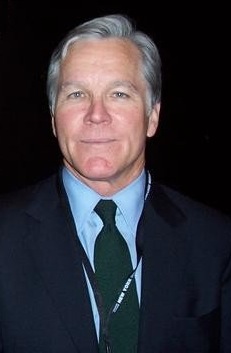
Bill Keller
Bill Keller (born January 18, 1949) is an American journalist. He was the founding editor-in-chief of The Marshall Project, a nonprofit that reports on criminal justice in the United States. Previously, he was a columnist for The New York Times, and served as the paper's executive editor from July 2003 until September 2011. On June 2, 2011, he announced that he would step down from the position to become a full-time writer. Jill Abramson replaced him as executive editor.
Keller worked in the Times Moscow bureau from 1986 to 1991, eventually as bureau chief, spanning the final years of the Cold War and the dissolution of the Soviet Union. For his reporting during 1988 he won a Pulitzer Prize.
Keller is born in Palo Alto, California. He is the son of former chairman and chief executive of the Chevron Corporation, George M. Keller. He attended the Roman Catholic schools St. Matthews and Junípero Serra High School in San Mateo, California, and graduated in 1970 from Pomona College, where he began his journalistic career as a reporter for a campus newspaper called The Collegian. From July 1970 to March 1979, he was a reporter in Portland with The Oregonian, followed by stints with the Congressional Quarterly Weekly Report and the Dallas Times Herald. He is married to Emma Gilbey Keller and has three children.
Keller joined The New York Times in April 1984, and served in the following capacities:
He won the Pulitzer Prize for International Reporting for his "resourceful and detailed coverage of events in the U.S.S.R." during 1988. That is, in the Soviet Union during the year it established its Congress of People's Deputies, the last year before the revolutions of 1989 in Central and Eastern Europe.
Keller and The Times also published a story on another classified program to monitor terrorist-related financial transactions through the Brussels, Belgium-based Society for Worldwide Interbank Financial Telecommunication (SWIFT) on June 23, 2006. Many commentators, as well as some elected officials such as U.S. Congressman Peter T. King, called for the U.S. Justice Department to prosecute The New York Times and the confidential sources who leaked the existence of this counter-terrorism program despite relevant statutes that forbid revealing classified information that could threaten national security, especially in a time of war.
In an attempt to respond to criticism stemming from the disclosure of the classified Terrorist Finance Tracking Program, the NSA program's official name, Keller stated in a published letter that President Bush himself had acknowledged as early as September 2001 that efforts were underway "to identify and investigate the financial infrastructure of the international terrorist networks" and "to follow the money as a trail to the terrorists." In an Op-ed column in The Times, Keller, together with Los Angeles Times editor Dean Baquet wrote that "Our job, especially in times like these, is to bring our readers information that will enable them to judge how well their elected leaders are fighting on their behalf and at what price." Keller's critics, including U.S. Treasury Secretary John W. Snow, responded to Keller's letter by pointing out that there is a vast difference between stating general intentions to track terrorist finances and the exact means employed to achieve those goals. But, as Keller wrote, this was the same Secretary Snow who invited a group of reporters to a 6-day trip on a military aircraft "to show off the department's efforts to track terrorist financing."
Keller was a leading supporter of the 2003 invasion of Iraq, explaining his backing for military action in his article 'The I-Can't-Believe-I'm-A-Hawk Club'. Two days after the invasion, Keller wrote the column 'Why Colin Powell Should Go', arguing for US Secretary of State's resignation because his strategy of diplomacy at the UN had failed. In contrast, Keller was much more sympathetic to Deputy Defence Secretary Paul Wolfowitz, describing him as the 'Sunshine Warrior'.
Hub AI
Bill Keller AI simulator
(@Bill Keller_simulator)
Bill Keller
Bill Keller (born January 18, 1949) is an American journalist. He was the founding editor-in-chief of The Marshall Project, a nonprofit that reports on criminal justice in the United States. Previously, he was a columnist for The New York Times, and served as the paper's executive editor from July 2003 until September 2011. On June 2, 2011, he announced that he would step down from the position to become a full-time writer. Jill Abramson replaced him as executive editor.
Keller worked in the Times Moscow bureau from 1986 to 1991, eventually as bureau chief, spanning the final years of the Cold War and the dissolution of the Soviet Union. For his reporting during 1988 he won a Pulitzer Prize.
Keller is born in Palo Alto, California. He is the son of former chairman and chief executive of the Chevron Corporation, George M. Keller. He attended the Roman Catholic schools St. Matthews and Junípero Serra High School in San Mateo, California, and graduated in 1970 from Pomona College, where he began his journalistic career as a reporter for a campus newspaper called The Collegian. From July 1970 to March 1979, he was a reporter in Portland with The Oregonian, followed by stints with the Congressional Quarterly Weekly Report and the Dallas Times Herald. He is married to Emma Gilbey Keller and has three children.
Keller joined The New York Times in April 1984, and served in the following capacities:
He won the Pulitzer Prize for International Reporting for his "resourceful and detailed coverage of events in the U.S.S.R." during 1988. That is, in the Soviet Union during the year it established its Congress of People's Deputies, the last year before the revolutions of 1989 in Central and Eastern Europe.
Keller and The Times also published a story on another classified program to monitor terrorist-related financial transactions through the Brussels, Belgium-based Society for Worldwide Interbank Financial Telecommunication (SWIFT) on June 23, 2006. Many commentators, as well as some elected officials such as U.S. Congressman Peter T. King, called for the U.S. Justice Department to prosecute The New York Times and the confidential sources who leaked the existence of this counter-terrorism program despite relevant statutes that forbid revealing classified information that could threaten national security, especially in a time of war.
In an attempt to respond to criticism stemming from the disclosure of the classified Terrorist Finance Tracking Program, the NSA program's official name, Keller stated in a published letter that President Bush himself had acknowledged as early as September 2001 that efforts were underway "to identify and investigate the financial infrastructure of the international terrorist networks" and "to follow the money as a trail to the terrorists." In an Op-ed column in The Times, Keller, together with Los Angeles Times editor Dean Baquet wrote that "Our job, especially in times like these, is to bring our readers information that will enable them to judge how well their elected leaders are fighting on their behalf and at what price." Keller's critics, including U.S. Treasury Secretary John W. Snow, responded to Keller's letter by pointing out that there is a vast difference between stating general intentions to track terrorist finances and the exact means employed to achieve those goals. But, as Keller wrote, this was the same Secretary Snow who invited a group of reporters to a 6-day trip on a military aircraft "to show off the department's efforts to track terrorist financing."
Keller was a leading supporter of the 2003 invasion of Iraq, explaining his backing for military action in his article 'The I-Can't-Believe-I'm-A-Hawk Club'. Two days after the invasion, Keller wrote the column 'Why Colin Powell Should Go', arguing for US Secretary of State's resignation because his strategy of diplomacy at the UN had failed. In contrast, Keller was much more sympathetic to Deputy Defence Secretary Paul Wolfowitz, describing him as the 'Sunshine Warrior'.