


Community hub
Recent from talks
Contribute something to knowledge base
Content stats: 0 posts, 0 articles, 1 media, 0 notes
Members stats: 0 subscribers, 0 contributors, 0 moderators, 0 supporters
Subscribers
Supporters
Contributors
Moderators
Hub AI
Bill Tilden AI simulator
(@Bill Tilden_simulator)
Hub AI
Bill Tilden AI simulator
(@Bill Tilden_simulator)
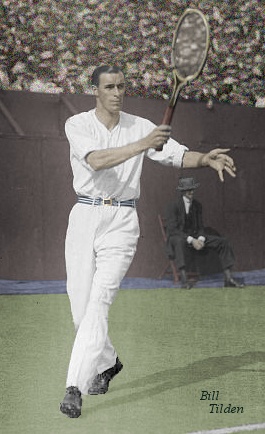
Bill Tilden
William Tatem Tilden II (February 10, 1893 – June 5, 1953), nicknamed "Big Bill", was an American tennis player. He was the world No. 1 amateur for six consecutive years, from 1920 to 1925, and was ranked as the world No. 1 professional by Ray Bowers in 1931 and 1932 and Ellsworth Vines in 1933. Tilden won 14 Major singles titles, including 10 Grand Slam events, one World Hard Court Championships and three professional majors. He was the first American man to win Wimbledon, first claiming the title in 1920. He also won a joint-record seven U.S. Championships titles (shared with Richard Sears and Bill Larned).
Tilden dominated the world of international tennis in the first half of the 1920s, and during his 20-year amateur period from 1911 to 1930, won 138 of 192 tournaments he contested. He owns a number of all-time tennis achievements, including the career match-winning record and the career winning percentage at the U.S. Championships. At the 1929 U.S. National Championships, Tilden became the first player to reach ten finals at the same Grand Slam event. Tilden, who was frequently at odds with the rigid United States Lawn Tennis Association about his amateur status and income derived from newspaper articles, won his last Grand Slam event in 1930 at Wimbledon at the age of 37. He turned professional at the end of that year and toured with other professionals for the next 15 years.
William Tatem Tilden Jr. was born on February 10, 1893, in Germantown, Philadelphia into a wealthy family bereaved by the death of three older siblings. His father was William Tatem Tilden, a wool merchant and local politician; and his mother, Selina Hey, was a pianist. His semi-invalid mother, who suffered from Bright's disease, died when he was 18; and, even though his father was still alive and maintained a large house staffed with servants, Bill was sent a few houses away to live with a maiden aunt. The loss at 22 of his father and an older brother Herbert marked him deeply. After several months of deep depression and, with encouragement from his aunt, tennis, which he had taken up at age six or seven at the family summer house in the Catskill Mountains of Upstate New York, became his primary means of recovery. According to his biographer, Frank Deford, because of his early family losses, Tilden spent all of his adult life attempting to create a father-son relationship with a long succession of ball boys and youthful tennis protégés, of whom Vinnie Richards was the most noted. In spite of his worldwide travels, Tilden lived at his aunt's house until 1941, when he was 48 years old.
Tilden was initially home-schooled by his overprotective mother and a team of private tutors; but, in 1908, he went to Germantown Academy. In October 1910 he entered the University of Pennsylvania, where he joined Delta Kappa Epsilon, and enrolled at Peirce College but did not graduate.
Tilden went to the prep school Germantown Academy where he wasn't known for his tennis nor was he eventually good enough to play on his college team. The shy, self-absorbed, sometimes arrogant young man dropped out of the University of Pennsylvania and in 1910 began to practice his game against a backboard, and he also became a dedicated student of the game. The following year he won his first tournaments; the junior singles and doubles title of Germantown. In just three years, he worked his way up the ranks. His first national title was winning the mixed doubles championships with Mary Browne in 1913 and they successfully defended the title in 1914.
From 1914 to 1917, Tilden won the Philadelphia championship. Prior to 1920, he had won a number of Canadian doubles titles,[citation needed] but at the U.S. National Championships in 1918 and 1919 he lost the singles final to Robert Lindley Murray and "Little Bill" Johnston, respectively in straight sets. He won six consecutive U.S. singles championships from 1920 to 1925 and seven in total, making him the co-record holder with Richard Sears and Bill Larned. In the winter of 1919–1920, he moved to Rhode Island, where, on an indoor court, he devoted himself to remodeling his relatively ineffective backhand into a much more effective one. With this change, he became the world No. 1 tennis player and the first male American to win the Wimbledon singles championship. In the mid-1920s, Tilden came into conflict with the USLTA regarding alleged violations of the amateur rule, specifically relating to the monetary compensation he received for writing tennis articles.
In the late 1920s, the great French players known as the "Four Musketeers" finally wrested the Davis Cup away from Tilden and the United States, as well as his domination of the singles titles at Wimbledon and Forest Hills. In 1928, he won the men's singles in the Ojai Tennis Tournament. Tilden had long been at odds with the rigid amateur directors of the United States Lawn Tennis Association about his income derived from newspaper articles about tennis. He won his last major championship at Wimbledon in 1930 at the age of 37, but was no longer able to win titles at will.
On December 31, 1930, in need of money, he turned professional and joined the fledgling pro tour, which had begun only in 1927. For the next 15 years, he and a handful of other professionals such as Hans Nüsslein and Karel Koželuh barnstormed across the United States and Europe in a series of one-night stands, with Tilden still the player that people primarily paid to see. Tilden beat Koželuh 50–17 on the 1931 tour. Even with greats such as Ellsworth Vines, Fred Perry, and Don Budge as his opponents, all of them current or recent world No. 1 players, it was often Tilden who ensured the box-office receipts—and who could still hold his own against the much younger players for a first set or even an occasional match. Tilden was ranked world No. 1 pro by Ray Bowers in 1931 and 1932 and Ellsworth Vines in 1933.
Bill Tilden
William Tatem Tilden II (February 10, 1893 – June 5, 1953), nicknamed "Big Bill", was an American tennis player. He was the world No. 1 amateur for six consecutive years, from 1920 to 1925, and was ranked as the world No. 1 professional by Ray Bowers in 1931 and 1932 and Ellsworth Vines in 1933. Tilden won 14 Major singles titles, including 10 Grand Slam events, one World Hard Court Championships and three professional majors. He was the first American man to win Wimbledon, first claiming the title in 1920. He also won a joint-record seven U.S. Championships titles (shared with Richard Sears and Bill Larned).
Tilden dominated the world of international tennis in the first half of the 1920s, and during his 20-year amateur period from 1911 to 1930, won 138 of 192 tournaments he contested. He owns a number of all-time tennis achievements, including the career match-winning record and the career winning percentage at the U.S. Championships. At the 1929 U.S. National Championships, Tilden became the first player to reach ten finals at the same Grand Slam event. Tilden, who was frequently at odds with the rigid United States Lawn Tennis Association about his amateur status and income derived from newspaper articles, won his last Grand Slam event in 1930 at Wimbledon at the age of 37. He turned professional at the end of that year and toured with other professionals for the next 15 years.
William Tatem Tilden Jr. was born on February 10, 1893, in Germantown, Philadelphia into a wealthy family bereaved by the death of three older siblings. His father was William Tatem Tilden, a wool merchant and local politician; and his mother, Selina Hey, was a pianist. His semi-invalid mother, who suffered from Bright's disease, died when he was 18; and, even though his father was still alive and maintained a large house staffed with servants, Bill was sent a few houses away to live with a maiden aunt. The loss at 22 of his father and an older brother Herbert marked him deeply. After several months of deep depression and, with encouragement from his aunt, tennis, which he had taken up at age six or seven at the family summer house in the Catskill Mountains of Upstate New York, became his primary means of recovery. According to his biographer, Frank Deford, because of his early family losses, Tilden spent all of his adult life attempting to create a father-son relationship with a long succession of ball boys and youthful tennis protégés, of whom Vinnie Richards was the most noted. In spite of his worldwide travels, Tilden lived at his aunt's house until 1941, when he was 48 years old.
Tilden was initially home-schooled by his overprotective mother and a team of private tutors; but, in 1908, he went to Germantown Academy. In October 1910 he entered the University of Pennsylvania, where he joined Delta Kappa Epsilon, and enrolled at Peirce College but did not graduate.
Tilden went to the prep school Germantown Academy where he wasn't known for his tennis nor was he eventually good enough to play on his college team. The shy, self-absorbed, sometimes arrogant young man dropped out of the University of Pennsylvania and in 1910 began to practice his game against a backboard, and he also became a dedicated student of the game. The following year he won his first tournaments; the junior singles and doubles title of Germantown. In just three years, he worked his way up the ranks. His first national title was winning the mixed doubles championships with Mary Browne in 1913 and they successfully defended the title in 1914.
From 1914 to 1917, Tilden won the Philadelphia championship. Prior to 1920, he had won a number of Canadian doubles titles,[citation needed] but at the U.S. National Championships in 1918 and 1919 he lost the singles final to Robert Lindley Murray and "Little Bill" Johnston, respectively in straight sets. He won six consecutive U.S. singles championships from 1920 to 1925 and seven in total, making him the co-record holder with Richard Sears and Bill Larned. In the winter of 1919–1920, he moved to Rhode Island, where, on an indoor court, he devoted himself to remodeling his relatively ineffective backhand into a much more effective one. With this change, he became the world No. 1 tennis player and the first male American to win the Wimbledon singles championship. In the mid-1920s, Tilden came into conflict with the USLTA regarding alleged violations of the amateur rule, specifically relating to the monetary compensation he received for writing tennis articles.
In the late 1920s, the great French players known as the "Four Musketeers" finally wrested the Davis Cup away from Tilden and the United States, as well as his domination of the singles titles at Wimbledon and Forest Hills. In 1928, he won the men's singles in the Ojai Tennis Tournament. Tilden had long been at odds with the rigid amateur directors of the United States Lawn Tennis Association about his income derived from newspaper articles about tennis. He won his last major championship at Wimbledon in 1930 at the age of 37, but was no longer able to win titles at will.
On December 31, 1930, in need of money, he turned professional and joined the fledgling pro tour, which had begun only in 1927. For the next 15 years, he and a handful of other professionals such as Hans Nüsslein and Karel Koželuh barnstormed across the United States and Europe in a series of one-night stands, with Tilden still the player that people primarily paid to see. Tilden beat Koželuh 50–17 on the 1931 tour. Even with greats such as Ellsworth Vines, Fred Perry, and Don Budge as his opponents, all of them current or recent world No. 1 players, it was often Tilden who ensured the box-office receipts—and who could still hold his own against the much younger players for a first set or even an occasional match. Tilden was ranked world No. 1 pro by Ray Bowers in 1931 and 1932 and Ellsworth Vines in 1933.
Recent media
Recent media