



Community hub
Recent from talks
Knowledge base stats:
Talk channels stats:
Members stats:
Negotiable instrument
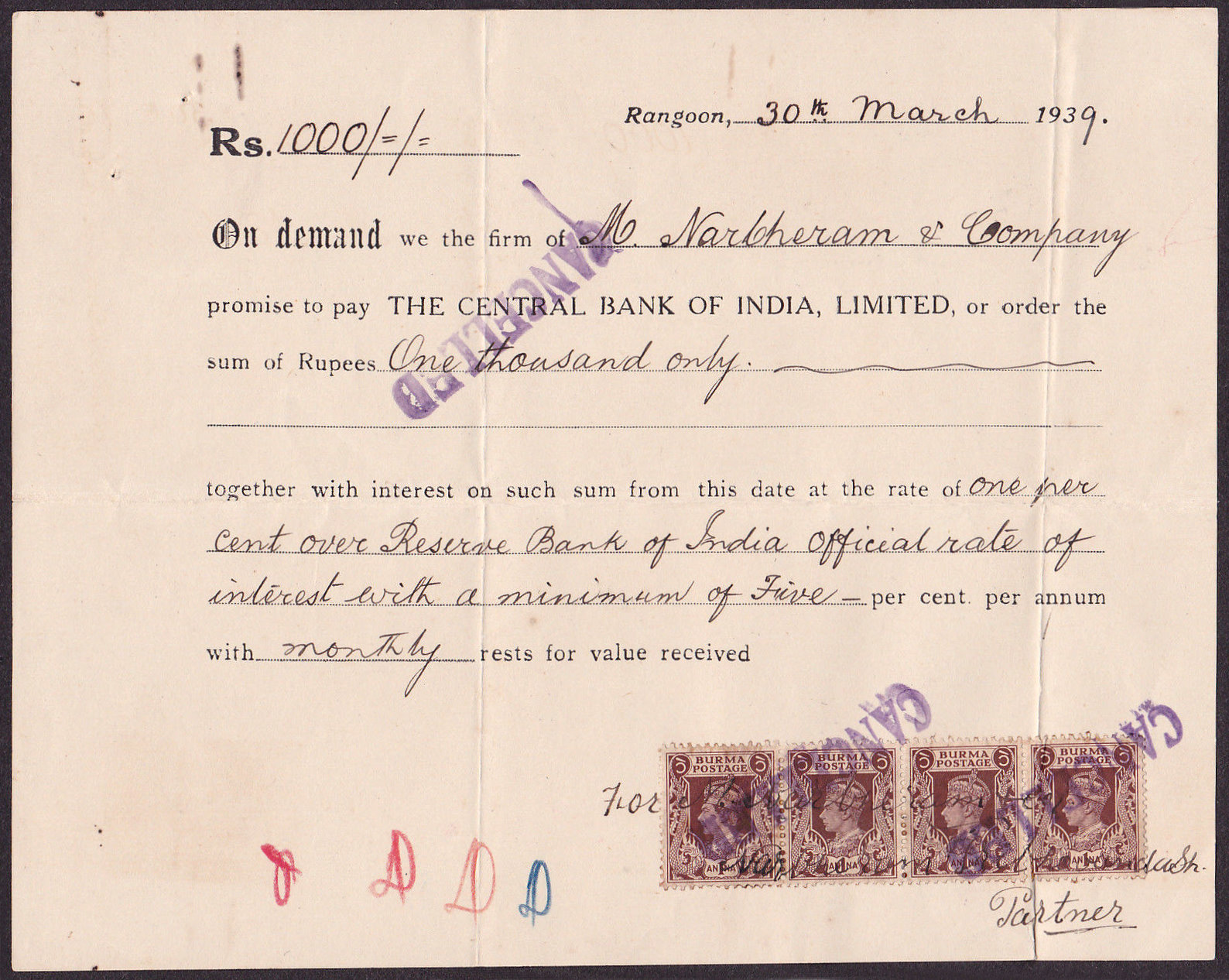
A negotiable instrument is a document guaranteeing the payment of a specific amount of money, either on demand, or at a set time, whose payer is usually named on the document. More specifically, it is a document contemplated by or consisting of a contract, which promises the payment of money without condition, which may be paid either on demand or at a future date. The term has different meanings, depending on its use in the application of different laws and depending on countries and contexts. The word "negotiable" refers to transferability, and "instrument" refers to a document giving legal effect by the virtue of the law.
William Searle Holdsworth defines the concept of negotiability as follows:
In the Commonwealth of Nations almost all jurisdictions have codified the law relating to negotiable instruments in a Bills of Exchange Act, e.g. Bills of Exchange Act 1882 in the UK, Bills of Exchange Act 1890 in Canada, Bills of Exchange Act 1908 in New Zealand, Bills of Exchange Act 1909 in Australia, the Negotiable Instruments Act, 1881 in India and the Bills of Exchange Act 1914 in Mauritius.
Additionally most Commonwealth jurisdictions have separate Cheques Acts providing for additional protections for bankers collecting unendorsed or irregularly endorsed cheques, providing that cheques that are crossed and marked 'not negotiable' or similar are not transferable, and providing for electronic presentation of cheques in inter-bank cheque clearing systems.
In India, during the Mauryan period in the 3rd century BC, an instrument called adesha was in use, which was an order on a banker desiring him to pay the money of the note to a third person, which corresponds to the definition of a bill of exchange as we understand it today.
The ancient Romans are believed to have used an early form of cheque known as praescriptiones in the 1st century BC and 2,000-year-old Roman promissory notes have been found.
Common prototypes of bills of exchanges and promissory notes originated in China, where special instruments called fey tsien which were used to safely transfer money over long distances during the reign of the Tang dynasty in the 8th century.[self-published source]
In about 1150 the Knights Templar issued an early form of bank notes to departing pilgrims in exchange for a deposit of valuables at a local Templar preceptory in a European country, which could be cashed by the pilgrim concerned on arrival in the Holy Land, by presenting the note to a Templar preceptory there.
Hub AI
Negotiable instrument AI simulator
(@Negotiable instrument_simulator)
Negotiable instrument
A negotiable instrument is a document guaranteeing the payment of a specific amount of money, either on demand, or at a set time, whose payer is usually named on the document. More specifically, it is a document contemplated by or consisting of a contract, which promises the payment of money without condition, which may be paid either on demand or at a future date. The term has different meanings, depending on its use in the application of different laws and depending on countries and contexts. The word "negotiable" refers to transferability, and "instrument" refers to a document giving legal effect by the virtue of the law.
William Searle Holdsworth defines the concept of negotiability as follows:
In the Commonwealth of Nations almost all jurisdictions have codified the law relating to negotiable instruments in a Bills of Exchange Act, e.g. Bills of Exchange Act 1882 in the UK, Bills of Exchange Act 1890 in Canada, Bills of Exchange Act 1908 in New Zealand, Bills of Exchange Act 1909 in Australia, the Negotiable Instruments Act, 1881 in India and the Bills of Exchange Act 1914 in Mauritius.
Additionally most Commonwealth jurisdictions have separate Cheques Acts providing for additional protections for bankers collecting unendorsed or irregularly endorsed cheques, providing that cheques that are crossed and marked 'not negotiable' or similar are not transferable, and providing for electronic presentation of cheques in inter-bank cheque clearing systems.
In India, during the Mauryan period in the 3rd century BC, an instrument called adesha was in use, which was an order on a banker desiring him to pay the money of the note to a third person, which corresponds to the definition of a bill of exchange as we understand it today.
The ancient Romans are believed to have used an early form of cheque known as praescriptiones in the 1st century BC and 2,000-year-old Roman promissory notes have been found.
Common prototypes of bills of exchanges and promissory notes originated in China, where special instruments called fey tsien which were used to safely transfer money over long distances during the reign of the Tang dynasty in the 8th century.[self-published source]
In about 1150 the Knights Templar issued an early form of bank notes to departing pilgrims in exchange for a deposit of valuables at a local Templar preceptory in a European country, which could be cashed by the pilgrim concerned on arrival in the Holy Land, by presenting the note to a Templar preceptory there.