
Recent from talks
Bit mouthpiece
Knowledge base stats:
Talk channels stats:
Members stats:
Bit mouthpiece
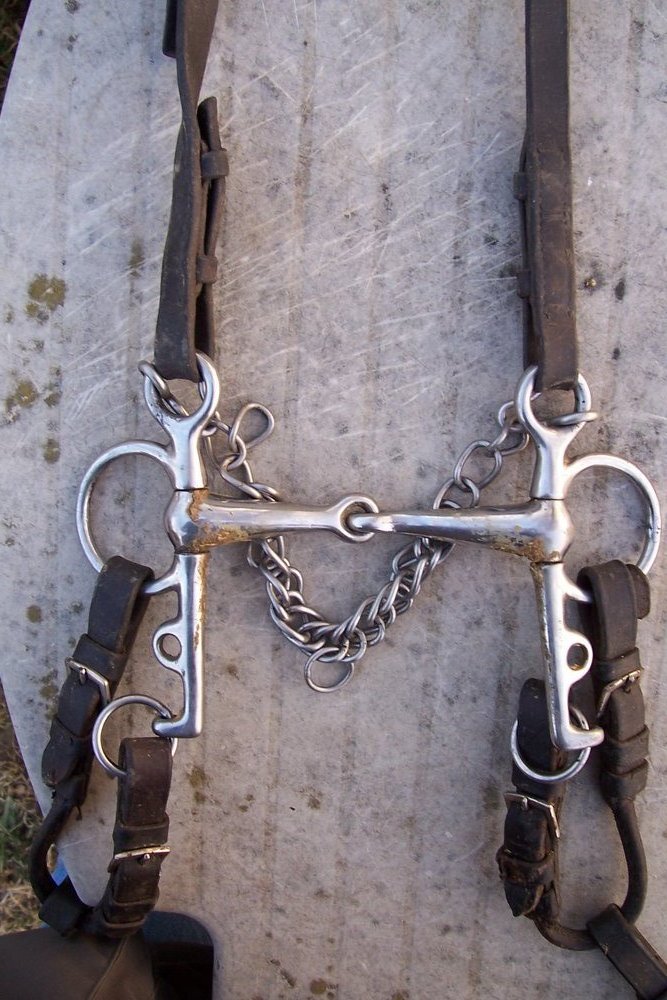
The mouthpiece is the part of a horse's bit that goes into the mouth of a horse, resting on the bars of the mouth in the sensitive interdental space where there are no teeth. The mouthpiece is possibly the most important determinant in the severity and action of the bit. Some mouthpieces are not allowed in dressage competition.
The other parts of the bit are the bit rings on a snaffle bit, and the shanks on a curb bit. These pieces do not go inside the mouth, but rather are the parts of a bit that are outside the mouth, where the bridle and reins attach.
Particular mouthpieces do not define the type of bit. Often, bits with mouthpieces, such as single or double-jointed bits, are incorrectly referred to as snaffles, which in actuality refers to a direct action bit, rather than a leverage bit, and not the mouthpiece. Though some mouthpieces are marked as "severe" and others as "mild", this is all relative. A heavy-handed rider can make even the mildest bit uncomfortable, and a skilled, light rider can ride in a much harsher mouthpiece without damaging the mouth or causing any distress in the horse. Additionally, the type of bit has a great impact on the action of the mouthpiece. Snaffles are generally considered the mildest, curbs and gags the harshest. It is difficult, therefore, to compare a harsher-type bit with a mild mouthpiece (such as a pelham with a rubber mullen mouth), and a milder-type bit with a harsher mouthpiece (like a snaffle with a slow twist). In general, however, the mouthpiece can have a marked difference on the severity. Snaffles with twisted wires are never considered mild, while a pelham with a low port may. In short, many factors in the bitting equation must be considered to evaluate the action and severity of a bit.
Various types of metal or synthetic substances are used for bit mouthpieces, which may determine how much a horse salivates or otherwise tolerates a bit; a horse having a moist mouth is considered more relaxed and responsive. Commonly used metals include stainless steel and nickel alloys, which generally do not rust and have a neutral effect on salivation; sweet iron, aurigan and copper, which generally tend to encourage salivation; and aluminum, which is considered drying and is discouraged as a mouthpiece metal. Synthetic mouthpieces may be made with or without internal metal cable or bar reinforcement. Rubber bits are generally thicker than metal bits, but other types of plastics are also used, often the same size and some flavored.
Types of Bits: All types.
What it is: The mouthpiece is a straight bar of material, without any joints or ports. In the mullen mouth, the bar has a slight bow to it, curving gently to allow some room for the tongue.
Action: The mullen mouth and straight bar are fairly similar in action, placing pressure on the tongue, lips, and bars. The mullen provides extra space for the tongue, instead of constantly pushing into it, resulting in more tongue relief, and making it more comfortable, but the mullen does not have as high of a port as a curb, thus does not offer full tongue relief. This bit is generally considered a very mild mouthpiece, although this varies according to the type of bit leverage (snaffle, pelham or curb), and improper use may make it harsh, since the majority of the bit pressure is applied on the sensitive tongue.
Materials: Rubber is very common, as are other synthetic materials. Stainless steel is also a favorite, but copper and sweet iron are not as popular.
Hub AI
Bit mouthpiece AI simulator
(@Bit mouthpiece_simulator)
Bit mouthpiece
The mouthpiece is the part of a horse's bit that goes into the mouth of a horse, resting on the bars of the mouth in the sensitive interdental space where there are no teeth. The mouthpiece is possibly the most important determinant in the severity and action of the bit. Some mouthpieces are not allowed in dressage competition.
The other parts of the bit are the bit rings on a snaffle bit, and the shanks on a curb bit. These pieces do not go inside the mouth, but rather are the parts of a bit that are outside the mouth, where the bridle and reins attach.
Particular mouthpieces do not define the type of bit. Often, bits with mouthpieces, such as single or double-jointed bits, are incorrectly referred to as snaffles, which in actuality refers to a direct action bit, rather than a leverage bit, and not the mouthpiece. Though some mouthpieces are marked as "severe" and others as "mild", this is all relative. A heavy-handed rider can make even the mildest bit uncomfortable, and a skilled, light rider can ride in a much harsher mouthpiece without damaging the mouth or causing any distress in the horse. Additionally, the type of bit has a great impact on the action of the mouthpiece. Snaffles are generally considered the mildest, curbs and gags the harshest. It is difficult, therefore, to compare a harsher-type bit with a mild mouthpiece (such as a pelham with a rubber mullen mouth), and a milder-type bit with a harsher mouthpiece (like a snaffle with a slow twist). In general, however, the mouthpiece can have a marked difference on the severity. Snaffles with twisted wires are never considered mild, while a pelham with a low port may. In short, many factors in the bitting equation must be considered to evaluate the action and severity of a bit.
Various types of metal or synthetic substances are used for bit mouthpieces, which may determine how much a horse salivates or otherwise tolerates a bit; a horse having a moist mouth is considered more relaxed and responsive. Commonly used metals include stainless steel and nickel alloys, which generally do not rust and have a neutral effect on salivation; sweet iron, aurigan and copper, which generally tend to encourage salivation; and aluminum, which is considered drying and is discouraged as a mouthpiece metal. Synthetic mouthpieces may be made with or without internal metal cable or bar reinforcement. Rubber bits are generally thicker than metal bits, but other types of plastics are also used, often the same size and some flavored.
Types of Bits: All types.
What it is: The mouthpiece is a straight bar of material, without any joints or ports. In the mullen mouth, the bar has a slight bow to it, curving gently to allow some room for the tongue.
Action: The mullen mouth and straight bar are fairly similar in action, placing pressure on the tongue, lips, and bars. The mullen provides extra space for the tongue, instead of constantly pushing into it, resulting in more tongue relief, and making it more comfortable, but the mullen does not have as high of a port as a curb, thus does not offer full tongue relief. This bit is generally considered a very mild mouthpiece, although this varies according to the type of bit leverage (snaffle, pelham or curb), and improper use may make it harsh, since the majority of the bit pressure is applied on the sensitive tongue.
Materials: Rubber is very common, as are other synthetic materials. Stainless steel is also a favorite, but copper and sweet iron are not as popular.
Recent media