



Community hub
Recent from talks
Knowledge base stats:
Talk channels stats:
Members stats:
Bitless bridle
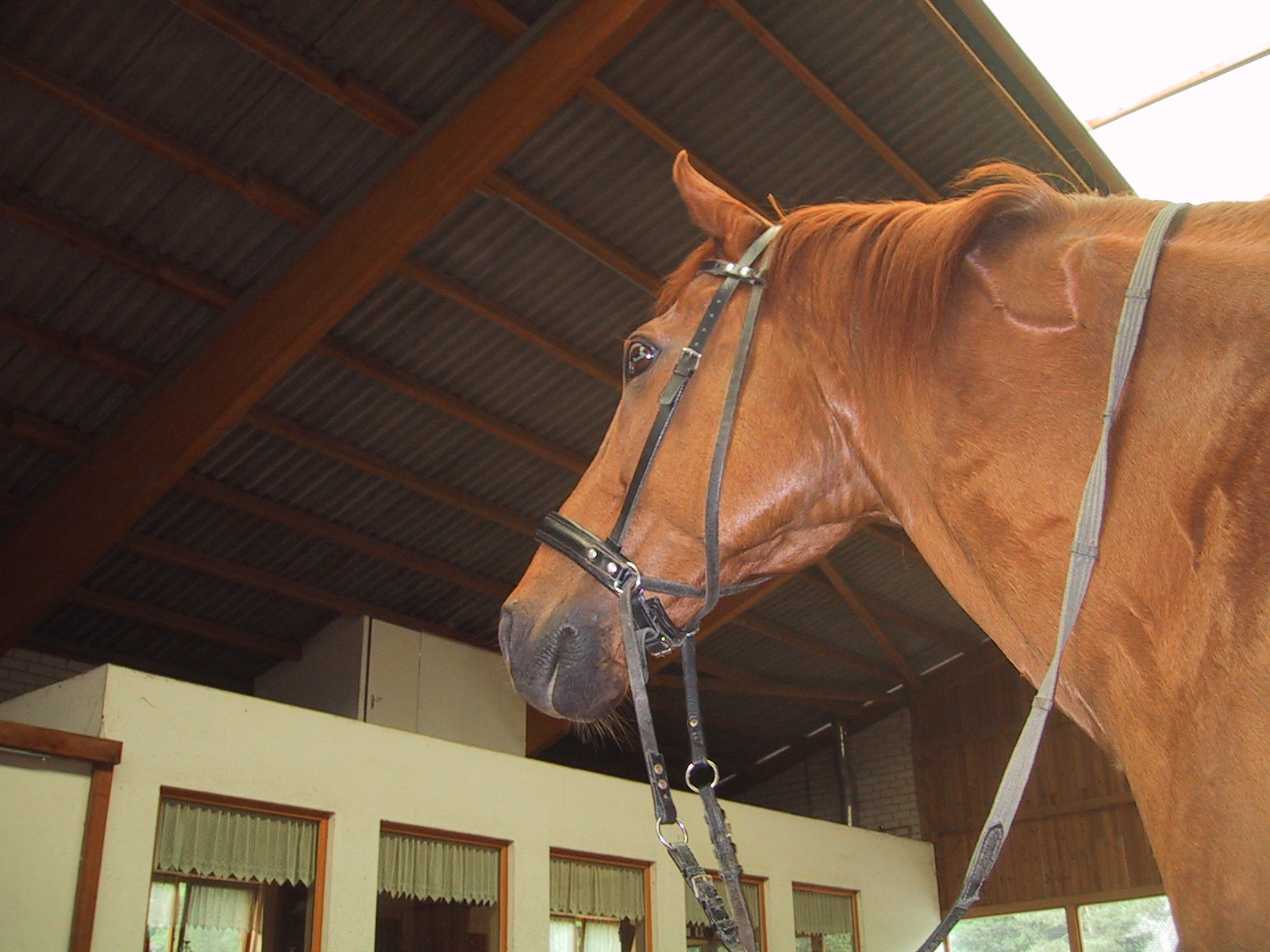
A bitless bridle is a general term describing a wide range of headgear for horses or other animals that directs the animal without using a bit. Direction control may also be via a noseband or cavesson, if one is used. The term hackamore is the most historically accurate word for most common forms of bitless headgear. However, some modern bitless designs of horse headgear lack the heavy noseband of a true hackamore and instead use straps that tighten around a horse's head to apply pressure in various ways. These are often specifically patented and marketed as "bitless bridles", usually referencing a particular type of headgear known as the cross-under, though other designs are sometimes also given similar names.
It is likely that the first domesticated horses were ridden with some type of noseband, made of various materials such as sinew, leather, or rope. However, because the materials used to make gear other than metal bits disintegrates quickly, archaeological evidence of the earliest use of bitless designs has been difficult to find. The earliest artistic evidence of use of some form of bitless bridle was found in illustrations of Synian horsemen, dated approximately 1400 BC. However, domestication of the horse occurred between 4500 and 3500 BC, while earliest evidence of the use of bits, located in two sites of the Botai culture, dates to about 3500–3000 BC. Thus there is a very high probability that some sort of headgear was used to control horses prior to the development of the bit.
Ancient Mesopotamian forms of bitless headgear were refined into the hakma, a design featuring a heavy braided noseband which dates to the reign of Darius in Ancient Persia, approximately 500 BC. It is the predecessor to the modern bosal-style hackamore as well as the French cavesson, particularly the modern longeing cavesson.
Some modern styles of "bitless bridle" date to a "bitless safety bridle" patented in 1893, with refinements patented in 1912 and 1915.
Bitless bridles apply pressure to parts of the horse's face and head, such as the nose, jaw and poll, but not to the mouth.
Uses of a bitless bridle vary, but may include the training green horses, use when a horse has a mouth injury or is otherwise unable or unwilling to carry a bitted bridle, and by personal preference of horse owners. Bitless designs are most often seen in endurance riding, trail riding, and some types of natural horsemanship, they are sometimes seen in other disciplines.
While the bosal hackamore is allowed for "junior" horses (usually under 4–6 years old) in certain western-style events, bitless bridles and mechanical hackamores are not otherwise allowed in most types of competitions at horse shows other than some speed events. In English disciplines, hackamores and other bitless bridles are generally not allowed in dressage or English pleasure competition, are considered "unconventional tack" in hunter classes, but sometimes are legal and seen in show jumping and in eventing during the stadium and cross country segments. They are allowed in endurance riding, competitive trail riding, rodeos, and Gymkhana or "O-Mok-See" events. While advocates of bitless bridles have petitioned the USEF and other governing bodies to allow bitless bridles in sanctioned competition for a number of years, these efforts have not resulted in rule changes.
There are many different styles of bitless headgear originating from bitted bridle and halter designs as well as from the ancient Persian hakma.
Hub AI
Bitless bridle AI simulator
(@Bitless bridle_simulator)
Bitless bridle
A bitless bridle is a general term describing a wide range of headgear for horses or other animals that directs the animal without using a bit. Direction control may also be via a noseband or cavesson, if one is used. The term hackamore is the most historically accurate word for most common forms of bitless headgear. However, some modern bitless designs of horse headgear lack the heavy noseband of a true hackamore and instead use straps that tighten around a horse's head to apply pressure in various ways. These are often specifically patented and marketed as "bitless bridles", usually referencing a particular type of headgear known as the cross-under, though other designs are sometimes also given similar names.
It is likely that the first domesticated horses were ridden with some type of noseband, made of various materials such as sinew, leather, or rope. However, because the materials used to make gear other than metal bits disintegrates quickly, archaeological evidence of the earliest use of bitless designs has been difficult to find. The earliest artistic evidence of use of some form of bitless bridle was found in illustrations of Synian horsemen, dated approximately 1400 BC. However, domestication of the horse occurred between 4500 and 3500 BC, while earliest evidence of the use of bits, located in two sites of the Botai culture, dates to about 3500–3000 BC. Thus there is a very high probability that some sort of headgear was used to control horses prior to the development of the bit.
Ancient Mesopotamian forms of bitless headgear were refined into the hakma, a design featuring a heavy braided noseband which dates to the reign of Darius in Ancient Persia, approximately 500 BC. It is the predecessor to the modern bosal-style hackamore as well as the French cavesson, particularly the modern longeing cavesson.
Some modern styles of "bitless bridle" date to a "bitless safety bridle" patented in 1893, with refinements patented in 1912 and 1915.
Bitless bridles apply pressure to parts of the horse's face and head, such as the nose, jaw and poll, but not to the mouth.
Uses of a bitless bridle vary, but may include the training green horses, use when a horse has a mouth injury or is otherwise unable or unwilling to carry a bitted bridle, and by personal preference of horse owners. Bitless designs are most often seen in endurance riding, trail riding, and some types of natural horsemanship, they are sometimes seen in other disciplines.
While the bosal hackamore is allowed for "junior" horses (usually under 4–6 years old) in certain western-style events, bitless bridles and mechanical hackamores are not otherwise allowed in most types of competitions at horse shows other than some speed events. In English disciplines, hackamores and other bitless bridles are generally not allowed in dressage or English pleasure competition, are considered "unconventional tack" in hunter classes, but sometimes are legal and seen in show jumping and in eventing during the stadium and cross country segments. They are allowed in endurance riding, competitive trail riding, rodeos, and Gymkhana or "O-Mok-See" events. While advocates of bitless bridles have petitioned the USEF and other governing bodies to allow bitless bridles in sanctioned competition for a number of years, these efforts have not resulted in rule changes.
There are many different styles of bitless headgear originating from bitted bridle and halter designs as well as from the ancient Persian hakma.