



Community hub
Recent from talks
Knowledge base stats:
Talk channels stats:
Members stats:
Blond
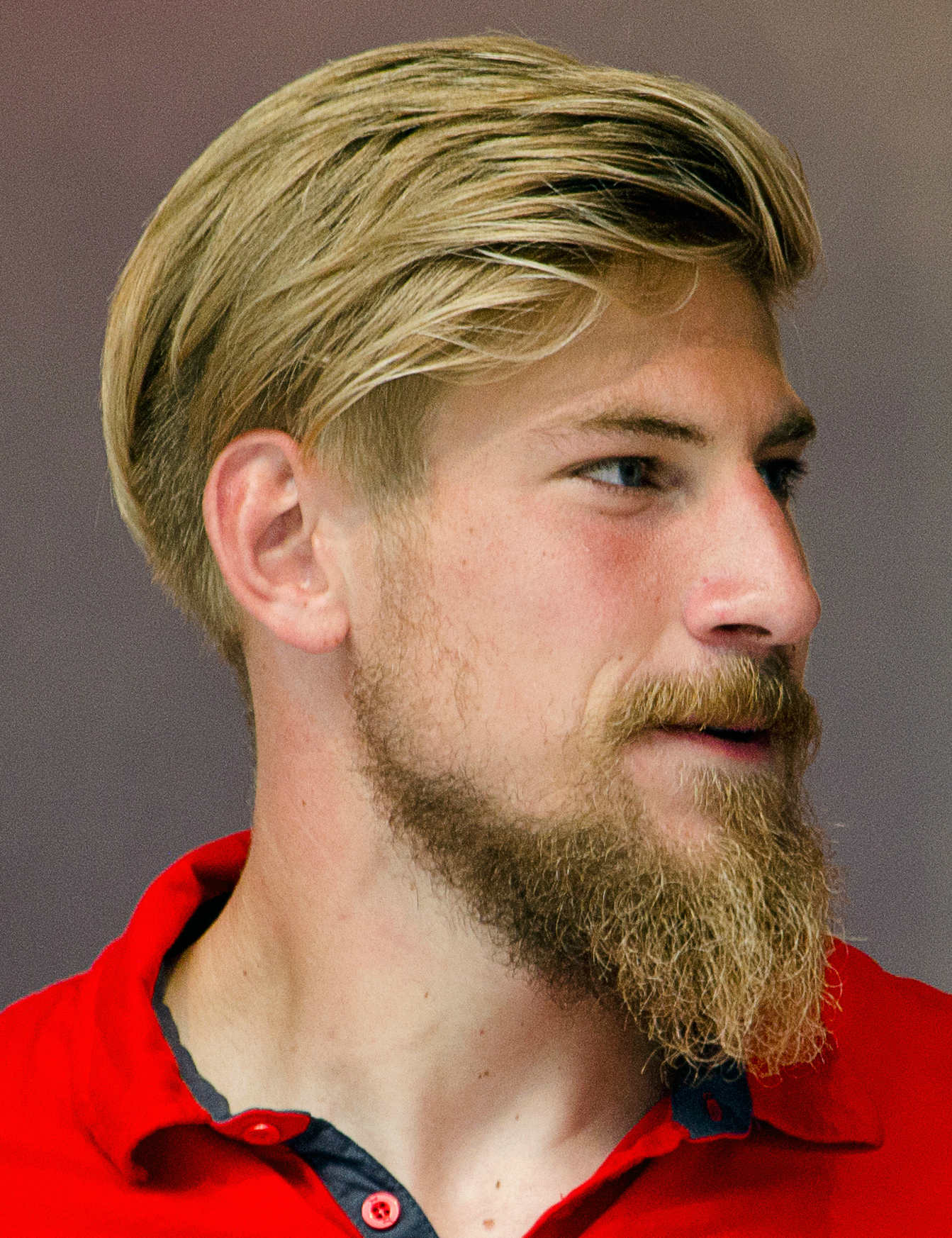
Blond (MASC) or blonde (FEM), also referred to as fair hair, is a human hair color characterized by low levels of eumelanin, the dark pigment. The resultant visible hue depends on various factors, but always has some yellowish color. The color can be from the very pale blond (caused by a patchy, scarce distribution of pigment) to reddish "strawberry" blond or golden-brownish ("sandy") blond colors (the latter with more eumelanin). Occasionally, the state of being blond, and specifically the occurrence of blond traits in a predominantly dark or colored population are referred to as blondism.
Because hair color tends to darken with age, natural blond hair is significantly less common in adulthood. Naturally occurring blond hair is primarily found in people living in or descended from people who lived in Northern Europe, and may have evolved alongside the development of light skin that enables more efficient synthesis of vitamin D, due to northern Europe's lower levels of sunlight. Blond hair has also developed in other populations, although it is usually not as common, and can be found among the native populations of the Solomon Islands, Vanuatu, and Fiji; among the Berbers of North Africa; and among some Asian people.
In Western culture, blonde hair has long been associated with beauty and vitality. In the Greco-Roman world, blonde hair was frequently associated with prostitutes, who dyed their hair using saffron dyes in order to attract more customers. The Greeks stereotyped Thracians and slaves as light-haired and the Romans associated blondness with the Celts and the Germanic peoples to the north. In the ancient Greek world, Iliad presented the mythological hero Achilles as what was then the ideal male warrior: handsome, tall, strong, and light-haired. In Western Europe during the Middle Ages, long and blonde hair was idealized as the paragon of female beauty. Sif, the wife of Thor in Norse mythology, and Iseult, the Celtic-origin legendary heroine, were both significantly portrayed as blonde. In contemporary Western culture, blonde women are often stereotyped as beautiful, but unintelligent.
The word blond is first documented in English in 1481 and derives from Old French blund, blont, meaning 'a colour midway between golden and light chestnut'. It gradually eclipsed the native term fair, of same meaning, from Old English fæġer, causing fair later to become a general term for 'light complexioned'. This earlier use of fair survives in the proper name Fairfax, from Old English fæġer-feahs meaning 'blond hair'.
The word blond, taken from Old French, may derive from the Medieval Latin blundus, meaning 'yellow'. The feminine form blonde was introduced in the 17th century.
Blond/blonde, with its continued gender–varied usage, is one of the few adjectives in written English to retain separate lexical genders. The two forms, however, are pronounced identically. American Heritage's Book of English Usage propounds that, as "a blonde" (just so, with "blonde" as noun) might not uncommonly be used to describe a woman, but less often "a blond" used to describe a man,[citation needed] the term is an example of a "sexist stereotype [whereby] women are primarily defined by their physical characteristics." The Oxford English Dictionary (OED) records that the phrase "big blond beast" was used in the 20th century to refer specifically to men "of the Nordic type" (that is to say, blond-haired). The OED also records that this term for fair hair as an adjective is especially used with reference to women, in which case it is likely to be spelt blonde, citing three Victorian usages of the term. The masculine version is used in the plural, in "blonds of the European race", in a citation from 1833 Penny cyclopedia, which distinguishes genuine blondness as a Caucasian feature distinct from albinism.
By the early 1990s, blonde moment or being a dumb blonde had come into common parlance to mean "an instance of a person, esp. a woman... being foolish or scatter-brained." Another hair color word of French origin, brunette (from the same Germanic root that gave brown), functions in the same way in orthodox English. The OED gives brunet as meaning 'dark-complexioned' or a 'dark-complexioned person', citing a comparative usage of brunet and blond to Thomas Henry Huxley in saying, "The present contrast of blonds and brunets existed among them." Brunette can be used, however, like blonde, to describe a mixed-gender populace. The OED quotes Grant Allen, "The nation which resulted... being sometimes blonde, sometimes brunette."
Blond and blonde are also occasionally used to refer to objects that have a color reminiscent of fair hair. For example, the OED records its use in 19th-century poetic diction to describe flowers, "a variety of clay ironstone of the coal measures", "the colour of raw silk", a breed of ray, lager beer, and pale wood.
Hub AI
Blond AI simulator
(@Blond_simulator)
Blond
Blond (MASC) or blonde (FEM), also referred to as fair hair, is a human hair color characterized by low levels of eumelanin, the dark pigment. The resultant visible hue depends on various factors, but always has some yellowish color. The color can be from the very pale blond (caused by a patchy, scarce distribution of pigment) to reddish "strawberry" blond or golden-brownish ("sandy") blond colors (the latter with more eumelanin). Occasionally, the state of being blond, and specifically the occurrence of blond traits in a predominantly dark or colored population are referred to as blondism.
Because hair color tends to darken with age, natural blond hair is significantly less common in adulthood. Naturally occurring blond hair is primarily found in people living in or descended from people who lived in Northern Europe, and may have evolved alongside the development of light skin that enables more efficient synthesis of vitamin D, due to northern Europe's lower levels of sunlight. Blond hair has also developed in other populations, although it is usually not as common, and can be found among the native populations of the Solomon Islands, Vanuatu, and Fiji; among the Berbers of North Africa; and among some Asian people.
In Western culture, blonde hair has long been associated with beauty and vitality. In the Greco-Roman world, blonde hair was frequently associated with prostitutes, who dyed their hair using saffron dyes in order to attract more customers. The Greeks stereotyped Thracians and slaves as light-haired and the Romans associated blondness with the Celts and the Germanic peoples to the north. In the ancient Greek world, Iliad presented the mythological hero Achilles as what was then the ideal male warrior: handsome, tall, strong, and light-haired. In Western Europe during the Middle Ages, long and blonde hair was idealized as the paragon of female beauty. Sif, the wife of Thor in Norse mythology, and Iseult, the Celtic-origin legendary heroine, were both significantly portrayed as blonde. In contemporary Western culture, blonde women are often stereotyped as beautiful, but unintelligent.
The word blond is first documented in English in 1481 and derives from Old French blund, blont, meaning 'a colour midway between golden and light chestnut'. It gradually eclipsed the native term fair, of same meaning, from Old English fæġer, causing fair later to become a general term for 'light complexioned'. This earlier use of fair survives in the proper name Fairfax, from Old English fæġer-feahs meaning 'blond hair'.
The word blond, taken from Old French, may derive from the Medieval Latin blundus, meaning 'yellow'. The feminine form blonde was introduced in the 17th century.
Blond/blonde, with its continued gender–varied usage, is one of the few adjectives in written English to retain separate lexical genders. The two forms, however, are pronounced identically. American Heritage's Book of English Usage propounds that, as "a blonde" (just so, with "blonde" as noun) might not uncommonly be used to describe a woman, but less often "a blond" used to describe a man,[citation needed] the term is an example of a "sexist stereotype [whereby] women are primarily defined by their physical characteristics." The Oxford English Dictionary (OED) records that the phrase "big blond beast" was used in the 20th century to refer specifically to men "of the Nordic type" (that is to say, blond-haired). The OED also records that this term for fair hair as an adjective is especially used with reference to women, in which case it is likely to be spelt blonde, citing three Victorian usages of the term. The masculine version is used in the plural, in "blonds of the European race", in a citation from 1833 Penny cyclopedia, which distinguishes genuine blondness as a Caucasian feature distinct from albinism.
By the early 1990s, blonde moment or being a dumb blonde had come into common parlance to mean "an instance of a person, esp. a woman... being foolish or scatter-brained." Another hair color word of French origin, brunette (from the same Germanic root that gave brown), functions in the same way in orthodox English. The OED gives brunet as meaning 'dark-complexioned' or a 'dark-complexioned person', citing a comparative usage of brunet and blond to Thomas Henry Huxley in saying, "The present contrast of blonds and brunets existed among them." Brunette can be used, however, like blonde, to describe a mixed-gender populace. The OED quotes Grant Allen, "The nation which resulted... being sometimes blonde, sometimes brunette."
Blond and blonde are also occasionally used to refer to objects that have a color reminiscent of fair hair. For example, the OED records its use in 19th-century poetic diction to describe flowers, "a variety of clay ironstone of the coal measures", "the colour of raw silk", a breed of ray, lager beer, and pale wood.