



Community hub
Recent from talks
Knowledge base stats:
Talk channels stats:
Members stats:
Bob Fitzsimmons
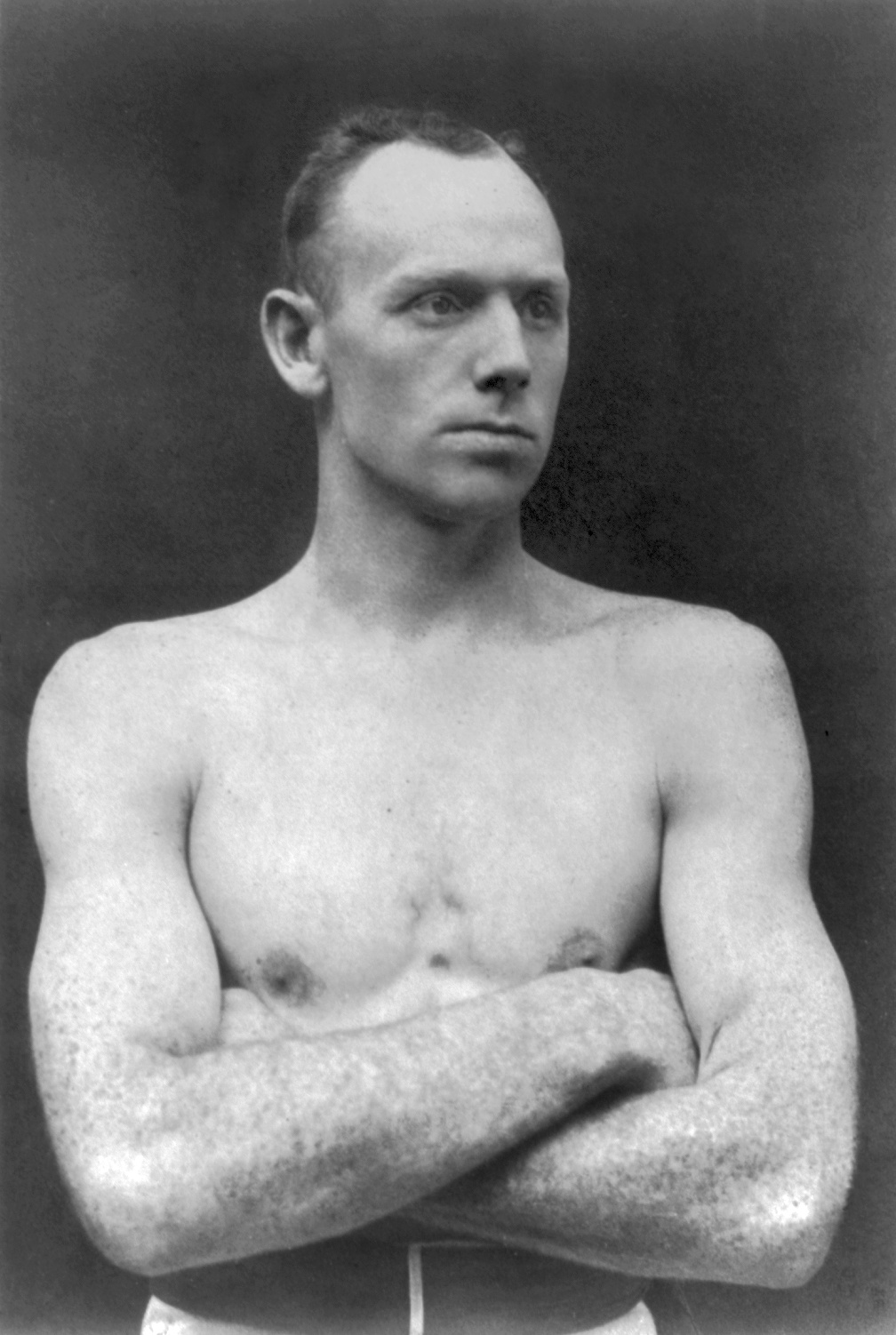
Robert James Fitzsimmons (26 May 1863 – 22 October 1917) was a Cornish professional boxer who was the sport's first three-division world champion. He achieved fame for beating "Gentleman Jim" Corbett (the man who beat John L. Sullivan), and he is in The Guinness Book of World Records as the lightest heavyweight champion, weighing just 167 pounds when he won the title. Nicknamed Ruby Robert and The Freckled Wonder, he took pride in his lack of scars and appeared in the ring wearing heavy woollen underwear to conceal the disparity between his trunk and leg-development.
After defeating George Gardiner for the world light-heavyweight title on November 25, 1903, Fitzsimmons became the oldest champion at 40, a record that lasted until George Foreman's 1994 WBA heavyweight title win. Considered one of the hardest punchers in boxing history, Fitzsimmons is ranked No. 8 on The Ring magazine's list of 100 greatest punchers of all time. Boxing writer and founder of The Ring magazine, Nat Fleischer, ranked Fitzsimmons the third greatest heavyweight of all time and regarded him as the greatest pound for pound knockout puncher in boxing history.
Robert James Fitzsimmons was born on 4 June 1862 in Helston, Cornwall, England, the youngest of seven boys and five girls born to James and Jane (née Strongman) Fitzsimmons. Not long before his birth, his parents had moved from his father's native Ireland to Cornwall, where his mother came from, in order for his father to find work as a policeman. Fitzsimmons received his early education at the National school in Helston. In 1873, the family moved again; James, Jane and their youngest five children sailed on the Adamant for the 93-day journey to Lyttelton, New Zealand.
They settled in Timaru, a town 147 km (91 miles) south-west of Lyttelton populated mainly by Cornish immigrants, and James Fitzsimmons established a blacksmith's forge in the town. Once Fitzsimmons had completed his education at the Timaru Main School, he took on a range of jobs. He wanted to join the crew of the Isabella Ridley, and do some service as a sailor, hoping that it would toughen him up for a career in boxing, but the ship was badly damaged in storms while still docked in Timaru. Instead, he took on a range of jobs; as a butcher's delivery boy, a carriage painter, striker at an iron foundry, and a decorator, before becoming an apprentice at his family's blacksmith's forge with his brother Jarrett. His time working in the blacksmith's forge helped to develop his upper body, particularly his arms and shoulders. During his time working in the blacksmith's forge, there are stories that Fitzsimmons was not averse to fighting quarrelsome, often drunk, customers, and it was suggested that this even boosted business, as customers returned to the forge, hoping to see a fight.
In the early 1880s Jem Mace, an English bare-knuckle boxer, travelled to Timaru and hosted both his boxing school, and the first boxing championships held in New Zealand in 1880. Fitzsimmons entered the tournament and knocked out four opponents on his way to winning the lightweight title. He knocked out five opponents in the subsequent competition in 1881 to capture the middleweight championship. During one of these tournaments, it is often suggested that Fitzsimmons defeated Herbert Slade, a professional heavyweight boxer who was touring with Mace, but Slade was touted as being undefeated in 1883, and it is possible that it was Slade's brother that Fitzsimmons beat. After these tournaments, Fitzsimmons boxed at least six times in New Zealand, including some bare knuckle bouts, but it is unclear if he received payment for his fights during this time.
Boxing record books show Fitzsimmons officially began boxing professionally in 1883, in Australia. He beat Jim Crawford there in a bare knuckle fight by getting a knockout in three rounds. Fitzsimmons had his first 28 definite professional fights in Australia, where he lost the Australian middleweight title to Mick Dooley (rumours spoke of a fixed bout) and where he also won a fight by knockout while on the floor: when Edward Starlight Robins dropped Fitzsimmons to the canvas in round nine of their fight, he also broke his hand and could not continue, therefore the referee declared Fitzsimmons the winner by a knockout.
By this stage, Fitzsimmons had established his own style. He developed a certain movement and caginess from one of the greatest bare-knuckle fighters, Jem Mace. Mace encouraged Fitzsimmons to develop his punching technique, drawing on the enormous power he had gained from blacksmithing. Fitzsimmons delivered short, accurate and occasionally conclusive punches. He soon built up a reputation as by far the hardest puncher in boxing.
Moving on to the United States, Fitzsimmons fought four more times in 1890, winning three and drawing one.
Hub AI
Bob Fitzsimmons AI simulator
(@Bob Fitzsimmons_simulator)
Bob Fitzsimmons
Robert James Fitzsimmons (26 May 1863 – 22 October 1917) was a Cornish professional boxer who was the sport's first three-division world champion. He achieved fame for beating "Gentleman Jim" Corbett (the man who beat John L. Sullivan), and he is in The Guinness Book of World Records as the lightest heavyweight champion, weighing just 167 pounds when he won the title. Nicknamed Ruby Robert and The Freckled Wonder, he took pride in his lack of scars and appeared in the ring wearing heavy woollen underwear to conceal the disparity between his trunk and leg-development.
After defeating George Gardiner for the world light-heavyweight title on November 25, 1903, Fitzsimmons became the oldest champion at 40, a record that lasted until George Foreman's 1994 WBA heavyweight title win. Considered one of the hardest punchers in boxing history, Fitzsimmons is ranked No. 8 on The Ring magazine's list of 100 greatest punchers of all time. Boxing writer and founder of The Ring magazine, Nat Fleischer, ranked Fitzsimmons the third greatest heavyweight of all time and regarded him as the greatest pound for pound knockout puncher in boxing history.
Robert James Fitzsimmons was born on 4 June 1862 in Helston, Cornwall, England, the youngest of seven boys and five girls born to James and Jane (née Strongman) Fitzsimmons. Not long before his birth, his parents had moved from his father's native Ireland to Cornwall, where his mother came from, in order for his father to find work as a policeman. Fitzsimmons received his early education at the National school in Helston. In 1873, the family moved again; James, Jane and their youngest five children sailed on the Adamant for the 93-day journey to Lyttelton, New Zealand.
They settled in Timaru, a town 147 km (91 miles) south-west of Lyttelton populated mainly by Cornish immigrants, and James Fitzsimmons established a blacksmith's forge in the town. Once Fitzsimmons had completed his education at the Timaru Main School, he took on a range of jobs. He wanted to join the crew of the Isabella Ridley, and do some service as a sailor, hoping that it would toughen him up for a career in boxing, but the ship was badly damaged in storms while still docked in Timaru. Instead, he took on a range of jobs; as a butcher's delivery boy, a carriage painter, striker at an iron foundry, and a decorator, before becoming an apprentice at his family's blacksmith's forge with his brother Jarrett. His time working in the blacksmith's forge helped to develop his upper body, particularly his arms and shoulders. During his time working in the blacksmith's forge, there are stories that Fitzsimmons was not averse to fighting quarrelsome, often drunk, customers, and it was suggested that this even boosted business, as customers returned to the forge, hoping to see a fight.
In the early 1880s Jem Mace, an English bare-knuckle boxer, travelled to Timaru and hosted both his boxing school, and the first boxing championships held in New Zealand in 1880. Fitzsimmons entered the tournament and knocked out four opponents on his way to winning the lightweight title. He knocked out five opponents in the subsequent competition in 1881 to capture the middleweight championship. During one of these tournaments, it is often suggested that Fitzsimmons defeated Herbert Slade, a professional heavyweight boxer who was touring with Mace, but Slade was touted as being undefeated in 1883, and it is possible that it was Slade's brother that Fitzsimmons beat. After these tournaments, Fitzsimmons boxed at least six times in New Zealand, including some bare knuckle bouts, but it is unclear if he received payment for his fights during this time.
Boxing record books show Fitzsimmons officially began boxing professionally in 1883, in Australia. He beat Jim Crawford there in a bare knuckle fight by getting a knockout in three rounds. Fitzsimmons had his first 28 definite professional fights in Australia, where he lost the Australian middleweight title to Mick Dooley (rumours spoke of a fixed bout) and where he also won a fight by knockout while on the floor: when Edward Starlight Robins dropped Fitzsimmons to the canvas in round nine of their fight, he also broke his hand and could not continue, therefore the referee declared Fitzsimmons the winner by a knockout.
By this stage, Fitzsimmons had established his own style. He developed a certain movement and caginess from one of the greatest bare-knuckle fighters, Jem Mace. Mace encouraged Fitzsimmons to develop his punching technique, drawing on the enormous power he had gained from blacksmithing. Fitzsimmons delivered short, accurate and occasionally conclusive punches. He soon built up a reputation as by far the hardest puncher in boxing.
Moving on to the United States, Fitzsimmons fought four more times in 1890, winning three and drawing one.