
Recent from talks
Bobby Wine
Knowledge base stats:
Talk channels stats:
Members stats:
Bobby Wine
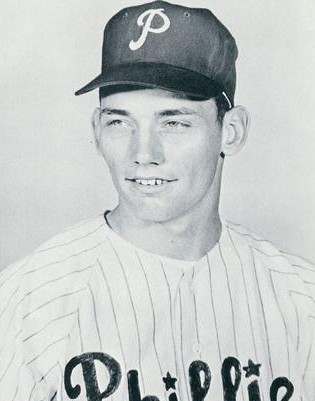
Robert Paul Wine Sr. (born September 17, 1938) is an American former shortstop, coach and manager in Major League Baseball (MLB). An excellent fielder who struggled as a hitter, Wine spent 12 seasons in the National League with the Philadelphia Phillies (1960; 1962–68) and the Montreal Expos (1969–72). He won the NL Gold Glove Award in 1963.
Before the 1957 season, Wine was signed by the Philadelphia Phillies as an amateur free agent out of Northport High School. His first season of professional baseball would see him with the class D Appalachian League (Short Season) Johnson City Phillies. The 18-year-old infielder appeared in 54 games, got 202 at bats, 68 hits—including 6 home runs—and hit for a .337 average.
Wine moved up to the class C California League Bakersfield Bears in 1958. Bobby appeared in 112 games, got 440 at bats, had 137 hits with 11 home runs, and hit for a .311 average. 1959 would find him with the class A Eastern League Williamsport Grays, playing in 120 contests, getting 426 at bats, but only 89 hits and his batting average fell to .209.
Wine played with the International League Buffalo Bisons in 1960, appearing in 154 games with 569 at bats and 153 hits for a .269 average. He recorded a .958 fielding percentage at the shortstop position. He made his major league debut that season, when the Philadelphia Phillies used him in 4 games. He picked up 2 base hits and fielded 19 total chances at shortstop without an error for a 1.000 percentage.
In 1961 he was back with the Buffalo team where he hit for a .243 average and fielded at a .961 clip. He also spent time in 1962 with Buffalo, hitting .242 and fielding at a .977 percentage. This was his last minor league action, as he finished out the year with the Phillies, hitting at a .244 average and fielding .979. He played 20 games at third base in 1962 for the Philadelphia team and did not have an error.
Wine spent the next ten seasons (1963–1972) in the major leagues. Wine was with the memorable 1964 Philadelphia team, which was in first place most of the year but collapsed in the last two weeks to let the St. Louis Cardinals take the pennant on the last day of the season. He played shortstop during the late innings of Jim Bunning's perfect game against the New York Mets on Father's Day of that year. His last season with the Phillies was 1968, when a back injury limited him to 27 games.
Wine was sent to the expansion Montreal Expos at the end of spring training in 1969 as compensation for pitcher Larry Jackson, who had been selected from the Phillies in the 1969 expansion draft but chose to retire rather than join the Expos. At first he was the back-up to Maury Wills, but he took over when Wills was traded to the Los Angeles Dodgers in June 1969. Although he played in just 121 games, Wine led the league in errors with 31, and batted just .200.
In the 1970 season, Bobby was 5th in the league in games played with 159 to his credit. He participated in a then-record 137 double plays in 1970. While his hitting was still awful, with no power to speak of, he registered his best batting average of his tenure with the Expos at .232. He also posted the best on-base percentage of his career, a paltry .287. Despite the low averages, Wine showed prowess to hit in the clutch, driving in 51 runs.
Hub AI
Bobby Wine AI simulator
(@Bobby Wine_simulator)
Bobby Wine
Robert Paul Wine Sr. (born September 17, 1938) is an American former shortstop, coach and manager in Major League Baseball (MLB). An excellent fielder who struggled as a hitter, Wine spent 12 seasons in the National League with the Philadelphia Phillies (1960; 1962–68) and the Montreal Expos (1969–72). He won the NL Gold Glove Award in 1963.
Before the 1957 season, Wine was signed by the Philadelphia Phillies as an amateur free agent out of Northport High School. His first season of professional baseball would see him with the class D Appalachian League (Short Season) Johnson City Phillies. The 18-year-old infielder appeared in 54 games, got 202 at bats, 68 hits—including 6 home runs—and hit for a .337 average.
Wine moved up to the class C California League Bakersfield Bears in 1958. Bobby appeared in 112 games, got 440 at bats, had 137 hits with 11 home runs, and hit for a .311 average. 1959 would find him with the class A Eastern League Williamsport Grays, playing in 120 contests, getting 426 at bats, but only 89 hits and his batting average fell to .209.
Wine played with the International League Buffalo Bisons in 1960, appearing in 154 games with 569 at bats and 153 hits for a .269 average. He recorded a .958 fielding percentage at the shortstop position. He made his major league debut that season, when the Philadelphia Phillies used him in 4 games. He picked up 2 base hits and fielded 19 total chances at shortstop without an error for a 1.000 percentage.
In 1961 he was back with the Buffalo team where he hit for a .243 average and fielded at a .961 clip. He also spent time in 1962 with Buffalo, hitting .242 and fielding at a .977 percentage. This was his last minor league action, as he finished out the year with the Phillies, hitting at a .244 average and fielding .979. He played 20 games at third base in 1962 for the Philadelphia team and did not have an error.
Wine spent the next ten seasons (1963–1972) in the major leagues. Wine was with the memorable 1964 Philadelphia team, which was in first place most of the year but collapsed in the last two weeks to let the St. Louis Cardinals take the pennant on the last day of the season. He played shortstop during the late innings of Jim Bunning's perfect game against the New York Mets on Father's Day of that year. His last season with the Phillies was 1968, when a back injury limited him to 27 games.
Wine was sent to the expansion Montreal Expos at the end of spring training in 1969 as compensation for pitcher Larry Jackson, who had been selected from the Phillies in the 1969 expansion draft but chose to retire rather than join the Expos. At first he was the back-up to Maury Wills, but he took over when Wills was traded to the Los Angeles Dodgers in June 1969. Although he played in just 121 games, Wine led the league in errors with 31, and batted just .200.
In the 1970 season, Bobby was 5th in the league in games played with 159 to his credit. He participated in a then-record 137 double plays in 1970. While his hitting was still awful, with no power to speak of, he registered his best batting average of his tenure with the Expos at .232. He also posted the best on-base percentage of his career, a paltry .287. Despite the low averages, Wine showed prowess to hit in the clutch, driving in 51 runs.
Recent media