
Recent from talks
Bolivarian propaganda
Knowledge base stats:
Talk channels stats:
Members stats:
Bolivarian propaganda
Bolivarian propaganda (also known as chavista propaganda and Venezuelan propaganda) is a form of nationalist propaganda, especially in Venezuela and associated with chavismo, Venezuelan socialism. This type of propaganda has been associated with Hugo Chávez's Bolivarian Revolution, which used emotional arguments to gain attention, exploit the fears of the population, create external enemies for scapegoat purposes, and produce nationalism within the population, causing feelings of betrayal for support of the opposition.
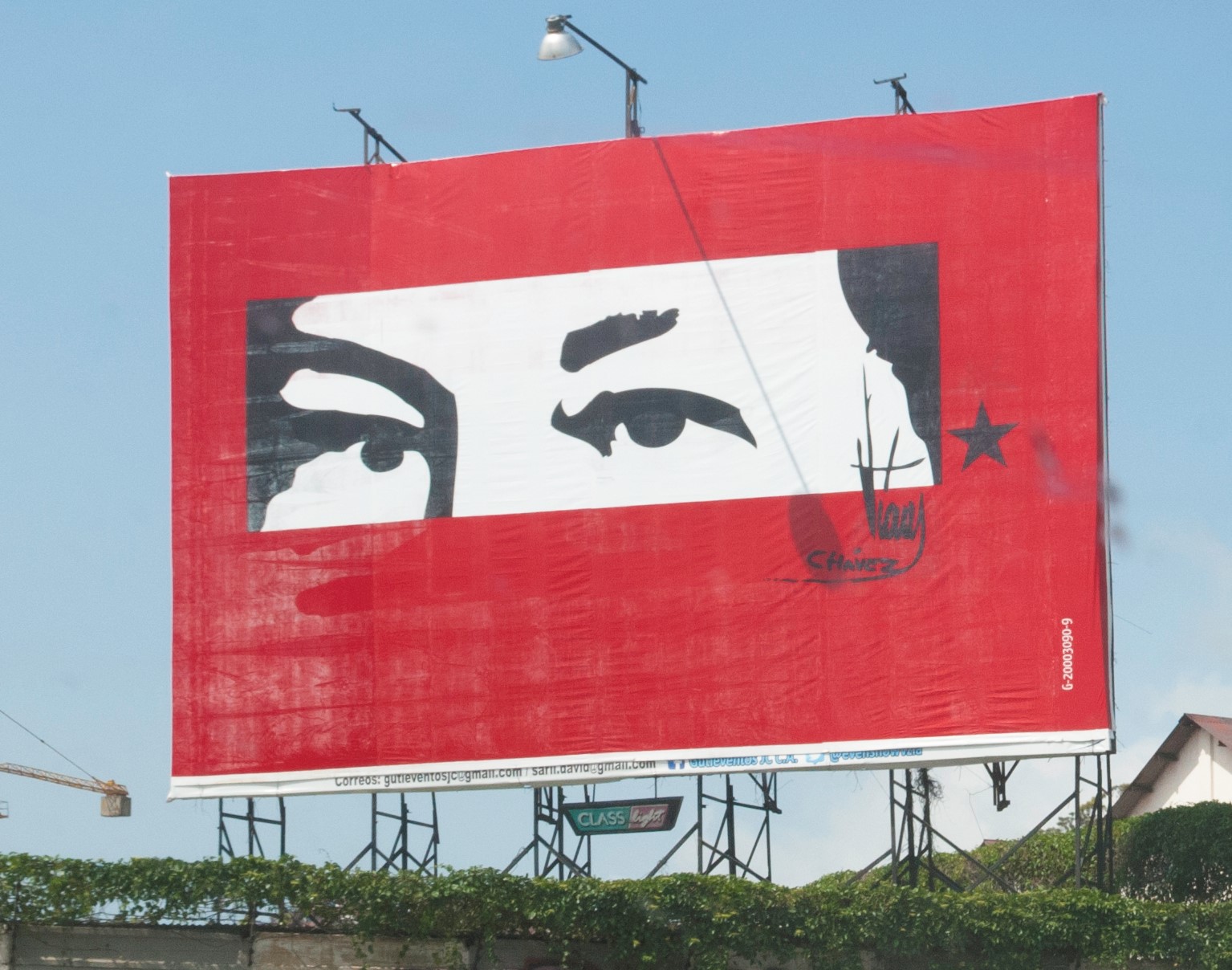
The World Politics Review stated in 2007 that, as Chávez began "transforming Venezuela into a socialist state", propaganda was "an important role in maintaining and mobilizing government supporters". The image of Chávez was seen on sides of buildings, on T-shirts, on ambulances, on official Petróleos de Venezuela (PDVSA) billboards, and as action figures throughout Venezuela. A 2011 article by The New York Times said Venezuela has an "expanding state propaganda complex" while The Boston Globe described Chávez as "a media savvy, forward-thinking propagandist" that had "the oil wealth to influence public opinion".
Chávez's successor, Nicolás Maduro, has continued using obligatory broadcasts on television known as cadenas. Maduro became unpopular among Venezuelans, especially throughout the Venezuelan protests, with The Economist noting that "Chavistas used to be good at propaganda. Now they cannot even get that right". Essayist Alberto Barrera Tyszka has stated that citizens viewing state propaganda see well-fed Bolivarian officials living in "decadence", which offends the "poverty of Venezuelans" and has damaged the government's image, with the majority of Venezuelans suffering from malnutrition under Maduro's government.
The term Bolivarian Revolution denotes a system of government, based on Simón Bolívar's vision of a unified South America led by a "strong but compassionate caudillo". Months after being inaugurated in 1999, Chávez promised to bring dramatic change to Venezuela through this revolution resulting in a "radical redefinition of the relationship of the media system of mass communication with the sphere of political power and beyond, with the State itself as controller and regulating agent of society".
A so-called "participatory democracy", had become the foundation of the Hugo Chávez administration, with Chávez utilizing the national hero Simón Bolívar to legitimize his political standing. According to Rory Carroll, "Media mastery had helped the commandante win successive elections and turn his administration into what he called the Bolivarian revolution".
Chávez's popularity was accomplished through "exploitation of charismatic legitimacy" and a propaganda program was established to accomplish "participatory democracy", to strengthen his political position, and to strengthen his power base. Douglas Schoen in The Threat Closer to Home said that Chávez has promoted his populist message via programs and legislation including a loyal chavista branch of bishops in the Catholic Church, closing RCTV, and altering laws to require citizens to report disloyal citizens.
In 2002, the Venezuelan government signed a $1.2 million contract with lobby firm Patton Boggs to improve the image of Hugo Chávez in the United States. In 2004, it was estimated that the Venezuelan government's funding of propaganda was $30,000 per day domestically to about $1.0 million per day for both domestic and international propaganda.[citation needed]
According to El Nacional, 65% of Venezuela's Ministry of Communication and Information (MINCI) funds were used for "official propaganda" in 2014. Allocation of funds to MINCI were over 500 million Venezuelan bolívares. These funds were divided among separate government media organizations; 161,043,447 bolívares to VTV, 65% more than it received in 2012, 97,335,051 bolívares for the Venezuelan Telecommunications Corporation, 96,861,858 bolívares for the New Television Station of the South, 20,381,890 bolívares for El Correo del Orinoco, 48,935,326 bolívares for AVN and more.
Hub AI
Bolivarian propaganda AI simulator
(@Bolivarian propaganda_simulator)
Bolivarian propaganda
Bolivarian propaganda (also known as chavista propaganda and Venezuelan propaganda) is a form of nationalist propaganda, especially in Venezuela and associated with chavismo, Venezuelan socialism. This type of propaganda has been associated with Hugo Chávez's Bolivarian Revolution, which used emotional arguments to gain attention, exploit the fears of the population, create external enemies for scapegoat purposes, and produce nationalism within the population, causing feelings of betrayal for support of the opposition.
The World Politics Review stated in 2007 that, as Chávez began "transforming Venezuela into a socialist state", propaganda was "an important role in maintaining and mobilizing government supporters". The image of Chávez was seen on sides of buildings, on T-shirts, on ambulances, on official Petróleos de Venezuela (PDVSA) billboards, and as action figures throughout Venezuela. A 2011 article by The New York Times said Venezuela has an "expanding state propaganda complex" while The Boston Globe described Chávez as "a media savvy, forward-thinking propagandist" that had "the oil wealth to influence public opinion".
Chávez's successor, Nicolás Maduro, has continued using obligatory broadcasts on television known as cadenas. Maduro became unpopular among Venezuelans, especially throughout the Venezuelan protests, with The Economist noting that "Chavistas used to be good at propaganda. Now they cannot even get that right". Essayist Alberto Barrera Tyszka has stated that citizens viewing state propaganda see well-fed Bolivarian officials living in "decadence", which offends the "poverty of Venezuelans" and has damaged the government's image, with the majority of Venezuelans suffering from malnutrition under Maduro's government.
The term Bolivarian Revolution denotes a system of government, based on Simón Bolívar's vision of a unified South America led by a "strong but compassionate caudillo". Months after being inaugurated in 1999, Chávez promised to bring dramatic change to Venezuela through this revolution resulting in a "radical redefinition of the relationship of the media system of mass communication with the sphere of political power and beyond, with the State itself as controller and regulating agent of society".
A so-called "participatory democracy", had become the foundation of the Hugo Chávez administration, with Chávez utilizing the national hero Simón Bolívar to legitimize his political standing. According to Rory Carroll, "Media mastery had helped the commandante win successive elections and turn his administration into what he called the Bolivarian revolution".
Chávez's popularity was accomplished through "exploitation of charismatic legitimacy" and a propaganda program was established to accomplish "participatory democracy", to strengthen his political position, and to strengthen his power base. Douglas Schoen in The Threat Closer to Home said that Chávez has promoted his populist message via programs and legislation including a loyal chavista branch of bishops in the Catholic Church, closing RCTV, and altering laws to require citizens to report disloyal citizens.
In 2002, the Venezuelan government signed a $1.2 million contract with lobby firm Patton Boggs to improve the image of Hugo Chávez in the United States. In 2004, it was estimated that the Venezuelan government's funding of propaganda was $30,000 per day domestically to about $1.0 million per day for both domestic and international propaganda.[citation needed]
According to El Nacional, 65% of Venezuela's Ministry of Communication and Information (MINCI) funds were used for "official propaganda" in 2014. Allocation of funds to MINCI were over 500 million Venezuelan bolívares. These funds were divided among separate government media organizations; 161,043,447 bolívares to VTV, 65% more than it received in 2012, 97,335,051 bolívares for the Venezuelan Telecommunications Corporation, 96,861,858 bolívares for the New Television Station of the South, 20,381,890 bolívares for El Correo del Orinoco, 48,935,326 bolívares for AVN and more.
Recent media