Hubbry Logo
Hussein FatalHussein FatalMain
Open search
Hussein Fatal
Community hub
Hussein Fatal
logo
8 pages, 0 posts
0 subscribers
Be the first to start a discussion here.
Hussein Fatal
Hussein Fatal
from Wikipedia

Key Information

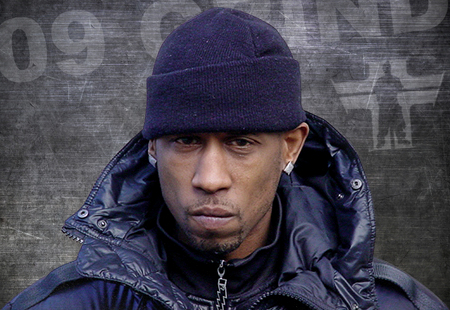
Bruce Edward Washington Jr. (April 3, 1973 – July 10, 2015),[2] better known by his stage name Hussein Fatal or sometimes as Fatal Hussein, was an American rapper, best known for his collaborative work with Tupac Shakur as a member of the rap group Outlawz.

Early life

[edit]

Fatal was born Bruce Edward Washington Jr. in New Jersey on April 3, 1973.[2]

Career

[edit]

Washington first appeared as "Hussein Fatal" in February 1996 on the songs "All Bout U" and "When We Ride" from Shakur's album All Eyez on Me. As a member of the Outlaw Immortalz, his name was chosen to evoke a villain, Iraqi president Saddam Hussein.[4][5] In June 1996, he was featured on Shakur's song "Hit 'Em Up", insulting Shakur's rivals in the song's second verse.[6]

After 2Pac died in September 1996 and Outlawz member Yaki Kadafi died in November, Washington did not appear on another recording until 1998 when Relativity Records released his first solo album In the Line of Fire.[7] The label went bankrupt; the album wasn't promoted and sold poorly.[8] Washington did not appear on the Outlawz debut album, Still I Rise.[9]

Washington then signed with Rap-A-Lot Records and began work on a second solo studio album, Death Before Dishonor, recording over 40 songs before being arrested in December 1999 for an assault committed three years earlier. Rap-A-Lot Records released the album as Fatal after he was paroled in 2002.[10]

Around 2003, through his affiliation with Rap-A-Lot, Washington began associating with Irv Gotti's Murder Inc. Records. That year, Washington performed on four songs of Ja Rule's album Blood in My Eye: "The Life", "It's Murda (Freestyle)", "The Wrap (Freestyle)" and the eponymous title track, "Blood in My Eye". He also made a cameo appearance in the music video for Clap Back, and appeared on the remix of Ashanti's "Rain On Me".[11][12][13] [14]

Washington performed again with the Outlawz on their 2010 mixtape Killuminati 2K10 and their 2011 mixtape Killuminati 2K11,[15][16] and on the 2011 album, Perfect Timing.[17][18][19] He also appeared on the tracks "Emancipation" and "Welcome To Real Life",[20][21] from fellow Outlawz member Young Noble's 2012 album Son of God.[22] He continued to release mixtapes on his own label, Thugtertainment, until his death.[23]

Death

[edit]

Washington was killed in a traffic collision in Banks County, Georgia, on July 10, 2015. He was 42 years old. His girlfriend, Zanetta Yearby, was charged with DUI, first-degree vehicular homicide, and reckless driving.[24]

Discography

[edit]
Solo albums Year Label
In the Line of Fire 1998 Relativity Records
Fatal 2002 Rap-a-Lot, Asylum Records
Born Legendary 2009 Thugtertainment
The Interview: It's Not a Gimmik 2 Me 2013
Ridin' All Week on 'Em 2015
Legendary Status 2018 Hussein Entertainment
With Young Noble Year Label
Thug in Thug Out 2007 High Powered, Koch, Thugtertainment, 1Nation Ent.
Outlaw Nation Vol. 3 (Mixtape) 2013 Thugtertainment, Outlaw Recordz
Jerzey Giantz (Mixtape) 2014
With Nutt-So Year Label
Outkasted Outlawz 2010 Nutty's Playhouse Entertainment, Thugtertainment
With Outlawz Year Label
Killuminati 2K10 2010 1Nation Ent., Thugtertainment
Killuminati 2K11 2011
Perfect Timing Universal, Fontana, 1Nation Ent., Krude

Filmography

[edit]
Year Title Role Notes
2002 Outlawz: Worldwide himself Documentary DVD
2003 Eyes On Hip Hop – The Chronicle Vol.1 himself Documentary DVD
Beef himself Documentary DVD
2004 All Access Vol.5 himself Documentary DVD
2007 Smooth: The Game Is Dead Motion picture debut
2008 The Money Kept Coming himself Documentary DVD
Ca$h Rules M.J. Motion picture debut
2011 Sex, Money and You Already Know: The Hykine Johnson Story Fatal Motion picture debut
2013 Napoleon: Life of an Outlaw himself Documentary DVD
Sleeping With Angels Walter Kurtz Motion picture debut
Can't Forget New Jersey himself Documentary
Bound by Blood Motion picture debut

References

[edit]
[edit]
Revisions and contributorsEdit on WikipediaRead on Wikipedia
from Grokipedia
Hussein Fatal, born Bruce Edward Washington Jr. on April 3, 1973, in Montclair, New Jersey, was an American rapper best known as a founding member of the hip-hop group Outlawz and for his close collaborations with Tupac Shakur. Fatal grew up in Montclair, where he began rapping and engaging in street life at a young age, eventually connecting with Tupac through fellow native Yaki Kadafi, who was like a half-brother to the late rapper. He adopted the stage name , drawing from dictator themes alongside other members, and first gained prominence in 1996 by featuring on Tupac's landmark album with verses on tracks like "All Bout U" and "When We Ride." As a key part of Outlawz—formed in 1996 under Tupac's influence—Fatal contributed his distinctive deep voice and East Coast flow to the group's gangsta rap style, appearing on early releases including the collaborative album Still I Rise (1999) with Tupac Shakur and their first independent album Ride wit Us or Collide wit Us (2000). He also pursued solo work, releasing his debut album In the Line of Fire in 1998 on Tommy Boy Records, followed by independent projects such as Fatal (2002) and Born Legendary (2009), which highlighted his loyalty to Tupac's legacy and themes of street life and resilience. Fatal died on July 10, 2015, aged 42, in a car accident on Interstate 85 in , where his vehicle collided with a tractor-trailer; he was pronounced dead at the scene, while a female passenger survived with injuries. His death was confirmed by members, who honored his enduring impact on hip-hop and his role in preserving Tupac's outlaw ethos.

Early life

Childhood and upbringing

Bruce Edward Washington Jr., known professionally as Hussein Fatal, was born on April 3, 1977, in . He was the son of Bruce Washington Sr. and Cheryl Perkins, and one of twelve children in a large family. Washington grew up on New Street in Montclair, a community with diverse socioeconomic conditions that included urban challenges typical of parts of Essex County during the late and 1980s. Inspired by hearing rappers like and on 98.7 KISS FM, he developed an early interest in hip-hop and began rapping as a child. This environment exposed him to local street culture from an early age, shaping his formative experiences amid a backdrop of family closeness and neighborhood dynamics. As he entered his teenage years, these influences contributed to a shift toward more serious engagements with his surroundings.

Early criminal involvement

During his teenage years in the Newark area, the urban environment exposed Bruce Washington Jr., later known as Hussein Fatal, to the harsh realities of street life. Immersed in the local drug trade, he began dealing as a , becoming entangled in the cycle of amid economic hardship and in the area. Additionally, he joined The Plague, a gang-affiliated group connected to early hip-hop circles including the , which further drew him into conflicts and criminal associations typical of Newark's neighborhoods. Washington's early delinquency escalated, resulting in multiple arrests as a minor. These incidents reflected the pervasive influence of dynamics and the economy on young people in the area, where minor offenses often compounded into repeated encounters with the juvenile justice system. Although specific details of each case remain limited, the frequency of arrests underscored his deep involvement in street-level crimes during . These formative experiences profoundly shaped Washington's , instilling a sense of resilience forged through adversity and periods spent in juvenile detention. The constant brushes with the law and immersion in the underbelly of urban life cultivated themes of street survival, , and the struggle for redemption that permeated his later lyrical content, reflecting a raw authenticity drawn from personal hardship rather than abstraction. His time navigating gangs and the drug trade not only hardened his perspective but also informed the gritty narratives in his music, emphasizing the perils of urban youth caught in systemic cycles of and .

Career

Association with Tupac Shakur and Outlawz

Hussein Fatal, born Bruce Washington Jr., entered the music scene in 1995 when he was introduced to Tupac Shakur by his childhood friend Yafeu Fula, professionally known as Yaki Kadafi, during a visit in New Jersey. This encounter occurred shortly after Shakur's release from prison, and Fatal impressed Shakur with his raw lyrical delivery, leading to an invitation to join the emerging rap collective that Shakur was assembling from the remnants of the earlier group Dramacydal. The group, initially named Outlaw Immortalz to reflect their unbreakable bond and street ethos, included core members like Kadafi, Kastro, E.D.I. Mean, and Napoleon, with Shakur adopting the alias Makaveli. Fatal adopted his stage name "Hussein Fatal" at Shakur's suggestion, drawing inspiration from , the Iraqi leader, to evoke themes of defiance and resilience that paralleled Shakur's own Makaveli persona, rooted in Niccolò Machiavelli's strategic philosophy. This naming convention extended to other members, aligning the group's identity with historical and revolutionary figures to symbolize their outlaw lifestyle and resistance against industry and street adversaries. Fatal made his debut on Shakur's double album All Eyez on Me (1996), contributing verses to tracks like "Tradin' War Stories," where he rapped alongside other Outlaw Immortalz members about the harsh realities of thug life and survival in the streets. He also appeared uncredited on "All About U," showcasing his gritty flow amid the album's ensemble features. Later that year, Fatal delivered a standout verse on the aggressive diss track "Hit 'Em Up," the B-side to Shakur's "How Do U Want It" single, where he directly targeted rivals Notorious B.I.G. and Junior M.A.F.I.A., boasting lines like "Biggie Smalls just got dropped, little Mo', pass the MAC and let me hit him in his back" to escalate the East Coast-West Coast feud. The Outlaw Immortalz signed to Shakur's Makaveli Records imprint, which was distributed through Death Row Records, positioning the group as Shakur's protégés for upcoming projects including features on his album The Don Killuminati: The 7 Day Theory (1996). Following Shakur's murder on September 13, 1996, and Kadafi's killing two months later on November 10, 1996, the group grappled with profound loss and internal turmoil, eventually shortening their name to Outlawz to honor the fallen without the "Immortalz" moniker. Fatal departed the group shortly thereafter, citing disagreements over a direct deal with Death Row Records, which contradicted Shakur's vision for Makaveli Records as an independent entity. The remaining Outlawz proceeded with Death Row, releasing their debut album Still I Rise on December 21, 1999, a collaborative effort featuring posthumous vocals from Shakur on tracks like "Letter to the President" and "Black Jesuz," marking their initial effort to carry forward the group's legacy amid legal and label disputes.

Solo recordings and collaborations

Hussein Fatal released his debut solo album, , on March 24, 1998, through Relativity Records. The project featured production from and Mike Dean, blending East Coast lyricism with West Coast influences, and included guest appearances from artists like and Tame One. It peaked at No. 50 on the chart and No. 10 on the Top R&B/Hip-Hop Albums chart. Singles such as "Everyday" featuring Antoinette Roberson and "Getto Star" featuring Tame One highlighted his aggressive flow and street narratives. The album's commercial potential was undermined by Relativity Records' bankruptcy shortly after its release, which led to minimal promotion and limited distribution, resulting in modest sales. Following this setback, Fatal signed with Rap-A-Lot Records and Asylum Records in 1999, beginning work on his second solo effort, initially titled Death Before Dishonor. He recorded over 40 tracks during this period, but the project faced significant delays due to his December 1999 arrest on a three-year-old assault charge, for which he served time until his parole in early 2002. The album was ultimately released as Fatal on November 19, 2002, featuring contributions from Outlawz members like Young Noble and Napoleon on tracks such as "I'm an Outlaw" and "I Wanna Be Free." Throughout the late and early , Fatal navigated label transitions and legal hurdles that stalled his momentum, including disputes over creative control and release schedules at Rap-A-Lot. Despite these challenges, he maintained visibility through key collaborations outside his group affiliations. Notable features included his verse on "Usual Suspects" alongside , , and from the 1997 soundtrack How to Be a Player, and "Ride" with Do or Die on their 2001 album . In 2003, he contributed to four tracks on 's via , including "The Life" featuring Caddillac Tah and "It's Murda (Freestyle)," showcasing his chemistry with the label's roster during a transitional phase in his career.

Later career developments

In the late 2000s, Hussein Fatal marked a significant return to recording with the release of his third studio album, Born Legendary, on June 16, 2009, through Thugtertainment. The project featured 15 tracks showcasing his signature gritty lyricism over beats produced by collaborators including SC, , and Jack B, emphasizing themes of resilience and street life as a solo artist. This album represented a comeback following a period of relative quiet after his earlier independent efforts, allowing Fatal to reassert his presence in underground hip-hop circles. Fatal rejoined his Outlawz cohorts—primarily Young Noble and E.D.I. Mean—for a series of group projects starting in 2010, revitalizing the trio's dynamic around shared West Coast and East Coast influences rooted in their Tupac-era origins. Their reunion yielded the mixtape Killuminati 2K10 on October 31, 2010, a 24-track collection blending aggressive flows with production nods to classic gangsta rap sounds, including solo showcases for each member. The following year, they followed with the studio album Perfect Timing on September 13, 2011, which highlighted the group's streamlined chemistry through 16 tracks of introspective and hard-hitting narratives, produced by figures like Rick Rock and Jake One. This era also included live performances, such as the Outlawz's 2010 "Memory of 2Pac" tour stops featuring Fatal alongside his bandmates, reinforcing their enduring bond and fanbase connection. Transitioning back to solo work, Fatal issued The Interview: It's Not a Gimmik 2 Me on February 13, 2013, via Thugtertainment, a 17-track effort delving into unfiltered accounts of urban survival and personal trials through raw, narrative-driven bars. His final independent release during his lifetime, Ridin' All Week on 'Em, arrived on February 28, 2015, also under Thugtertainment, comprising 14 songs that captured his unyielding focus on street authenticity and daily hustles with vivid, no-holds-barred storytelling. Leading up to his death, Fatal maintained an active performance schedule, including appearances at hip-hop events in early , while teasing additional unreleased tracks and collaborations that highlighted his ongoing creative output. Posthumously, his sixth studio album Legendary Status was released on July 10, 2018, through Hussein Entertainment, featuring 15 tracks with collaborations including members and appearances from and others.

Personal life

Family and relationships

Hussein Fatal, born Bruce Edward Washington Jr., maintained close family ties throughout his adult life, rooted in his large family from , where he grew up with his parents, Cheryl Perkins and Bruce Washington Sr., and 11 siblings. His sister, Tammy Perkins-Cross, organized fundraising efforts for his funeral following his death, highlighting the family's ongoing support amid his music career. In his personal relationships, Fatal was in a long-term partnership with Zanetta L. Yearby at the time of his passing in 2015; the couple resided together in , reflecting his relocation from his roots to the in later years. As a to three daughters, he navigated the demands of his rap career while emphasizing family responsibilities, with his children noted as being deeply affected by his loss. Fatal's lifestyle post-fame involved balancing professional pursuits in hip-hop with private family life, splitting time between , where he retained strong community connections, and Georgia, where he sought a quieter environment away from urban pressures. He publicly embraced later in life, which influenced his personal values of loyalty and redemption, as affirmed by fellow members who described his acceptance of Islam and its role in shaping his outlook. This spiritual commitment aligned with a street code of brotherhood and resilience, evident in his dedication to family despite career challenges. In December 1999, Hussein Fatal (born Bruce Washington Jr.) was arrested on a prior charge that dated back several years. This led to a sentence, during which he served time until 2001 before being transferred to a . He was ultimately paroled in early 2002. His history included approximately 20 arrests as an adult, often linked to his early associations with street life in . The imprisonment severely disrupted his burgeoning music career, forcing him to miss key opportunities such as group activities and other collaborative projects during that period. Legal entanglements like this created ongoing delays in album releases and group activities for the . Following his , Fatal resumed recording and reestablished his presence in hip-hop, appearing on tracks from Ja Rule's 2003 album and later launching his independent label, Thugtertainment, in 2010. These troubles reinforced his reputation within the rap community as someone who had navigated and overcome systemic challenges.

Death and aftermath

The 2015 accident

On July 11, 2015, just after 2:30 a.m., Hussein Fatal, born Bruce Edward Washington Jr., was killed in a single-vehicle crash in Banks County, Georgia, while traveling southbound on Interstate 85 past the off-ramp for Georgia State Route 15. The incident involved a black Dodge Challenger in which Fatal was a passenger and his girlfriend, Zanetta L. Yearby, was the driver. The vehicle left the roadway at high speed, struck an embankment, vaulted into the air, collided with the underside of the Georgia 15 bridge, and came to rest on its roof. was ejected from the side during the crash and died at the scene at the age of 38. Yearby survived with non-life-threatening injuries. responders, including the Georgia State Patrol's Specialized Collision Reconstruction Team, arrived promptly to secure the area and confirm Fatal's death on-site. Following the fatal car accident on , , in , the conducted a thorough investigation, determining that the driver, Zanetta L. Yearby, Fatal's girlfriend, was impaired by alcohol and operating the vehicle at excessive speed, contributing to the crash. Yearby was treated for injuries at a hospital and then arrested and charged with (DUI), first-degree , , failure to maintain lane, and no proof of . The , Fatal's group, issued a statement expressing over the and requesting prayers for his and children, underscoring the profound loss and implicit call for accountability in the aftermath.

Legacy

Cultural impact

Hussein Fatal's signature aggressive flow and vivid storytelling were prominently featured in his verse on 2Pac's 1996 diss track "Hit 'Em Up," where he delivered lines like "Get out the way yo, get out the way yo / Biggie Smalls just got dropped little Lunaticz pass the glock and / MOP let’s do the man like the last time and / Blast him! ... Frank White need to get spanked right for setting up / This shadow puppet shit that they call rap". This contribution added a layer of measured intensity and direct confrontation to the song, amplifying its role in escalating the East Coast-West Coast hip-hop rivalry by targeting rivals such as The Notorious B.I.G. with precise, imagery-rich threats. As a founding member of the , Fatal played a pivotal role in preserving Tupac Shakur's legacy through the group's music, which emphasized themes of loyalty among comrades and the gritty realism of street life. The 's ongoing projects, including posthumous efforts tied to Fatal's involvement, continued to honor Shakur's vision of unity and authenticity in hip-hop, maintaining his influence long after his death. Fatal's work extended the boundaries of by embracing a bi-coastal perspective, blending East Coast roots with West Coast collaborations during a period of intense coastal tensions following the deaths of Tupac and Biggie Smalls. Hailing from , he represented the Garden State's presence in the genre, infusing tracks with raw, regional authenticity that highlighted under-the-radar narratives of urban struggle.

Posthumous recognition

Following his in 2015, Hussein Fatal received significant posthumous recognition through the of unreleased material and tributes from his former collaborators. In 2018, his first posthumous album, Legendary Status, was issued on July 10 via Hussein Entertainment, compiling 15 tracks of previously unheard recordings produced by Fatal's team, including executive production by his sister . The project featured collaborations with members such as and highlighted Fatal's raw lyricism on songs like the title track and "Block 2 Block" with Phaze, serving as a testament to his unfinished body of work. Outlawz members paid ongoing tributes to Fatal, emphasizing his integral role in the group's dynamic. Napoleon issued a heartfelt statement shortly after his passing, stating, "Ride out in peace Conrad. Thug in peace. Outlaw Immortalz 4 life," reflecting on Fatal's real name and their shared bond. similarly confirmed the news on and later expressed in interviews the profound loss, calling it "a big blow" to the hip-hop community and the group. These sentiments extended to performances, such as the 's 2015 Dubai concert at the Music Room, which proceeded despite the recent tragedy. Anniversary commemorations, including posts from E.D.I. and the group in 2025 marking 10 years, underscored his enduring presence in their narrative. In 2025, members continued to honor his legacy through reflections on the 10th anniversary of his death. Media outlets highlighted Fatal's versatility as a rapper capable of blending street narratives with introspective depth, often under the radar compared to his peers. BET covered his passing in real-time reports, noting his foundational role in the Outlawz and collaborations with Tupac on landmark tracks like "Hail Mary," while including him in year-end retrospectives on music losses. Ambrosia for Heads published a detailed tribute emphasizing his range across solo efforts and group verses, from aggressive deliveries on All Eyez on Me to more melodic flows in later projects, positioning him as an underrated talent whose style influenced East Coast-West Coast fusion. Fatal's legacy appeared in post-2015 hip-hop documentaries revisiting the Tupac era, where his contributions to the were archival staples. The 2019 film Napoleon: Life of an Outlaw, directed by Jonathan Abdilla, incorporated footage and discussions of Fatal alongside interviews with surviving members, exploring the group's formation and losses during the mid-1990s rap revolution. Similarly, online releases like the video "Celebrity Underrated - The Hussein Fatal Story" delved into his life within the Tupac circle, using rare clips to illustrate his impact on the outlaw rap aesthetic. These works reinforced his relevance in narratives about the turbulent Tupac years and the 's survival.

Discography

Solo albums

Hussein Fatal released his debut solo studio album, , on March 24, 1998, through Relativity Records. The project featured 11 tracks, including highlights like "M.O.B." with and "Everyday" showcasing his gritty rooted in street life. It peaked at number 50 on the chart, marking a modest commercial entry for the rapper. His second album, , arrived on , , via and , following a delay from its original 1999 recording sessions due to the artist's incarceration. The 16-track effort included collaborations with members such as on "I'm an Outlaw" and on "I Wanna Be Free," emphasizing themes of thug life and resilience with production from Mike Dean. Critical reception noted its raw energy but limited mainstream impact. In 2009, Fatal issued Born Legendary on June 16 through his independent label Thugtertainment, a 15-track album reflecting personal growth and maturity in his lyricism. Standout cuts like "Chrome 45" and "Step to da Side" highlighted his evolution, though production was handled primarily in-house rather than with high-profile names like DJ Premier. The release underscored his shift toward self-reliant artistry post-major label experiences. The Interview: It's Not a Gimmik 2 Me, released independently on , 2013, via Thugtertainment, adopted a mixtape-style format with 17 tracks emphasizing unfiltered, conversational flows. Producers including Fatalveli and Scottzilla contributed to its raw, minimalistic sound, evident in introspective pieces like "Real Rap" and "Don't Trust Shit," prioritizing authenticity over polished production. Fatal's final solo album before his death, Ridin' All Week on 'Em, dropped on February 28, 2015, through Thugtertainment as an independent effort. The 14-track release embraced a street anthem vibe, with the title track serving as a high-energy closer capturing relentless hustle, produced in a straightforward style to appeal to core hip-hop listeners. Reviews praised its unpretentious nod to his origins amid a career of challenges. Posthumously, Legendary Status was released on July 10, 2018, via Hussein Entertainment. The 15-track featured collaborations with artists like and , continuing themes of legacy and street resilience, executive produced by Fatal's sister Keisha Hussein.

Group and collaborative works

Hussein Fatal rejoined the in 2009 following a period of separation after Tupac Shakur's death, contributing verses, production, and creative input to their later projects that emphasized themes of resilience, street life, and legacy in the absence of their founder. His return marked a significant reunion for the group, reduced to core members , , and himself, allowing for a more focused sound rooted in West Coast traditions. The Outlawz's 2010 mixtape Killuminati 2K10, released independently through Outlaw Recordz and Thugtertainment, featured Fatal's prominent role, including production on tracks like "Killuminat 2K10" and solo performances such as "Immortals," where he delivered introspective lyrics on survival and group unity. Distributed digitally and on , the project served as a reunion effort, blending new material with nods to Tupac's The Don Killuminati: The 7 Day Theory, and highlighted Fatal's production skills alongside his raw, narrative-driven verses that addressed personal struggles and industry betrayals. The received limited commercial push but was praised for its authentic Outlawz energy, with Fatal's contributions underscoring the group's enduring bond. Fatal's final major group effort came with Perfect Timing (2011), the Outlawz's sixth and last studio , released via Krude Production Inc. on the 15th anniversary of Tupac's death. As a key performer and co-writer, Fatal appeared on multiple tracks, including the title song "Perfect Timing," where his verse reflected on the passage of time, loss, and perseverance in hip-hop. The album, recorded in studios, incorporated guest features from artists like Scarface, , and , but Fatal's presence anchored the core trio's chemistry, with themes exploring paranoia, street survival, and redemption post-Tupac. It was noted for its polished production contrasting the group's earlier raw output. Beyond Outlawz projects, Fatal engaged in notable non-group collaborations that showcased his versatility. On Ja Rule's (2003, Murder Inc./Def Jam), he provided the hook and a verse on the title track "Blood in My Eye," delivering aggressive flows over a gritty beat produced by , contributing to the album's confrontational tone amid Ja Rule's feuds. The track, featuring Cadillac Tah and James Gotti, highlighted Fatal's ability to blend with East Coast styles while maintaining his distinct delivery. Fatal also collaborated with DMX on the 1997 posse cut "Usual Suspects" from the How to Be a Player (Def Jam), alongside , , , and . His verse added a West Coast edge to the ensemble's hard-hitting disses and boasts, produced by , emphasizing criminal bravado and crew loyalty in a track that exemplified mid-90s East-West crossover appeal. This appearance, part of a broader tied to the film, underscored Fatal's early network beyond the .

Filmography

Feature films

Hussein Fatal made his acting debut in the 2008 straight-to-video crime drama Ca$h Rules, directed by Zodiac Fishgrease, where he appeared alongside fellow hip-hop artists such as Anthony "Treach" Criss and . The film follows a group of criminals on a violent spree, with Fatal contributing to the in a supporting role that highlighted street-level tensions within the hip-hop community. His performance drew on his real-life persona as an member, blending authentic rap culture with scripted narrative elements. Fatal's foray into acting remained limited, with Ca$h Rules serving as his primary credited role in a feature-length scripted production. This appearance aligned with broader opportunities for rappers in low-budget, urban-themed films during the mid-2000s, often serving dual purposes of storytelling and music promotion. No further major roles in narrative features followed before his death in 2015.

Documentaries and other appearances

Hussein Fatal contributed to several documentaries through interviews and archival footage, often reflecting on his friendship with Tupac Shakur and his role in the Outlawz. He appeared in the 2019 documentary Napoleon: Life of an Outlaw via archival footage. Additionally, he made TV cameos on BET's Rap City across various episodes in the 1990s and 2000s, performing freestyles with the Outlawz and participating in interviews that highlighted their music and Tupac affiliations.

References

Add your contribution
Related Hubs
User Avatar
No comments yet.