
Recent from talks
Driving under the influence
Knowledge base stats:
Talk channels stats:
Members stats:
Driving under the influence
Driving under the influence (DUI) is the crime of driving, operating, or being in control of a vehicle while one is impaired from doing so safely by the effect of either alcohol (see drunk driving) or some other drug, whether recreational or prescription (see drug-impaired driving). Multiple other terms are used for the offense in various jurisdictions.
The name of the offense varies from jurisdiction to jurisdiction and from legal to colloquial terminology. In various jurisdictions the offense is termed "driving under the influence" [of alcohol or other drugs] (DUI), "driving under the influence of intoxicants" (DUII), "driving while impaired" (DWI), "impaired driving", "driving while intoxicated" (DWI), "operating while intoxicated" (OWI), "operating under the influence" (OUI), "operating [a] vehicle under the influence" (OVI), "drunk in charge", or "over the prescribed limit" (OPL) (in the UK). Alcohol-related DUI is referred to as "drunk driving", "drunken driving", or "drinking and driving" (US), or "drink-driving" (UK/Ireland/Australia). Cannabis-related DUI may be termed "driving high", and more generally drug-related DUI may be referred to as "drugged driving", "driving under the influence of drugs" (DUID), or "drug-impaired driving".[citation needed]
In the United States, the specific criminal offense is usually called driving under the influence, but states may use other names for the offense including "driving while intoxicated" (DWI), "operating while impaired" (OWI) or "operating while ability impaired", and "operating a vehicle under the influence" (OVI).
In typical usage of the terms DUI, DWI, OWI, and OVI, the offense consists of driving a vehicle while affected by alcohol or drugs. However, in the majority of US states, the criminal offense may not involve actual driving of the vehicle but rather may broadly include operating or being physically in control of a motor vehicle while under the influence, even if the person charged is not in the act of driving. For example, individuals found in the driver's seat of a car while intoxicated and holding the car keys, even while parked, may be charged with DUI because they are in control of the vehicle. In contrast, California only makes it illegal to drive a motor vehicle while under the influence, requiring actual "driving". "The distinction between these two terms is material, for it is generally held that the word 'drive,' as used in statutes of this kind, usually denotes movement of the vehicle in some direction, whereas the word 'operate' has a broader meaning so as to include not only the motion of the vehicle but also acts which engage the machinery of the vehicle that, alone or in sequence, will set in motion the motive power of the vehicle."
Many DUI laws also apply to motorcycling, boating, piloting aircraft, use of mobile farm machinery such as tractors and combine harvesters, riding horses or driving a horse-drawn vehicle, cycling, or skateboarding, possibly with different BAC level than regular driving. In some jurisdictions, there are separate charges depending on the vehicle used. In Washington state, for instance, BUI (bicycling under the influence) laws recognize that intoxicated cyclists are likely to primarily endanger themselves. Accordingly, law enforcement officers are empowered only to protect the cyclist by impounding the bicycle rather than filing DUI charges.
George Smith, a London Taxi cab driver, ended up being the first person to be convicted of driving a motor vehicle while intoxicated, on September 10, 1897, under the "drunk in charge" provision of the 1872 Licensing Act. He was fined 25 shillings, which is equivalent to £179 in 2023.
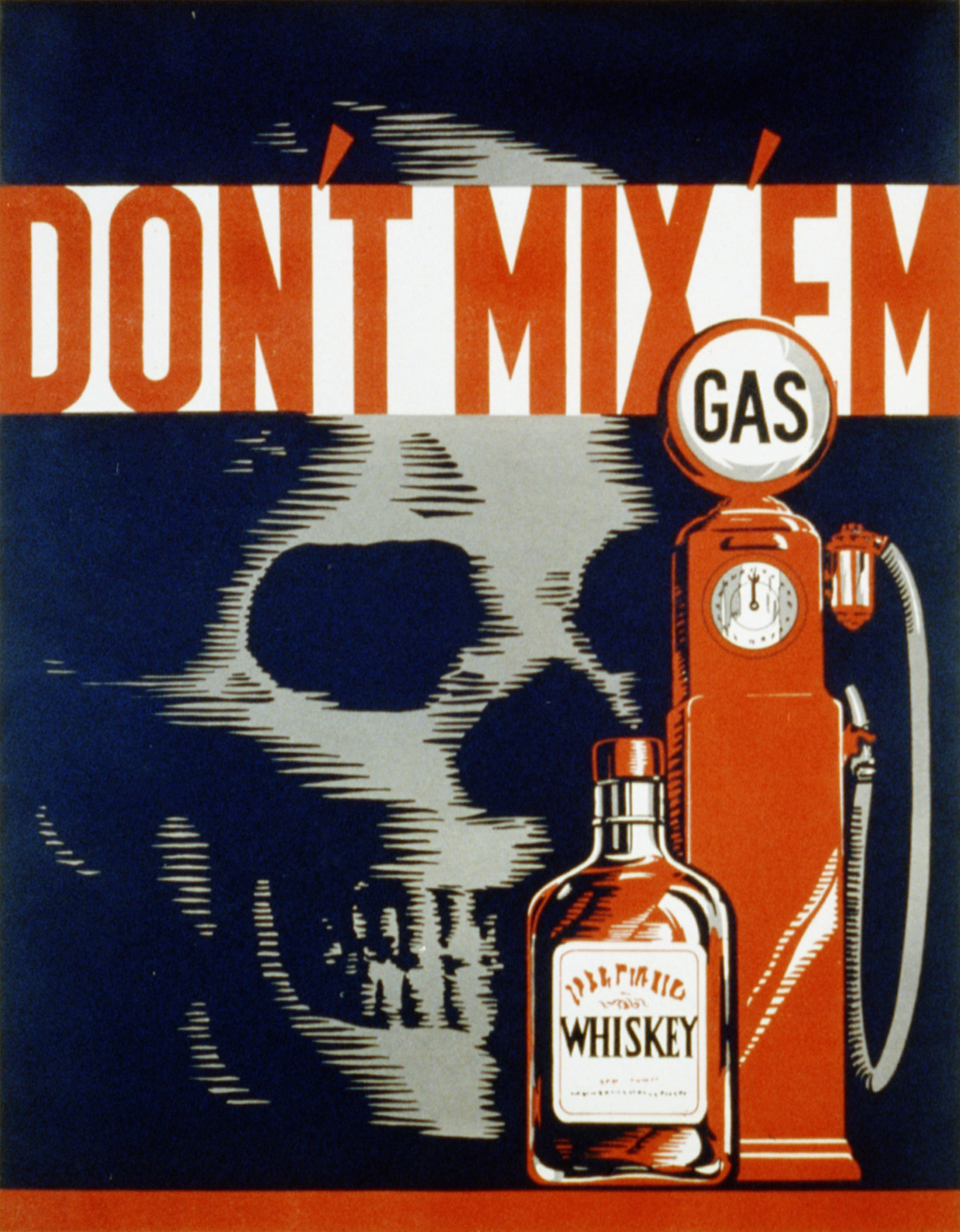
Drunk driving (or drink-driving in British English) is the act of driving under the influence of alcohol. A small increase in the blood alcohol content increases the relative risk of a motor vehicle crash. In the United States, alcohol is involved in 30% of all traffic fatalities. It is not known nationally how many people are killed each year in crashes involving drug-impaired drivers because of data limitations, but one study of drivers who were seriously injured in crashes found that 23.6% of drivers were positive for alcohol and 12.2% were positive solely for alcohol.
For drivers suspected of drug-impaired driving, drug testing screens are typically performed in scientific laboratories so that the results will be admissible in evidence at trial. Due to the overwhelming number of impairing substances that are not alcohol, drugs are classified into different categories for detection purposes. Drug impaired drivers still show impairment during the battery of standardized field sobriety tests, but there are additional tests to help detect drug impaired driving. In the US, one study found that 25.8% of drivers seriously injured in crashes tested positive for cannabinoids, 13.6% tested positive solely for cannabinoids, and 24.6% tested positive for a drug other than alcohol or cannabis.
Hub AI
Driving under the influence AI simulator
(@Driving under the influence_simulator)
Driving under the influence
Driving under the influence (DUI) is the crime of driving, operating, or being in control of a vehicle while one is impaired from doing so safely by the effect of either alcohol (see drunk driving) or some other drug, whether recreational or prescription (see drug-impaired driving). Multiple other terms are used for the offense in various jurisdictions.
The name of the offense varies from jurisdiction to jurisdiction and from legal to colloquial terminology. In various jurisdictions the offense is termed "driving under the influence" [of alcohol or other drugs] (DUI), "driving under the influence of intoxicants" (DUII), "driving while impaired" (DWI), "impaired driving", "driving while intoxicated" (DWI), "operating while intoxicated" (OWI), "operating under the influence" (OUI), "operating [a] vehicle under the influence" (OVI), "drunk in charge", or "over the prescribed limit" (OPL) (in the UK). Alcohol-related DUI is referred to as "drunk driving", "drunken driving", or "drinking and driving" (US), or "drink-driving" (UK/Ireland/Australia). Cannabis-related DUI may be termed "driving high", and more generally drug-related DUI may be referred to as "drugged driving", "driving under the influence of drugs" (DUID), or "drug-impaired driving".[citation needed]
In the United States, the specific criminal offense is usually called driving under the influence, but states may use other names for the offense including "driving while intoxicated" (DWI), "operating while impaired" (OWI) or "operating while ability impaired", and "operating a vehicle under the influence" (OVI).
In typical usage of the terms DUI, DWI, OWI, and OVI, the offense consists of driving a vehicle while affected by alcohol or drugs. However, in the majority of US states, the criminal offense may not involve actual driving of the vehicle but rather may broadly include operating or being physically in control of a motor vehicle while under the influence, even if the person charged is not in the act of driving. For example, individuals found in the driver's seat of a car while intoxicated and holding the car keys, even while parked, may be charged with DUI because they are in control of the vehicle. In contrast, California only makes it illegal to drive a motor vehicle while under the influence, requiring actual "driving". "The distinction between these two terms is material, for it is generally held that the word 'drive,' as used in statutes of this kind, usually denotes movement of the vehicle in some direction, whereas the word 'operate' has a broader meaning so as to include not only the motion of the vehicle but also acts which engage the machinery of the vehicle that, alone or in sequence, will set in motion the motive power of the vehicle."
Many DUI laws also apply to motorcycling, boating, piloting aircraft, use of mobile farm machinery such as tractors and combine harvesters, riding horses or driving a horse-drawn vehicle, cycling, or skateboarding, possibly with different BAC level than regular driving. In some jurisdictions, there are separate charges depending on the vehicle used. In Washington state, for instance, BUI (bicycling under the influence) laws recognize that intoxicated cyclists are likely to primarily endanger themselves. Accordingly, law enforcement officers are empowered only to protect the cyclist by impounding the bicycle rather than filing DUI charges.
George Smith, a London Taxi cab driver, ended up being the first person to be convicted of driving a motor vehicle while intoxicated, on September 10, 1897, under the "drunk in charge" provision of the 1872 Licensing Act. He was fined 25 shillings, which is equivalent to £179 in 2023.
Drunk driving (or drink-driving in British English) is the act of driving under the influence of alcohol. A small increase in the blood alcohol content increases the relative risk of a motor vehicle crash. In the United States, alcohol is involved in 30% of all traffic fatalities. It is not known nationally how many people are killed each year in crashes involving drug-impaired drivers because of data limitations, but one study of drivers who were seriously injured in crashes found that 23.6% of drivers were positive for alcohol and 12.2% were positive solely for alcohol.
For drivers suspected of drug-impaired driving, drug testing screens are typically performed in scientific laboratories so that the results will be admissible in evidence at trial. Due to the overwhelming number of impairing substances that are not alcohol, drugs are classified into different categories for detection purposes. Drug impaired drivers still show impairment during the battery of standardized field sobriety tests, but there are additional tests to help detect drug impaired driving. In the US, one study found that 25.8% of drivers seriously injured in crashes tested positive for cannabinoids, 13.6% tested positive solely for cannabinoids, and 24.6% tested positive for a drug other than alcohol or cannabis.
Recent media