Hubbry Logo
Bryan BurroughBryan BurroughMain
Open search
Bryan Burrough
Community hub
Bryan Burrough
logo
8 pages, 0 posts
0 subscribers
Be the first to start a discussion here.
Bryan Burrough
Bryan Burrough
from Wikipedia

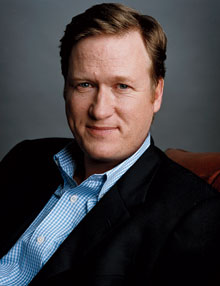
Bryan Burrough (born August 13, 1961, in Memphis, Tennessee) is an American journalist and author of eight books, including four New York Times best-sellers, the Wall Street classic Barbarians at the Gate (with John Helyar); Public Enemies: America’s Greatest Crime Wave and the Birth of the FBI, 1933-34; The Big Rich: The Rise and Fall of the Greatest Texas Oil Families; and Forget the Alamo: The Rise and Fall of an American Myth (with Chris Tomlinson and Jason Stanford.) His most recent book, The Gunfighters: How Texas Made the West Wild, was published by Penguin Press in June 2025.[1]

Key Information

A 1983 graduate of the University of Missouri journalism school,[2] Burrough was a reporter for The Wall Street Journal between 1983 and 1992, working in Dallas, Houston, Pittsburgh and New York. While at the Journal, he won the Gerald Loeb Award for excellence in financial journalism three times. From 1992 until 2017 he was a special correspondent for Vanity Fair magazine. His book reviews and op-ed articles have appeared in The New York Times, The Los Angeles Times, and The Washington Post. He has made appearances on Today, Good Morning America and many documentary films. He is currently Editor at Large at Texas Monthly magazine. His Texas Monthly true-crime podcast, Stephenville, received national notice in 2023.

Burrough is a member of the Texas Institute of Arts and Letters, the Philosophical Society of Texas and the New Jersey Literary Hall of Fame.

Education

[edit]

Burrough obtained his degree from the University of Missouri School of Journalism in 1983.[3][4]

Family

[edit]

At the age of eight, Burrough moved with his family to Waco and then to Temple, Texas, where he grew up. As an adult, he lived in New York and New Jersey for 30 years. Today[when?] he has returned to Texas, where he lives in Austin with his wife Amy Pfluger.

Works

[edit]
Books non-fiction
  • Barbarians at the Gate: The Fall of RJR Nabisco (1990, with John Helyar)
  • Vendetta: American Express and the Smearing of Edmond Safra (1992)
  • Dragonfly: NASA and the Crisis Aboard Mir (1998)
  • Public Enemies: America's Greatest Crime Wave and the Birth of the FBI, 1933–34 (2004)
  • The Big Rich: The Rise and Fall of the Greatest Texas Oil Fortunes (2009)
  • Days of Rage: America's Radical Underground, the FBI, and the Forgotten Age of Revolutionary Violence (2015)
  • Forget the Alamo: The Rise and Fall of an American Myth (2021, with Chris Tomlinson and Jason Stanford) ISBN 9781984880093
  • The Gunfighters: How Texas Made the West Wild (2025)[1]

Other writing:

  • "Texas Has Had Its Day in the Political Sun" (February 22, 2009). The Washington Post

Adaptations

[edit]

Awards

[edit]
  • 1989 Gerald Loeb Award for Deadline and/or Beat Writing for coverage of the RJR Nabisco buyout (shared with John Helyar)[5]
  • 1991 Gerald Loeb Award for Large Newspapers for the story "The Vendetta"[6]
  • 1994 Gerald Loeb Award for Magazines for the story "Divided Dynasty"[7]

References

[edit]
[edit]
Revisions and contributorsEdit on WikipediaRead on Wikipedia
from Grokipedia
Bryan Burrough (born August 13, 1961) is an American journalist and author renowned for his narrative nonfiction accounts of corporate intrigue, criminal enterprises, and historical events. A graduate of the School of Journalism, he began his career as a reporter for , where he contributed to investigative stories on financial scandals and earned the for financial journalism. Burrough's breakthrough came with the 1989 book Barbarians at the Gate: The Fall of , co-authored with John Helyar, which detailed the record-breaking of the tobacco and food conglomerate and became a cornerstone of business , later adapted into a film and television . Subsequent works expanded his scope to and American history, including the New York Times bestsellers Public Enemies: America's Greatest Crime Wave and the Birth of the FBI, 1933–34 (2004), which chronicled Depression-era gangsters like and inspired Michael Mann's 2009 film adaptation, and The Big Rich: The Rise and Fall of the Greatest Texas Oilfortunes (2009), examining the state's influential oil barons. Transitioning to Vanity Fair as a special correspondent, Burrough produced in-depth features on topics ranging from corporate malfeasance to cultural phenomena, while continuing to author books such as Days of Rage: America's Radical Underground, the FBI, and the Forgotten Age of Revolutionary Violence (2015) and Forget the Alamo: The Rise and Fall of an American Myth (2021, co-authored with Chris Tomlinson and Jason Stanford), which challenged traditional narratives of . His most recent work, The Gunfighters: How Texas Made the West Wild (2025), explores the role of gunmen in shaping the . Burrough's writing is characterized by meticulous research, vivid storytelling, and a focus on the human elements driving major events, establishing him as a leading voice in and .

Early Life and Education

Childhood and Upbringing

Bryan Burrough was born on August 13, 1961, and raised in the small city of Temple. His paternal grandfather, John Vernon Burrough, served in law enforcement and participated in efforts to apprehend , including setting up roadblocks in , during the 1930s crime wave, though without success. Burrough was exposed from childhood to vivid family accounts of that era's gangsters and federal pursuits, which ignited his enduring fascination with American outlaw history and the origins of the FBI. As a young boy, he developed an ambition to work as a reporter, specifically imagining himself on the police beat for one of Texas's daily papers.

Formal Education

Burrough pursued his higher education at the in Columbia, focusing on . He earned a degree from the university's in 1983. During his undergraduate years, Burrough gained practical experience by working as a reporter for the Columbia Missourian, the student-run daily affiliated with the journalism school. This hands-on role involved covering local stories and honing reporting skills, which aligned with the school's emphasis on experiential training in professional practices. No records indicate further formal postgraduate studies following his .

Personal Life

Family and Residences

Burrough was born on August 13, 1961, in , to parents John and Mary Burrough. He married Marla Dorman, an editor, with whom he has two sons. The couple resided in , during much of his career in New York media. Burrough later relocated to , where he currently lives with his wife, Amy Pfluger.

Professional Career

Wall Street Journal Tenure

Burrough joined in 1983 as a reporter in its Dallas bureau shortly after graduating from the University of Missouri School of Journalism. There, he focused on business and financial stories, including coverage of the energy sector and corporate deals in Texas and the Southwest. His most prominent work at the Journal came in 1988, when he and colleague John Helyar provided exhaustive, real-time reporting on the leveraged buyout of by Kohlberg Kravis Roberts & Co. (KKR). The duo's front-page articles detailed the bidding war's internal machinations, drawing on unprecedented access to executives and bankers, and captured the era's excess in dealmaking. This coverage, spanning months of intense scrutiny, highlighted the $25 billion transaction as the largest leveraged buyout in history at the time and set a standard for narrative-driven . The series formed the foundation for Barbarians at the Gate: The Fall of , co-authored by Burrough and Helyar and published in 1990 while Burrough remained at the Journal. The book, which expanded on the articles' fly-on-the-wall style, became a and enduring reference on 1980s corporate raiders, though some critics noted its reliance on anonymous sources for dramatic reconstructions. Burrough's investigative approach during this period emphasized firsthand reporting over opinion, privileging deal documents and participant accounts amid the junk-bond-fueled frenzy. Burrough departed the Wall Street Journal in 1992 after nearly a decade, transitioning to longer-form magazine work. His tenure contributed to the paper's reputation for deep corporate exposés, though it operated within the constraints of daily journalism's tight deadlines and editorial focus on verifiable facts over speculation.

Vanity Fair Contributions and Freelance Work

Burrough transitioned from The Wall Street Journal to freelance journalism by joining Vanity Fair as a contributor in August 1992, assuming the role of special correspondent in January 1995. In this capacity, he produced extended narrative features, often under a contractual obligation for three articles per year, each averaging 10,000 words, focusing on corporate intrigue, financial scandals, and historical reckonings. His compensation for such pieces reached six figures, as he later disclosed in a reflection on the magazine's editorial era under Graydon Carter. This freelance arrangement allowed Burrough to apply his investigative rigor to long-form storytelling, distinct from daily reporting, yielding pieces that frequently influenced public discourse and his subsequent book projects. Key Vanity Fair contributions included "Gucci and Goliath" (July 1999), which chronicled the bitter inheritance disputes and corporate takeover attempts engulfing the Gucci fashion empire, and "The Miranda Obsession" (December 1999), recounting the bizarre saga of a mysterious phone caller who captivated Hollywood elites under the pseudonym Miranda Grosvenor. Other prominent works encompassed "Trouble Next Door" (August 2001), examining neighborhood conflicts exacerbated by a high-profile murder case; "The Path to War" (May 2004, co-authored with Evgenia Peretz, David Rose, and David Wise), dissecting intelligence failures and policy decisions leading to the Iraq invasion; and "The Hunt for Steve Cohen" (May 2013, co-authored with Bethany McLean), probing the U.S. government's pursuit of the SAC Capital founder amid insider trading allegations. Burrough also covered Allen Stanford's $7 billion Ponzi scheme in a July 2009 feature, highlighting regulatory lapses in offshore banking. Beyond Vanity Fair, Burrough's freelance output during this period primarily reinforced his magazine-centric career, with occasional contributions to outlets like in later years, though his core independent work remained tied to narrative-driven investigations that paralleled his book-length explorations of American history and .

Major Works

Barbarians at the Gate

Barbarians at the Gate: The Fall of is a 1989 nonfiction book co-authored by Wall Street Journal reporters Bryan Burrough and John Helyar, chronicling the (LBO) of , the tobacco and food products conglomerate. Published by , the 529-page work draws on hundreds of interviews with participants, providing a detailed, chronological of the events from October to December 1988. The account begins with RJR Nabisco CEO , who on October 20, 1988, proposed a $17 billion management-led buyout to address the company's slumping stock price and internal conflicts between its foods and divisions. This triggered a frenzied auction among firms, escalating bids amid leveraged financing reliant on junk bonds and massive debt. Kohlberg Kravis Roberts & Co. (KKR), led by and George Roberts, ultimately won with a $25.07 billion offer on November 30, 1988—the largest LBO in history at the time—after outbidding rivals including and Johnson's group. Burrough and Helyar emphasize the era's corporate excesses, such as Johnson's lavish perks including private jets for and a boardroom culture prioritizing deal-making over operations, portraying the buyout as emblematic of greed driven by and easy credit. The narrative style, blending investigative reporting with novelistic tension, highlights key figures' motivations: Johnson's desire to retain control and amass wealth, KKR's strategic opportunism, and bankers' fee-chasing amid $600 million in transaction costs. The book achieved commercial success as a New York Times bestseller, selling over a million copies and establishing a template for that humanizes financial machinations. Critics praised its access and pacing; a 1990 New York Times lauded the authors' "verve and relish" in rendering the saga suspenseful. Their underlying Wall Street Journal coverage earned the 1989 for Distinguished Business and Financial Journalism. Post-buyout, RJR Nabisco grappled with $20 billion in debt, leading to asset sales and , outcomes the book foreshadows as risks of such highly leveraged deals.

Public Enemies: America's Greatest Crime Wave and the Birth of the FBI

Public Enemies: America's Greatest Crime Wave and the Birth of the FBI, 1933-34 is a 592-page work published in 2004 by Penguin Press. The book examines the surge of bank robberies, kidnappings, and murders committed by approximately 30 to 40 fugitive gangs across the during the years of 1933 and 1934. Burrough draws on primary sources including declassified FBI files, local records, contemporary newspaper accounts, and survivor interviews to reconstruct events, emphasizing the chaotic, often incompetent pursuits by federal agents under . Central figures include , who escaped from jail twice and robbed over a dozen banks before his July 22, 1934, shooting death outside Chicago's ; Bonnie Parker and Clyde Barrow, killed in a May 23, 1934, ambush in after a spree that claimed 13 lives; and others such as , George "Machine Gun" Kelly, and the Barker-Karpis gang, responsible for high-profile kidnappings like that of Charles Urschel in 1933. Burrough details specific incidents, such as Dillinger's March 1934 escape from Crown Point jail using a carved wooden gun and the Bureau of Investigation's (FBI predecessor) reliance on publicity stunts amid jurisdictional conflicts with . The narrative critiques the Bureau's early disorganization, noting Hoover's initial understaffing—fewer than 400 agents nationwide—and focus on self-promotion over effectiveness, including exaggerated claims of victories to justify budget increases from $2.8 million in 1933 to $7.5 million by 1935. Burrough argues that the wave, fueled by Prohibition-era criminal networks and economic desperation, compelled to expand federal authority via laws like the 1934 Lindbergh Kidnapping Act, transforming the Bureau into a centralized force but at the cost of Hoover's myth-making, such as crediting agents with feats achieved by locals. This approach prioritizes granular timelines and eyewitness discrepancies over romanticized legends, revealing causal links between Prohibition's end in 1933 and the shift to interstate predation. Critics lauded the book's vivid, fast-paced prose and archival rigor; a New York Times review described it as a "rollicking yarn" that humanizes both criminals and agents without glorification. It became a , selected as one of Entertainment Weekly's ten best books of 2004, and influenced public understanding of the era by countering Hoover-era propaganda preserved in official histories. called it "iconoclastic," highlighting Burrough's evidence-based dismantling of FBI .

Days of Rage: America's Radical Underground, the FBI, and the Forgotten Age of Revolutionary Violence

Days of Rage: America's Radical Underground, the FBI, and the Forgotten Age of Revolutionary Violence is a 2015 nonfiction book by Bryan Burrough that examines left-wing militant groups active in the United States during the , a period marked by over 30,000 bombings and numerous acts of often overlooked in historical narratives. Published by Penguin Press on April 7, 2015, the 608-page work details the operations of organizations such as the , the , and the , chronicling their tactics including bank robberies, assassinations of police officers, and raids on armories in cities like New York and . Burrough structures the narrative around specific incidents and figures, such as the Weather Underground's accidental Townhouse explosion on March 6, 1970, which killed three members and prompted the group to shift toward underground bombings targeting symbols of government and capitalism, including the U.S. Capitol on March 1, 1971, and on May 19, 1972. The book also covers the Black Liberation Army's involvement in the January 2, 1972, assassination of New York Police Department officers and Gregory Foster, as well as the October 20, 1981, Brinks armored car robbery in , which resulted in the deaths of two police officers and a . Drawing on declassified FBI documents, trial transcripts, and interviews with former radicals and , Burrough portrays the FBI's counterterrorism efforts under and subsequent directors as hampered by bureaucratic infighting and legal constraints post-Watergate, yet ultimately effective in dismantling most cells by the mid-1980s. The author's methodology emphasizes granular reconstruction of events over ideological analysis, highlighting how these groups, often composed of disillusioned students and activists from the , splintered into violent factions amid racial tensions and opposition to U.S. , achieving minimal strategic gains while causing civilian casualties and property damage exceeding $100 million in today's dollars. Burrough contends that this "forgotten age" of surpassed later threats like the Unabomber in scale, with radicals responsible for approximately 25% of all bombings in the decade, yet public memory faded due to media focus on foreign events and the groups' internal collapses from and betrayals. Critics from progressive outlets have accused the book of insufficiently contextualizing systemic or economic factors driving , potentially reflecting institutional biases in academia toward excusing violence through structural explanations, though Burrough prioritizes verifiable timelines and perpetrator accountability over such interpretations. Reception was generally positive among mainstream reviewers for its exhaustive research and narrative drive, with praising it as a "superb chronicle" that revives obscured history without romanticizing the perpetrators. The Guardian noted its fascination in detailing futile insurgencies but critiqued the radicals' ultimate ineffectiveness in altering policy. Sales reached strong figures for narrative history, bolstered by Burrough's prior bestsellers, though some academic responses dismissed it for underemphasizing broader social forces, a perspective attributable to left-leaning scholarly tendencies that often mitigate culpability for ideological violence.

Forget the Alamo: The Rise and Fall of an American Myth (co-authored)

Forget the Alamo: The Rise and Fall of an American Myth is a 2021 nonfiction book co-authored by Bryan Burrough, Chris Tomlinson, and Jason Stanford, published on June 8 by Penguin Press. The work examines the historical events surrounding the 1836 Battle of the Alamo, challenging the longstanding narrative of Anglo-Texan heroism propagated in American popular culture and education. Drawing on primary sources including letters, diaries, and contemporary accounts, the authors argue that the traditional depiction of the Alamo defenders as unified freedom fighters against Mexican tyranny was largely fabricated in the decades following the battle to serve political ends, particularly to retroactively justify the Texas Revolution's roots in preserving slavery. Burrough, a veteran journalist with prior experience in narrative history through books like Public Enemies, contributed his expertise in archival research and storytelling structure, collaborating with Tomlinson, a Texas columnist, and Stanford, a political consultant, after the trio—longtime friends and Texas residents—identified gaps in the mythic portrayal during informal discussions. The book's core thesis posits that many Alamo defenders were not idealistic settlers but opportunistic land speculators, debtors fleeing creditors, or adventurers with minimal ties to governance, with fewer than 200 combatants present during the 13-day ending March 6, . It details how Mexican General López de Santa Anna's centralist policies, including the abolition of in 1829 and subsequent enforcement attempts, motivated immigrants—who owned over 5,000 enslaved by —to rebel, framing their uprising as a defense of rather than economic interests in human bondage. The authors highlight Tejano (Mexican-Texan) involvement, noting that local leaders invited Santa Anna to suppress unrest, and that post-battle reprisals against Tejanos undermined claims of a purely defensive war. Burrough and co-authors trace the myth's construction to figures like , who amplified tales of heroism to rally support after his San Jacinto victory on , , later embellished by 19th-century novelists and filmmakers into a symbol of . The narrative extends to modern implications, critiquing how the Alamo story has been invoked to foster , while advocating for a more inclusive reckoning with 's multicultural origins based on verifiable records rather than romanticized lore. Upon release, the book achieved commercial success, reaching the New York Times bestseller list, and prompted discussions on revising Texas history curricula, though it faced pushback from preservationists defending the site's interpretive focus on military valor. Burrough, in interviews, emphasized the project's aim to align historical education with empirical evidence from archives like the State Library, rather than uncritical acceptance of that emerged in the 1840s amid U.S. debates. The collaboration leveraged each author's strengths—Burrough's investigative rigor, Tomlinson's regional insights, and Stanford's analytical framing—to produce a 416-page volume that includes endnotes citing over 500 sources, underscoring a commitment to primary documentation over secondary interpretations.

Other Publications

Burrough's 1992 book Vendetta: American Express and the Smearing of examines the 1980s scandal in which allegedly orchestrated a smear campaign against banker , leading to his resignation from a ; the work draws on extensive interviews and documents to argue that corporate rivalry escalated into unethical tactics. The narrative highlights Safra's rise as a secretive financier and the fallout, including multimillion-dollar lawsuits settled out of court in 1990. In 2009, Burrough published The Big Rich: The Rise and Fall of the Greatest Oil Fortunes, a chronicle of four pioneering oil tycoons—H.L. Hunt, Roy Cullen, , and Clint Murchison—who amassed billions in the mid-20th century through wildcatting and shrewd investments, influencing U.S. politics and culture from the 1930s to the 1970s. The book details their intergenerational declines amid family feuds, , and economic shifts, such as the , using archival records and family accounts to portray as a hub of unchecked . The Demon Next Door, released as an Audible Original in 2019, recounts the 1987 murders committed by Danny Corwin in —Burrough's hometown—including the rape and killing of three women over nine months, culminating in his execution in 1998 after confessions and linked him to the crimes. Drawing on police files, transcripts, and local interviews, Burrough explores the community's shock and the killer's unremarkable facade as a farmhand, emphasizing investigative breakthroughs like matches. Burrough's most recent work, The Gunfighters: How Texas Made the West Wild (2025), reevaluates the late-19th-century gunfighter era, attributing America's mythic violence to Texas's post-Civil War culture of dueling, Rangers' revolver adoption, and high homicide rates—peaking at over 30 per 100,000 in some towns—through profiles of figures like and Ben Thompson, sourced from frontier newspapers and court records. The book argues that Texas exported this "" westward via cattle drives and migration, shaping national perceptions via dime novels and early films, while debunking romanticized duels as often ambushes or alcohol-fueled brawls.

Adaptations and Media Influence

Film and Television Adaptations

"Barbarians at the Gate," co-authored by Burrough and John Helyar and published in 1989, was adapted into a by that premiered on March 20, 1993. Directed by Glenn Jordan, the movie starred as , the RJR Nabisco CEO at the center of the saga, and as investment banker . The screenplay by stayed faithful to the book's depiction of the $25 billion buyout battle, emphasizing the excesses of dealmaking, and received praise for its satirical tone and performances, earning multiple Emmy nominations including for Outstanding Television Movie. Burrough's 2004 book "Public Enemies: America's Greatest Crime Wave and the Birth of the FBI, 1933–34" served as the basis for the 2009 feature film "Public Enemies," directed by Michael Mann and released on July 1, 2009. The film, produced by Universal Pictures, starred Johnny Depp as bank robber John Dillinger and Christian Bale as FBI agent Melvin Purvis, chronicling the gangsters' crime spree and the bureau's early efforts under J. Edgar Hoover amid the Great Depression. Mann's adaptation drew on Burrough's research into primary sources like FBI files and contemporary newspapers but prioritized visual storytelling and period authenticity, including digital enhancements for historical accuracy in shootouts and settings; Burrough noted the director's fidelity to the book's chaotic narrative while acknowledging creative liberties for dramatic effect. The movie grossed over $214 million worldwide but divided critics on its pacing and emotional depth compared to the source material's journalistic detail. No other major film or television adaptations of Burrough's works have been produced as of 2025.

Broader Cultural Impact

Burrough's Barbarians at the Gate (1989), co-authored with John Helyar, established a benchmark for narrative business journalism, chronicling the $25 billion leveraged buyout of RJR Nabisco as a cautionary tale of 1980s Wall Street excess. The book's vivid depiction of deal-makers' greed and recklessness influenced public skepticism toward corporate finance, with its title becoming a enduring idiom for hostile takeovers and financial overreach. Frequently assigned in MBA programs since its release, it shaped pedagogical approaches to mergers and acquisitions, emphasizing human folly over abstract economics. In the true crime domain, Public Enemies (2004) reframed the 1933–1934 crime wave—featuring outlaws like and the Barker-Karpis gang—as the crucible for the FBI's modern origins under . By integrating archival records and eyewitness accounts, Burrough elevated the genre's reliance on primary sources, moving beyond to dissect institutional responses to chaos. The work's exhaustive timeline of bank robberies, kidnappings, and pursuits informed subsequent , underscoring how media hype amplified public fascination with Depression-era desperadoes. Days of Rage (2015) revived scholarly and popular interest in the 1970s' "forgotten" wave of , documenting approximately 30,000 bombings by groups like the Weather Underground and , which caused deaths but achieved no systemic change. Burrough's account, drawing from declassified FBI files, challenged romanticized views of activism by highlighting its violent, underground evolution, prompting reflections on why this era faded from amid post-9/11 security discourses. The co-authored Forget the Alamo (2021) provoked intense cultural contention over narratives, positing that Anglo settlers' defense of —rather than abstract liberty—drove the 1836 conflict, citing figures like slaveholder . Released amid national reckonings with historical myths, it fueled backlash including event cancellations at state institutions and calls for rebuttal panels, exemplifying clashes between revisionist interpretations and traditional heroism tropes. Critics, including Texas officials, decried it as ideologically driven revisionism overstating 's centrality, while defenders argued it exposed inconvenient empirical realities from period documents. This debate extended to broader disputes over Confederate legacies and public monuments, amplifying Burrough's role in contesting regional foundational stories. Collectively, Burrough's corpus has advanced nonfiction's capacity to interrogate power structures, from financial elites to revolutionary fringes, fostering a legacy of demystifying through granular, source-driven analysis.

Awards and Recognition

Gerald Loeb Awards

Bryan Burrough has received the for Distinguished Business and Financial Journalism three times, recognizing excellence in financial reporting. In 1989, Burrough shared the award in the Beat/Deadline Writing category with John Helyar for their Wall Street Journal coverage of the , a series of articles that later formed the basis of their Barbarians at the Gate. He won individually in 1991 in the Large Newspapers category for "The Vendetta," a Wall Street Journal investigation into American Express's contentious dealings with banker . Burrough's third award came in 1994 in the Magazines category for "Divided Dynasty," a Vanity Fair feature detailing the bitter business feud within the Haft family, owners of Dart Drug and other retail chains.
YearCategoryWorkPublication
1989Beat/Deadline Writing (shared)Coverage of Buyout
1991Large Newspapers"The Vendetta"
1994Magazines"Divided Dynasty"Vanity Fair

Other Honors

Burrough received the Award for Excellence in Business and Financial Journalism three times during his tenure as a reporter for . He is a member of the Texas Institute of Letters, an organization recognizing contributions to . Burrough has also been affiliated with the Philosophical Society of Texas, participating in events related to his works on .

Controversies and Critical Reception

Debates Surrounding "Forget the Alamo"

The publication of Forget the Alamo: The Rise and Fall of an American Myth in June 2021 ignited significant controversy, primarily over its central thesis that the Texas Revolution of 1835–1836, including the Battle of the Alamo, was driven more by Anglo-American settlers' determination to preserve slavery than by ideals of liberty or resistance to Mexican tyranny. Co-authors Bryan Burrough, Chris Tomlinson, and Jason Stanford argued, based on contemporary accounts and economic data, that many Alamo defenders and Texian leaders were slaveholders whose economic interests hinged on maintaining the institution, which Mexico had outlawed in 1829 and sought to enforce amid rising tensions. They contended that post-revolution myth-making sanitized this reality, transforming the Alamo into a symbol of unalloyed heroism while downplaying slavery's role, with figures like Sam Houston exploiting the narrative for political gain. Critics, including Texas Lieutenant Governor Dan Patrick, rejected this framing as revisionist distortion, asserting that the revolution stemmed primarily from Mexican President Antonio López de Santa Anna's centralist policies, such as the 1835 abolition of the 1824 federal constitution, imposition of military rule, and suppression of local autonomy, rather than alone. Patrick highlighted the Texas Declaration of Independence's 1836 grievances, which emphasized constitutional violations, , and arbitrary arrests over , noting that only a minority of signers owned slaves and that the document does not explicitly cite abolition as a . Historians such as those affiliated with the Texas State Historical Association echoed this, criticizing the book for selective sourcing and anachronistic imposition of modern racial lenses on events, arguing it underplays non-slaveholding immigrants' motivations like cultural clashes and opposition to Santa Anna's . The labeled it "fake history," claiming it misrepresented Alamo William B. Travis's letters, which invoked defense of and families rather than chattel property. The backlash manifested in tangible actions, including the cancellation of a July 2021 book event at the after complaints from and Patrick, who cited the presentation's potential to "erase" heritage; the event had drawn over 300 RSVPs before its abrupt withdrawal. In response, Patrick proposed an expert panel to scrutinize Alamo and counter what he termed ideological overreach. Authors reported receiving death threats and physical intimidation vows, attributing the intensity to demographic shifts in and resistance among traditionalists to reevaluating foundational myths amid national reckonings with slavery's legacy. Tomlinson defended the work as grounded in primary documents like slave censuses showing high ownership rates among elite revolutionaries (e.g., over 80% of signers of the Turtle Bayou Resolutions in ), urging focus on evidence over symbolism. Defenders, including some academics, praised the book for illuminating overlooked Tejana contributions and the revolution's internal divisions, such as and Indigenous opposition to , while acknowledging slavery's economic centrality without denying other factors. However, the debate underscored broader tensions in , with proponents viewing event cancellations as suppression of inquiry and opponents seeing the book as politicized deconstruction eroding civic pride; no peer-reviewed rebuttals have emerged as of 2025, though Alamo collections continue to emphasize multifaceted causes in public exhibits.

Criticisms of Portrayals in "Days of Rage"

Critics, including historian Dan Berger, have accused Burrough of portraying and radicals as "naïve bad guys and narcissistic thugs in love with violence," emphasizing their incompetence and personal flaws while downplaying the political motivations rooted in opposition to the , , and . Berger, whose work focuses on social movements and prisons, argued that this framing relies on FBI perspectives and stereotypes, such as describing Black radicals like as an "unlikeliest " or reducing the Party's decline to interpersonal violence rather than state repression via . Burrough's depictions of female activists drew particular ire for objectification and dismissal of their agency; for instance, he described Weather Underground leader as "too beautiful to take seriously," a characterization critics like those in viewed as sexist and emblematic of broader reductions of women to props in male-dominated narratives. Similarly, portrayals of figures, such as labeling George Jackson a "thug with a fountain pen" (despite evidence he used a short golf pencil in prison), were faulted for ignoring structural contexts like incarceration and instead amplifying views. Former Weather Underground member Cathy Wilkerson directly contested her portrayal as the group's "West Coast bombmaker," stating in a 2015 New York Times letter that she never confirmed this role to Burrough and that it misrepresented her involvement following the 1970 Greenwich Village townhouse explosion. Wilkerson also disputed a quoted attribution to her claiming the Black Panther Party and Black Liberation Army sought only to "kill policemen," clarifying instead that she highlighted the party's 10-point program and its unintended social disruptions. Other reviewers noted omissions in historical precedents, such as Burrough's claim that the radicals were unprecedented, overlooking earlier movements like Marcus Garvey's United Negro Improvement Association, which by the had thousands of chapters across 40 countries. Critics from left-leaning outlets, often sympathetic to the underground groups, further argued that Burrough's narrative justifies contemporary state violence by uncritically quoting FBI agents on bomb counts while minimizing radicals' limited actions, such as the Weather Underground's 24 bombs over six years, and underemphasizing the FBI's own excesses.

General Critiques of Journalistic Approach

Burrough's narrative-driven journalistic style, which emphasizes reconstructed scenes, dialogue, and personal accounts derived from extensive interviews, has been critiqued for occasionally prioritizing dramatic flair over comprehensive analytical depth. Reviewers have noted that this technique can result in excessive focus on operational minutiae and individual actors, sometimes at the expense of elucidating underlying ideological or structural factors, leading to narratives that feel vivid but contextually thin. A recurring concern involves potential over-reliance on participants' recollections, which may introduce biases or inaccuracies uncorrected by contemporaneous records, particularly in long-form reconstructions spanning decades. While Burrough cross-references sources rigorously—drawing from FBI files, court documents, and multiple interviewees—critics argue that the resulting emphasis on sensational episodes can amplify isolated events while downplaying contradictory evidence or broader patterns, as seen in instances where his reporting undercuts its own hyperbolic claims about violence or impact. Additionally, some assessments highlight a tendency toward snappy, character-centric generalizations that brand historical figures or eras without sufficient nuance, potentially simplifying multifaceted dynamics into entertaining but reductive portraits. This approach, while effective for accessibility, has been faulted for favoring readability and market appeal—hallmarks of his Vanity Fair contributions—over exhaustive systemic scrutiny, echoing broader debates in narrative nonfiction about balancing engagement with scholarly detachment.

Legacy and Recent Developments

Influence on Business and True Crime Journalism

Burrough's co-authored book Barbarians at the Gate: The Fall of RJR Nabisco (1989), originating from a Wall Street Journal series on the $25 billion leveraged buyout of RJR Nabisco, established a benchmark for narrative-driven business journalism by blending exhaustive investigative reporting with vivid character portraits and dramatic tension, transforming coverage of corporate finance from arid deal chronologies into accessible, novel-like accounts. The work, which spent 34 weeks on the New York Times bestseller list and sold over 2 million copies, demonstrated that complex financial maneuvers could captivate general audiences, prompting subsequent journalists to prioritize human elements and insider access in reporting on mergers, private equity, and Wall Street excesses. Its enduring influence is evident in its repeated citations as "the best business book ever published," shaping pedagogical approaches in business schools and inspiring emulations in books like Liar's Poker expansions and modern private equity exposés. Burrough's three Gerald Loeb Awards—for spot news (1986), beat reporting (1989), and magazine writing (2008)—underscore his role in elevating financial journalism's standards, particularly through rigorous sourcing from hundreds of interviews and documents, a method that prioritized empirical detail over speculation and influenced outlets like Vanity Fair and The Wall Street Journal to adopt similar depth in business narratives. His emphasis on chronological storytelling and psychological insight, as articulated in discussions on narrative technique, encouraged reporters to counterbalance data-heavy prose with scene reconstruction, fostering a hybrid style that persists in contemporary investigative business writing. In true crime journalism, Burrough's Public Enemies: America's Greatest Crime Wave and the Birth of the FBI, 1933-34 (2004) reshaped the genre by dismantling J. Edgar Hoover-era myths through over 100 interviews and archival review, presenting a multifaceted view of gangsters like John Dillinger and Melvin Purvis as products of economic desperation and institutional rivalry rather than simplistic villains or heroes, thereby modeling a fact-grounded alternative to sensationalized retellings. The book's adaptation into Michael Mann's 2009 film, which grossed $214 million worldwide, amplified its reach and validated true crime's potential for cinematic historical fidelity, inspiring subsequent works to integrate FBI records and eyewitness accounts for causal analysis over folklore. Similarly, Days of Rage (2015), chronicling over 1,900 bombings by 1970s radicals via declassified files and participant testimonies, advanced the subfield by framing domestic terrorism as a tactical failure driven by ideological fragmentation, influencing modern analyses of extremism to favor granular timelines and agent perspectives over ideological narratives. Burrough's oeuvre has collectively promoted a truth-seeking ethos in , prioritizing verifiable causation—such as socioeconomic triggers for 1930s bank robberies or F.B.I. bureaucratic incentives—over moralizing, which has permeated podcasts, documentaries, and books emphasizing primary evidence, as seen in the genre's shift toward comprehensive oral histories post-2000s. His avoidance of unsubstantiated drama, rooted in Journal-honed , counters tabloid tendencies, establishing a template for enduring, research-intensive narratives that withstand revisionism.

Recent Activities as of 2025

In 2025, Bryan Burrough published The Gunfighters: How Texas Made the West Wild, a historical account examining the role of in shaping the era of gunfighters during the late 19th-century American West, including figures such as , , and . An excerpt from the book appeared in the May 2025 issue of , where Burrough serves as editor at large. Burrough promoted the book through various media appearances, including a June 3, 2025, discussion on Texas Standard detailing 's centrality to Wild West violence and a June 25 interview on Texas Public Radio exploring the rise of gunfighters. He also featured on the Daily Stoic podcast, addressing themes of honor and violence in the gunfighter era. Public speaking engagements included a presentation at the Boerne Book Festival on October 4, 2025, focusing on the book's themes, and an Author's Table Dinner Series event at the Dallas Historical Society on October 22, 2025. Additionally, Burrough contributed an article titled "Vanity Fair's Heyday" to the Spring 2025 issue of The Yale Review, reflecting on high payments for magazine writing during the magazine's peak and contrasting them with current industry realities, dated March 14, 2025.

References

Add your contribution
Related Hubs
User Avatar
No comments yet.