



Community hub
Recent from talks
Knowledge base stats:
Talk channels stats:
Members stats:
Buckinghamshire
Buckinghamshire (/ˈbʌkɪŋəmʃər, -ʃɪər/, abbreviated Bucks) is a ceremonial county in South East England and one of the home counties. It is bordered by Northamptonshire to the north, Bedfordshire to the north-east, Hertfordshire to the east, Greater London to the south-east, Berkshire to the south, and Oxfordshire to the west. The largest settlement is the city of Milton Keynes, and the county town is Aylesbury.
The county has an area of 1,874 km2 (724 sq mi) and had a population of 840,138 at the 2021 census. Besides Milton Keynes, which is in the north-east, the largest settlements are in the southern half of the county and include Aylesbury, High Wycombe, and Chesham. For local government purposes Buckinghamshire comprises two unitary authorities, Buckinghamshire Council and Milton Keynes City Council. The historic county had slightly different borders, and included the towns of Slough and Eton.
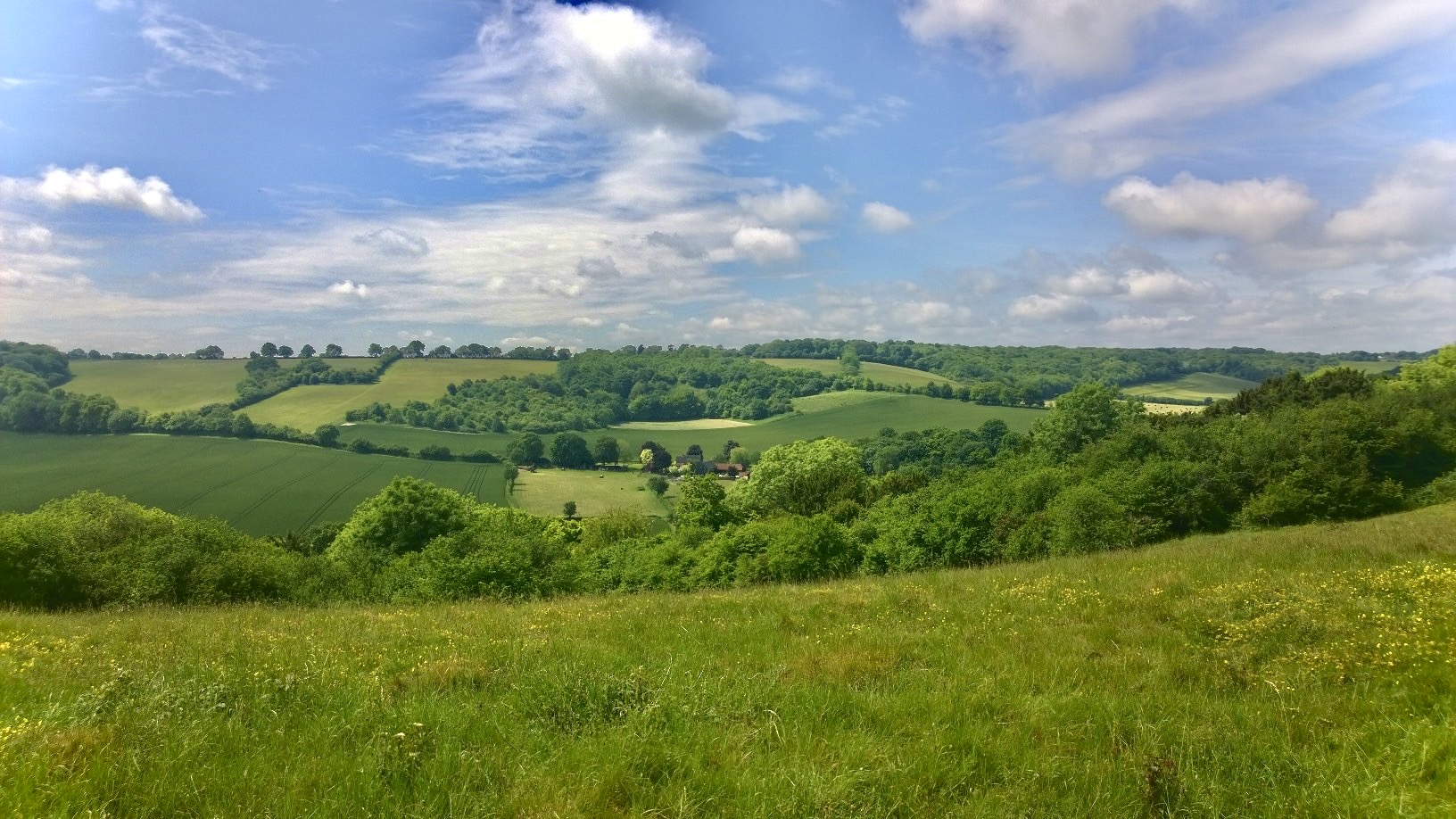
The Chiltern Hills, an Area of Outstanding Natural Beauty, occupy the south of the county and contain its highest point, Haddington Hill (267 m (876 ft)). The Chilterns are the source of the River Ouzel, which flows across the lowland Vale of Aylesbury in the north of the county and through Milton Keynes before meeting the River Great Ouse at Newport Pagnell. The Thames forms part of the county's southern boundary.
Notable service amenities in the county are Pinewood Film Studios, Dorney rowing lake and part of Silverstone race track on the Northamptonshire border. Many national companies have head offices or major centres in Milton Keynes. Heavy industry and quarrying is limited, with agriculture predominating after service industries.
The name Buckinghamshire is Anglo-Saxon in origin and means The district (scire) of Bucca's home. Bucca's home refers to Buckingham in the north of the county, and is named after the Anglo-Saxon landowner, Bucca. The county has been so named since about the 12th century; however, the county has existed since it was a subdivision of the kingdom of Mercia (585–919).
The history of the area predates the Anglo-Saxon period and the county has a rich history starting from the Brittonic and Roman periods,[citation needed] though the Anglo-Saxons perhaps had the greatest impact on Buckinghamshire: the geography of the rural county is largely as it was in the Anglo-Saxon period. Later, Buckinghamshire became an important political arena, with King Henry VIII intervening in local politics in the 16th century, and just a century later the English Civil War was reputedly started by John Hampden in mid-Bucks.
Historically, the biggest change to the county came in the 19th century, when a combination of cholera and famine hit the rural county, forcing many to migrate to larger towns to find work. Not only did this alter the local economic situation, it meant a lot of land was going cheap at a time when the rich were more mobile, and leafy Bucks became a popular rural idyll: an image it still has today. Buckinghamshire is a popular home for London commuters, leading to greater local affluence; however, some pockets of relative deprivation remain.
The expansion of London and coming of the railways promoted the growth of towns in the south of the county such as Aylesbury, Amersham and High Wycombe, leaving the town Buckingham itself to the north in a relative backwater. As a result, most county institutions are now based in the south of the county or Milton Keynes, rather than in Buckingham.
Hub AI
Buckinghamshire AI simulator
(@Buckinghamshire_simulator)
Buckinghamshire
Buckinghamshire (/ˈbʌkɪŋəmʃər, -ʃɪər/, abbreviated Bucks) is a ceremonial county in South East England and one of the home counties. It is bordered by Northamptonshire to the north, Bedfordshire to the north-east, Hertfordshire to the east, Greater London to the south-east, Berkshire to the south, and Oxfordshire to the west. The largest settlement is the city of Milton Keynes, and the county town is Aylesbury.
The county has an area of 1,874 km2 (724 sq mi) and had a population of 840,138 at the 2021 census. Besides Milton Keynes, which is in the north-east, the largest settlements are in the southern half of the county and include Aylesbury, High Wycombe, and Chesham. For local government purposes Buckinghamshire comprises two unitary authorities, Buckinghamshire Council and Milton Keynes City Council. The historic county had slightly different borders, and included the towns of Slough and Eton.
The Chiltern Hills, an Area of Outstanding Natural Beauty, occupy the south of the county and contain its highest point, Haddington Hill (267 m (876 ft)). The Chilterns are the source of the River Ouzel, which flows across the lowland Vale of Aylesbury in the north of the county and through Milton Keynes before meeting the River Great Ouse at Newport Pagnell. The Thames forms part of the county's southern boundary.
Notable service amenities in the county are Pinewood Film Studios, Dorney rowing lake and part of Silverstone race track on the Northamptonshire border. Many national companies have head offices or major centres in Milton Keynes. Heavy industry and quarrying is limited, with agriculture predominating after service industries.
The name Buckinghamshire is Anglo-Saxon in origin and means The district (scire) of Bucca's home. Bucca's home refers to Buckingham in the north of the county, and is named after the Anglo-Saxon landowner, Bucca. The county has been so named since about the 12th century; however, the county has existed since it was a subdivision of the kingdom of Mercia (585–919).
The history of the area predates the Anglo-Saxon period and the county has a rich history starting from the Brittonic and Roman periods,[citation needed] though the Anglo-Saxons perhaps had the greatest impact on Buckinghamshire: the geography of the rural county is largely as it was in the Anglo-Saxon period. Later, Buckinghamshire became an important political arena, with King Henry VIII intervening in local politics in the 16th century, and just a century later the English Civil War was reputedly started by John Hampden in mid-Bucks.
Historically, the biggest change to the county came in the 19th century, when a combination of cholera and famine hit the rural county, forcing many to migrate to larger towns to find work. Not only did this alter the local economic situation, it meant a lot of land was going cheap at a time when the rich were more mobile, and leafy Bucks became a popular rural idyll: an image it still has today. Buckinghamshire is a popular home for London commuters, leading to greater local affluence; however, some pockets of relative deprivation remain.
The expansion of London and coming of the railways promoted the growth of towns in the south of the county such as Aylesbury, Amersham and High Wycombe, leaving the town Buckingham itself to the north in a relative backwater. As a result, most county institutions are now based in the south of the county or Milton Keynes, rather than in Buckingham.