


Community hub
Recent from talks
Contribute something to knowledge base
Content stats: 0 posts, 0 articles, 1 media, 0 notes
Members stats: 0 subscribers, 0 contributors, 0 moderators, 0 supporters
Subscribers
Supporters
Contributors
Moderators
Hub AI
Budapest Stock Exchange AI simulator
(@Budapest Stock Exchange_simulator)
Hub AI
Budapest Stock Exchange AI simulator
(@Budapest Stock Exchange_simulator)
Budapest Stock Exchange
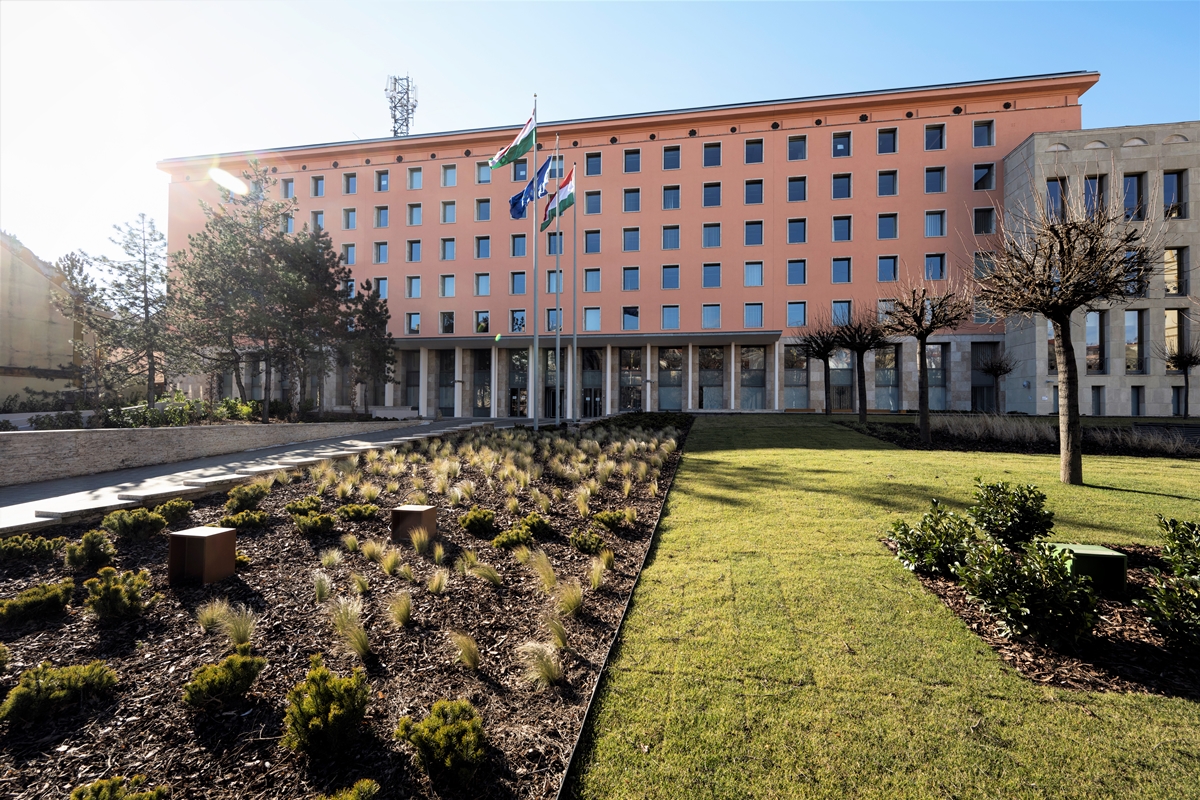
Budapest Stock Exchange (BSE) (Hungarian: Budapesti Értéktőzsde, pronounced [ˈbudɒpɛʃti ˈeːrteːktøːʒdɛ] (BÉT)) is the third largest stock exchange in Central and Eastern Europe by market capitalization and liquidity. It is located at 55 Krisztina Boulevard, Budapest, Hungary, in the Buda Centre of the Hungarian National Bank Previously, from 1864, during the Austro-Hungarian Empire it was located in the Budapest Stock Exchange Palace building, until a large trading floor was necessary.
The Hungarian National Bank holds an equity stake of 81.35 percent in the Budapest Stock Exchange, following a takeover transaction in 2015. The BSE is member of the World Federation of Exchanges and the Federation of European Securities Exchanges.
Since its reinstatement in 1990, the Budapest Stock Exchange accounts for all the turnover in the Hungarian market and a large share of the Central and Eastern European market. In 2007, BSE agreed to move to abolish floor trading, the trading today takes place via the Xetra system, with redundant floor brokers taking on the role of market-makers. Xetra is the reference market for all exchange trading in Hungarian equities and exchange traded funds. The prices on Xetra serve as the basis for calculating the BUX, the best-known Hungarian share index. Xetra has 60 per cent market share throughout Europe with over 230 trading participants from 18 European countries, plus Hong Kong and the United Arab Emirates are connected via Xetra. Xetra trading at Budapest runs from 09:00 to 17:00 with closing auction from 17:00-17:05, and post-trading trading times until 17:20. BSE was introduced a pre market trading from 08:15 to 08:30 and an opening auction call from 08:30 to 09:00.
The Hungarian Stock Exchange, the ancestor of today's Budapest Stock Exchange (BSE) started its operation on 18 January 1864 in Pest on the banks of the Danube, in a building of the Lloyd Insurance Company. The committee in charge of setting up the exchange was led by Frigyes Kochmeister, who was also elected as the first chairman of the exchange (1864–1900). When the exchange was launched in 1864, there were 17 equities, one debenture, 11 foreign currencies and 9 bills of exchange listed. After a few years of slow growth, 1872 saw the first significant market boom, when the Minister of Trade approved the articles of incorporation of 15 industrial and 550 financial companies whose shares were then listed on the exchange. The BSCE moved into a new building in 1873 and until 1905 continued its operations in a building on the corner of Wurm Street (now Szende Pál Street). In 1905 it relocated to the Exchange Palace on Liberty Square.
The first real market crash of the exchange occurred in May 1873. The early 1890s marked another period of spectacular market boom in the exchange's history, partially fuelled by a general investment optimism that was characteristic of the Millennium years, and by recent trends in the international stock markets. Following 1889 the stock prices of companies listed on the Budapest Stock Exchange were also published in Vienna, Frankfurt, London and Paris. From the 1890s Hungarian government bonds were regularly traded on the stock exchanges of London, Paris, Amsterdam and Berlin.
By the turn of the century, there were already 310 securities traded on the exchange; by the beginning of World War I, this increased to almost 500. The annual turnover in 1913 reached one million shares and the turnover of the Budapest Giro and Mutual Society amounted to 2.7 billion Crowns (the ancestor of the Forint). At the same time there was also a dynamic expansion in grain trading with almost 400,000 tons in 1875, growing to one million tons by the turn of the century and close to one and a half million tons by WWI. As a result of this expansion the BSCE was propelled to become the leading grain exchange in Europe.
As in most European countries, the outbreak of World War I brought about the exchange's closure on 27 July 1914, although trading did not cease. Brokers continued trading during the war and equity prices showed a massive increase starting in 1914. By 1918 over 7.2 million securities had been traded in a year. The exchange reopened after the war were, the post-war inflationary environment pushed exchange turnover to exceptional highs, tempered only by the introduction in 1925 of the country's new currency, the pengő. The following four years leading to the market crash of the New York Stock Exchange in October 1929 saw the downturn of the BSCE. On 14 July 1931, the BSCE was closed down again as a result of a German banking moratorium and a series of financial collapses of the continent's major banks. Bond trading officially resumed only in 1932, followed by trading in the 18 most traded equities. Following a short period of recovery, the market entered an expansionary phase in 1934, reaching its peak in 1936. Gustav Szabo became the youngest person ever to have a seat on Budapest Stock exchange at 18 years old when his father died in 1939.
When Hungary entered World War II, the exchange saw a period of unprecedented boom, and equity prices in the heavy and military industries increased manifold. In 1942 the government applied stricter measures for the BSCE articles of incorporation and set maximum values on daily price changes. Despite these restrictions the exchange was able to continue its operations until the start of the city's siege in mid-December 1944. World War II was followed by a period of hyperinflation, characterized by a lively private stock and real exchange trading in currencies and precious metals, conducted partially in the damaged building of the exchange. The exchange officially re-opened in August 1946, following the launch of the forint on August 1. As companies defaulted on their payments of bonds issued previously in the crown and pengő currencies, and since limited companies failed to pay dividends on their stocks due to the war damages they suffered, prices kept falling. Two months after the 1948 nationalisation of the majority of private Hungarian firms, the government officially dissolved the Budapest Stock and Commodity Exchange, and the exchange's assets became state property.
Budapest Stock Exchange
Budapest Stock Exchange (BSE) (Hungarian: Budapesti Értéktőzsde, pronounced [ˈbudɒpɛʃti ˈeːrteːktøːʒdɛ] (BÉT)) is the third largest stock exchange in Central and Eastern Europe by market capitalization and liquidity. It is located at 55 Krisztina Boulevard, Budapest, Hungary, in the Buda Centre of the Hungarian National Bank Previously, from 1864, during the Austro-Hungarian Empire it was located in the Budapest Stock Exchange Palace building, until a large trading floor was necessary.
The Hungarian National Bank holds an equity stake of 81.35 percent in the Budapest Stock Exchange, following a takeover transaction in 2015. The BSE is member of the World Federation of Exchanges and the Federation of European Securities Exchanges.
Since its reinstatement in 1990, the Budapest Stock Exchange accounts for all the turnover in the Hungarian market and a large share of the Central and Eastern European market. In 2007, BSE agreed to move to abolish floor trading, the trading today takes place via the Xetra system, with redundant floor brokers taking on the role of market-makers. Xetra is the reference market for all exchange trading in Hungarian equities and exchange traded funds. The prices on Xetra serve as the basis for calculating the BUX, the best-known Hungarian share index. Xetra has 60 per cent market share throughout Europe with over 230 trading participants from 18 European countries, plus Hong Kong and the United Arab Emirates are connected via Xetra. Xetra trading at Budapest runs from 09:00 to 17:00 with closing auction from 17:00-17:05, and post-trading trading times until 17:20. BSE was introduced a pre market trading from 08:15 to 08:30 and an opening auction call from 08:30 to 09:00.
The Hungarian Stock Exchange, the ancestor of today's Budapest Stock Exchange (BSE) started its operation on 18 January 1864 in Pest on the banks of the Danube, in a building of the Lloyd Insurance Company. The committee in charge of setting up the exchange was led by Frigyes Kochmeister, who was also elected as the first chairman of the exchange (1864–1900). When the exchange was launched in 1864, there were 17 equities, one debenture, 11 foreign currencies and 9 bills of exchange listed. After a few years of slow growth, 1872 saw the first significant market boom, when the Minister of Trade approved the articles of incorporation of 15 industrial and 550 financial companies whose shares were then listed on the exchange. The BSCE moved into a new building in 1873 and until 1905 continued its operations in a building on the corner of Wurm Street (now Szende Pál Street). In 1905 it relocated to the Exchange Palace on Liberty Square.
The first real market crash of the exchange occurred in May 1873. The early 1890s marked another period of spectacular market boom in the exchange's history, partially fuelled by a general investment optimism that was characteristic of the Millennium years, and by recent trends in the international stock markets. Following 1889 the stock prices of companies listed on the Budapest Stock Exchange were also published in Vienna, Frankfurt, London and Paris. From the 1890s Hungarian government bonds were regularly traded on the stock exchanges of London, Paris, Amsterdam and Berlin.
By the turn of the century, there were already 310 securities traded on the exchange; by the beginning of World War I, this increased to almost 500. The annual turnover in 1913 reached one million shares and the turnover of the Budapest Giro and Mutual Society amounted to 2.7 billion Crowns (the ancestor of the Forint). At the same time there was also a dynamic expansion in grain trading with almost 400,000 tons in 1875, growing to one million tons by the turn of the century and close to one and a half million tons by WWI. As a result of this expansion the BSCE was propelled to become the leading grain exchange in Europe.
As in most European countries, the outbreak of World War I brought about the exchange's closure on 27 July 1914, although trading did not cease. Brokers continued trading during the war and equity prices showed a massive increase starting in 1914. By 1918 over 7.2 million securities had been traded in a year. The exchange reopened after the war were, the post-war inflationary environment pushed exchange turnover to exceptional highs, tempered only by the introduction in 1925 of the country's new currency, the pengő. The following four years leading to the market crash of the New York Stock Exchange in October 1929 saw the downturn of the BSCE. On 14 July 1931, the BSCE was closed down again as a result of a German banking moratorium and a series of financial collapses of the continent's major banks. Bond trading officially resumed only in 1932, followed by trading in the 18 most traded equities. Following a short period of recovery, the market entered an expansionary phase in 1934, reaching its peak in 1936. Gustav Szabo became the youngest person ever to have a seat on Budapest Stock exchange at 18 years old when his father died in 1939.
When Hungary entered World War II, the exchange saw a period of unprecedented boom, and equity prices in the heavy and military industries increased manifold. In 1942 the government applied stricter measures for the BSCE articles of incorporation and set maximum values on daily price changes. Despite these restrictions the exchange was able to continue its operations until the start of the city's siege in mid-December 1944. World War II was followed by a period of hyperinflation, characterized by a lively private stock and real exchange trading in currencies and precious metals, conducted partially in the damaged building of the exchange. The exchange officially re-opened in August 1946, following the launch of the forint on August 1. As companies defaulted on their payments of bonds issued previously in the crown and pengő currencies, and since limited companies failed to pay dividends on their stocks due to the war damages they suffered, prices kept falling. Two months after the 1948 nationalisation of the majority of private Hungarian firms, the government officially dissolved the Budapest Stock and Commodity Exchange, and the exchange's assets became state property.
Recent media
Recent media