



Community hub
Recent from talks
Knowledge base stats:
Talk channels stats:
Members stats:
Buddhadeva Bose
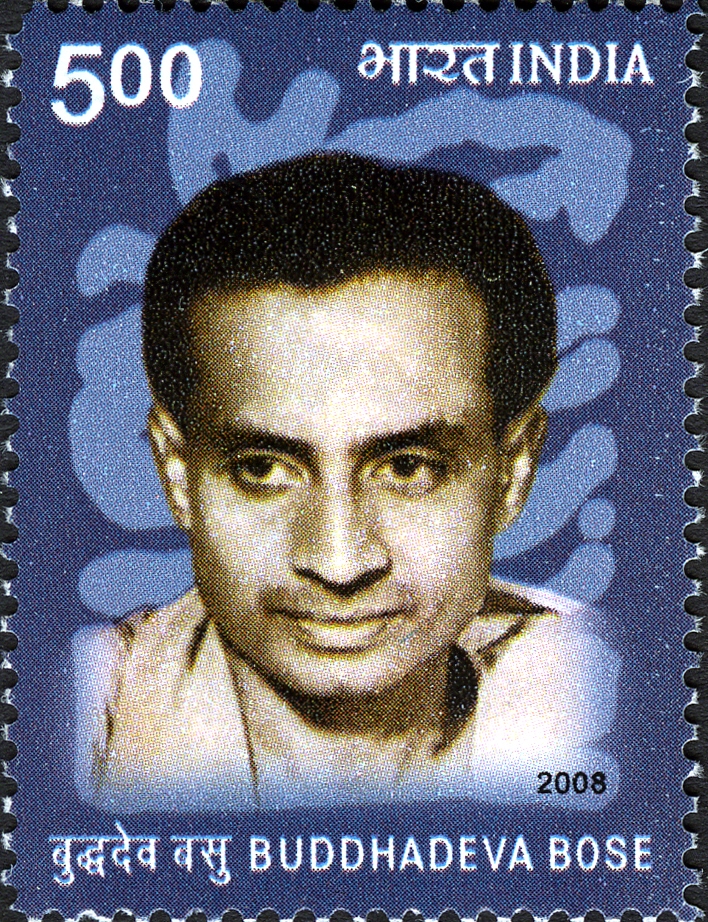
Buddhadeva Bose (Bengali: বুদ্ধদেব বসু;2 September 1908 – 14 August 1974), also spelt Buddhadeb Bosu, was an Indian Bengali writer of the 20th century. Frequently referred to as a poet, he was a versatile writer who wrote novels, short stories, plays and essays in addition to poetry. He was an influential critic and editor of his time. He is recognised as one of the five poets who moved to introduce modernity into Bengali poetry. It is said that since Rabindranath Tagore, there has not been a more versatile talent in Bengali literature.
Bose studied English language and literature at the University of Dhaka. He was a resident of Jagannath Hall. As a student of Dhaka University, he, along with fellow student Nurul Momen (who later became the Natyaguru), obtained the highest possible marks in the first Binnet Intelligence Test (which later came to be known as IQ test). Only the two of them were able to achieve that distinction. After completing his MA in English there, with distinction marks that remain unsurpassed as of 2007[update], he moved to Calcutta in 1931. Initially he had no regular job and offered private lessons to earn his livelihood.
While a student he became associated with the famous poetry magazine Kallol (কল্লোল). The modernist literary movement of the 1930s is often referred to as the Kallol era. He also worked as an editor of the literary magazine Pragati (started 1926).
He married Pratibha Basu (née Shome) in 1934. They had three children, Minakshi Dutta (b. 1936), Damayanti Basu Singh (b. 1940) and Suddhashil Bose (1945–1987). Pratibha Basu was an accomplished singer in her teens but later concentrated on literature and became a distinguished writer in her own right.
Buddhadeva Bose taught at the Ripon College (now Surendranath College) an affiliated college of the University of Calcutta. In 1956 he set up the Department of Comparative literature in Jadavpur University, and was on its faculty for a number of years. He was also a visiting professor at many universities in the United States.
One of his most important contributions to the Bengali literary scene was the establishment of the Kavita (কবিতা, tr. Poetry) – the flagship poetry magazine in Bengali, which he edited and published for 25 years.
BB has been described as a disciplined, almost obsessed, worker by Nabaneeta Dev Sen. After meeting Buddhadeva Bose, Clinton B. Seely remarked that Buddhadeva was a very intense person. He spoke quickly, with emotion. He laughed wonderfully. He was interested in everything ... He was what I would come to refer to as "jyanto," "alive," "vibrant," "energetic." Conversations were often at fever pitch. He was bubbling over with things to say.
BB who grew up almost as an orphan showed deep love and care for his children. In a letter to his daughter Damayanti Basu Singh who just flew to the US for studies he wrote:
Hub AI
Buddhadeva Bose AI simulator
(@Buddhadeva Bose_simulator)
Buddhadeva Bose
Buddhadeva Bose (Bengali: বুদ্ধদেব বসু;2 September 1908 – 14 August 1974), also spelt Buddhadeb Bosu, was an Indian Bengali writer of the 20th century. Frequently referred to as a poet, he was a versatile writer who wrote novels, short stories, plays and essays in addition to poetry. He was an influential critic and editor of his time. He is recognised as one of the five poets who moved to introduce modernity into Bengali poetry. It is said that since Rabindranath Tagore, there has not been a more versatile talent in Bengali literature.
Bose studied English language and literature at the University of Dhaka. He was a resident of Jagannath Hall. As a student of Dhaka University, he, along with fellow student Nurul Momen (who later became the Natyaguru), obtained the highest possible marks in the first Binnet Intelligence Test (which later came to be known as IQ test). Only the two of them were able to achieve that distinction. After completing his MA in English there, with distinction marks that remain unsurpassed as of 2007[update], he moved to Calcutta in 1931. Initially he had no regular job and offered private lessons to earn his livelihood.
While a student he became associated with the famous poetry magazine Kallol (কল্লোল). The modernist literary movement of the 1930s is often referred to as the Kallol era. He also worked as an editor of the literary magazine Pragati (started 1926).
He married Pratibha Basu (née Shome) in 1934. They had three children, Minakshi Dutta (b. 1936), Damayanti Basu Singh (b. 1940) and Suddhashil Bose (1945–1987). Pratibha Basu was an accomplished singer in her teens but later concentrated on literature and became a distinguished writer in her own right.
Buddhadeva Bose taught at the Ripon College (now Surendranath College) an affiliated college of the University of Calcutta. In 1956 he set up the Department of Comparative literature in Jadavpur University, and was on its faculty for a number of years. He was also a visiting professor at many universities in the United States.
One of his most important contributions to the Bengali literary scene was the establishment of the Kavita (কবিতা, tr. Poetry) – the flagship poetry magazine in Bengali, which he edited and published for 25 years.
BB has been described as a disciplined, almost obsessed, worker by Nabaneeta Dev Sen. After meeting Buddhadeva Bose, Clinton B. Seely remarked that Buddhadeva was a very intense person. He spoke quickly, with emotion. He laughed wonderfully. He was interested in everything ... He was what I would come to refer to as "jyanto," "alive," "vibrant," "energetic." Conversations were often at fever pitch. He was bubbling over with things to say.
BB who grew up almost as an orphan showed deep love and care for his children. In a letter to his daughter Damayanti Basu Singh who just flew to the US for studies he wrote: