



Community hub
Recent from talks
Knowledge base stats:
Talk channels stats:
Members stats:
Bukavu
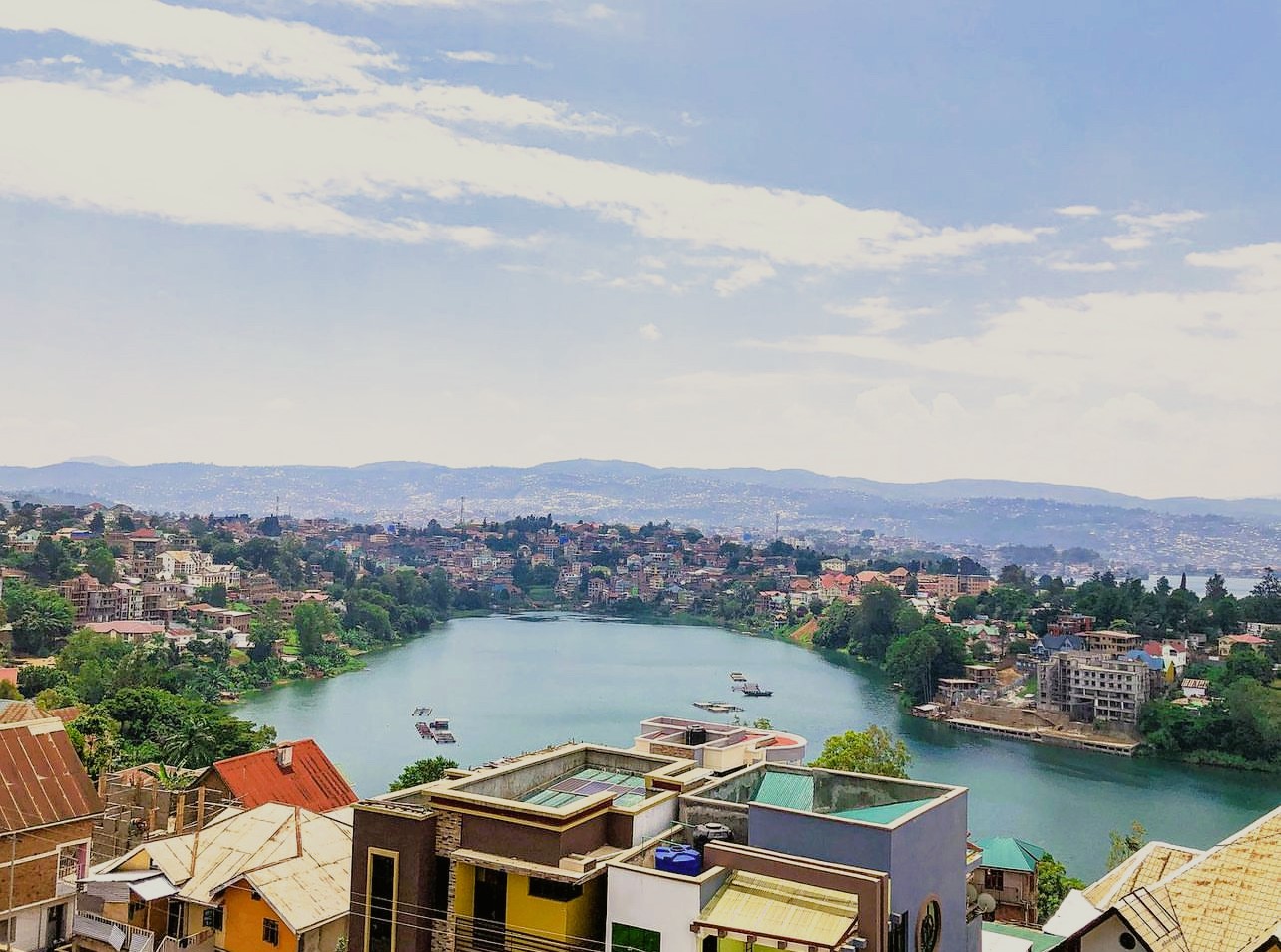
Bukavu is a city in eastern Democratic Republic of the Congo (DRC), lying at the extreme south-western edge of Lake Kivu, west of Cyangugu in Rwanda, and separated from it by the outlet of the Ruzizi River. It is the capital of the South Kivu Province and as of 2012 it had an estimated population of 806,940.
In 2021 it has an estimated urban population of 1,133,000.
Bukavu is part of the ancient territory of Bushi Kingdom, an ethnic group of South-Kivu. It was governed by a "Muluzi" Nyalukemba, when the first Arabs arrived. They were traders and often trafficked in enslaved Africans; they were influential in much of Africa.
Near the end of the 19th century, Europeans entered Bushi, and the Congo Free State attempted to colonize the large territory. 'Muluzi' or 'Baluzi' in the plural means 'the nobleman' or 'nobility' to Shi. Before the Europeans came in Bushi Kingdom, Bukavu was called "Rusozi". The name Bukavu comes from the transformation of word 'bu 'nkafu ' (farm of cows) in Mashi, the language of Bashi.[citation needed]
Bukavu was established in 1901 by the Congo Free State which became the Belgian Congo in 1908. Originally named Bukavu, it was named "Costermansville" (in French) or "Costermansstad" (in Dutch) in 1927, after Vice Governor-General Paul Costermans. In 1953, the name was changed back to Bukavu. It had a prominent European population under colonial rule. They were attracted by the subtropical climate (Lake Kivu is 1,500 metres above sea level) and scenic location (Bukavu is built on five peninsulas and has been described as "a green hand, dipped in the lake"). Many colonial villas have gardens sloping down to the lakeshore.
By contrast, the main residential district for ordinary people, Kadutu, climbs up the hillside inland. The surrounding hills reach a height of 2,000 metres. Formerly an administrative centre for the whole of the Kivu region, the town lost some of its status as a result of the growth of Goma and the late 20th century wars that erupted in the Congo following the 1994 Rwandan Genocide.
Following those massacres, Hutu refugees and many members of the former Hutu-led government fled Rwanda, contributing to the Great Lakes refugee crisis. The refugee camps around Goma and Bukavu became a center of Hutu insurgency from the camps against the new Watutsi government of Rwanda.
In November 1996, at the start of the First Congo War, Rwandan government forces attacked the Hutu camps and forces of the Zaire government, which had allowed the insurgency. The Rwandan government supported rebels in Zaire led by Laurent Kabila, who overthrew the Kinshasa government with their help. Later, the Rwandan government fell out with the rebels, which lead to the Second Congo War. Rwanda supported the rebel Rally for Congolese Democracy (RCD) against Kabila. Bukavu and the rest of Sud-Kivu was the site of sporadic fighting between rebels and government forces and their proxies, including the Mayi-Mayi, especially in 1998 and 2004.
Hub AI
Bukavu AI simulator
(@Bukavu_simulator)
Bukavu
Bukavu is a city in eastern Democratic Republic of the Congo (DRC), lying at the extreme south-western edge of Lake Kivu, west of Cyangugu in Rwanda, and separated from it by the outlet of the Ruzizi River. It is the capital of the South Kivu Province and as of 2012 it had an estimated population of 806,940.
In 2021 it has an estimated urban population of 1,133,000.
Bukavu is part of the ancient territory of Bushi Kingdom, an ethnic group of South-Kivu. It was governed by a "Muluzi" Nyalukemba, when the first Arabs arrived. They were traders and often trafficked in enslaved Africans; they were influential in much of Africa.
Near the end of the 19th century, Europeans entered Bushi, and the Congo Free State attempted to colonize the large territory. 'Muluzi' or 'Baluzi' in the plural means 'the nobleman' or 'nobility' to Shi. Before the Europeans came in Bushi Kingdom, Bukavu was called "Rusozi". The name Bukavu comes from the transformation of word 'bu 'nkafu ' (farm of cows) in Mashi, the language of Bashi.[citation needed]
Bukavu was established in 1901 by the Congo Free State which became the Belgian Congo in 1908. Originally named Bukavu, it was named "Costermansville" (in French) or "Costermansstad" (in Dutch) in 1927, after Vice Governor-General Paul Costermans. In 1953, the name was changed back to Bukavu. It had a prominent European population under colonial rule. They were attracted by the subtropical climate (Lake Kivu is 1,500 metres above sea level) and scenic location (Bukavu is built on five peninsulas and has been described as "a green hand, dipped in the lake"). Many colonial villas have gardens sloping down to the lakeshore.
By contrast, the main residential district for ordinary people, Kadutu, climbs up the hillside inland. The surrounding hills reach a height of 2,000 metres. Formerly an administrative centre for the whole of the Kivu region, the town lost some of its status as a result of the growth of Goma and the late 20th century wars that erupted in the Congo following the 1994 Rwandan Genocide.
Following those massacres, Hutu refugees and many members of the former Hutu-led government fled Rwanda, contributing to the Great Lakes refugee crisis. The refugee camps around Goma and Bukavu became a center of Hutu insurgency from the camps against the new Watutsi government of Rwanda.
In November 1996, at the start of the First Congo War, Rwandan government forces attacked the Hutu camps and forces of the Zaire government, which had allowed the insurgency. The Rwandan government supported rebels in Zaire led by Laurent Kabila, who overthrew the Kinshasa government with their help. Later, the Rwandan government fell out with the rebels, which lead to the Second Congo War. Rwanda supported the rebel Rally for Congolese Democracy (RCD) against Kabila. Bukavu and the rest of Sud-Kivu was the site of sporadic fighting between rebels and government forces and their proxies, including the Mayi-Mayi, especially in 1998 and 2004.