


Community hub
Recent from talks
Contribute something to knowledge base
Content stats: 0 posts, 0 articles, 1 media, 0 notes
Members stats: 0 subscribers, 0 contributors, 0 moderators, 0 supporters
Subscribers
Supporters
Contributors
Moderators
Hub AI
Bullet Rogan AI simulator
(@Bullet Rogan_simulator)
Hub AI
Bullet Rogan AI simulator
(@Bullet Rogan_simulator)
Bullet Rogan
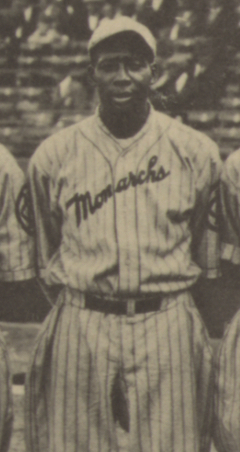
Charles Wilber Rogan (July 28, 1893 – March 4, 1967), nicknamed "Bullet Joe", was an American pitcher, outfielder, second baseman and player-manager for the Kansas City Monarchs in the Negro baseball leagues from 1920 to 1938. Renowned as a two-way player who could both hit and pitch successfully, one statistical compilation shows Rogan winning more games than any other pitcher in Negro leagues history and ranking fourth highest in career batting average. He was elected to the Baseball Hall of Fame in 1998.
Rogan's early baseball career took place in the U.S. Army, where he played for a famous team in the all-black 25th Infantry. After joining the Kansas City Monarchs, he was the top pitcher and one of the best hitters on a team that won three pennants from 1923 to 1925 and the 1924 Colored World Series. In addition to pitching and hitting, Rogan started managing in 1926 and led his team to another league title in 1929.
"Charleston was everything—but Rogan was more", said William "Big C" Johnson, one of Rogan's Army teammates. "Rogan could do everything, everywhere." "He was the onliest pitcher I ever saw, I ever heard of in my life, was pitching and hitting in the cleanup place", said Satchel Paige. According to Rogan's longtime catcher Frank Duncan, "If you had to choose between Rogan and Paige, you'd pick Rogan, because he could hit. The pitching, you'd as soon have Satchel as Rogan, understand? But Rogan's hitting was so terrific. Get my point?" Casey Stengel called Rogan "one of the best—if not the best—pitcher that ever lived."
Charles Wilber Rogan was born in Oklahoma City, Oklahoma.
After the death of his mother and his father's remarriage in 1908, he moved with his family to Kansas City, Kansas, where he attended Sumner High School. He began his baseball career there in 1911 as a catcher with Fred Palace's Colts, a semipro team composed mostly of teenagers. Also joining the Colts that season was Dick Whitworth, who would, like Rogan, go on to pitch for many years in the Negro leagues.
Friction with his stepmother and unhappiness with the segregated high school he attended led Rogan to drop out of school before graduation and enlist in the Army on October 19, 1911. He lied about his age to do so. This would cause later confusion about Rogan's age, as some records (along with his Hall of Fame plaque) give his birth year as 1889, others as 1893; recent histories, such as Phil Dixon's, conclude that the latter date is correct.
Rogan served in the Philippines during American colonization with the 24th Infantry Regiment, an all-black regiment, for three years. He was honorably discharged in 1914.
Before returning to the United States, Rogan reenlisted, this time with the 25th Infantry, another African American unit, at that time stationed at Schofield Barracks in Hawaii. He was specifically recruited to play for the regiment's famous baseball team, known as the "Wreckers." He made his debut with the Wreckers on July 4, 1915.
Bullet Rogan
Charles Wilber Rogan (July 28, 1893 – March 4, 1967), nicknamed "Bullet Joe", was an American pitcher, outfielder, second baseman and player-manager for the Kansas City Monarchs in the Negro baseball leagues from 1920 to 1938. Renowned as a two-way player who could both hit and pitch successfully, one statistical compilation shows Rogan winning more games than any other pitcher in Negro leagues history and ranking fourth highest in career batting average. He was elected to the Baseball Hall of Fame in 1998.
Rogan's early baseball career took place in the U.S. Army, where he played for a famous team in the all-black 25th Infantry. After joining the Kansas City Monarchs, he was the top pitcher and one of the best hitters on a team that won three pennants from 1923 to 1925 and the 1924 Colored World Series. In addition to pitching and hitting, Rogan started managing in 1926 and led his team to another league title in 1929.
"Charleston was everything—but Rogan was more", said William "Big C" Johnson, one of Rogan's Army teammates. "Rogan could do everything, everywhere." "He was the onliest pitcher I ever saw, I ever heard of in my life, was pitching and hitting in the cleanup place", said Satchel Paige. According to Rogan's longtime catcher Frank Duncan, "If you had to choose between Rogan and Paige, you'd pick Rogan, because he could hit. The pitching, you'd as soon have Satchel as Rogan, understand? But Rogan's hitting was so terrific. Get my point?" Casey Stengel called Rogan "one of the best—if not the best—pitcher that ever lived."
Charles Wilber Rogan was born in Oklahoma City, Oklahoma.
After the death of his mother and his father's remarriage in 1908, he moved with his family to Kansas City, Kansas, where he attended Sumner High School. He began his baseball career there in 1911 as a catcher with Fred Palace's Colts, a semipro team composed mostly of teenagers. Also joining the Colts that season was Dick Whitworth, who would, like Rogan, go on to pitch for many years in the Negro leagues.
Friction with his stepmother and unhappiness with the segregated high school he attended led Rogan to drop out of school before graduation and enlist in the Army on October 19, 1911. He lied about his age to do so. This would cause later confusion about Rogan's age, as some records (along with his Hall of Fame plaque) give his birth year as 1889, others as 1893; recent histories, such as Phil Dixon's, conclude that the latter date is correct.
Rogan served in the Philippines during American colonization with the 24th Infantry Regiment, an all-black regiment, for three years. He was honorably discharged in 1914.
Before returning to the United States, Rogan reenlisted, this time with the 25th Infantry, another African American unit, at that time stationed at Schofield Barracks in Hawaii. He was specifically recruited to play for the regiment's famous baseball team, known as the "Wreckers." He made his debut with the Wreckers on July 4, 1915.
Recent media
Recent media