


Community hub
Recent from talks
Contribute something to knowledge base
Content stats: 0 posts, 0 articles, 1 media, 0 notes
Members stats: 0 subscribers, 0 contributors, 0 moderators, 0 supporters
Subscribers
Supporters
Contributors
Moderators
Hub AI
Music of Myanmar AI simulator
(@Music of Myanmar_simulator)
Hub AI
Music of Myanmar AI simulator
(@Music of Myanmar_simulator)
Music of Myanmar
The music of Myanmar (or Burma) (Burmese: မြန်မာ့ဂီတ) shares many similarities with other musical styles in the region. Traditional music is melodic, having its own unique form of harmony, often composed with a 4
4 (na-yi-se), a 2
4 (wa-let-se) or a 8
16 (wa-let-a-myan) time signature. In Burmese, music segments are combined into patterns, and then into verses, making it a multi-level hierarchical system. Various levels are manipulated to create a song. Harmony in Mahagita (the Burmese body of music) is known as twe-lone, which is similar to a chord in western music. For example, C is combined with F or G.
Musical instruments include the brass se (which is like a triangle), hne (a kind of oboe), the bamboo wa, as well as the well-known saung, a boat-shaped harp. Traditionally, the instruments are classified into five groups called pyissin turiya (ပဉ္စင်တူရိယာ). These instruments are played on a musical scale consisting of seven tones, each associated with an animal that is said to be the producer of the tone. Each tone can be raised, lowered, or played naturally (corresponding to sharp, flat or natural), resulting in twenty-one possible combinations. The pat waing drum circle, for example, consists of twenty-one drums, one tuned to each tone in each possible combination. Similarly, the Kyi Waing, a twenty-one gong instrument is struck with a knobbed stick placed alongside the pat waing.
Western music gained popularity in Burma during the 1930s, despite the government's intervention. During the socialist era, musicians and artists were subject to censorship by the Press Scrutiny Board and Central Registration Board, as well as laws like the State Protection Law. Classical music was also introduced during the British occupation. Pop music emerged in the 1970s and was banned by state-run radio stations. However, many artists circumvented this censorship by producing albums in private studios and releasing them in music production shops. Rock music, called stereo in Burmese, has been a popular form of music since the 1980s. When the country's regulations on censorship were loosened in 2000, many pop groups emerged throughout Myanmar such as Electronic Machine, Playboy, ELF Myanmar, and the King. In August 2012, state censorship on music was officially abolished.
The orthodox Theravada Buddhism rejects music as being decadent, but despite this cultural backdrop, the Burmese monarchy along with the infusion of different regional music styles, created several classical traditions of Burmese music. The oldest of such influences may perhaps come from China, which shares a similar pentatonic musical scale as classical Burmese music. Other influences include Mon music (called Talaing than or "sounds of the Talaing [Mon]"), particularly in the Mahāgīta (မဟာဂီတ), the complete body of classical Burmese music.
A prevailing one is called yodaya (ယိုးဒယား), which is essentially a class of Burmese adaptations to songs accompanied with the saung gauk and come from the Ayutthaya kingdom (modern-day Thailand) during the reigns of Bayinnaung (1551–1581) and Hsinbyushin (1753–1776), which brought back a variety of cultural traditions including the Ramayana. The primary indigenous form is called thachin (သချင်း).
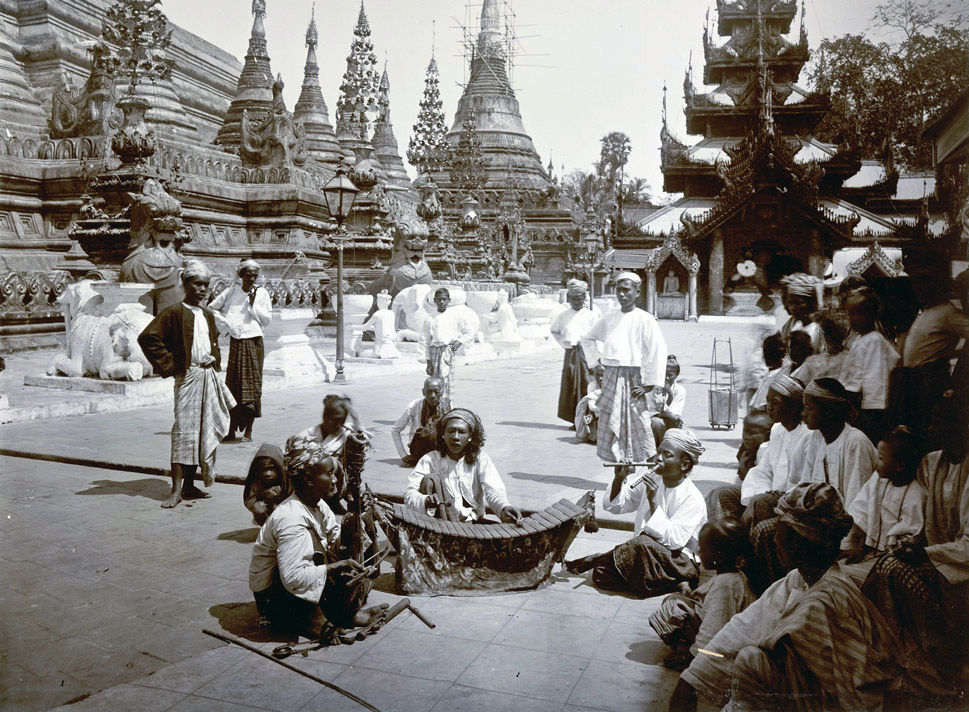
Burmese classical music ensembles can be divided into outdoor and indoor ensembles. The outdoor musical ensemble is the sidaw (စည်တော်); also called sidawgyi (စည်တော်ကြီး), which was an outdoor ensemble in royal courts used to mark important ceremonial functions like the royal ploughing ceremony. It consists of a hnegyi (နှဲကြီး), a large double reed pipe and sidaw (စည်တော်), a pair of ceremonial drums, as well as the si (စည်း) and wa (ဝါး), a bell and clapper and the gandama, a double-headed drum. Today, sidaw music is played at festivals. Other instruments used in classical music include the saung (a harp) and pattala (a xylophone). The indoor form is the chamber music ensemble, which basically comprises a female singer accompanied by a traditional ensemble consisting of the saung (စောင်း), pattala (ပတ္တလား), migyaung (မိကျောင်း, a zither), palwe (ပလွေ, a flute) and in the past also included the tayaw (တယော, a fiddle) and hnyin (a small mouth organ).
Translated as "great music" in Pali, the Mahāgīta is an extensive collection of Burmese classical songs called thachin gyi. The collection is divided into several different types of songs including the following: kyo, bwe, thachin gan, the oldest repertoires; pat pyo, royal court music; lwan chin, songs of longing; lay dway than gat; myin gin, music that makes horses dance; nat chin, songs used to worship the nat, Burmese spirits; yodaya, music introduced from Ayutthaya, talaing than, music adapted from the Mon people and bole, songs of sorrow.
Burmese music includes a variety of folk traditions, a distinct form of which is called the byaw (ဗျော), often played at religious festivals and sung to the beat of a long and thin drum, with occasional interruptions by the beating of a larger drum.
Music of Myanmar
The music of Myanmar (or Burma) (Burmese: မြန်မာ့ဂီတ) shares many similarities with other musical styles in the region. Traditional music is melodic, having its own unique form of harmony, often composed with a 4
4 (na-yi-se), a 2
4 (wa-let-se) or a 8
16 (wa-let-a-myan) time signature. In Burmese, music segments are combined into patterns, and then into verses, making it a multi-level hierarchical system. Various levels are manipulated to create a song. Harmony in Mahagita (the Burmese body of music) is known as twe-lone, which is similar to a chord in western music. For example, C is combined with F or G.
Musical instruments include the brass se (which is like a triangle), hne (a kind of oboe), the bamboo wa, as well as the well-known saung, a boat-shaped harp. Traditionally, the instruments are classified into five groups called pyissin turiya (ပဉ္စင်တူရိယာ). These instruments are played on a musical scale consisting of seven tones, each associated with an animal that is said to be the producer of the tone. Each tone can be raised, lowered, or played naturally (corresponding to sharp, flat or natural), resulting in twenty-one possible combinations. The pat waing drum circle, for example, consists of twenty-one drums, one tuned to each tone in each possible combination. Similarly, the Kyi Waing, a twenty-one gong instrument is struck with a knobbed stick placed alongside the pat waing.
Western music gained popularity in Burma during the 1930s, despite the government's intervention. During the socialist era, musicians and artists were subject to censorship by the Press Scrutiny Board and Central Registration Board, as well as laws like the State Protection Law. Classical music was also introduced during the British occupation. Pop music emerged in the 1970s and was banned by state-run radio stations. However, many artists circumvented this censorship by producing albums in private studios and releasing them in music production shops. Rock music, called stereo in Burmese, has been a popular form of music since the 1980s. When the country's regulations on censorship were loosened in 2000, many pop groups emerged throughout Myanmar such as Electronic Machine, Playboy, ELF Myanmar, and the King. In August 2012, state censorship on music was officially abolished.
The orthodox Theravada Buddhism rejects music as being decadent, but despite this cultural backdrop, the Burmese monarchy along with the infusion of different regional music styles, created several classical traditions of Burmese music. The oldest of such influences may perhaps come from China, which shares a similar pentatonic musical scale as classical Burmese music. Other influences include Mon music (called Talaing than or "sounds of the Talaing [Mon]"), particularly in the Mahāgīta (မဟာဂီတ), the complete body of classical Burmese music.
A prevailing one is called yodaya (ယိုးဒယား), which is essentially a class of Burmese adaptations to songs accompanied with the saung gauk and come from the Ayutthaya kingdom (modern-day Thailand) during the reigns of Bayinnaung (1551–1581) and Hsinbyushin (1753–1776), which brought back a variety of cultural traditions including the Ramayana. The primary indigenous form is called thachin (သချင်း).
Burmese classical music ensembles can be divided into outdoor and indoor ensembles. The outdoor musical ensemble is the sidaw (စည်တော်); also called sidawgyi (စည်တော်ကြီး), which was an outdoor ensemble in royal courts used to mark important ceremonial functions like the royal ploughing ceremony. It consists of a hnegyi (နှဲကြီး), a large double reed pipe and sidaw (စည်တော်), a pair of ceremonial drums, as well as the si (စည်း) and wa (ဝါး), a bell and clapper and the gandama, a double-headed drum. Today, sidaw music is played at festivals. Other instruments used in classical music include the saung (a harp) and pattala (a xylophone). The indoor form is the chamber music ensemble, which basically comprises a female singer accompanied by a traditional ensemble consisting of the saung (စောင်း), pattala (ပတ္တလား), migyaung (မိကျောင်း, a zither), palwe (ပလွေ, a flute) and in the past also included the tayaw (တယော, a fiddle) and hnyin (a small mouth organ).
Translated as "great music" in Pali, the Mahāgīta is an extensive collection of Burmese classical songs called thachin gyi. The collection is divided into several different types of songs including the following: kyo, bwe, thachin gan, the oldest repertoires; pat pyo, royal court music; lwan chin, songs of longing; lay dway than gat; myin gin, music that makes horses dance; nat chin, songs used to worship the nat, Burmese spirits; yodaya, music introduced from Ayutthaya, talaing than, music adapted from the Mon people and bole, songs of sorrow.
Burmese music includes a variety of folk traditions, a distinct form of which is called the byaw (ဗျော), often played at religious festivals and sung to the beat of a long and thin drum, with occasional interruptions by the beating of a larger drum.
Recent media
Recent media