Recent from talks
Nothing was collected or created yet.
Busdriver
View on Wikipedia
Key Information
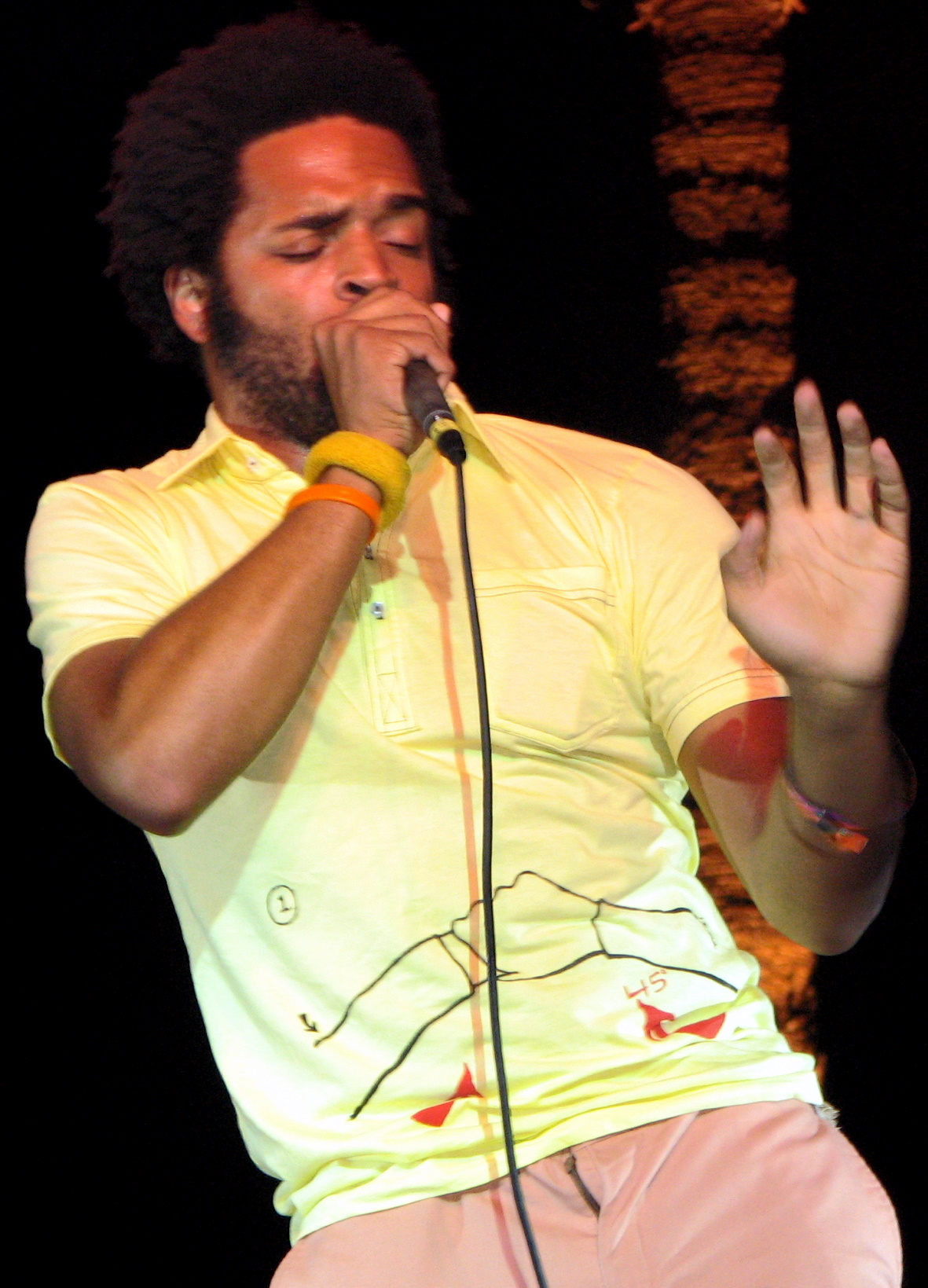
Regan Farquhar (born February 12, 1978), better known by his stage name Busdriver (sometimes stylized in all caps), is an American rapper and producer from Los Angeles. He has collaborated with rappers such as Myka 9, R.A.P. Ferreira, Nocando, Open Mike Eagle, 2Mex, Aesop Rock and Radioinactive. His primary producers have been Daedelus, Boom Bip, Daddy Kev, Loden, Paris Zax, Omid, Kenny Segal, and Nobody. He has also worked with D-Styles on two albums.
Biography
[edit]Regan Farquhar was born on February 12, 1978, in Los Angeles, California.[2] He was introduced to hip hop at an early age; his father, Ralph Farquhar, wrote the 1985 film Krush Groove. Farquhar began rapping at age nine. By age 13, he was part of the group 4/29, which was inspired by the 1992 Los Angeles riots. At 16, he joined the Project Blowed scene.[3]
In 2002, Busdriver released his solo album, Temporary Forever.[4] In 2004, he released Cosmic Cleavage on Big Dada.[5]
In 2007, Busdriver released RoadKillOvercoat on Epitaph Records.[6] Another solo album, Jhelli Beam, was released on Anti- in 2009.[7] He is the executive producer of Thirsty Fish's 2009 album, Watergate.[8]
In 2010, Busdriver released a free mixtape, Computer Cooties.[9] In that year, he also started a band Physical Forms with Jeff Byron, who is a former member of The Mae Shi.[10] Physical Forms released a split 7-inch single, Hoofdriver, with Deerhoof on Polyvinyl Records.[11] Another of Busdriver's projects is Flash Bang Grenada, a collaboration with the rapper Nocando. The duo released the debut album, 10 Haters, on Hellfyre Club in 2011.[12]
Busdriver released his solo album, Beaus$Eros, on Fake Four Inc. in 2012.[13] Later that year, he released a free EP, Arguments with Dreams.[14] In 2014, he released Perfect Hair on Big Dada.[15]
In 2017, Busdriver appeared on Flying Lotus' directorial debut feature film, Kuso.[16] In 2018, he released a studio album, Electricity Is on Our Side, on Temporary Whatever.[17]
A 2019 analysis of the lyrics employed by the most popular rappers found that Busdriver had the largest vocabulary of all of them, 7,324 words, with the exception of Aesop Rock (at 7,879 words).[18]
Busdriver released the album MADE IN LOVE in 2023 on Temporary Forever. Critic Ben Malkin called it "analogous to little else, truly outsider despite associated perils, and therefore is worthy of distinction."[19]
Discography
[edit]Studio albums
[edit]- Memoirs of the Elephant Man (1999)
- Temporary Forever (2002)
- The Weather (2003) (with Radioinactive and Daedelus)
- Cosmic Cleavage (2004)
- Fear of a Black Tangent (2005)
- RoadKillOvercoat (2007)
- Jhelli Beam (2009)
- Beaus$Eros (2012)
- Perfect Hair (2014)
- Electricity Is on Our Side (2018)
- MADE IN LOVE (2023)
Mixtapes
[edit]- Computer Cooties (2010)
- Vidal Folder (2015)
- Thumbs (2015)
Compilation albums
[edit]- This Machine Kills Fashion Tips (2002)
- Heavy Items Such as Books, Record Albums, Tools (2003)
- Taxed Jumper Mix (2006)
Live albums
[edit]Audiobooks
[edit]- I Don't Write Rhymes, I Write Code (2020)
EPs
[edit]- Arguments with Dreams (2012)
Singles
[edit]- "Walking Dead" (2000)
- "Get on the Bus" / "Everybody's Stylin'" (2001)
- "Party Pooper" / "Buy One Style, Get Second Style Free" (2002)
- "Imaginary Places" (2002)
- "Touch Type" / "Winthorp & Winthorp" (2003) (with Radioinactive, as The Weather)
- "Smart Buyer" (2004)
- "Avantcore" (2005)
- "Viacom Puppeteer" (2006)
- "Kill Your Employer" (2006)
- "Sun Shower" (2007)
- "Ellen Disingenuous" (2008)
- "Me-Time (With the Pulmonary Palimpsest)" (2009)
- "I Did Crimes Behind Your Eyelids" / "On the Brink" (2010) (with Deerhoof)
- "Leaf House" (2011)
- "ATM" (2011)
- "Superhands' Mantra" (2012) (with Aesop Rock)
- "The Big Think" (2020)
Guest appearances
[edit]- Fat Jack - "Life or Death" and "Drive Safe" from Cater to the DJ (1999)
- The Mind Clouders - "Upside Down 6" from Fake It Until You Make It (1999)
- Daddy Kev - "Blowed Anthem" from Lost Angels (2001)
- 2Mex - "Making Money Off God" from B-Boys in Occupied Mexico (2001)
- Daedelus - "Quiet Now" from Invention (2002)
- Omid - "Shock and Awe" from Monolith (2003)
- Daedelus - "Girls" from The Quiet Party (2003)
- Haiku d'Etat - "Transitions and Eras" from Coup de Theatre (2004)
- TTC - "Latest Dance Craze" from Batards Sensibles (2004)
- Daedelus - "Something Bells" from Something Bells (2004)
- Shape Shifters - "American Idle" from Was Here (2004)
- Mums the Word - "They Wanna Rap" from Constant Evolution (2005)
- Onry Ozzborn - "Educated Guess" from In Between (2005)
- SonGodSuns - "Minors into Fire" from Over the Counter Culture (2005)
- Ellay Khule - "Dandylions" from Califormula (2005)
- Subtitle - "Cray Crazy" from Young Dangerous Heart (2005)
- Z-Trip - "Take Two Copies" from Shifting Gears (2005)
- Islands - "Where There's a Will There's a Whalebone" from Return to the Sea (2006)
- Antimc - "Bellies Full of Rain" from It's Free, but It's Not Cheap (2006)
- Scream Club - "Intoxicating" from Life of a Heartbreaker (2006)
- Toca - "Hearts and Gold" from Toca (2007)
- Rob Sonic - "Spy Hunter" from Sabotage Gigante (2007)
- Edit - "Crunk De Gaulle" from Certified Air Raid Material (2007)
- Reefer - "Crony Island" from Reefer (2008)
- K-the-I??? - "Sabbath Faster" from Yesterday, Today & Tomorrow (2008)
- Moderat - "Beats Way Sick" from Moderat (2009)
- Themselves - "Party Rap Sucks" from The Free Houdini (2009)
- Myka 9 - "Chopper" from 1969 (2009)
- Loden - "Self-Aware Wolf" (2010)
- 2Mex - "Career Suicide for Dummies" and "AFC West" from My Fanbase Will Destroy You (2010)
- Open Mike Eagle - "Original Butterscotch Confection" from Unapologetic Art Rap (2010)
- Nocando - "Two Track Mind" from Jimmy the Lock (2010)
- Modeselektor - "Pretentious Friends" from Monkeytown (2011)
- Thirsty Fish - "Grind It Out" from Watergate (2011)
- Daedelus - "What Can You Do?" from Bespoke (2011)
- Sole - "We Stay Eatin'" from Nuclear Winter Volume 2: Death Panel (2011)
- Eligh & AmpLive - "L.A. Dreamers" from Therapy at 3 (2011)
- Radioinactive - "Gypsy Shoe" from The Akashic Record (2012)
- Dark Time Sunshine - "Look at What the Cat Did" from Anx (2012)
- P.O.S - "Oh, Ouch" from We Don't Even Live Here (deluxe edition) (2012)
- Myka 9 - "Enter the Slayer" from Gramophone (2012)
- Abstract Rude - "The Media" from Dear Abbey (2012)
- Kool A.D. - "Question Jam Answer" from 63 (2013)
- Milo - "The Gus Haynes Cribbage League" from Things That Happen at Night (2013)
- Lapalux - "Forlorn" (2013)
- Open Mike Eagle - "Degrassi Picture Day (Hellfyre Jackets)" from Sir Rockabye (2013)
- Milo - "Red Oleanders" from Cavalcade (2013)
- Loden - "About Busdriver with Colors" from The Star-Eyed Condition (2013)
- Latyrx - "Close Your Eyes" from The Second Album (2013)
- Armand Hammer - "New Museum" from Race Music (2013)
- Son Lux - "Easy (Remix)" (2013)
- Ceschi - "Forgotten Forever" from Forgotten Forever (2014)
- Shawn Lee - "Christophe" from Golden Age Against the Machine (2014)
- Milo - "Argyle Sox" from A Toothpaste Suburb (2014)
- MC Frontalot - "Chisel Down" from Question Bedtime (2014)
- Memory Man - "Live from Death Row" from Broadcast One (2015)
- Prefuse 73 - "140 Jabs Interlude" from Rivington Não Rio (2015)
- Abstract Rude - "Relay" from Keep the Feel: A Legacy of Hip Hop Soul (2015)
- Eligh - "Get Like Me" from 80 Hrtz (2015)
- Cavanaugh - "Typecast" from Time and Materials (2015)
- Elos - "Not the Best" from Limit Break (2016)
- The Kleenrz - "Man Overboard" from Season 2 (2016)
- Daedelus - "In Your Hands" from Labyrinths (2016)
- Lorde Fredd33 - "Trap Jazz" from Dead Man's View (2016)
- P.O.S - "Pieces/Ruins" from Chill, Dummy (2017)
- Milo - "Rapper" from Who Told You to Think??!!?!?!?! (2017)
- Jeremiah Jae - "In da Zone" from Daffi (2018)
- Blu & Fat Jack - "Low End Theory" from Underground Makes the World Go Round (2019)
Productions
[edit]- 2Mex - "My Intro Won't Destroy You", "Bluetooth Cyborg", "Career Suicide for Dummies", and "Jolly Rancher" from My Fanbase Will Destroy You (2010)
- Open Mike Eagle - "Nightmares (Busdriver Remix)" and "Four Days" from Extended Nightmares Getdown: The Dark Blue Door (2011)
- Sole - "The Inferno" from A Ruthless Criticism of Everything Existing (2012)
- Tera Melos - "Snake Lake (Busdriver Remix)" from X'ed Out Remixes (2013)
- Open Mike Eagle - "Deathmate Black" from Dark Comedy (2014)
- Billy Woods - "U-Boats" from Today, I Wrote Nothing (2015)
References
[edit]- ^ Hamilton, Pierre (May 11, 2005). "Busdriver: Fear of a Black Tangent". PopMatters. Retrieved March 1, 2021.
- ^ Kergan, Wade. "Busriver - Biography". AllMusic. Retrieved June 7, 2017.
- ^ Ali, Reyan (February 3, 2012). "Busdriver - Interview". The A.V. Club. Archived from the original on March 5, 2016. Retrieved June 7, 2017.
- ^ Bush, John. "Temporary Forever - Busdriver". AllMusic. Retrieved June 7, 2017.
- ^ Collinson, Jamie (June 15, 2004). "Cosmic Cleavage". XLR8R. Archived from the original on December 25, 2011. Retrieved June 7, 2017.
- ^ Crock, Jason (February 1, 2007). "Busdriver: RoadKillOvercoat". Pitchfork. Retrieved June 7, 2017.
- ^ Cohen, Ian (June 12, 2009). "Busdriver: Jhelli Beam". Pitchfork. Retrieved June 7, 2017.
- ^ Feuer, Daiana (July 31, 2009). "Busdriver: Worse Things Than The World Blowing Up". L.A. Record. Retrieved June 7, 2017.
- ^ Janak (October 5, 2010). "Busdriver – Computer Cooties". Above Ground Magazine. Archived from the original on July 7, 2011. Retrieved June 7, 2017.
- ^ Carnage, Sean (August 27, 2010). "Let's get physical: Jeff Byron debuts post-Mae Shi music this Monday with Physical Forms". Sean Carnage. Retrieved June 7, 2017.
- ^ Breihan, Tom (October 1, 2010). "New Release: Deerhoof and Physical Forms: Hoofdriver". Pitchfork. Retrieved June 7, 2017.
- ^ Martins, Chris (September 10, 2010). "Exclusive: Busdriver and Nocando Form Alt-Rap Superduo, Flash Bang Grenada". LA Weekly. Retrieved June 7, 2017.
- ^ Quinlan, Thomas (March 13, 2012). "Busdriver - Beaus$Eros". Exclaim!. Retrieved June 7, 2017.
- ^ Padula, David (September 21, 2012). "Download Busdriver's New EP: 'Arguments With Dreams'". Prefix. Retrieved June 7, 2017.
- ^ Kivel, Adam (September 12, 2014). "Busdriver – Perfect Hair". Consequence of Sound. Retrieved June 7, 2017.
- ^ Budgor, Zach (July 25, 2017). "Kuso". Paste. Retrieved July 19, 2018.
- ^ Roberts, Randall (June 26, 2018). "California Sounds: A panic-inducing new video from Poolside, a new album by Watts rapper Jay Rock and Busdriver's hip-hop esoterica". Los Angeles Times. Retrieved July 19, 2018.
- ^ Daniels, Matt. "Rappers, sorted by the size of their vocabulary". The Pudding. Retrieved August 7, 2025.
- ^ peanutbutterpope (May 24, 2023). "Made in Love – Busdriver – ALBUM REVIEW". PEANUTBUTTERPOPE. Retrieved August 7, 2025.
External links
[edit]Busdriver
View on GrokipediaBiography
Early life
Regan Farquhar, known professionally as Busdriver, was born on February 12, 1978, in Los Angeles, California.[5] His father, Ralph Farquhar, is a screenwriter and producer who wrote the screenplay for the 1985 hip-hop film Krush Groove, which immersed the young Farquhar in hip-hop culture from an early age.[6] This familial connection to the burgeoning rap scene provided a foundational exposure to music and entertainment, shaping his creative environment amid the vibrant 1980s and 1990s Los Angeles landscape.[7] Farquhar began rapping at the age of nine, drawn to the art form as a natural outlet for his introverted personality.[7] By age 13, he had joined the hip-hop collective 4/29, a group named after and directly inspired by the 1992 Los Angeles riots following the Rodney King verdict, which instilled an early sense of social awareness in his lyrical approach.[8] These formative experiences during his childhood highlighted the turbulent socio-political atmosphere of South Central Los Angeles, influencing the themes of community and unrest in his nascent work. At 16, Farquhar became involved with the influential Project Blowed collective, a key hub for underground hip-hop in Leimert Park.[9] He regularly participated in open mic sessions at venues like the Good Life Café and Project Blowed events, where he honed his skills through freestyles and ciphers alongside emerging artists such as Aceyalone.[6] These intense, competitive environments served as a rigorous training ground, fostering his rapid-fire delivery and experimental style while connecting him to the broader West Coast hip-hop community.[7]Career beginnings
Busdriver began his professional music career in the mid-1990s as part of the Los Angeles underground hip-hop scene. At age 13, he released his first record with the group 4/29, named after the date the 1992 Los Angeles riots began, marking his initial foray into recording.[6] By his mid-teens, he transitioned to solo work under the Busdriver moniker and immersed himself in the Project Blowed collective, a pivotal open-mic workshop and crew at the Good Life Café that fostered experimental hip-hop talent.[10] His involvement in Project Blowed's cyphers honed his rapid-fire delivery and abstract style, establishing early connections within the local scene. Busdriver's debut solo album, Memoirs of the Elephant Man, arrived in 1999 as a self-released project on the Temporary Whatever label through Afterlife Records, a Project Blowed-affiliated imprint.[10] This independent effort showcased his emerging production skills and lyrical dexterity, distributed primarily through local channels and performances. His follow-up, Temporary Forever in 2002, also self-released on Temporary Whatever, represented a significant step forward with more polished beats and guest features from artists like Aceyalone and Radioinactive; it gained traction via grassroots promotion and solidified his reputation in indie circles.[10] These early releases highlighted his commitment to DIY ethos amid limited resources. A key early collaboration came in 2003 with the album The Weather, partnering with rapper Radioinactive and producer Daedelus on Mush Records. The project blended dense, surreal rhymes over glitchy, atmospheric beats, reflecting their mutual interest in pushing hip-hop's boundaries beyond conventional structures.[12] This release marked Busdriver's entry into a broader network of experimental artists. Through consistent performances at Project Blowed events, Busdriver built a dedicated following in the LA underground, transitioning from local acclaim to national visibility via his Mush Records affiliation. The label's platform exposed his work to wider audiences, bridging the gap between West Coast indie scenes and emerging alternative rap communities.[10]Later career
In 2005, Busdriver released his fourth solo studio album Fear of a Black Tangent on Mush Records, which featured collaborations with producers like Omid and Prefuse 73.[13][14] He followed this by signing with Epitaph Records in 2006, debuting on the label with RoadKillOvercoat in 2007, an album noted for its slower, more introspective pace compared to his earlier rapid-fire style.[15][16] By 2009, he moved to the Anti- imprint of Epitaph for Jhelli Beam, his sixth studio album, which explored themes of identity and performance through dense, abstract lyricism.[17] Entering the 2010s, Busdriver continued diversifying his output, releasing Perfect Hair in 2014 on the UK-based Big Dada label, an album that blended biting social commentary with intricate production.[18][19] In 2017, he expanded into multimedia by appearing in Flying Lotus's surreal body horror film Kuso, contributing vocals to the soundtrack track "Ain't No Coming Back" and embodying a character in the post-apocalyptic narrative.[20][21] His ninth studio album, Electricity Is on Our Side, arrived in 2018 via his own Temporary Whatever label, marking a return to self-production and a double-disc format that delved into personal and existential themes over 80 minutes.[22][23] In April 2018, Busdriver faced sexual assault allegations from musician Cult Days and additional women, as detailed in a Consequence report. The claims included an alleged assault in Denton, Texas, in 2016, and other instances of inappropriate behavior during tours. Busdriver denied the allegations in a public statement, asserting they were unfounded, and no legal charges were filed. The matter received media attention but did not result in further public developments as of 2025.[24][25] In recent years, Busdriver has solidified his independent trajectory with the 2023 release of Made in Love on Temporary Whatever, a concise 11-track project emphasizing experimental hip hop elements through glitchy beats and stream-of-consciousness flows.[26][27] This album underscores his adaptation to the streaming era, with full availability on platforms like Bandcamp and Spotify, allowing direct fan access without major label intermediaries.[28] By circling back to his own imprint after stints with larger labels, Busdriver has maintained creative control and career longevity, prioritizing artistic experimentation over commercial pressures in an industry dominated by digital distribution.[29]Musical style
Lyrical approach
Busdriver's lyrical approach is characterized by an exceptionally expansive vocabulary, with a 2019 analysis of his discography identifying over 7,324 unique words across his output, placing him among the most lexically diverse artists in hip-hop. This complexity manifests in dense, abstract constructions that blend humor, vivid imagery, and intellectual abstraction, as seen in tracks from his 2004 album Cosmic Cleavage, such as "She-Hulk Dehorning the Illusionist," where he raps lines like "You have a playful fetish of having your anal crevice rammed in by a four-door sedan full of football players," evoking surreal disgust and convoluted metaphors free of clichés.[30][31] His themes often delve into identity, politics, surrealism, and personal introspection, drawing obliquely from his Los Angeles upbringing to reference social issues like race and economic disparity without direct autobiography. For instance, in "Nagging Nimbus" from Cosmic Cleavage, Busdriver explores parental guilt and modern alienation through surreal vignettes, while later works like "Split Seconds" from Jhelli Beam (2009) satirize colonialism and neoliberalism, critiquing systemic absurdities in a manner reminiscent of early 20th-century Surrealists. Political undertones appear in tracks such as "Kill Your Employer," which mocks performative activism and industry hypocrisy, intertwining personal identity struggles with broader societal critique, as in self-deprecating admissions of oversensitivity that highlight cultural tensions.[32][32][32] Busdriver employs sophisticated wordplay techniques, including rapid-fire delivery, internal rhymes, and alliterative flourishes, often delivered at breakneck speeds that challenge listeners' comprehension. In Perfect Hair (2014), this is evident in tongue-twister sequences like those in "Upsweep," where dense rhyme schemes layer emotional depth over absurd imagery, such as in "Colonize the Moon," a nearly 10-minute track building prog-rap structures around alliterative phrases and multisyllabic internals that parody societal ambitions. Multilingual elements occasionally surface in conceptual claims, as in "King Cookie Faced (For Her)," where he asserts universal linguistic fluidity, though his core style remains rooted in English's phonetic elasticity.[33][34] Over time, Busdriver's lyrics have evolved from the confrontational, bombastic style of his early 2000s work—marked by aggressive cultural jabs and impenetrable flows—to a more introspective approach in his 2020s releases, emphasizing self-deprecation, relational nuance, and philosophical reflection. This shift is apparent in albums like Electricity Is on Our Side (2018), where themes of personal vulnerability and industry fatigue replace earlier bravado, allowing for vivid, conflicted explorations of love and identity that prioritize emotional catharsis over sheer verbal acrobatics, and continuing in Made in Love (2023). Production elements, such as sparse beats, occasionally amplify this introspective turn by providing breathing room for lyrical subtlety.[9][9][2]Production and performance
Busdriver's production style is characterized by a DIY ethos, where he has self-produced or heavily contributed to the majority of his albums, often releasing early works independently through labels like Afterlife Records. His approach incorporates eclectic sampling from diverse sources, including classical music such as Mozart's Piano Sonata No. 11 and Bach's Suite No. 2, which he aligns rhythmically with his lyrics to create intricate hip-hop grooves. Influenced by jazz and electronic music, Busdriver frequently employs electronic beats layered with jazz elements, utilizing tools like MPC samplers to craft dense, experimental soundscapes, as seen in his beat collection Vidal Folder. This self-reliant method allows for a fusion of hip-hop with punk, electronica, and avant-garde styles, emphasizing innovation over conventional structures. In albums like RoadKillOvercoat (2007), produced with collaborators DJs Nobody and Boom Bip, Busdriver's musical arrangements feature notable tempo shifts and layered instrumentation, blending sparse percussion with psychedelic guitars, stun-gun beats, and multi-tracked vocals to evoke an alien, atmospheric edge. Tracks such as "Sun Shower" incorporate 1980s rock-tinged elements alongside sugary samples and campfire strums, highlighting his ability to merge genres into weirder, slower-paced compositions compared to his earlier rapid-fire work. These elements underscore a conceptual depth, prioritizing auditory experimentation and rhythmic complexity. Busdriver's live performances are renowned for their high-energy delivery, featuring blisteringly fast rapping and dynamic stage presence that captivates audiences. He engages crowds through theatrical flair, such as shadow play and spastic movements over kaleidoscopic beats, creating a manic yet nerdy-cool vibe, as demonstrated at his 2007 Coachella set in the Gobi Tent. Notable tours include appearances at major festivals like Coachella, where his exuberant style—likened to a "manic Carlton"—drew praise for its passionate intensity. Over the 2010s, Busdriver's technical evolution incorporated modern digital production techniques, evident in albums like Electricity Is on Our Side (2018), which he self-released via Temporary Whatever. This record adapts to software-driven workflows with futuristic, synth-heavy beats and avant-garde jazz improvisations, reflecting a shift toward more accessible yet diverse electronic arrangements while maintaining his experimental core.Discography
Studio albums
Busdriver's solo studio albums demonstrate his commitment to independent production and experimental hip-hop, often self-released or issued on small labels that align with his underground ethos. Early releases emphasize rapid delivery and abstract lyrics, while later works explore broader stylistic shifts, including jazz influences and personal introspection. His discography highlights turning points in reception, such as raw, energetic deliveries that garnered critical praise for technical prowess. The debut solo studio album, Memoirs of the Elephantman, was self-released in 1999 on Temporary Whatever.[35] This early effort showcased Busdriver's emerging dense lyricism and ties to the Los Angeles underground scene. Temporary Forever followed in 2002 on the independent label Temporary Whatever.[36] This self-produced effort established Busdriver's signature dense lyricism and frenetic pacing, reflecting the DIY spirit of Los Angeles' Project Blowed scene.[37] Cosmic Cleavage followed in 2004 on Big Dada Recordings, marking a shift toward more cohesive, beat-driven structures without pauses between tracks.[38] Critics noted its consistency as Busdriver's tightest work to date, blending personal narratives on urban life with uninterrupted flows.[31] In 2005, Fear of a Black Tangent appeared on Mush Records, featuring production from collaborators like Daedelus and Thavius Beck.[39] The album's satirical tangents on hip-hop tropes and social issues exemplified Busdriver's verbal dexterity, earning acclaim for revitalizing abstract rap.[40] RoadKillOvercoat, issued in 2007 on Epitaph Records, represented a major-label pivot with contributions from producers like Nobody and Boom Bip.[41] This slower, more atmospheric release pushed Busdriver outside his comfort zone, focusing on luxurious beats and reduced speed for deeper thematic exploration.[16] The 2009 album Jhelli Beam on Anti- showcased a raw, high-energy style with self-production and beats from Nosaj Thing and Daedelus.[42] Reviewers highlighted its technical impressiveness, likening the dense, dexterous flows to a fusion of MF DOOM's wordplay and Doseone's intensity, solidifying Busdriver's reputation for innovative lyricism.[43] Beaus$Eros, released in 2012 on Fake Four Inc., featured indie rock influences and collaborations, marking a departure toward more melodic and genre-blending structures.[44] The album explored themes of love and ego with pop sensibilities, receiving attention for its accessibility within Busdriver's experimental catalog. After a period of collaborative projects, Perfect Hair emerged in 2014 on Big Dada Recordings, largely self-produced with input from Mono/Poly and others.[45] The album balanced accessibility with avant-garde elements, receiving praise for its unique synthesis of Busdriver's career hallmarks and guest features like Danny Brown.[33] Electricity Is on Our Side, self-released in 2018 on Temporary Whatever, returned to Busdriver's independent roots with a sprawling 23-track format.[23] This ambitious, homespun effort incorporated jazz-fusion collaborations, emphasizing underground innovation amid his two-decade career.[46] Busdriver's most recent studio album, Made in Love, came out in 2023 on Temporary Whatever, continuing his self-produced experimental approach with glitchy, abstract hip-hop elements.[26] It was lauded for its outsider perspective, blending personal themes in a manner distinct from mainstream trends.[47]Collaborative albums
Busdriver has engaged in several notable full-length collaborative albums that highlight his role in the experimental hip-hop scene, partnering with fellow underground artists to blend rapid-fire lyricism with innovative production. These projects often emphasize shared creative processes, where Busdriver's dense, abstract flows intersect with collaborators' beats and rhymes to push genre boundaries beyond traditional rap structures.[12] One of his earliest major collaborations is The Weather (2003), recorded with rapper Radioinactive and producer Daedelus on Mush Records. The album features a collective approach, with the trio trading verses over glitchy, jazz-inflected electronics that create a playful yet chaotic soundscape, allowing Busdriver to experiment with non-sequiturs and product-placement satire in a group dynamic. Released on February 18, 2003, it exemplifies how these partnerships fostered avant-hip-hop that balanced intelligence with accessibility, avoiding pretension while critiquing consumer culture.[12][48] In the early 2010s, Busdriver formed the duo Flash Bang Grenada with rapper Nocando, releasing their debut full-length 10 Haters on Hellfyre Club in 2011. This project stemmed from informal track-sharing sessions that evolved into a cohesive album, where the pair's complementary styles—Busdriver's intricate wordplay and Nocando's punchy delivery—clashed over bombastic, sample-heavy beats to form a "supergroup" of LA experimental rap. Dropped on August 23, 2011, the record amplified their joint irreverence, multiplying the chaotic energy of their individual works into a satirical takedown of haters and industry norms, further solidifying Busdriver's ties to influential collectives like Hellfyre Club.[49][50] The duo followed with Dorner vs. Tookie in 2013 on Hellfyre Club, expanding their punk-infused hip-hop with raw, politically charged narratives over aggressive production. Released on March 5, 2013, the album drew acclaim for its bold thematic contrasts and continued the supergroup's boundary-pushing style.[51] These collaborations, including affiliations with Anti-Pop Consortium members through shared scenes and guest spots, underscored Busdriver's impact in forming ad-hoc supergroups that expanded experimental hip-hop's boundaries via label-driven releases on imprints like Mush and Hellfyre.[3]EPs and mixtapes
Busdriver has utilized EPs and mixtapes as platforms for experimentation and direct fan engagement, often releasing them for free or at low cost to preview evolving styles outside his full-length albums. His early EP, Sun Shower, released in 2007 on Epitaph Records, consists of five tracks including remixes of the title song by artists such as Cadence Weapon and Thavius Beck, functioning primarily as an extension of his album Roadkill Overcoat. In 2012, Busdriver issued Arguments with Dreams on Big Dada, a seven-track free download that showcased abstract hip hop elements with guest features from Das Racist and Open Mike Eagle, serving as a promotional precursor to his subsequent full-length release. These EPs highlight his penchant for concise, remix-heavy formats to test lyrical and production boundaries. Turning to mixtapes, Busdriver's Computer Cooties (2010) was his first in the format, a free digital release featuring 13 tracks with collaborations including Daedelus and Open Mike Eagle, emphasizing glitchy, rapid-fire abstract hip hop. In 2015, he dropped Vidal Folder, a 37-minute collection of unfinished beats, loops, and song sketches uploaded to SoundCloud, allowing fans insight into his creative process through raw, experimental hip hop instrumentals. Later that year, Thumbs arrived via Temporary Whatever on Bandcamp as a 13-track mixtape delving into electronic and wonky influences, further exploring themes of societal conformity from his prior album Perfect Hair; it included a music video for the track "Much" to boost fan interaction. These mixtapes underscore Busdriver's use of the format for stylistic innovation, such as intensified electronic textures in Thumbs, while maintaining accessibility through digital platforms.Singles
Busdriver has released several standalone singles throughout his career, often as 12-inch vinyl or limited-edition formats that served as promotional vehicles for his albums or independent projects. These singles highlight his experimental hip-hop style and have occasionally gained traction through soundtrack placements or video releases. Notable examples include early works from the early 2000s and later digital promotions tied to mixtape-style albums.[2] One of Busdriver's breakthrough singles, "Imaginary Places," was released on September 24, 2002, as a 12-inch vinyl single via Temporary Whatever Records. Featuring production by D-Styles, the track served as the lead single for his album Temporary Forever and was later included on the soundtrack for the video game Tony Hawk's Underground, exposing it to a wider gaming audience. The single's B-side included remixes and additional tracks, emphasizing Busdriver's dense lyrical delivery over intricate beats.[52][53] In 2015, "Much" emerged as a key promotional single from the mixtape album Thumbs, released digitally via Temporary Whatever and Alpha Pup on November 4, 2015. Produced by the Jefferson Park Boys (Kenny Segal and Mike Parvizi), the track features upbeat, bouncy production that contrasts Busdriver's rapid-fire rhymes on themes of excess and camaraderie. A music video directed by Wes Pierce premiered on Stereogum, marking it as a feel-good entry point to the album and receiving positive mentions for its playful visuals and energetic flow in hip-hop discussions.[54][55][56] For the 2014 album Perfect Hair, Busdriver issued digital promotional singles such as "Ego Death" featuring Aesop Rock and Danny Brown, released via Big Dada Recordings to build anticipation. Produced by Jeremiah Jae, this track blended dense wordplay with glitchy electronics and was highlighted in album previews for its high-profile collaborations, serving as a radio and streaming teaser that underscored the project's experimental edge. Limited vinyl editions of select tracks from the era were also pressed for promotional purposes, though primarily digital formats dominated outreach.[57][45] Earlier singles like "Get on the Bus" / "Everybody's Stylin'" (2001, 12-inch via Massmen Records) and "Party Pooper" / "Buy One Style, Get Second Style Free" (2002, 7-inch via Project Blowed) were limited-run vinyl releases that captured Busdriver's affiliation with the Los Angeles underground scene, often played at local events but without significant chart impact. These formats, including translucent yellow vinyl for the latter, appealed to collectors and helped establish his reputation for innovative, beat-heavy hip-hop.| Single Title | Release Year | Format | Label | Notable Context |
|---|---|---|---|---|
| Imaginary Places | 2002 | 12-inch vinyl | Temporary Whatever | Soundtrack placement on Tony Hawk's Underground |
| Much | 2015 | Digital single | Temporary Whatever / Alpha Pup | Video premiere on Stereogum; album teaser |
| Ego Death (feat. Aesop Rock & Danny Brown) | 2014 | Digital promo | Big Dada | Promotional single for Perfect Hair |
| Get on the Bus / Everybody's Stylin' | 2001 | 12-inch vinyl | Massmen | Underground LA scene promotion |
