
Recent from talks
Buster Brown
Knowledge base stats:
Talk channels stats:
Members stats:
Buster Brown
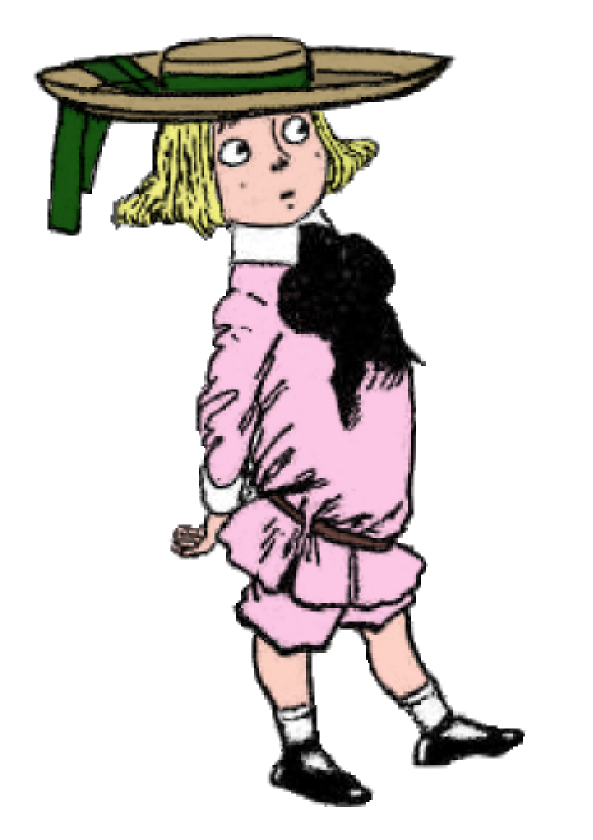
Buster Brown is a comic strip character created in 1902 by Richard F. Outcault that was adopted as the mascot of the Brown Shoe Company in 1904. The characters of Buster Brown, Mary Jane, and his dog Tige became well known to the American public in the early 20th century. The Buster Brown suit reflected his outfit and became very popular for young boys.
The character of Buster Brown may have been loosely based on Granville Hamilton Fisher, a son of Charles and Anna Fisher of Flushing, New York. Outcault copied Fisher's physical appearance for his comic strip. The name "Buster" came from the popularity of Buster Keaton, then a child actor in vaudeville. Roger Cushman Clark (1899–1995) of Deadwood, South Dakota was also described as the "original model" for the Buster Brown character.
The comic strip began in the New York Herald on May 4, 1902. Outcault left to work for William Randolph Hearst in January 1906. He continued to produce the comic strip in Hearst's newspapers after a court battle which left it nameless, while the Herald continued their own version of Buster Brown with other artists. The Herald version lasted until January 1911, and Outcault's version until May 13, 1923.
The series was translated into Portuguese and published in the Brazilian children's magazine O Tico-Tico where Buster Brown was known as Chiquinho.
Buster Brown is a young city-dwelling boy with wealthy parents. He is disturbingly pretty (contrast him to Outcault's own The Yellow Kid, or Frederick Opper's creations), but his actions belie his looks. He is a practical joker who might dress in a girl's outfit and have her wear his clothes, break a window with his slingshot, or play a prank on a neighbor. The trick or transgression is discovered, and he is punished, usually by being spanked by his mother, but it is unclear if he ever repents. Many strips end with Buster delivering a self-justifying moral that has little or nothing to do with his crime. For example, a strip from May 31, 1903, shows him giving Tige a soda from a drugstore soda fountain. The drink splashes, not only the front of his own clothes, but the skirts of a woman's splendid dress. Horrified by his clumsy misadventure, Buster's mother takes him home and flogs him with a brush. In the last panel the boy has written a message beginning, "Resolved! That druggists are legalized robbers; they sell you soda and candy to make you ill, then they sell you medicine to make you worse."
Mary Jane is Buster's girlfriend. She is based on R. F. Outcault's daughter of the same name. Her parents are never mentioned, though at many of the comic headers there are letters addressed to her from her mother. She has curly black hair and brown eyes. She usually wears a blue, frilly dress, a large bow, and Mary Jane shoes with black stockings.
Tige is thought to be the first talking pet to appear in the comics. Unlike the characters presented under this trope, Tige's speech is acknowledged by adults, and many are shocked by this. This popular character was the subject of a book in 1905 with the title, "Tige" His Story.
Outcault traveled to the 1904 St. Louis World's Fair, selling licenses to up to 200 companies to use the Buster Brown characters to advertise their products. Buster Brown's association with shoes began with John Bush, a sales executive with the Brown Shoe Company; he persuaded his company to purchase rights to the Buster Brown name, and the brand was introduced to the public at the 1904 World's Fair.
Hub AI
Buster Brown AI simulator
(@Buster Brown_simulator)
Buster Brown
Buster Brown is a comic strip character created in 1902 by Richard F. Outcault that was adopted as the mascot of the Brown Shoe Company in 1904. The characters of Buster Brown, Mary Jane, and his dog Tige became well known to the American public in the early 20th century. The Buster Brown suit reflected his outfit and became very popular for young boys.
The character of Buster Brown may have been loosely based on Granville Hamilton Fisher, a son of Charles and Anna Fisher of Flushing, New York. Outcault copied Fisher's physical appearance for his comic strip. The name "Buster" came from the popularity of Buster Keaton, then a child actor in vaudeville. Roger Cushman Clark (1899–1995) of Deadwood, South Dakota was also described as the "original model" for the Buster Brown character.
The comic strip began in the New York Herald on May 4, 1902. Outcault left to work for William Randolph Hearst in January 1906. He continued to produce the comic strip in Hearst's newspapers after a court battle which left it nameless, while the Herald continued their own version of Buster Brown with other artists. The Herald version lasted until January 1911, and Outcault's version until May 13, 1923.
The series was translated into Portuguese and published in the Brazilian children's magazine O Tico-Tico where Buster Brown was known as Chiquinho.
Buster Brown is a young city-dwelling boy with wealthy parents. He is disturbingly pretty (contrast him to Outcault's own The Yellow Kid, or Frederick Opper's creations), but his actions belie his looks. He is a practical joker who might dress in a girl's outfit and have her wear his clothes, break a window with his slingshot, or play a prank on a neighbor. The trick or transgression is discovered, and he is punished, usually by being spanked by his mother, but it is unclear if he ever repents. Many strips end with Buster delivering a self-justifying moral that has little or nothing to do with his crime. For example, a strip from May 31, 1903, shows him giving Tige a soda from a drugstore soda fountain. The drink splashes, not only the front of his own clothes, but the skirts of a woman's splendid dress. Horrified by his clumsy misadventure, Buster's mother takes him home and flogs him with a brush. In the last panel the boy has written a message beginning, "Resolved! That druggists are legalized robbers; they sell you soda and candy to make you ill, then they sell you medicine to make you worse."
Mary Jane is Buster's girlfriend. She is based on R. F. Outcault's daughter of the same name. Her parents are never mentioned, though at many of the comic headers there are letters addressed to her from her mother. She has curly black hair and brown eyes. She usually wears a blue, frilly dress, a large bow, and Mary Jane shoes with black stockings.
Tige is thought to be the first talking pet to appear in the comics. Unlike the characters presented under this trope, Tige's speech is acknowledged by adults, and many are shocked by this. This popular character was the subject of a book in 1905 with the title, "Tige" His Story.
Outcault traveled to the 1904 St. Louis World's Fair, selling licenses to up to 200 companies to use the Buster Brown characters to advertise their products. Buster Brown's association with shoes began with John Bush, a sales executive with the Brown Shoe Company; he persuaded his company to purchase rights to the Buster Brown name, and the brand was introduced to the public at the 1904 World's Fair.
Recent media