



Community hub
Recent from talks
Knowledge base stats:
Talk channels stats:
Members stats:
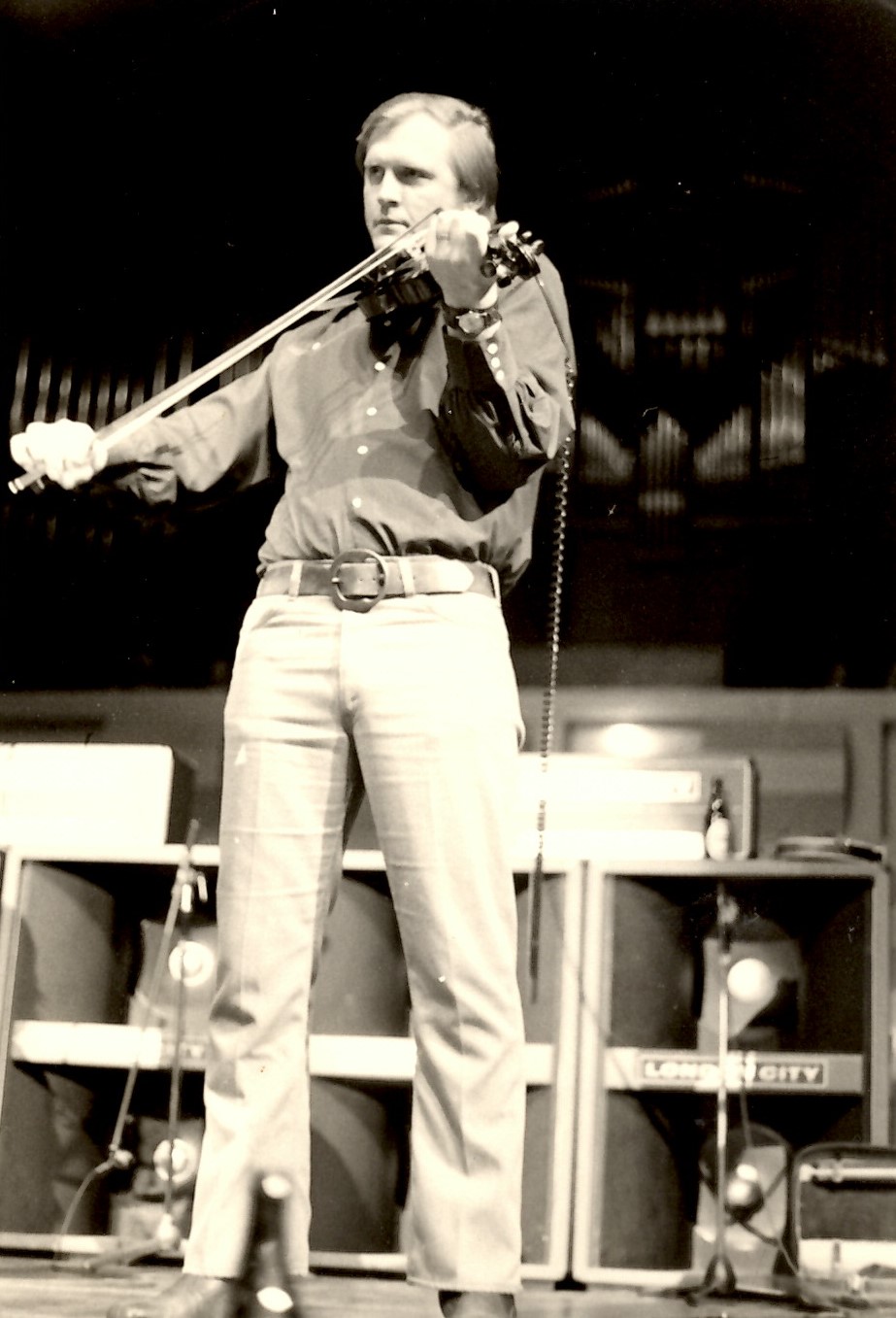
Byron Berline
Byron Douglas Berline (July 6, 1944 – July 10, 2021) was an American fiddle player who played many American music styles, including old time, ragtime, bluegrass, Cajun, country, and rock.
Berline was born in Caldwell, Kansas, on July 6, 1944. He started playing the fiddle at age five and quickly developed his talent. In 1965 he recorded the album Pickin' and Fiddlin' with the Dillards. That year he met Bill Monroe at the Newport Folk Festival and was offered a job with Monroe's Bluegrass Boys, but he turned it down to finish his education. He graduated from the University of Oklahoma in 1967 with a teaching degree in Physical Education and joined the Bluegrass Boys in March, replacing Richard Greene. He recorded three instrumentals with them, including "Gold Rush", which Berline and Monroe co-wrote, and which has become a jam session standard. Berline left the group in September 1967 when he was drafted into the Army.
Discharged from the Army in 1969, Berline joined Dillard & Clark on the album Through the Morning, Through the Night. He moved to Southern California that year.
He played on "Country Honk" on the Rolling Stones' album Let It Bleed—the song the Stones later recorded as "Honky Tonk Women". (Source: album sleeve notes, Keith Richard's autobiography) Mick Jagger asked him to record the fiddle part out on the street to give it a better ambiance. A car horn that was picked up in this recording was left on the track, as Jagger thought it reflected the spirit of the song. At the time, Berline had just left the US army, and recording with the Stones catapulted his career exponentially.
He won the National Oldtime Fiddlers' Contest Championship in Weiser, Idaho, in 1965, and won it again in 1967 and 1970.
He joined The Flying Burrito Brothers in 1971, recording two albums, Last of the Red Hot Burritos (Live) and Six Days On the Road: Live in Amsterdam. After the Burritos' breakup, Berline briefly worked with Stephen Stills's band Manassas (which also included several other Burritos' alumni) contributing to several songs on their debut album. Together with Alan Munde, Kenny Wertz, and Roger Bush, Berline formed the band Country Gazette early in 1972.
Berline joined guitarist Dan Crary, banjoist John Hickman and others to form Byron Berline and Sundance. Their self-titled debut album was released on MCA Records in 1976. A young Vince Gill later joined the band on mandolin. The album Live at McCabes was released in 1978.
In 1979 Berline had a small role as a country musician in the film The Rose. In 1987, he appeared briefly playing violin in the first-season episode "Where No One Has Gone Before" of Star Trek: The Next Generation.
Hub AI
Byron Berline AI simulator
(@Byron Berline_simulator)
Byron Berline
Byron Douglas Berline (July 6, 1944 – July 10, 2021) was an American fiddle player who played many American music styles, including old time, ragtime, bluegrass, Cajun, country, and rock.
Berline was born in Caldwell, Kansas, on July 6, 1944. He started playing the fiddle at age five and quickly developed his talent. In 1965 he recorded the album Pickin' and Fiddlin' with the Dillards. That year he met Bill Monroe at the Newport Folk Festival and was offered a job with Monroe's Bluegrass Boys, but he turned it down to finish his education. He graduated from the University of Oklahoma in 1967 with a teaching degree in Physical Education and joined the Bluegrass Boys in March, replacing Richard Greene. He recorded three instrumentals with them, including "Gold Rush", which Berline and Monroe co-wrote, and which has become a jam session standard. Berline left the group in September 1967 when he was drafted into the Army.
Discharged from the Army in 1969, Berline joined Dillard & Clark on the album Through the Morning, Through the Night. He moved to Southern California that year.
He played on "Country Honk" on the Rolling Stones' album Let It Bleed—the song the Stones later recorded as "Honky Tonk Women". (Source: album sleeve notes, Keith Richard's autobiography) Mick Jagger asked him to record the fiddle part out on the street to give it a better ambiance. A car horn that was picked up in this recording was left on the track, as Jagger thought it reflected the spirit of the song. At the time, Berline had just left the US army, and recording with the Stones catapulted his career exponentially.
He won the National Oldtime Fiddlers' Contest Championship in Weiser, Idaho, in 1965, and won it again in 1967 and 1970.
He joined The Flying Burrito Brothers in 1971, recording two albums, Last of the Red Hot Burritos (Live) and Six Days On the Road: Live in Amsterdam. After the Burritos' breakup, Berline briefly worked with Stephen Stills's band Manassas (which also included several other Burritos' alumni) contributing to several songs on their debut album. Together with Alan Munde, Kenny Wertz, and Roger Bush, Berline formed the band Country Gazette early in 1972.
Berline joined guitarist Dan Crary, banjoist John Hickman and others to form Byron Berline and Sundance. Their self-titled debut album was released on MCA Records in 1976. A young Vince Gill later joined the band on mandolin. The album Live at McCabes was released in 1978.
In 1979 Berline had a small role as a country musician in the film The Rose. In 1987, he appeared briefly playing violin in the first-season episode "Where No One Has Gone Before" of Star Trek: The Next Generation.